Cultural Heritage and Economic Development: proposal for the creation of «living» Archaeological Parks in the Archaeological Sites of Greece, with Kythera and Antikythera as an example
Aris Tsaravopoulos
Reserve Archaeologist of the KΣT’ ΕΠΚΑ, aristsaravopoulos@hotmail.com
Gelly Fragou
Archaeologist, gelyfragoy11@hotmail.com
Summary
The following text proposes a way to revive the «forgotten» archaeological sites without state or other public expenditure, a way that will make them more visible, accessible and accessible, while at the same time increasing jobs (without any cost to the budget), and helping to extend the tourist season in the areas where they are located.
The proposal consists in the creation of a living, to emphasize, living Archaeological Park, in which visitors will have the opportunity to be active and, from mere spectators, will be transformed into active subjects.
This activity is part of the general framework of an alternative tourism programme. Interested visitors-tourists will come, not just to visit, but to participate in the process of revealing and creating the archaeological site. In other words, they will be working as «working» staff. There is the possibility to address tourists who are looking for an alternative way of vacation and who are willing to offer, by paying, voluntary work in an archaeological site.
In many archaeological sites abroad, many excavations are carried out in this way and funding is secured. The following proposal achieves objectives which, while requiring no public expenditure, are part of a self-financing process of excavation, shaping, enhancement and protection of the archaeological site.
Key words: sustainable economic development, archaeology, cultural heritage, Kythera, Antikythera
Introduction
In many Greek archaeological sites, whose impact goes beyond the borders of the country, such as the Acropolis, Mycenae, Olympia, Delphi, Knossos, Vergina and some others, the large number of visitors almost all year round, makes it possible to maintain, improve and promote them and their contribution to the national and local economy is obvious.
Many of the archaeological sites, which are outside the «tourist circuit» and are less well known, such as1 Emporios in Chios (Archontidou-Argyri et al, 2003), Psara, Palamari in Skyros (Parlama, 2006), Paliomonastiron in Rio, «Mikri Doxipara» in Evros (www.mikridoxipara-zoni.gr), Karthaia of Kea2 (Mendoni, 2004; Simantoni-Bournias et al., 2006) and many others, shaped with many national or community expenditures (CSF, NSRF, etc.), have so few visitors that, even indirectly through the tourist attraction they may create (since most of them do not have a ticket), they never seem to recoup the money spent on their maintenance and promotion.
But there are also too many archaeological sites - and these are most of them - that remain unexplored, covered by silt and vegetation, and which do not offer the persistent visitor even samples of the archaeological wealth they hide. These are the ones that, one by one, scattered all over Greece, constitute the real wealth of the country, the raw material of Greece's «heavy industry» which, two centuries after the creation of the modern Greek state, has not yet been exploited. Of course, if we try to preserve and highlight these sites in the way that was followed in the above cases, we would have the same «financially costly» results: huge expenses for maintenance, landscaping and promotion (which in the current economic situation of the country would be a joke even to think about) with meager direct or indirect payback effects over centuries.
Objectives
The following text proposes a way to revive the «forgotten» archaeological sites without state or other public expenditure, a way that will highlight them and make them accessible. The work will start with people who will work and at the same time pay for their participation. This will bring life to the site because it will no longer be a «dead» archaeological site which is only accessible at certain times of the year. At the same time, the proposal will increase the number of jobs for archaeologists, conservators and local people (as the need for accommodation and food will increase). The scientific staff will not be paid by the state, but by the income generated by the participants-volunteer-tourists in the project. All of the above will help to extend the tourist season in the areas where the archaeological sites are located, as the proposed work is planned to last from the end of spring to the beginning of autumn, for 6-7 months. Two archaeological sites on the islands of Kythera and Antikythera are presented as concrete examples of the implementation of the proposal (case studies). These archaeological sites are «Paleokastro» on Kythera and «Kastro» on Antikythera. The first of the authors of this article has been working on these two islands for more than twenty years as a responsible employee of the archaeological service (Tsaravopoulos 2006; Tsaravopoulos 2009a; Tsaravopoulos 2009b).
Trying to create «living» archaeological parks: archaeological sites as sources of sustainable development
The proposal consists in the creation of a living, to emphasize, living Archaeological Park, in which visitors will have the opportunity to be active and, from mere spectators, will be transformed into active subjects. The difference is that in the simple Archaeological Site, the visitor exhausts it with one, at most two, if he is very diligent, daily visits, while, as proposed, in the «Living Archaeological Park» the visitor will participate both in the uncovering of antiquities, but also in the shaping and presentation of the site. In Greece, particularly in the south, the sunny days that allow outdoor work begin in mid-March and end in late November. This makes it possible to plan archaeological activity throughout this period.
This activity is part of the general framework of an alternative tourism programme. Interested visitors-tourists will come, not for a simple visit but, as mentioned above, to participate in the process of uncovering and creating the archaeological site. That is, they will be working as «working» staff, and will be taught at the same time, the excavation process, but also all the other activities required for the creation and operation of an Archaeological Park, such as the uncovering of the antiquities and their restoration, the creation of paths to the sites of special interest, the guided tour of the site while at the same time, in the afternoons, they will be given lessons on (1) the history of the archaeological site, (2) the way in which historical conclusions are drawn from the excavation data, but also (3) lessons on the objectives of archaeological research, (4) lessons on the direct conservation and design of movable and immovable finds, as well as (5) the ways of promoting the «ancient» to the wider public.
Of course, the «impatience» of quickly drawing archaeological conclusions must be overcome and those responsible for the excavation should try to act more as «teachers» and less as «hasty» researchers. This process, however, allows for the possibility of a continuous vitality in the archaeological site, since the data of the finds and the sites that are revealed will be constantly changing. The «visitor-workers» at the site will be able to see the progress of the uncovering, but also to draw conclusions from the results of the excavation in which they themselves will participate. From the same group will be selected those who will guide the random visitors, who will also follow the excavation process live. The two archaeological sites on which we focus the proposal have been integrated by the Municipality of Kythera and Antikythera in a network of paths.
There is the possibility of addressing tourists who are looking for an alternative way of holidaying and who are willing to offer, for a fee, voluntary work in an archaeological site.3 In many archaeological sites abroad, in Spain (www.archaeospain.com), France (www.culture.gouv.fr), but also in Romania and elsewhere, many excavations are carried out in this way and funding is secured. The essential difference between our proposal and the above cases lies in the fact that their main objective is the scientific result and for this reason their duration is short, while they proceed with speed in order to draw as many scientific conclusions as possible in as limited a period of time as possible. Our proposal sets as its main objective the function of the site, the teaching of the participants without, of course, overlooking the scientific result which, however, will not overshadow the first two functions, while at the same time contributing to the integration of the ancient into community life. The latter will take place as follows: during periods of low tourist traffic, when production and economic activity are non-existent in some areas and people expect to live off tourists during the summer months, the operation of the archaeological site in the way proposed above will contribute to strengthening the economic life of these areas. The owners of guesthouses and restaurants will be required to meet the needs of the professional and tourist-workers who will participate in the project for long periods of time. This will generate income. The economic development will give local people the opportunity to stay in the area, realising that their local antiquities can also be a source of economic income.
The above proposal achieves three objectives which, while not requiring any public expenditure, are part of a self-financing process of excavation, shaping, enhancement and protection of the archaeological site. The first objective is to enhance the archaeological site by revealing its functional parts, ensuring the presence of staff and guiding visitors throughout the tourist season, which can start in April-May and last until November. This objective is in the immediate objectives of the Archaeological Service as defined in the Archaeological Law of the Greek State.4 The permanent presence of a team working on the site will help in the preservation and maintenance of the antiquities and the visitor paths, so that the image of abandonment that most archaeological sites have today does not appear.
The second objective is to prolong the tourist season which will contribute to the economic development of the region in which they are located. At the same time, residents will be in touch with their cultural heritage. Direct contact with the community will allow many residents to come into contact with the work carried out there. The organisation of our proposal will be local in nature and will be a partnership between local authorities and residents, the responsible archaeological service and a non-profit organisation made up of the above. All these members will decide on the participants in the project, the exact period of the archaeological work and in collaboration with the archaeologists working on the project will decide on the sites to be excavated each year. Residents of the neighbouring communities will encourage many ordinary tourists to visit the sites. Many of the residents have suffered the inconvenience of delay in attempting to build on their land, either for the simple control of the excavation or for the excavation of the antiquities that were there, and they will be able to see that their sacrifice has a direct effect in revealing and interpreting the history of their place and, they will probably cease to see archaeologists as «dangerous beings» whose aim is, for «their own sake», to prevent them from building.5
A third objective is the creation of jobs (again, not at public expense) in archaeologists, antiquities conservators and antiquities designers and, indirectly, in all the professions that will serve this action. A group of 30-35 participants (visitor-workers) will need at least 5 archaeologists in charge of teams for at least 8 months on each site, at least one designer and one conservator of antiquities. All the above will be paid by the participants (visitors-workers) in the project. The selection of scientific staff will be based on knowledge and experience on the site, and each year the scientific staff will be evaluated by the participating volunteer “clients”.
In addition, new jobs will be created for local people to serve the hospitality and food needs of all participants.6
At the same time, the voluntary participants (the «alternative tourists») in the excavation, restoration and landscaping of the site, work which, as mentioned above, is expected to last for many decades, become living advertisers of the archaeological site, attracting many more visitors. Experience to date in the sites discussed below has shown that despite the difficulties of living and working, volunteers return to the excavation in the coming years, and new volunteers are constantly expressing their desire to participate.
As outlined above, the archaeological sites instead of being closed to the public «because of excavation», as is the case in the majority of systematic and rescue excavations carried out in the archaeological sites of our country, will be «opened» for the same reason, making the excavation process itself open to visitors.
Paleokastro Kythira
The island of Kythera is located on the eastern peninsula of the Peloponnese, opposite the cape of Malea and controls the sea passage from the Aegean to the Western Mediterranean. Since antiquity it has been known throughout the world as the «divine island of Aphrodite» a feature which is a strong attraction for visitors and candidates to participate in the excavation.
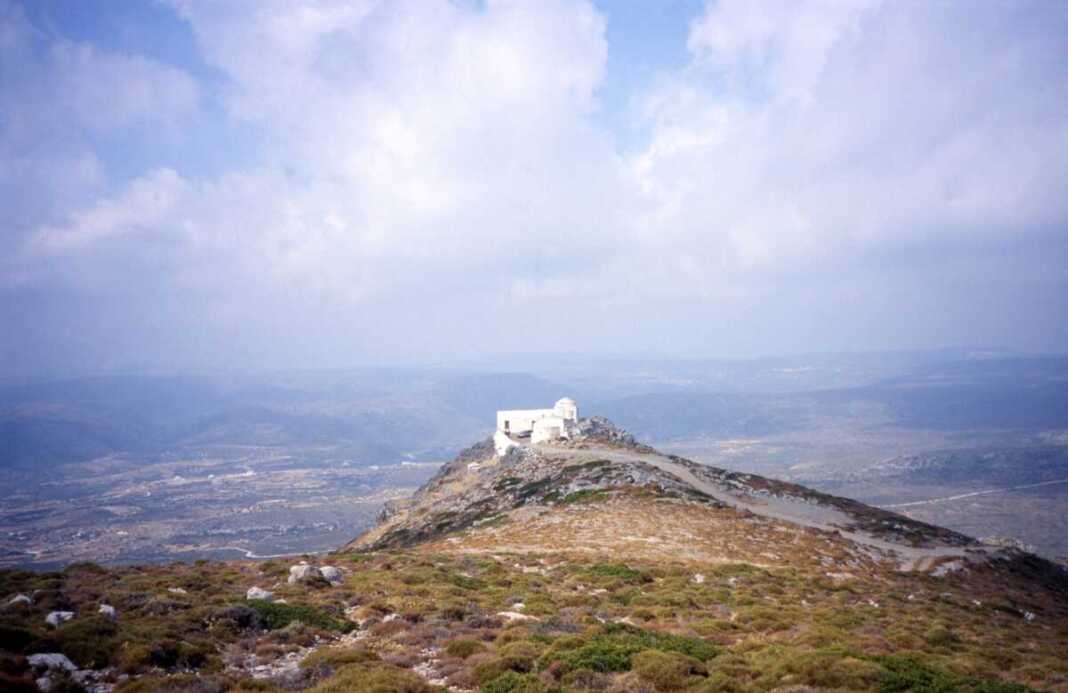
The largest, fortified settlement of the island was located in the archaeological site of Paleokastro in the centre of the island at a distance of about four kilometres from the beach of Paleopolis where Skandia operated its port (Coldstream & Huxley, 1972: 37-40; Petrochilos, 1984: 64-87). The fortified ancient city occupies an area of more than 600 000 m2. Its walls are largely covered by vegetation and are not visible, and in many places have been destroyed by agricultural work and landscaping over the last ten centuries. At «Paleokastro» two ancient sanctuaries are preserved visible (one after excavation), the first of a great female deity (probably Aphrodite, although there is no epigraphic corroborating evidence) at the top of the hill (Petrochilos, 2003; 2007; 2009). The second temple belongs to the Dioscorus, probably also a sanctuary, on the site where the Christian church of Agioi Anargyroi (Cosmas and Damianos) now operates (Figs. 1, 2). The ancient city has been fortified at least twice, the first in Archaic times and the second after the conquest of the island by Conon, in 393 BC (Xenophon, Greek 4.8.7). The rescue excavation carried out in 2010 and 2011 revealed parts of the inhabited area of the late Hellenistic period and the first centuries of Roman rule, although, as can be seen from the movable finds, habitation in the area had begun in late Geometric times. In another part of the same excavation a tomb of the late Archaic period was found.
The only archaeological work at the site was a small-scale systematic excavation at the top of the hill carried out by Professor I. Petrochilos of the University of Ioannina, who revealed the aforementioned sanctuary dedicated to the female deity. In the last two years (2010, 2011), following a request by the Municipality and the Metropolis of Kythera for the opening of a path to the temple of Aghios Anargyroi, a small-scale rescue excavation was started, which revealed the antiquities described above (Figs. 1, 2). The excavation was carried out with the participation of volunteers - students, etc. under the supervision of the KST’ EPKA, which was then represented on the island by the first of the authors of this article, and the financial support of the Kytherian Research Group founded by Kytherians-Australians for this purpose.
The archaeological site is not accessible because of the vegetation. First, the site will have to be cleared. The large area it covers will result in work there lasting for 8-9 months each year, for 50-60 years during which time the living archaeological park proposal, as discussed above, will be implemented. There are 4 modern settlements around the archaeological site of «Paleokastro» whose communities will participate in the non-profit organization for the operation of the archaeological park. In these settlements there are dormitories that can provide accommodation and food for the participants.
Ancient Aegilia, Antikythera
The case of Antikythera is quite different. The island, much smaller in size, is located in the middle of the distance between Kythera and Crete, with a harbour open to the northern winds, which prevent the safe departure of small ships and the entry of larger ones. The island has today only 25 permanent residents (from the 700 or so it had 80 years ago) with a steady course of desertification, since there is no prospect of any prospects in the, narrowly defined, productive sector.
The island, which has no good beaches, has no traditional settlements and there is not much for the visitor to see and do if he stays for more than two or three days. However, there is an entire walled ancient city whose history can be a powerful attraction for visitors from all over the world to make its «revival» possible.
From the inscriptions and archaeological data it seems that the island was fortified with the funding of the Persian Empire, in an attempt by the latter to attack, in the second half of the 4th century BC, from the rear to Alexander the Great. It was founded in the years of the great conflict that ended with the dissolution of the Persian Empire and the emergence of the Hellenistic Kingdoms, fundamentally changing both Greek and world history. During the Hellenistic period, the island participated in the pirate activity of the Cretan cities and, with its key position on the sea routes of merchant and warships, it became the target of many powers (Rhodians, Macedonians, Spartans, etc.) competing for control of the Aegean area. During the «Cretan Revolution» against the Romans, the small island, which belonged to the Cretan city of Falassarna, was the first target of the Roman attack that ended with the destruction of the megalithic island and its final enslavement (69-67 BC). This is when the life of the ancient city of Antikythera came to an end (Sekunda, 2009; Tsaravopoulos, 2009c).
The fortification of the ancient city of Antikythera, which was called Aegilia in ancient times, is preserved along its entire length and covers an area of about 300 acres, within which there are preserved sanctuaries, military installations, remains of houses, tanks and other architectural remains. The large area it covers and the completion of its uncovering requires work that will take several decades to complete. The «pirate» activity resulting from the sources and archaeological data can act as an attraction for those who wish to pursue this alternative form of tourism (Jacopi, 1932: 169-170; Segre, 1933: 452-461).
Due to the rapid decline of the population, the Community of Antikythera - which is now represented by the Municipality of Kythera and Antikythera - requested the creation of an archaeological park on the island, since, as mentioned above, there is no possibility of creating another attraction for visitors. Every summer since 2000 the 26th EIA under the supervision of the first author of this article has been organising excavations at the site. Financial support is provided by the Antikythera Community, the Society for Kytherian Studies and finally the Kytherian Research Group.
Creation of «living» archaeological parks in «Paleokastro» of Kythira and «Castle» of Antikythera
In the case of «Paleokastro» in Kythera, the large area of the site allows the implementation of the programme we have been proposing for many decades. «Paleokastro» is the main ancient settlement of the island and its excavation will continuously shed light on the history of Kythera. The location of «Paleokastro» almost in the centre of the island makes it easily accessible from the Kythera residences of Mitata, Aroniadika, Livadi, and the holiday resorts of Paleopolis, Avlemonas and Diakofti. As part of the work programme, which will last for two or three weeks for each work group, fieldwork will be carried out in the morning, including excavation work, clearing and shaping of routes and sites. The working day will have variable hours depending on the sunrise, but will not last longer than 5 hours. In the afternoon the activities will include washing and recording of the mobile finds, reading and discussion of the excavation diary, as well as lectures-lessons that will include the history of Greece, the history of Kythera integrated in the wider region of the Peloponnese, the Ionian Islands and Crete, as well as the connection of the excavation findings with the stations of the island's history. On Sundays, excursions will be organised to the other archaeological sites of the island. In Kythera, the residences allow archaeological work from mid-March to November.
All of the above presupposes a clear assumption: that the surface excavated each year will neither be large in area nor will it go to great depth because the first objective of the excavation process will be didactic and then research. The excavation area, as is the case in all archaeological sites in the country, has an extremely large number of mobile finds, which emerge almost as soon as one «scrapes» the ground, so that they can be used as teaching objects for the participants even with the limited excavation process.
In the case of ancient Antikythera, the proposal to create a living Archaeological Park could give the island a new chance to revive. As mentioned above, the visitor exhausts the archaeological site in one or at most two, if very diligent, day visits, while the rest of the island is exhausted in another two days. But those coming to Antikythera are obliged, by the sparse schedules of the liner, to stay longer days which prevents even the thought of a trial visit. With our proposal, however, there is the possibility of creating interest among visitors to stay on the island for two or even three weeks.
So far, responding to the desire of the Community of Antikythera to promote the archaeological site, as members of the competent Ephorate of Antiquities, we had proceeded to cleanings and small revelations of the ancient city wall and the architectural remains of the temple of Apollo at the root of the hill of the fortress.
The island, of course, with only 25 permanent residents, has no accommodation facilities, but also no comfortable catering services, which makes it difficult for a large group to be present all the months from March to November.
Accommodation is in tents in the school yard which has been out of operation for 20 years. Bathing facilities are limited and only in the main settlement, Potamos, about three kilometres from the accommodation site. Catering is provided at noon at the River and in the evening at the school which has cooking facilities. Living conditions for the team working in Antikythera are difficult.
Since 2000, many volunteers, students and others of many professions and specialties have been continuously involved in the excavation process. The experience of these years has shown that volunteering, even when accommodation or food is not provided, has a great appeal not only to those involved in the humanities, but to a large extent to many of our fellow citizens whose professions and occupations are completely different.
In this context, and here, as in Kythera, each team will work for 2 or 3 weeks, from May to September in the first years of the programme, with the prospect, if accommodation facilities are created, of extending the period from April to October-November. As in Kythera, the working day starts at sunrise and lasts 5 hours. After work, the workers can swim in the nearby excavation beach and then go either by car or on foot to the main settlement where there is a shower and two restaurants. In the afternoon, on the school site, there will be washing and recording of mobile finds, reading of the diaries and lessons in history and archaeological methodology.
In Antikythera, the above proposal achieves the three objectives mentioned at the beginning of this text, but we believe that with the implementation of the programme there will also be a substantial contribution to the reversal of the process of desertification of the island, since the presence of a large team, not only during the months that the excavation process will last, but also during the rest of the year, when the conservation teams will be working on the creation of a museum space10, will lead to the «repatriation» of the island's inhabitants, for whom the excavation work will be carried out. One of the reasons for the desertification of the island is due to the lack of jobs. That is, the operation, in this way, of the Archaeological Site will allow other jobs to be created on the island to serve the workers, paid or voluntary, at the archaeological site (Tsaravopoulos, 2009d; 2010).
In the field of archaeology, it will ensure at least six jobs (archaeologists and conservators) for more than 5 months a year on the island11. The realisation by local residents that archaeological work can breathe life into the island has already become apparent and the distrust that the excavation team faced when they first appeared on the island, and despite the unstinting support they received from the Community Authority, has recently completely subsided and now all residents support the excavation work.
It has also been found that those who have so far volunteered to participate in the excavation work have become living advertisers of the island and return or send many friends and acquaintances to the island despite all the difficulties of living there.
To complete the proposal we will repeat the statement that the archaeological site instead of being closed to the public «because of the excavation», will be «opened» for the same reason, making the excavation process itself open to the public.
Problems and constraints: the role of the Archaeological Service
Both archaeological sites are «declared» and protected by the Archaeological Law. However, some land remains private, and would either have to be expropriated (which means state expenditure) or exchanged for public land12.
The question of course arises as to how such a proposal could be implemented. It is certain that everything would have to be done under the constant control of the Archaeological Service of the Ministry of Culture.
It is a serious problem because it could fall into the inertia that many similar initiatives fall into after an initial enthusiasm. The institution should operate independently of the participants in the excavation and research activity and should manage the finances throughout the year so that the workers, archaeologists, conservators, planners, but also accountants and caretakers, can look forward to the project as a permanent job which will ensure that they will be able to work for relatively many years. As a possible solution, without being unique, we see the cooperative organisation of the team which, in direct contact with the Archaeological Service and under its control, will undertake the organisation and operation of the project.
Of course, for an archaeological site to operate in this way in Greece, first of all, the bureaucratic obstacles that are closely linked to the organisation of the Archaeological Service, as well as to the conservative mentality of its members, must be overcome. This mentality is not unrelated to the general organisation and functioning of the Public Administration in Greece. Bureaucratic rigidities, fear of the new and the responsibilities it creates, inertia, combined with the deep-rooted state-centred machine, very often prevent any acceptance of proposals that depart from the usual. In every new proposal that is made, the bureaucratic mechanism ’discovers’ dozens of typically «insurmountable» obstacles, which are easily overcome and ingenious solutions are found when a «powerful» person shows the appropriate interest13.
There is a reasonable hope, due to the restructuring of the Public Administration and the change in its mentality and operation, imposed to overcome the crisis in which the Greek state has fallen into, that this proposal will be accepted and will be able to be implemented, proving in practice that the antiquities, when properly promoted, can contribute effectively to the sustainable development of a place. It would be possible to start with a pilot project on the two islands and, if it proves successful, to extend it to other archaeological sites in Greece.14
Because of the economic crisis it seems that no resources will ever be allocated for archaeological sites outside the «tourist circuit». This proposal will help to promote archaeological sites and preserve cultural heritage and at the same time will be a key element of sustainable development.
Epilogue
In conclusion, this proposal «exploits» the vast archaeological wealth of Greece for its development, the promotion of its cultural heritage and the better documentation of its history without the need for investment by the Greek state. The case of «Paleokastro» in Kythera is almost unknown archaeologically and historically. Kythera is an island with tourist development, but on the other hand the archaeological site is completely inaccessible. Antikythera on the other hand is an island whose population is rapidly declining and the only prospect for development is the creation of a «living» archaeological park. Both archaeological sites have a different attraction characteristic. Kythera is the island of Aphrodite and the promotional slogan that could be used for the needs of the project is «excavations on the island of Aphrodite», while the «attractive» slogan for Antikythera could be «excavations on the island of pirates».
Notes
- Here are just a few of the landscaped areas for which huge amounts of national and community resources have been spent on their development, while their visitor numbers are minimal.
- A lot of money has been spent over the last two decades on the development of the archaeological site of «Karthaia» (which was included in the programmes of the TPEAE due to the special interest of the Secretary General of the Ministry of Culture, as well as many other sites chosen due to the special relations of the chief archaeologists with the Secretary General) but it is still not accessible from the land. One has to be a floater owner or rent a floater of opportunity!
- Another target group is the global community of archaeology students who are looking for archaeological sites to gain excavation experience. Their expenses are often covered by the universities they attend.
- This is the Archaeological Law 3028, Government Gazette A’ 153/28-6-2002, «for the protection of Antiquities and Cultural Heritage in general» and in particular article 3 which defines the «Content of protection». (Archaeological Law 3028/2002, no. 3)
- For readers who do not know the reality in Greece, it should be clarified that in many areas, before any intervention in the subsoil, either for construction, or for infrastructure work (road opening, water supply and sewerage networks, etc.) required first of all the monitoring of the Archaeological Service of the Ministry of Culture, while if found antiquities are forced to excavate them at the expense of the state or the owner of the site and, as is understood this process entails financial costs and delayed Archaeological Law 3028/2002, Article 37.
- Here we should note the possibility that the «participants» in the excavation will not be alone, but accompanied by relatives or friends who will increase the group in the hospitality and catering areas.
- Homer, Iliad O, 432; Hesiod, Theogony, 192. For the «sanctity» of the island in the arts, Botticelli's paintings «The Birth of Aphrodite» and Jean-Antoine Watteau's «Boarding at Kythera» and Charles Baudelaire's poem «Journey to Kythera»
- These are the findings of the days of the excavation which the participants will see, but some key findings that have been revealed in other periods and have contributed to the historical conclusions will also be discussed.
- The creation of living spaces meets the objectives of the programme, as it will allow the restoration of old houses or the construction of new ones on an island that is in the process of being abandoned.
- The excavation at Antikythera so far has «produced» a number of exhibits which, together with copies of the finds from the «shipwreck», will create a remarkable exhibition space (Caltsas, Vlachogianni, Bougia, 2012; Marțiș et al., 2006; Pyrrou et al., 2006; Marțiș et al. Tsaravopoulos 2009c).
- The remuneration of the working archaeologists and conservators will be ensured, as stated above by the participants in the excavation - teaching process.
- The exchange of land is provided for by the Archaeological Law 3028/2002, article 18.8.Especially in Kythera, an even better solution was found, which is the offer of land by some Australian Kytherians, owners of land in Paleokastro, who grant the archaeologists the right to carry out excavations.
- The author has experience of interventions by «powerful» people that worked positively, while the mechanism had expressed a negative opinion on his proposal, but also of interventions that stopped proposals on bureaucratic pretexts and were impossible to overcome due to lack of interest from a «powerful» person.
- According to our estimates, there are more than two hundred archaeological sites in Greece where this programme could be implemented, bringing the corresponding cultural and economic results to the areas where they are located.
Bibliography
Archontidou-Argyri, A. et al. 2003: Emporio: A settlement of the early historical times. Works of rehabilitation, Ministry of Culture, K’ EPKA, Chios.
Bevan, A., Conolly, J. and A. Tsaravopoulos 2008: The Fragile Communities of Antikythera, Archaeology International 10, 2008, 32-36.
Caltsas, N., Vlachogianni, E., Bougia, P. (eds). 2012 The Antikythera Shipwreck. The Ship, the Treasures, the Mechanism, Catalogue of the exhibition in the National Archaeological Museum from April 2012 to April 2013.
Huxley, G. & Coldstream, N. 1972. Kythera, Excavations and Studies. London
Jacopi, G. 1932. Nuove epigrafi dale Sporadi Meridionali, Clara Rhodes 2: 169-170
Marțiș, T., Zoitopoulos, M. & Tsaravopoulos, A. 2006: Antikythera: The Early Hellenistic Cemetery of pirates’ town, in Luca, S.A. & Sîrbu, V. (eds): The Society of the Living - The Community of the Dead (from Neolithic to the Christian Era), Proceedings of the 7th International Colloquium on Funerary Archaeology, 2006, Biblioteca Septemcastrensis XVII (2006), Sibiu, pp. 125-134
Mendoni, L. 2004 The protection and presentation of archaeological sites in connection with sustainable development: the archaeological site of Karthaia, in Doukelis, P. N. and Mendoni, L. (eds) Perception and Evaluation of Cultural Landscapes: Proceedings of an International Symposium, Zakynthos, December 1997, Athens: Research Centre for Greek and Roman Antiquity, National Hellenic Research Foundation (Meleτήματα 38): 187-221.
Parlama, L. 2006. The Work of the Committee for the Research, Protection and Promotion of the Prehistoric Settlement at Palamari in Skyros. In.
Petrocheilos, I. 1984. Kythera from prehistoric times to the Roman Empire. Ioannina
Petrocheilos, I. 2003. In. Myth and Reality. Proceedings of the 1st International Conference of Kytheraic Studies, Kythera 2003, Volume A’, pp. 77-79, pp. 77-79.
Petrocheilos, I. 2007. In. Epathlon, Archaeological conference in honour of Adonides Kyros (Poros 2002), vol. A’, Athens, pp. 295-306
Petrocheilos, I. 2009. In. Athens, 2003, Markopoulo Mesogaia. pp. 537-547
Pyrrou, N., Tsaravopoulos, A. & Bojică, C. 2006 The Byzantine settlement of Antikythira (Greece) in the 5th - 7th centuries. in Luca, S.A. & Sîrbu, V. (eds) The Society of the Living - The Community of the Dead (from Neolithic to the Christian Era. Proceedings of the 7th International Colloquium on Funerary Archaeology, 2006. Biblioteca Septemcastrensis XVII (2006). Sibiu, pp. 223-237
Segre, M. 1932 Nuovi Testi storici, RFIC N.S. 10: 432-461
Sekunda, N. 2009: The Date and Circumstances of the Construction of the Fortifications at Phalasarna, HOROS 17-21 (2004-2009): 595-600
Semantoni-Bournias, E. and others. 2006. The project Conservation and Promotion of the ancient Karthaea of Kea. The years 2002-2004. Archaeognosia 14: 237-284
Tsaravopoulos, A. 2006. 2006. Kythera, Antikythera. in Vlachopoulos, A. (ed). archaeology, Aegean Islands, Melissa, Athens. pp. 198-203
Tsaravopoulos, A. 2009a. In. Athens, Markopoulo Mesogaia. pp. 561-576
Tsaravopoulos, A. 2009b. The work of the 2nd Ephorate of Prehistoric and Classical Antiquities in Antikythera. In Vasilopoulou, V. & Katsarou-Tzeveleki, S. (eds). Athens, Markopoulo Mesogaia. pp. 577-592
Tsaravopoulos, A. 2009c. The IG.V.1,948 inscription and the inscribed pencils of the Antikythera Castle. HOROS 17-21 (2004-2009): 327-348. The English version in print in Gdanskie Studia Archeologiczne Nr 2 (2012): 207-217.
Tsaravopoulos, A. 2009δ. Can an archaeological site contribute to the sustainable development of a remote island? In Neagu, M. (ed) Museums, monuments and tourism at the lower Danube, Călăraşi: Culture and Civilization at the lower Danube, 39-43.
Tsaravopoulos, A. 2010. Archaeological site for local development? A proposal for the creation of a «living» Archaeological Park in Antikythera. Ilissia 5-6: 52-58.
—
Here is the proposal in English.
Self-Sustained Archaeological Sites
Archaeological Sites as Self-Sustained Resources for Economic Regeneration: Towards the Creation of Living Archaeological Parks on the Islands of Kythera and Antikythera
© W. S. Maney & Son Ltd 2013 DOI 10.1179/1350503313Z.00000000049
http://explore.tandfonline.com/page/ah/maney-publishing-journals
Aris Tsaravopoulos
26th Ephorate of Prehistoric and Classical Antiquities, Hellenic Ministry of Education, Religious Affairs, Culture and Sports, Greece
Gely Fragou
Independent researcher, Greece
This paper argues that less known archaeological sites on marginalized or non-touristic areas can contribute to the formation of local economies that can benefit from alternative heritage tourism and public participation in the archaeological excavation process. The discussion of a proposal for turning two archaeological sites on the Greek islands of Kythera and Anitkythera respectively (Paleokastro and Kastro) into living archaeological parks serves as an example that highlights the possibilities for the creation of self-sustain- able heritage projects that need not rely on direct state funding.
keywords economic regeneration, island communities, living archaeological parks, Kythera, Antikythera
Introduction
The potential for archaeological sites to contribute to the economic regeneration of otherwise deprived areas is something widely recognized within the existing heritage management literature (Cernea, 2001; Hampton, 2005). In a country like Greece, where tourism is considered as ‘the heavy industry’ and the rich archaeological herit- age constitutes the component of a thriving heritage industry, the role of antiquities in generating income on both national and local level is vital. Indeed, several universally known archaeological sites that benefit their local regions by sustaining heritage tourism exist in the country, such as the World Heritage sites of the Acropolis in Athens, Mycenae and Ancient Olympia in the Peloponnese, Delphi in Central Greece, Vergina in Northern Greece, and Knossos in Crete.1 In most of these cases, the income derived from the entrance fees would be, in theory, adequate for covering conservation and preservation needs. However, it should be mentioned that, accord- ing to the current national scheme, the income from all archaeological sites and museums in the country is managed by the Greek state services and reallocated on the basis of existing priorities and needs.
At the same time, interventions in the last decades have been made to several archaeological sites in Greece, which lack worldwide reputation and popularity among tourists, through funding schemes provided by European, national, and local governmental bodies - such as the Community Support Framework and the National Strategic Reference Framework. These projects have mostly focused on the preservation and enhancement of archaeological sites as a means to contribute to tourism development and consequently to economic regeneration.2 However, based on personal experience, many of these sites - such as the archaeological site of Karthaia on the island of Kea, which was funded by the Credit Management Fund for the Realization of Archaeological Projects - received funding due to the personal interest of the General Secretary of the Ministry of Culture or the special relations that certain archaeologists in charge had developed with the latter. Even if the aforementioned archaeological sites attracted tourists, the relevant income would not suffice for their conservation, restoration, and promotion, and would not guar- antee their long-term management. It is worth noting that in the case of Karthaia, despite the significant amount of money spent throughout a number of years, the site remains inaccessible as only people who own or can afford to hire a boat can reach it. Meanwhile, throughout Greece there are still numerous sites that remain unexplored, badly maintained, and inaccessible, almost ‘invisible’, to the wider public. In order for them to play a more significant role within contemporary society and for the sake of their local communities, their management requires a different approach to the one mentioned above.
This paper argues that even less-known archaeological sites on areas that have never previously enjoyed the benefits of heritage tourism can offer opportunities for economic regeneration. Moving away from the dependence on one-off grants that support heritage enhancement projects (instead of providing long-term management solutions) a model that renders archaeological sites self-sustainable through alterna- tive heritage tourism and public participation in the archaeological excavations is suggested. It is the aim of this paper to discuss a specific proposal that could potentially contribute towards a revival of the local economy of two communities on the islands of Kythera and Antikythera with the help of their neglected local archaeo- logical sites. The case studies of Paleokastro and Kastro (on the aforementioned islands) will be examined in terms of their capacity to offer public participation in the archaeological excavation as a way to generate funds for self-sustainable preserva- tion. Furthermore, the potential obstacles that have to be overcome in order to materialize such a plan are addressed in the light of the conditions that operate within the heritage management mechanism of the Greek state. The authors deem this approach particularly useful considering today's difficult economic conditions in the country. The ideas and suggestions presented in this paper have been the result of extensive working experience by the first author (Aris Tsaravopoulos) as the responsible archaeologist for the 26th Ephorate of Prehistoric and Classical Anti- quities on the islands of Kythera and Antikythera (Tsaravopoulos, 2006) and are part of a still evolving proposal (Tsaravopoulos, 2009d and 2010).
Living archaeological parks, economic sustainability, and public participation in archaeological excavations
The suggested proposal is underpinned by three core concepts which are briefly elaborated in this section. These include the idea of a living archaeological park, the concept of the economic sustainability of archaeological sites, and public participa- tion in excavations. The term archaeological park, as opposed to archaeological site, is widely used both internationally (e.g. Fernandes et al., 2008; Gillespie, 2009) and in Greece (Papageorgiou, 2000; Stratouli and Hourmouziadi, 2004) and tends to emphasize both the cultural and natural heritage elements of a particular area or landscape.3 The distinction according to Papageorgiou (2000: 177) lies also on the aim of the relevant parks ‘to function as living organisms for the benefit of the local population and tourists’, and it is exactly this aspect that we choose to emphasize by using the term ‘living archaeological park’ in this paper.
Within this context, the term of economic sustainability is used in order to denote the ways in which archaeological sites can be self-sustained and can also contribute to the economic regeneration of their surrounding communities. This can be achieved by identifying the unique qualities of heritage which will render it competitive follow- ing, for example, the competitive advantage model as advocated in the Greek context by Liwieratos (2009). According to this approach, if heritage is perceived as the com- petitive advantage in the development process of a region, sustainable conservation can be achieved, as tourism and general development will depend on existence and maintenance of heritage (Liwieratos, 2009: 9).
At the same time, the engagement of a wider public with the archaeological process and the active participation of local communities in archaeological projects have been advocated as key concepts in what is today termed as public and community archaeology (Marshall, 2002; Merriman, 2004; Tully, 2007). One particular aspect of this public involvement, the community archaeology excavations, where the public is offered the opportunity to get actively involved in the excavation of archaeological remains, have been a common place in several countries, such as the UK and the USA (Simpson, 2008). This interesting approach, however, is far from being widely embraced by the Greek archaeological system. It is within this wider scope that the potential public participation in the excavation of two specific case studies on the islands of Kythera and Antikythera is viewed as a form of alternative tourism that could benefit the long-term management of these sites and the economy of the relevant communities. The underlying concept is that public participation, within a sophisticated and informed wider management plan, can contribute towards rendering an archaeological site a financially self-sufficient resource.
The case study of Paleokastro, Kythera
The archaeological site of Paleokastro (= Old Castle) is the largest fortified settlement on the island of Kythera - an island located opposite of Cape Maleas on the south-eastern peninsula of the Peloponnese. Since antiquity, Kythera has been known as the ‘divine (zathea) island of Aphrodite’, an attribute that has attracted visitors and tourists. Paleokastro lies in the centre of the island approximately 4 km from the beach of Palaeopolis, where the ancient harbour of the city, known as Skandeia, was located (Coldstream and Huxley, 1972: 37-40; Petrocheilos, 1984: 64-87). The fortified ancient settlement occupies an area larger than 600,000 m2, but today its walls are heavily covered by vegetation and thus are not visible. In addition, many sections of the site have been destroyed by farming activities over the last ten centuries.
The visible remains of Paleokastro consist of two ancient temple-sanctuaries. The first sanctuary, which was uncovered after excavation works, belongs to a female deity (possibly Aphrodite - although there is no epigraphic evidence, yet, to confirm it) and is located on the top of the hill (Petrocheilos, 2003; 2007; 2009). The afore- mentioned excavation, carried out by Prof. I. Petrocheilos from the University of Ioannina, was the first archaeological intervention on the site. The second temple was dedicated to the Ancient Greek twin-gods ‘Dioskouroi’ (Castor and Pollux) and was located where the Christian church of the Aghioi Anargyroi (Saints Cosmas and Damian) today stands (Figure 1).
The ancient settlement of Paleokastro was fortified at least twice: first during the Archaic period (c. 700-480 bc) and later after the occupation of the island by Athenian general Conon, in 393 bc (Xenophon, Hellenica 4.8.7). Rescue excavations carried out in 2010 and 2011 uncovered an Archaic period grave and parts of the inhabited area of the late Hellenistic and early Roman periods. However, movable findings provide indications for human presence from the Late Geometric period (c. 760-700 bc). The aforementioned small-scale rescue excavations followed after the request of both the Municipality and the Metropolis of Kythera to open a path towards the church of Saints Kosmas and Damian. The excavation was carried out with students and volunteers under the supervision of the 26th Ephorate of Prehistoric and Classical Antiquities (EPCA), represented on the island by Aris Tsaravopoulos, and with financial support provided by the Kytherian Research Group, created by Australian Kytherians (Figure 2).
At the moment, the biggest challenge for the Paleokastro site is its inaccessibility due to vegetation overgrowth and, therefore, one of the initial interventions required is for the remains to be revealed. It should be stressed that the development of a management plan for the site of Paleokastro is in progress. The agency responsible for the site is the 26th EPCA which is headquartered in Piraeus, Attica. The Munici- pality of Kythera, on the other hand, has not been involved in the management of the site up to date.
The case study of Kastro, Antikythera
The archaeological site of Kastro is located on Antikythera, a small island situated between Kythera and Crete. The island today counts only twenty-five permanent inhabitants (from almost 700 that used to be there eighty years ago) with a steady process towards depopulation, since there is no prospect in the productive sector. The isolation of this community is further aggravated by its inaccessibility, caused by the inefficiency of the existing harbour which leaves boats exposed to the northern winds. Overall, boat connections to mainland Greece and Crete do not run frequently. There are no traditional settlements or attractive beaches on the island, and therefore visitors are not offered much to see and do on a stay that exceeds two or three days. However, the remains of the fortified ancient city of Aegilia have the potential of becoming a major tourist attraction for visitors from all over the world, and thus to contribute to the island's revival.
The ancient city of Antikythera (widely known among locals as ‘Kastro’, which means Castle) has had a rich history due to the island's key position as a sea passage. The first phase of the fortification dates to the fourth century bc in the period of the conflict between the Persian Empire and Alexander the Great's realm, while during the Hellenistic period the island participated in the pirate activity practised by Cretan cities such as Phalasarna (Bevan et al., 2008; Sekunda, 2009; Tsaravopoulos, 2009c). The ancient city was eventually destroyed by the Romans in 69-67 bc, causing a great hiatus in human activity on the area (Tsaravopoulos, 2009b). The ancient fortification covers an area of approximately 300 acres, containing today the remains of sanctuaries, military installations, remnants of houses, water cisterns, and other architectural elements. The archaeological site is extensive, and uncovering all of the remains it encloses would require an effort of many decades. The ‘piratical’ activity attested by ancient sources and archaeological evidence (Jacopi, 1932; Segre, 1933) could very well serve as a point of attraction for those who desire an alternative form of tourism. Indeed, the creation of an archaeological park on the island was a request put forward by the municipality's authorities as the only way to bring tourism to Antikythera.
Every summer, since 2000, the 26th EPCA under the supervision of Mr Tsara- vopoulos has been conducting excavations at the ancient city of Antikythera (Figures 3 and 4). Financial support has been provided by the Municipality of Antiky- thera, the Society of Kytherian Studies, and more recently by the Kytherian Research Group. As in most cases in Greece, the local authorities are not actually involved in the management of the archaeological site, and the biggest challenge, as in the aforementioned case study of Paleokastro at Kythera, is to organize a living archaeological park following the rationale elaborated in the following sections of this paper.
Turning the fortified settlements of Paleokastro and Kastro into living archaeological parks
The underlying principle behind the proposal to turn the sites of Paleokastro in Kythera and Kastro in Antikythera into living archaeological parks is for visitors to be able to actively engage with the archaeological heritage instead of passively ‘consuming’ it. Moving beyond the typical one-off visit to an archaeological site, the idea is to provide a series of activities - focusing on the excavation, enhancement, and presentation of the site - in which the visitor can participate throughout the course of several days. Such open-air activities are greatly facilitated by the climate of southern Greece, where sunny days allowing outdoor work begin approximately from mid-March and last until the end of November.
Public participation in the archaeological process and benefits for site preservation
Within the proposed programme, visitors-tourists would be divided into working teams that will have the opportunity to learn about the excavation process and take part in an excavation themselves as labourers under the supervision of archaeologists. Each working team would be expected to work for two or three weeks. In addition to the provision of guided tours, they would be introduced into and provide assistance in several other activities relevant to the enhancement and function of an archaeo- logical park, such as object-handling, conservation, storage and safe-keeping of antiquities, maintenance of footpaths to areas of special interest, and so on. The fieldwork, including excavation and cleaning, would take place in the mornings. The working days would have floating hours, depending on sunrise, but they would not last for over five hours per day. The aforementioned details require that each year the excavation area will not be large in size and depth, because the primary aim of the excavation process is educational. In this process, professional archaeologists in charge of the programme would be expected to shift their focus from the common tendency to solely emphasize research and to impatiently pursue discoveries. They will rather serve as facilitators and guides to the excavation process without, of course, compromising the standards of archaeological work.
In the evenings, participants would be offered seminars on various themes, such as the history of the archaeological sites, the objectives of archaeological research, the interpretation of archaeological material, techniques of archaeological illustration for movable and non-movable finds, presentation of heritage to a wider public. They can also participate in the cleaning and recording of finds and discuss the excavation diaries (compiled by the responsible archaeologists on the day). Both Paleokastro and Kastro have a large number of movable findings that come to surface easily, and these items could be used as teaching material for the participants. On the island of Kythera, particular weekends could include organized trips to other archaeological sites on the island.
Overall, the rationale of the proposal is for the archaeological sites in question not to be inaccessible to the public ‘due to excavation’, as it happens in most excavations taking place in the country, but to engage people with the process of uncovering the past. Participants in the excavation and site-preservation activities will become, at the same time, vivid advertisers of the archaeological sites and their projects, and can potentially promote the programme and attract more visitors. From our experience so far, concerning the projects that have taken place in the last decade at the archaeological sites of Kythera and Antikythera, despite the difficulties of the living standards and working conditions, the numerous volunteers have had a tendency to return every year and their willingness to participate in the excavations has been consistent. Indeed, in 2007 fifteen international archaeology students participated in the excavations at Kythera for which they contributed Ä2500. This year a small financial contribution was requested, and this did not deter participants from joining the excavation. With a programme that caters for satisfactory living conditions and the provision of a range of stimulating activities, the flow of volunteers would very likely remain high.
The target audience for the proposed activities consists of both people with a specific interest in archaeology (e.g. archaeology students) and members of the wider public who seek an alternative heritage and tourist experience, while the impact to the local community is direct. Both Paleokastro and Kastro have been incorporated into a hiking path network by the Municipality of Kythera and Antikythera. Hiking activity is mainly taking place during spring and autumn in order to avoid the extreme hot weather conditions during the summer, and this network could function as a means to encourage tourists to visit the islands of Kythera and Antikythera. Hikers could integrate visits to the aforementioned archaeological sites in their hiking adventure. Another target group could be the global community of archaeology students who seek available opportunities to gain excavation experience, as mentioned above. The expenses of the latter are often paid by their universities, providing a cost-effective solution. Indeed, this constitutes common practice in a number of excavations in several European countries.4
The long-term benefits of the aforementioned activities for the development and enhancement of the Paleokastro and Kastro archaeological sites are significant. The availability of human resources can ensure the continuity of the archaeological excavations, the existence of permanent staff (e.g. site wardens and scientific personnel), and the conduction of seasonal tours of the site (from March-April until November). This aim complies with one of the core goals of the Hellenic Archaeological Service as defined by article 3 of the so-called Archaeological Law.5 The continuous presence of a group working at the site would benefit the preservation of the antiquities and the maintenance of the paths, and would contribute to the overall appearance and condition of the archaeological park. In addition, the programme of activities would generate job opportunities for archaeologists, conservators, and other professionals who can be employed through the income generated from the participants. Drawing from our experience so far, a group of thirty to thirty-five participants (visitors- workers) would need at least five archaeologists, one illustrator, and one conserva- tor responsible in each section for at least eight months in Kythera and five months in Antikythera. In the latter there is a potential for the development of a small museum in the former primary school of the island where currently the archaeologi- cal team camps every year and presents the archaeological finds to the community. The museum will exhibit the archaeological findings alongside with replicas of the findings derived from the universally known shipwreck of Antikythera (Marțiș et al., 2006; Pyrrou et al., 2006; Tsaravopoulos, 2009c; Caltsas et al., 2012).
Benefits for the local community
Another major objective of the proposal presented in this paper is the extension of the tourist season for the area surrounding Paleokastro at Kythera and the develop- ment of heritage-oriented tourism in the isolated community of Antikythera. This would provide economic benefits for the relevant local communities, as the programmes of activities within the archaeological parks would last for at least six months. Particularly in the case of Antikythera, we believe that, in line with the research conducted by Liwieratos (2009: 94) in Mani, economic growth would motivate local residents to stay in the area and would raise their awareness of the potential of their archaeological heritage. Indeed, residents on both islands who have followed public talks and activities relating to the excavation of the sites have expressed their interest in this proposal and have been positive towards an economic regeneration of their area through heritage tourism.
At the area surrounding Paleokastro there are four modern settlements, the communities of which can be involved in the running of a non-profit organization for the functioning of the archaeological park. The accommodation infrastructure in that particular area of Kythera allows for work to take place from mid-March until November, and the site itself is easily accessible from a number of villages (such as Mitata, Aroniadika, Livadi) and the coastal areas of Palaeopolis, Avlemonas, and Diakofti. The extensive area of the site is estimated to generate a long-lasting archaeological activity (at least for fifty to sixty years) which can take place during eight to nine months on a yearly basis.
In the case of Antikythera, the proposal for the creation of a living archaeological park would offer the island a new chance to revive its social and economic life. The small size of the island, its relative lack of other tourist attractions, and the inconvenient boat connections have so far limited the opportunities for visitors to engage with something interesting for more than a couple of days. With this proposal, however, a series of heritage-related activities at the ancient fortification can sustain an interesting programme for two or three weeks. Currently the island, with only twenty-five inhabitants, does not provide adequate accommodation infrastructure or other serv- ices (restaurants, cafés, etc.), which renders the presence of large groups of people throughout the year difficult. It is due to the lack of infrastructure that currently the excavation team resides every summer in tents situated in the playground of a school building that ceased to function twenty years ago. Despite the difficult living condi- tions, the number of volunteers with no archaeological background, who are keen on participating in the excavation project, increases year by year. It is estimated that the attraction of tourists will lead to the development of tourist infrastructure and the programme will contribute substantially to the prevention of the island's depopulation process (Tsaravopoulos, 2009d; 2010).
Local communities and decision-making
Furthermore, local communities could be actively involved - for example, through a locally elected committee, if not through their elected local authority representatives - in the development of a relevant management plan and of a non-profit organization that will be responsible, always under the supervision of the Hellenic Archaeo- logical Service, for the activity and function of the archaeological parks. To this end, this proposal advocates for principles of participatory planning models which emphasize that ‘heritage management has a higher probability of success by shifting responsibilities to the public’ (Liwieratos, 2009: 12). The community of Antikythera (representing the local administration on the island), for example, has initiated and occasionally funded the partial cleaning of the archaeological site and its fortification walls, as well as the uncovering of the architectural remains of the Apollo's sanctuary located at the root of the hill (Figure 4).
Having a voice in the decision-making process with regard to the function of the archaeological parks of Paleokastro and Kastro, in collaboration with the responsible professional archaeologists, could also have a long-term positive impact on the col- laboration between the local people and the Archaeological Service. The traditional suspicion and mistrust often expressed by the Greek public towards archaeologists - largely due to the inconvenience, delays, and occasional forced expropriations that citizens encounter during construction works that uncover antiquities in their properties (Hamilakis, 2007: 36-38; Loukaki, 2008: 148; Tsaravopoulos, 2010: 57) - could be overcome with the active involvement of the local community in the management of its heritage. Indeed, our personal experience has shown that the initial climate of mistrust that the archaeological team faced at the early stages of the archaeological expedition has now been transformed into a climate of mutual trust and collaboration. A recent indicative example is that once the government forced the only archaeologist responsible for the two islands - as several other Greek experi- enced archaeologists - into early retirement as part of the current austerity measures, the local community reacted strongly against this decision (VisitKythera.gr, 2012).
Problems and constraints: the role of the Greek State Archaeological Service
Several issues need to be considered and some crucial obstacles should be overcome in order for this proposed programme to materialize. Both Paleokastro and Kastro have been declared as ‘Archaeological Sites’ and are therefore protected by the Greek Archaeological Law. Although the sites are currently threatened mainly by the natural elements, they remain without site wardens/guards because part of the land is still under private ownership. As a result, the land occupied by the archaeological remains must be either expropriated or exchanged with other state land on the islands, as suggested by article 18.8 of the legislation (Archaeological Law, 2002). As compulsive expropriations are paid after fifty years by the state, stakeholders tend to prefer the land exchange. However, it should be noted that we do not view expropriations as an ideal solution, since this results in the dislocation of the private owner/inhabitant. A better solution should be found to accommodate all parties.
Although any activity on the sites should remain under the continuous supervision of the Hellenic Archaeological Service (belonging, at the moment, to the Ministry of Education, Religious Affairs, Culture and Sports), we argue that control of the latter should coexist with the suggested non-profit organization mentioned above. This organization should operate independently and manage the finances throughout the whole year, in order for all employees (archaeologists, conservators, etc.) to have guaranteed work.
It is recognized, however, that, in order for these archaeological sites on Kythera and Antikythera to operate in the aforementioned manner, bureaucratic obstacles that are closely connected with the structure of the Archaeological Service and the conservative attitude of certain of its members (Loukaki, 2008: 148) need to be con- fronted. It is common knowledge that bureaucratic anchylosis (stiffness), inertia, and the fear of assuming new responsibilities are often deeply rooted in state-controlled mechanisms (Herzfeld, 1991: 195-96; Hamilakis, 2007: 37; Deltsou, 2010: 255-56) and in many cases function as barriers against innovative ideas. As the first author has often experienced in his long career, in every new proposal the bureaucratic mecha- nism can ‘discover’ hundreds of typical ‘insuperable’ obstacles, which could otherwise be easily dealt with. In addition, ingenious solutions are too often found only when a politically or economically powerful individual demonstrates a personal interest to the project. Perhaps the restructuring of public administration and the apparent, and hopefully long-term, change of mentality that have resulted from the current economic crisis can provide scope for improvements. There is hope that this proposal may be accepted and realized, proving in practice that antiquities in Greece, when rightly promoted, can contribute effectively to the sustainable development of a region.
Conclusion
This paper intended to demonstrate, through the suggestion of an innovative, by Greek standards, proposal, that archaeological sites can potentially function as a means of economic regeneration of local communities in remote areas via the devel- opment of alternative cultural tourism. However, as implied, this could only be achieved if bureaucracy and conservative mentalities that are opposing the economic exploitation of archaeological resources change. We argue that the current, severe economic crisis in Greece provides an opportunity for these mentalities to alter. Moving from the macro-environment that requires fundamental changes in mentalities and ideologies, to the micro-environment of the islands where the two sites are located, it is imperative to identify the unique attributes of each site and its wider context. It is only through this identification that the sites will gain the ‘competitive advantage elements’ (see Liwieratos, 2009) that are essential for their economic and social sustainability.
Notes
1 According to the Hellenic Statistical Authority (), from March 2011 to March 2012, the number of visitors to these five sites altogether accounted for more than half of the total number of visitors to archaeological sites in the country.
2 Some examples include the site of Emporios on the island of Chios (Archontidou-Argyri and Kokkinoforou, 2003), the site of Palamari on Skyros (Parlama, 2006), the Paliomonastiro in Achaia
(), the Small Doxipara-Zoni at Evros (), and Karthaia on the island of Kea (Mendoni, 2004; Simantoni- Bournia et al., 2006).
3 In Northern Greece, the archaeological park of Dion () and the Dispilio excavation park or open-air museum (), in the prefectures of Pieria and Kastoria respectively, are also two characteristic examples of this approach.
106 ARIS TSARAVOPOULOS and GELY FRAGOU
4 Spain (), France (), and Romania ( and ).
Bibliography
Article 3, entitled ‘Content of protection’, stipulates, among other things, that the protection of the country's cultural heritage ‘consists in [...] its preservation and prevention of destruction [...] its enhancement and integration into contemporary social life’ (Archaeological Law, 2002).
Archaeological Law 2002, Law No. 3028/2002, On the Protection of Antiquities and Cultural Heritage in General (English translation) [online] [accessed 10 June 2012] Available at: .
Archontidou-Argyri, A. and Kokkinoforou, M. eds. 2003: Emporio: A Settlement of the Early Historical Times, Works of Rehabilitation, Chios: Ministry of Culture, 20th Ephorate of Prehistoric and Classical Antiquities. Bevan, A., Conolly, J., and Tsaravopoulos, A. 2008: The Fragile Communities of Antikythera.
International, 10: 32-36.
Caltsas, N., Vlachogianni, E., and Bougia, P. eds. 2012. The Ship, the Treasures, the
Mechanism, Catalogue of the Exhibition in the National Archaeological Museum from April 2012 to April
- Athens: National Archaeological Museum.
Cernea, M. M. 2001. Cultural Heritage and Development: A Framework for Action in the Middle East and
Washington, DC: World Bank.
Coldstream, N. and Huxley, G. eds. 1972. Kythera, Excavations and Studies. London: Faber and Faber. Deltsou, E. 2010. The Making of an Historic Site: An Exercise in Knowledge and Localism. in A. Stroulia and
S. B. Sutton, eds. Archaeology In Situ: Sites, Archaeology, and Communities in Greece, Plymouth: Lexington.
Books, pp. 241-65.
Fernandes, A. P. B., Mendes, M., Aubry, T., Sampaio, J., Jardim, R., Correia, D., Junqueiro, Â., Bazaréu,
D., Dias, F., and Pinto, P. 2008. The Evolving Relationship between the Côa Valley Archaeological Park and the Local Community: An Account of the First Decade, Conservation and Management of Archaeological Sites, 10(4): 330-43.
Gillespie, J. 2009. protecting World Heritage: regulating ownership and land use at Angkor Archaeological Park, Cambodia. international Journal of Heritage Studies, 15(4): 338-54.
Hamilakis, Y. 2007 The Nation and its Ruins: Antiquity, Archaeology, and National Imagination in Greece, Oxford: Oxford University Press.
Hampton, M. 2005. heritage, local communities and economic development. annals of tourism research, 32(3): 735-59.
Herzfeld, M. 1991 A Place in History: Social and Monumental Time in a Cretan Town, Princeton, NJ: Princeton University Press.
Jacopi, G. 1932. nuove epigrafi dale Sporadi Meridionali. clara Rhodes, 2: 169-70.
Liwieratos, K. 2009. Competitive Advantage Strategy in Cultural Heritage Management: A Case-Study of the
Mani Area in the Southern Peloponnese, Greece. BAR International S1989. Oxford: Archaeopress.
Loukaki, A. 2008. living ruins, value conflicts. aldershot: ashgate.
Marshall, Y. 2002. what is community archaeology? world archaeology, 34(2): 211-19.
Marțiș, T., Zoitopoulos, M., and Tsaravopoulos, A. 2006: Antikythera: The Early Hellenistic Cemetery of Pirates’
Town. in S. A. Luca and V. Sîrbu, eds. The Society of the Living - The Community of the Dead (from Neolithic to the Christian Era), Proceedings of the 7th International Colloquium on Funerary Archaeology, 2006, Biblioteca Septemcastrensis XVII (2006), Sibiu, pp. 125-34.
Mendoni, L. 2004 The Protection and Presentation of Archaeological Sites in Connection with Sustainable Development: The Archaeological Site of Karthaia, in P. N. Doukelis and L. Mendoni, eds. Perception and Evaluation of Cultural Landscapes: Proceedings of an International Symposium, Zakynthos, December 1997, Athens: Research Centre for Greek and Roman Antiquity, National Hellenic Research Foundation (Meleτήματα 38), pp. 187-221.
Merriman, N. 2004 Introduction: Diversity and Dissonance in Public Archaeology, in N. Merriman, ed., Public Archaeology, London: Routledge, pp. 1-18.
ARCHAEOLOGICAL SITES AS RESOURCES FOR ECONOMIC REGENERATION 107
Papageorgiou, L. 2000 The Unification of Archaeological Sites of Athens: The Birth of an Archaeological Park? Conservation and Management of Archaeological Sites, 4(3): 176-84.
Parlama, L. 2006. In. Athens: Ministry of Culture, Fund of Credits Management for Archaeological Projects, pp. 305-15.
Petrocheilos, I. 1984. Kythera from prehistoric times to the Roman Empire. Ioannina: University of Ioannina. Petrocheilos, I. 2003. In: A. Glykofridi-Leontsini, ed. A. A. Glyfonikon, A. A. Glyfonikon, A. Glyfonikon, A. Glyfonikon, A. Glyfonikon, A. Glyfonikon, A. Glyfonikon, A. Glyfonikon: Myth and Reality. Proceedings of the 1st International Conference of Kytheraic Studies, Kythera 2003, Volume A. Athens: Publication of the Free
Open University of the Municipality of Kythira, pp. 77-79.
Petrocheilos, I. 2007. In. ,
Archaeological conference in honour of Adonides Kyros (Poros 2002), Volume A. Athens: Municipality of Poros,
pp. 295-306.
Petrocheilos, I. 2009. Paliokastro of Kythera.
Tzeveleki, eds. From Mesogeia to Argosaronikos. Proceedings of the Colloquium. Athens,
2003, Markopoulo, Messogaia, pp. 537-47.
Pyrrou, N., Tsaravopoulos, A., and Bojică, C. 2006.
In S. A. Luca and V. Sîrbu, eds. The Society of the Living - The Community of the Dead (from Neolithic to the Christian Era), Proceedings of the 7th International Colloquium on Funerary Archaeology, 2006, Biblioteca Septemcastrensis XVII (2006), Sibiu: Ministry of Culture and Municipality of Markopoulo, Mesogaia, pp. 223-37.
Segre, M. 1932. nuovi Testi storici. rivista di Filologia e d'Istruzione Classica, n.s., 10: 432-61.
Sekunda, N. 2009 The Date and Circumstances of the Construction of the Fortifications at Phalasarna,
17-21(2004-09): 595-600.
Simantoni-Bournia, E. et al. 2006. The project Conservation and Promotion of the ancient Karthaea of Kea. The years 2002-2004.
Archaeognosia, 14: 237-84.
Simpson, F. 2008 Community Archaeology Under Scrutiny: Conservation and Management of Archaeological
Sites, 10(1): 3-16.
Stratouli, G. and Hourmouziadi N. 2004 An Archaeological Park at the Polyphytos Lake, Kozani, West Macedonia.
nia: When the Communication of the Archaeological Activity Creates Cultural Landscapes, in P. N. Doukelis and L. Mendoni, eds. Perception and Evaluation of Cultural Landscapes: Proceedings of an International Symposium, Zakynthos, December 1997, Athens: Research Centre for Greek and Roman Antiquity, National Hellenic Research Foundation (Meleτήματα 38), pp. 179-85.
Tsaravopoulos, A. 2006: Kythera, Antikythera, in A. Vlachopoulos, ed. Archaeology: Aegean Islands, Athens: Melissa Publications, pp. 198-203.
Tsaravopoulos, A. 2009a. In. Athens: Markopoulo Mesogaia, pp. 561-76.
Tsaravopoulos, A. 2009b. The work of the 2nd Ephorate of Prehistoric and Classical Antiquities in Antikythera. In V. Vasilopoulou and S. Katsarou-Tzeveleki, eds. Athens, Markopoulo Mesogaia, pp. 577-92.
Tsaravopoulos, A. 2009c. The IG.V.1,948 inscription and the inscribed pencils of the Antikythera Castle. HOROS, 17-21(2004-09): 327-48.
Tsaravopoulos, A. 2009d. Can an Archaeological Site Contribute to the Sustainable Development of a Remote Island? In M. Neagu, ed. Museums, Monuments and Tourism at the Lower Danube: Proceedings of the Con- ference held in Călăraşi, Roumania:, Published in Culture and Civilization at the Lower Danube, 27: 39-43.
Tsaravopoulos, A. 2010. Archaeological site for local development? A proposal for the creation of a «living» Archaeological Park in Antikythera. Ilissia, 5-6: 52-58.
Tully, G. 2007. community archaeology: general methods and standards of practice. public archaeology, 6(3): 155-87.
VisitKythera.gr 2012. protest for Tsaravopoulos' reserve, 29/11/2011 [online] [accessed 22 June 2012]. Available at: .
108 ARIS TSARAVOPOULOS and GELY FRAGOU
Notes on contributors
Aris Tsaravopoulos is an archaeologist of the 26th Ephorate of Prehistoric and Classical Antiquities, currently forced into early retirement from the Hellenic Ministry of Education, Religious Affairs, Culture and Sports.
Correspondence to: Aris Tsaravopoulos.
Email: aristsaravopoulos@hotmail.com
Gely Fragou is an archaeologist and independent researcher.
Correspondence to: Gely Fragou.
Email: gelyfragoy11@hotmail.com