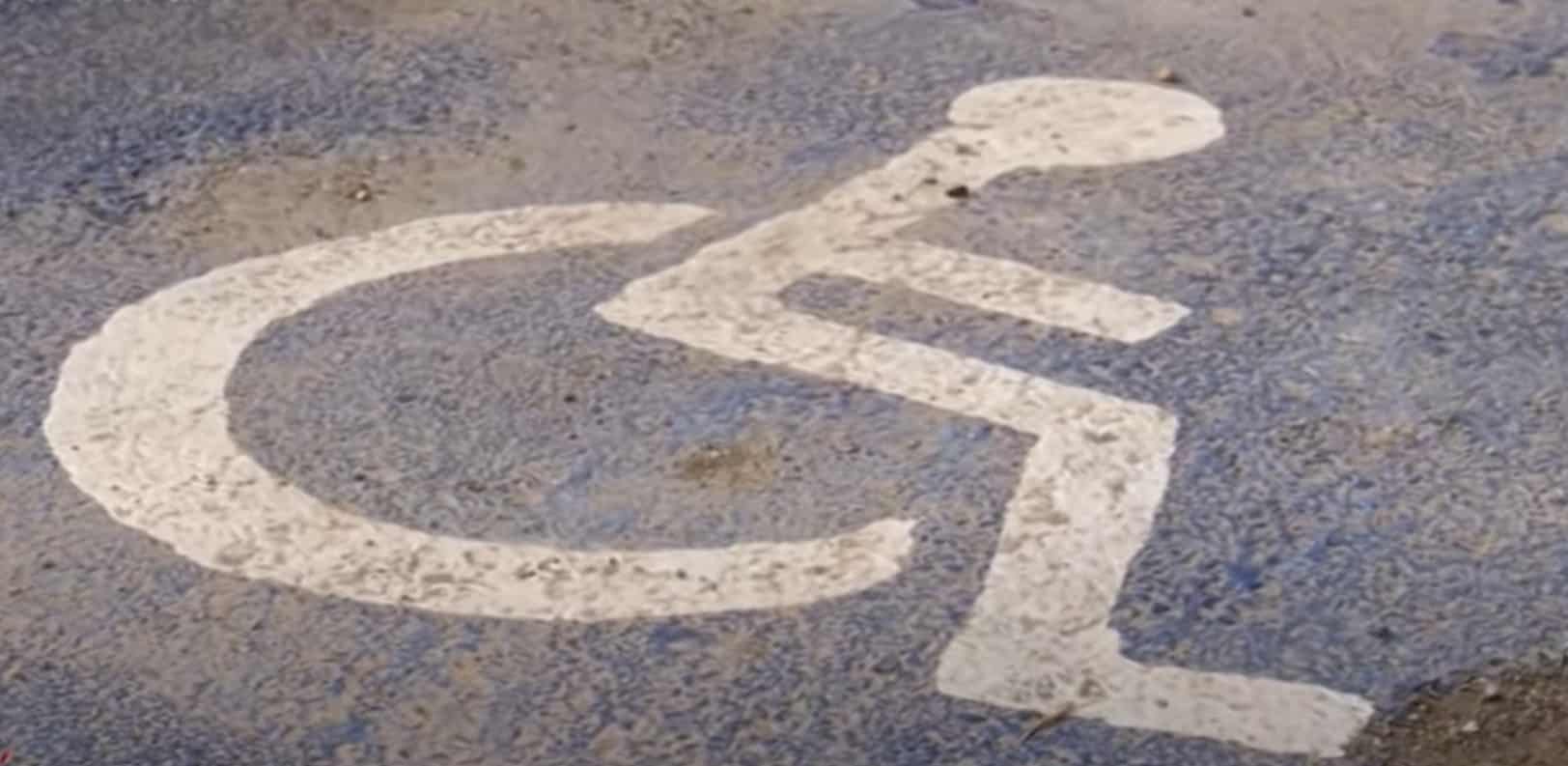
«Don't make me feel disabled. When you look down at me. There's just a little distance between us.
»Nothing else. Sit next to me." (Internet)
«In this day and age, and in societies governed by «political correctness,» certain traditional words or phrases, even when meant as a joke, would spark a storm of reactions. Phrases such as: «Well… even Maria the Lame knows that,» «Oh… come on, person with a disability… you can’t even do that?» or «Why are you walking like that? Are you disabled?» or «Some people really need a good thrashing…» reflect society’s «discriminatory» attitude toward fellow human beings who need its support.
The above phrases vividly capture the «rape» and «social fog»…which a group of our fellow human beings—who have been wronged by nature—have known and experienced. The belittlement, the contempt, exclusion, and rejection that characterized our attitude toward people with disabilities are gradually fading away, giving way to tolerance and respect for diversity.
The progress of our society has led us to reevaluate certain concepts upon which social stereotypes were built and the most inhumane prejudices took root. Among these concepts are «normality» and «normal people.».
Humanism and the virtue of tolerance have debunked the myth of the «normal person» and raised the banner of the necessity of the right to be different. Moreover, the concepts of progressiveness and freedom are enriched by our attitude—both individual and societal—toward disability in all its forms.
Progress and Freedom
Progressiveness, then, and the degree of freedom of an individual or a society depend in part on how they treat people with disabilities. Rejecting the old ways and breaking free from the stereotypical perceptions of the past toward vulnerable social groups positively shapes both the progressive character of society and that of each individual. Furthermore, freeing ourselves from the passions of the soul, from unfounded fears and prejudices toward people with special needs, makes us aware of the depth of our inner freedom.
All too often, individuals and societies are trapped in ways of thinking and prejudices that harm our «vulnerable» fellow human beings and bring shame upon our culture. On the contrary, Adopting groundbreaking positions on the essence of humanism frees us from the power of external forces and cultivates both our spiritual freedom and our self-determination. All of this, however, contributes to the acceptance of the uniqueness of human existence and to respect for individuality, whatever form it may take in a person (physical, mental, etc.).
The evocation, then, of compassionate feelings toward vulnerable individuals is the result of a profound transformation of the human psyche into attitudes and behaviors that elevate human «kindness» to a primary value. Progressiveness, however, along with the freedom of individuals and society, gives rise to altruism, shatter prejudices and stereotypes about people with disabilities, and protect us from the side effects of a peculiar and inhumane form of social racism.
Our Quality and Wealth
In the «knowledge society,» modernity, and the metaverse, quality and wealth—as concepts and states—have been enriched with new elements that tend to overturn traditional structures and relationships meaning and referred to.
The quality and wealth of an individual or a society are determined not so much by quantitative measures (material goods) as by the extent of «humanity» shown toward people with special needs. An individual or a society is judged to be developed not so much by a high or low standard of living but by the compassionate feelings toward those groups of people who face various problems (physical, mental, etc.). In other words, when a person or a society places those «disadvantaged» by nature at the center of their concern, then they can take pride in their civilized character.
Therefore, the legal and institutional framework of an organized state is not enough; a change in mindset and philosophy regarding the human dimension of our culture is also required.
This qualitative transformation of individuals and society fosters the human virtues of respect, altruism, and tolerance toward the «vulnerable.».
The acceptance, then, of «difference» and selfless support for people with disabilities presupposes and entails a deeper transformation that will gradually lead to the rejection of every form of modern «discrimination.».
The measure, then, of the culture and quality of an individual or a society is not the quantity of consumer goods but the an abundance of love and caring for those individuals who struggle to survive because they have fewer physical or mental resources than the rest of the «normal» population. A defining factor of our «wealth,» therefore, is the opportunities we provide to people with special needs for a quality life.
It just happens…
«And don't forget that it can happen to any of us./ You don't expect it to ever happen to you./ It just happens» (Internet)
The hypothetical «disabled person» in the verses above addresses every «potential» fellow human being, reminding them of the uncertainty and transience of human existence. And he not only acknowledges our transience and our inability to prevent «evil,» but also condemns our implicit indifference to potential danger: «You don’t expect it… it just happens.».
It chronicles the shared fate of all people who are constantly exposed to the unpredictable will of those forces that threaten our very existence.
After all, a person is not judged by the evil or the unexpected that threatens his life, but by the way he reacts to it. And this constitutes the ultimate criterion for evaluating his character. Our general philosophy of life and the principles by which we interpret our lives must be adapted to the randomness and «instability» of our environment. Prudence and humility are our only weapons.
A Strong Society
«From each according to his ability, to each according to his needs.» (Marx)
Although Marx’s position above was formulated as a proposition—a law of an ideal regime, state, or society— it nevertheless applies to our desirable attitude toward people with disabilities.
An attitude that must highlight the value of the uniqueness and individuality of each of our fellow human beings. Our society can and must be founded on the need for this recognition. A universal and pan-human society. A society that «will serve the powerless» rather than a «society of the powerful.».
In a «strong society,» the three pillars of a person’s qualitative transformation may be:
I acknowledge
I accept
»I'm changing"
By Ilias Giannakopoulos, philologist and graduate of the School of Philosophy in Athens