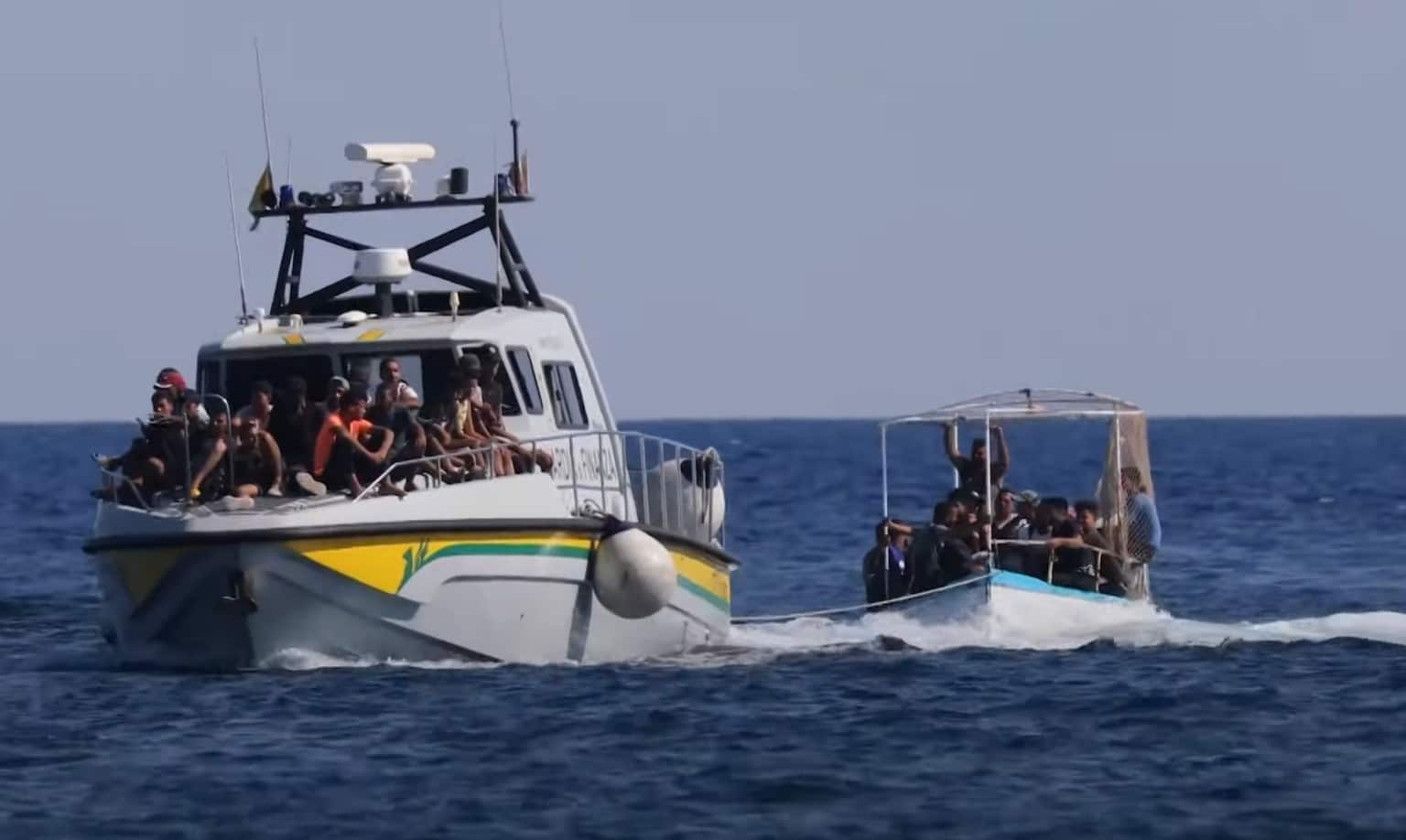
Over five hundred refugees and migrants rescued in recent days by two ships of non-governmental organisations operating in the Mediterranean have been transferred to ports in Italy.
The Berlin-based NGO SOS Humanity 1, the Berlin-based NGO SOS Humanity, arrived in the Adriatic city of Bari yesterday, Sunday, with 261 people.
While the Geo Barents, of the NGO Médecins Sans Frontières (MSF), docked in Salerno, south of Naples, with 248 refugees and migrants.
These people, women, men and children, were rescued off Libya while sailing in rubber and wooden boats.
Humanity 1 was carrying 93 minors, most of them unaccompanied, among others.
Many of the survivors bore visible signs of torture, and some reported being sexually assaulted, according to the crew. According to SOS Humanity, they come from Syria, Egypt, Cameroon and Ivory Coast.
Unlike in November, when NGO ships had to wait weeks because of a conflict with the new government of the far-right coalition in Rome, this time there was a quicker solution. Permits were given to dock in Salerno and Bari - the journey was much longer than to other Italian ports - after a few days.
However, according to SOS Humanity, it took 40 hours to cover the distance in a rough sea and many of the passengers were in great discomfort.
The Ministry of the Interior in Rome justified the decision by citing the fact that the ports and reception facilities for refugees and migrants in Sicily are facing overcrowding.
The Italian government has stated that its general policy on the migration issue remains unchanged, explaining that it has exceptionally allowed ships to dock due to the worsening weather; and has once again accused NGOs of ’encouraging« illegal immigration.
But migrants and refugees arrive on Italian shores even without any help. At the weekend, a fishing boat carrying around 400 people was spotted by the Italian coastguard and escorted to Rigio in Calabria, where it docked.
Non-governmental organisations have been at the forefront in recent years in search and rescue operations for refugees and migrants trying to reach a country in the European Union, often departing in anything but seaworthy vessels from the coasts of mainly Libya and Tunisia.
At least 17,000 people have died in the Mediterranean since 2014 trying to reach Europe, according to the UN.
In 2022, Italy recorded a large increase in migrant arrivals by sea, according to figures from the Ministry of Interior, which put the number at 97,000 people, compared to around 63,000 in 2021 and 32,000 in 2020.