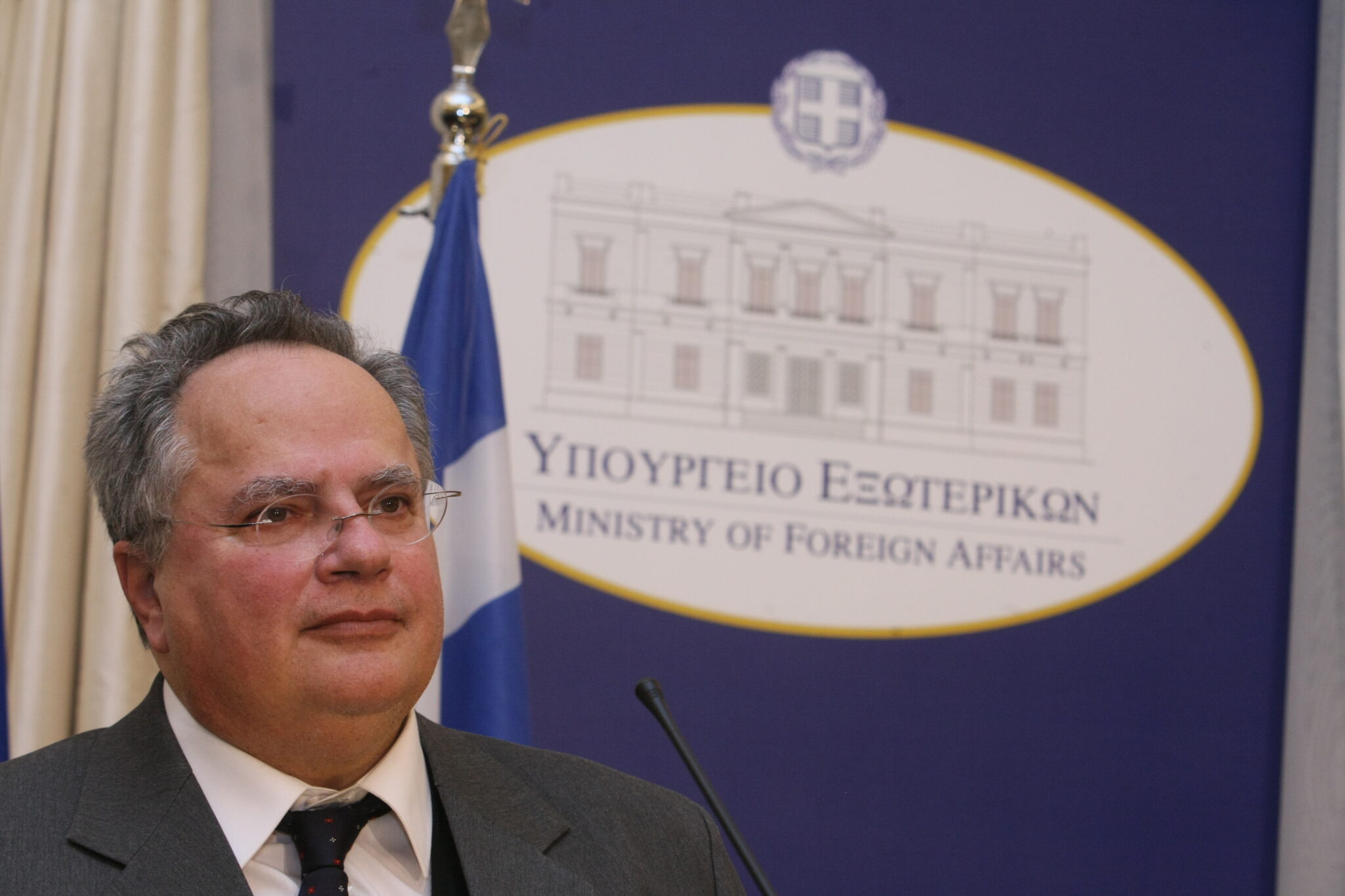
It was November 28, 2015, in the middle of the day, when I first set foot in Tehran. I had to travel over 40 hours in total, as I had covered the trilateral in Israel, so I flew Athens from Tel Aviv and from there to Istanbul with final destination Tehran. Alone, without being part of the delegation that would later come with the then Foreign Minister Nikos Kotzias, deputy ministers, civil servants and businessmen.
All of this, and much more that is not at present, came to mind with the events that are happening today with the «seizure» - detention of two Greek-owned ships by the Guards of the Islamic Revolution, in retaliation for the seizure of a ship carrying Iranian oil by the Greek authorities, at the behest of the US.
It was Greece's first step towards a multidimensional and proactive foreign policy aimed at serving its national interests first and foremost and becoming a pillar of stability and security. In addition, Iran, in the difficult times that Greece was going through due to the debt crisis as it did not have the financial means and ability to buy oil from other markets, provided oil on credit.
But apart from the diplomatic and economic benefits of a cooperation with Iran, Nikos Kotzias had an idea in his mind since the 1990s and he wrote about it in his 2010 book on foreign policy. An initiative has already been born, among many others, a particularly important, inexpensive but effective initiative. The creation of the Forum of Ancient Civilisations.
The «Forum of Ancient Civilizations» aimed, through the formulation of a broad and multifaceted, positive agenda of joint actions by ten states, to make culture a source of soft power and a key tool of a modern and multidimensional foreign policy. Moreover, the Forum's aim was to make international cultural cooperation a factor for economic development.
In addition to Greece, the forum was attended by China, Egypt, Bolivia, Iraq, Iran, Italy, Mexico, Peru and, shortly afterwards, Armenia. An initiative in the cultural field, between countries that are cradles of ancient civilisations and come from different geographical regions.
The fact that countries such as China, Egypt, Mexico and others coexisted at the same table with Greece created a comparative advantage on the international scene at a difficult time when Athens needed to be extroverted and to diversify its strategic aspirations.
That move by Nikos Kotzias did not please many European countries, nor the US, of course, but under the cloak of civilisation no one could object to such an initiative.
For the record, the first Ministerial Conference of the Forum of Ancient Civilisations was convened on 24 April 2017, marking the beginning of a multilateral cooperation of global significance.
The government of Alexis Tsipras with Nikos Kotzias in the Ministry of Foreign Affairs had chosen a multidimensional and proactive policy to bring Greece closer to countries that were not on the map of Greek diplomacy. And we are not talking about second-rate countries.
In this context, the Rhodes Conference on Security and Stability with the participation of almost 30 countries from Europe and the Arab World and the Conference on Religious Pluralism and Peaceful Coexistence in the Middle East, with the participation of world religious leaders and delegations of religions and faiths, were also established.
Of course all these initiatives were discredited by the Mitsotakis Government and abolished, punishing the Tsipras Government or himself? History will tell.
In diplomacy you are judged by the result of the peace, security and stability you can offer your country.
Nikos Kotzias has built the «wooden walls» of Greek diplomacy, which in difficult times for Greece has made the country a pillar of stability and an equal partner. Today, the Mitsotakis government, with its foreign policy, is reinventing the wheel of diplomacy, only unfortunately it is the last wheel of the cart.
Spyros Sideris is a journalist