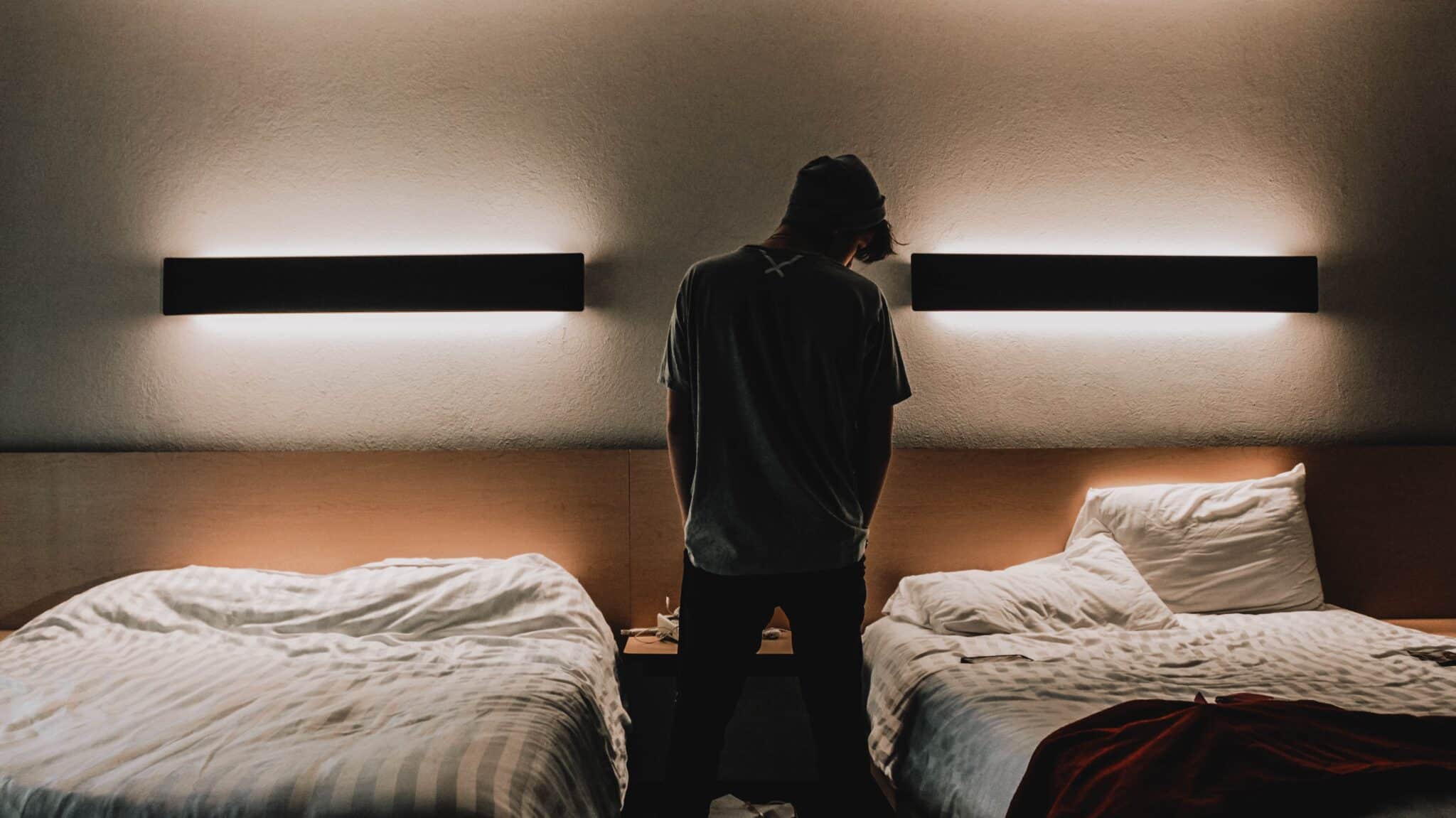
Are we tired of having our sheets stolen and of our partner's incessant snoring? Maybe it's time to consider a «sleep divorce.».
For many of us, getting a good night's rest is a challenge—and the pandemic has only made things worse. A survey by the Kaiser Family Foundation found that 36% of Americans said they were experiencing sleep problems due to the stress caused by the pandemic.
As much as we love cuddling with our partner, the last thing we need when we finally fall asleep is to be woken up by the light of an iPad or a wandering elbow in our face.
«The key, however, is to make this decision as a couple and make it clear that the decision is for the benefit of your relationship and not a sign of abandonment,» he adds.
Jennifer Colburn, a doctoral student in Austria, is among those married couples who go to bed alone.
She and her husband often live apart when Colburn is collecting (scientific) data. When she returned from one such research trip in the middle of the pandemic, the couple tried to sleep side by side in a small double bed.
«We have a particularly bad situation because I have several sleep disorders,» she tells HuffPost. «I no longer sleepwalk or scream in my sleep now that I have a CPAP machine to treat my sleep apnea, but I still have restless leg syndrome and I still kick, grumble, and steal blankets.».
They recently moved to a new place and decided to start sleeping in separate beds. Now they both rest better.
«To be honest, our relationship is the best it has ever been in the 10 years we have been married,» she says. «There is a stigma attached to sleeping separately, but your partner's fatigue and dissatisfaction cannot be good for your relationship. Finding that balance of being independent but needing each other without being codependent (in terms of sleep) is a fine line to walk, and I think having your own personal space can help with that.».
Indeed, research shows that When we are rested, we communicate better, are happier, and have greater empathy. – all the important characteristics for developing and maintaining healthy, long-term relationships. If we can add an extra bed or an extra room, separate sleeping arrangements are a very sweet offer, says Wendy Troxel.
«There are times when it makes sense for a couple to ”split up and win” by sleeping separately,» he says.
For example, he talks about parents of newborns who are sleep deprived, «giving each partner an occasional break to spend the night in a separate room, while the other parent takes on nighttime infant care duties is a great way to ensure that both parents do not experience chronic sleep deprivation.».
This type of sleep can also be beneficial if we and our partner have different sleep cycles, says Jennifer Adams, author of Sleeping Apart Not Falling Apart.
This was one of the main reasons why Adams and her husband decided to sleep in separate rooms. Her husband wakes up early in the morning, while she is a ”night owl.”.
«I would like to go to bed and read when he was asleep and (he) had to wake up early in the morning for work, and then when he woke up in the morning, he would get up, get dressed, and be ready for work (and) he would wake me up,» she said.
Upon waking, both would be left with (a sense of) guilt and some resentment—something that is a common experience among people who sleep together. A 2013 study from the University of California, Berkeley found that a partner's restless night caused by disturbances from the other partner can lead to conflicts in the relationship the next day.
Another study showed that Sleep problems and relationship problems tend to occur simultaneously.
«The reality is that our sleep cycle is linked to our cardiac system,» says Adams. «It is incredibly difficult to change our built-in sleep rhythms to accommodate someone else's cycles.».
All this talk of «sleep divorce» sounds promising, but let's turn to the question that's on everyone's mind: What about sex? Does sleeping in separate rooms or beds affect a couple's sex life?;
«Not at all,» says Rachel Fouqua, a woman from Colorado who decided to get a «sleep divorce» from her boyfriend over the summer due to some rather incompatible sleeping habits. (He sleeps diagonally and thumps and kicks all night long. He also sleeps and talks...)
«I think sleeping separately allows us to decide when we want to cuddle—we just get into each other's beds,» she said. «Sleeping in separate beds has increased and improved our sex life.».
If nothing else, our absence at night makes us more tender.
«We wake up (and) miss each other because we don't ”mess around” with each other all night,» she says. «It makes us crave physical affection a little more, especially in the mornings. We both work against (normal) work schedules, so this works for us.».
Saiya Kansagra, associate professor at Duke University Medical Center and sleep health expert for Mattress Firm, says that such a decision will not affect the couple's intimacy.
«Really, beds should only be used for two things – sleep and sex», he said. «When you enter your bedroom, your mind should start focusing on sleep or intimacy, not on things like work or watching TV.».
If we acknowledge this, it can help keep intimacy a priority in the bedroom, should we proceed with a «sleep divorce,» he adds.
For couples who don't want to get a «sleep divorce» but want to improve their companionship, Synchronizing sleep schedules can positively affect their intimacy.. (Of course, this advice is not very useful for people who work with different work schedules).
«If we can make this adjustment, some great companion activities that will help us synchronize our sleep routines include drinking herbal tea to relax, getting a massage, and getting closer,» he says.
Whatever adjustments we make to our sleeping arrangements with our partner—sleeping separately, synchronizing schedules—let's make sure we communicate our expectations and boundaries in our relationship with our partner, says Adams.
«If we sleep separately because we need our sleep, our partner should probably understand... We all need sleep,» he says. «If we sleep separately to escape our partner, then we should probably read another article.».