If the history of this place is not a tragedy, it is certainly a tasteless, never-ending revue, where the audience pays for a ticket to watch the same old con artists steal their clothes right off the clothesline. And now, after taking away our trains, forests, coastlines, schools, communications, and electricity, they’ve decided to take away our water faucets as well.
Oh, you godless people, water! The only thing that falls from the sky for free and isn't produced in any free-market factory.
If one analyzes the modern Greek ruling class through the lens of a ruthless sociological dissection, one will find that the only thing that has distinguished it over time is industrial production «reformist» pretexts for plundering the collective wealth. So when you hear the so-called «efficient state» spouting nonsense about «administrative restructuring» and «rational management» of water, don’t look for technocratic truths. Check your pockets and your water meter right away. Because there are no substitutes for water. It’s not like a pair of pants where you can say, «I won’t buy it if it gets more expensive,» nor is it like cable TV that you can cancel if you don’t like the programming. It is the very foundation of our biological existence. And when those in power attempt to subject life itself to the laws of dividends and corporate profitability, they are not carrying out administrative reform; they are committing a fundamental institutional perversion.
Neoliberalism is cowardly. It never comes right out and tells you, «I’m stealing your water.» It hides behind incomprehensible jargon, complex laws, and bureaucratic tricks, following the golden formula: consolidation, valuation, and handover. So how do you privatize water in Greece without people taking to the streets with rakes? Well, of course, you don’t privatize it outright. You call it «consolidation of agencies.» You take the municipal services, the DEYAs, and the farmers’ organizations, and transfer them all as a package to the two publicly traded corporations listed on the Stock Exchange, EYDAP and EYATH.
«But the government owns the shares!» the system’s eager mouthpieces will shriek. What a touching fairy tale. Except that these companies, being publicly traded, are governed by corporate law and are legally obligated to generate profits for their private shareholders. Their goal isn’t public health—it’s dividends. So they’re building up a massive «corporate fortune» from networks, reservoirs, and pumping stations. And why are they building it? So that tomorrow, every «investor» can easily value it, price it high, and pocket the profits when the time is right. Under capitalism, whoever controls management and investments also owns the asset. All that talk about «public ownership» is just legalistic nonsense meant to lull the common folk to sleep.
At the same time, they’re dismantling whatever local accountability existed. In the past, if the water supply was cut off in a village, residents would go to the mayor and pelt him with stones. Now, decision-making is being shifted to the central offices in Athens and Thessaloniki and to the so-called «Independent Authorities.» This is the most insidious ploy of neoliberal totalitarianism: they transfer pricing authority to detached regulatory agencies, so that when the bill goes through the roof, the government can wash its hands of the matter and tell you, «It’s the Regulatory Authority’s algorithm’s fault!» And just like that, under the principle of «full cost recovery,» water in mountainous and island regions will be sold as if it were liquid gold, and if you can’t afford to pay, the market will simply «self-regulate» by cutting you off.
So don’t go looking to see when the privatization will be announced with great fanfare. They’re following the «DEI Model» to the letter: you consolidate the monopoly into two companies, have them operate like hedge funds, and then gradually sell off your stake.
But the ramifications of this crime do not stop at the home of the middle-class consumer; they violently invade the farmer’s field and the very geopolitics of the future. They are dismantling the Land Improvement Organizations (TOEB/GOEB), uprooting the collective knowledge accumulated by farmers over decades. Their forced incorporation into anonymous corporations expropriates the wealth created by the sweat of generations of farmers and transforms the producer from a co-manager of his land into a desperate customer of a multinational corporation. When farmers can no longer irrigate their fields because the «corporate invoice» will siphon off whatever profit they have, primary production will collapse, the countryside will be completely deserted, and the country will end up importing even tomatoes from the cartels of the global agribusiness. That is their true goal: the violent concentration of land ownership.
And if you’re wondering how they’ll justify all of this, the answer is the ever-present, convenient «state of emergency.» Water scarcity and the climate crisis are real, serious problems. But in the hands of this clique, they are turned into the ultimate institutional tool. Under the pretext of urgency, all regular planning is scrapped, transparency is bypassed, and a feeding frenzy of direct contracts is set up for «our own people»—for desalination plants, for pharaonic transportation projects, and for «smart» water meters. The climate threat is rebranded as an «investment opportunity» for the local oligarchy.
Furthermore, there is also a dark, class-based implication that is rarely discussed: the creation of water ghettos. When water is subject to market rules, its quality will reflect the class structure of society. Clean, tested, high-quality water for affluent neighborhoods and tourist areas that can afford it, and substandard water, meeting only minimal standards, for working-class neighborhoods and border areas. Water ceases to be the great equalizer of public health and becomes a class privilege.
The European experience shows us that all the cities that tried this poison—from Thatcher’s Britain to Paris and Berlin—ended up with ruined networks, contaminated resources, and exorbitantly expensive water, only to rush later to remunicipalize them. Even our own Council of State has repeatedly ruled this scheme unconstitutional. But the bureaucratic state pays no heed to constitutions. They’re not incompetent—don’t be fooled. They’re extremely capable and methodical when it comes to serving the interests of the local and international oligarchy.
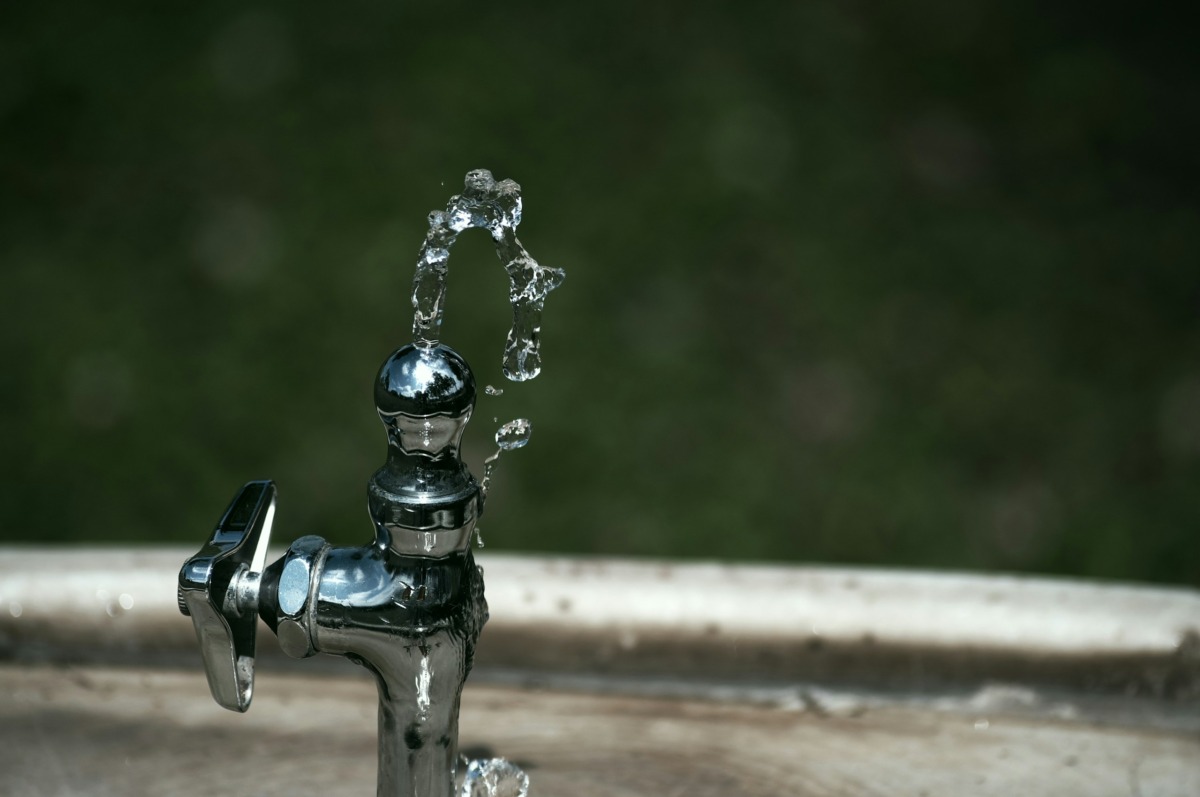
That is why the only serious response is not to beg the state to retain the 51% of the shares, but to completely overturn this corporate model. Water must remain a public, social good under genuine democratic control. Everything else is just a ploy to keep us thirsty and coming back to the tap—only soon, even the tap will require a coin to operate.