The Christmas bread of Asia Minor was seven-flavoured or ‘atazymo', which means fermented seven times.
In Adramitino Bay, opposite the north and east of Lesvos, they «caught» the yeast long before kneading it with «rovithozumo» and basil! According to records from Asia Minor refugees in Lesvos, chickpeas were soaked in holy water and basil. They were then left for seven days next to the icons and then left to soak in a turban. Whatever was left over was not thrown away but «given to the chickens».
This was followed by the first kneading with a little flour, in order to make a soft and thick dough. This dough was «sealed» with their hands and left covered in a warm place «to rise».
All in all, they puffed the dough in the same way, adding water and flour each time. The seventh time they added a little oil, spices (nutmeg, cinnamon) and a little sugar.
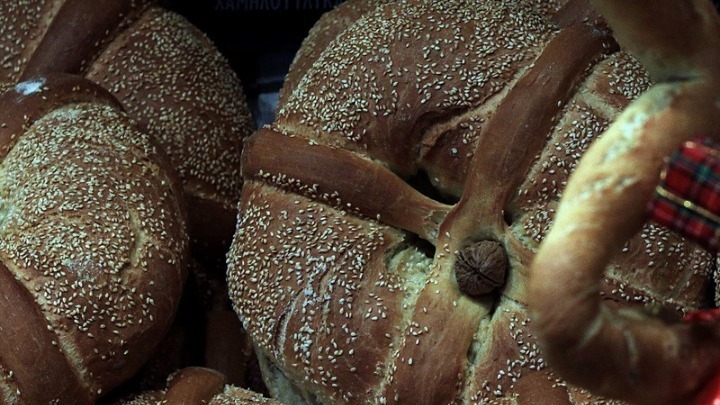
After the seventh kneading, the dough was decorated with nuts and sesame seeds, while in the southernmost parts of the Gulf of Adramion near Aibali it was also sealed with the «etelia», a wooden round seal with the two-headed eagle.
They were eaten on Christmas morning after church with the first bite dipped in sweet smooth wine.
Until the last bite of Christmas Bread, no knife was used and any crumbs went to the «uprights»!
This Asia Minor custom is still observed today 100 years after the catastrophe in many houses of Lesvos, especially in those with residents of refugee origin.