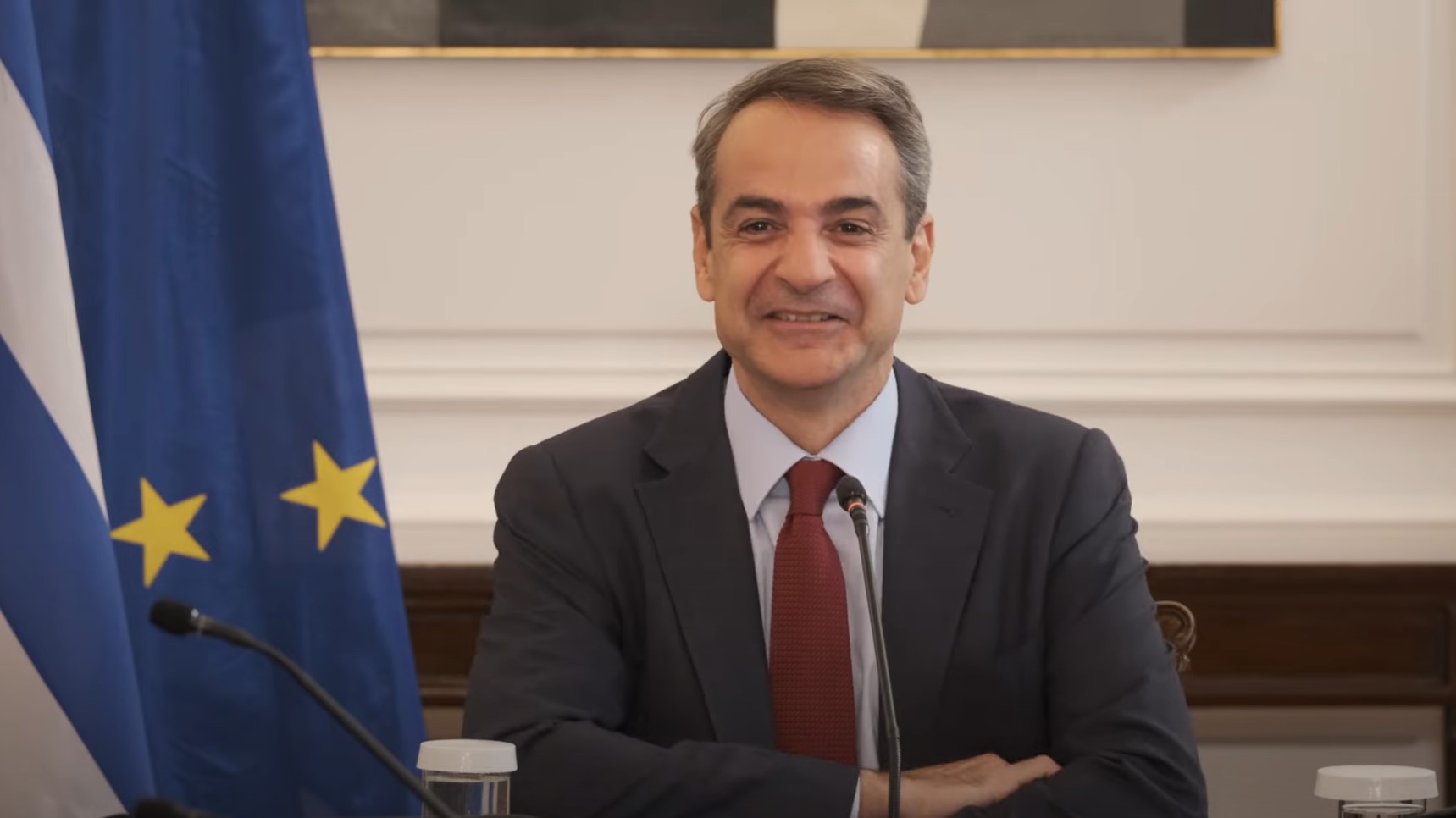
Prime Minister Kyriakos Mitsotakis held a meeting with the mayors of Eastern Attica after visiting the offices of the Eastern Attica Subregional Administration in Pallini at noon.
«»The funds allocated to local governments over the past three years have far exceeded the resources disbursed during the previous decade,” the prime minister noted in his remarks during the meeting.
Referring to the development potential of eastern Attica, he emphasized the need for a comprehensive plan that would capitalize on the region’s strengths.
«Eastern Attica seems to lack a master plan—a comprehensive development plan— one that would cover all aspects of the discussion regarding the interventions that need to be undertaken at the national, regional, or local levels. A comprehensive plan that will outline priorities, financing tools, and, above all, synergies between the various initiatives we will launch,» he emphasized.
«We are conducting a comprehensive review of the operational framework of the decentralized administrations, with some initial measures that may be implemented soon: streamlining bureaucracy, primarily, and a more profound, structural reform that will also serve as our campaign pledge for the second four-year term regarding the organization of the state’s levels of governance,» added Kyriakos Mitsotakis.
The prime minister also focused on the governability of municipalities due to the problems caused by the simple proportional representation electoral system: «We’ve taken steps; we have a new election law, but as you can see, governability—especially when we have to manage crises—and stability must be non-negotiable priorities in terms of the support they receive from the institutional framework, in this case from the electoral law,» while reiterating his commitment to holding elections at the end of the four-year term. «It is a Greek paradox that the prime minister’s commitment to hold elections at the end of the four-year term is considered an electoral surprise. But that is what will happen. That is why we have plenty of time ahead of us to carry out our work, whether we are talking about institutional reforms or, primarily, the launch, continuation, and completion of major projects at the local, regional, and national levels.’.
Finally, referring to the impact of the energy crisis, Kyriakos Mitsotakis noted: «We are also facing an unprecedented energy crisis, the likes of which we have not experienced in 50 years, and for which we, as the central government, must be prepared to maintain the necessary reserves to continue supporting businesses, households, and government agencies; but we are confident in our capabilities and our planning that, no matter how difficult the winter may be, we have faced many difficulties during the three years we have been in government, and we will overcome this one as well.».
Makis Voridis: Institutional Measures to Address the Symptoms of a Lack of Governance
Interior Minister Makis Voridis highlighted the institutional measures the government has taken to address the symptoms of political instability caused by the simple proportional representation system in local self-, while also detailing the steps that have been taken to reform the functioning of decentralized administrations.
Mr. Voridis also pointed out that the recently enacted legislative framework governing municipal building departments, combined with the creation of 150 permanent engineering positions, restores their operational capacity. He also noted that a large portion of the 2023 annual recruitment plan will be allocated to local government, with an emphasis on staffing municipalities with specialized scientific personnel, which will significantly aid their operations.
Finally, he praised the significant financial support the government provides to local governments, with a view to fostering the development of local communities.
Stelios Petsas: Projects totaling 189 million euros through the Antonis Tritsis program
Deputy Minister of the Interior Stelios Petsas emphasized the close cooperation between the central government and local authorities, as well as the consistent use of the financial tools available to support local authorities.Stelios Petsas.
«Through the “Antonis Tritsis” program, projects totaling 189 million euros have been included, ranging from traditional infrastructure projects (e.g., rural road construction in Lavrio) urban revitalization projects (e.g., the redevelopment of Drosia in Dionysos, the redevelopment of Nea Makri in Marathon, and Lathia Park in Acharnes), as well as projects aimed at reducing the environmental footprint (e.g., electric mobility in Pallini and Paiania, recycling in Vari-Voula-Vouliagmeni) and digital transformation (e.g., Markopoulo). In addition, 63 million euros have been allocated to cover emergency needs, ranging from the pandemic to overdue obligations and lifeguard services. As for energy costs, we have allocated 218 million euros to local governments in the first half of the year, compared to an estimated annual additional cost of 270 million euros to cushion the impact.’.
In addition, Mr. Petsas emphasized the importance of the new call for road construction projects—with a focus on road safety—totaling 335 million euros, which is funded by the Recovery Fund and is aimed at municipalities and regions.
George Karagiannis: Projects totaling approximately 2 billion euros in eastern Attica
The government’s plan for a comprehensive upgrade of infrastructure and quality of life for more than 400,000 residents in eastern Attica was outlined by the Deputy Minister responsible for infrastructure, George Karagiannis.
«Our investments total approximately 2 billion euros and resolve long-standing issues, while at the same time creating the growth prospects the region needs. We are moving forward with road projects worth approximately 400 million euros and rail projects worth 700 million euros. In the coming years, the Attica Highway will extend to Rafina and Lavrio, while these two major ports will be connected via the commuter rail system to the rest of the network, offering better and safer transportation, while also paving the way the way for the effective utilization of the potential of both ports.
»With flood control projects totaling approximately 300 million euros, we are regulating dozens of streams and protecting areas such as Rafina, Marathon, and Nea Makri against flooding,” he noted.
Mr. Karagiannis added that, at the same time, «the largest investment program for sewerage projects in eastern Attica, amounting to approximately 800 million euros,» is currently underway.
Sofia Zacharaki: The region has a hinterland full of alternative tourism options
Deputy Minister of Tourism Sofia Zacharaki spoke about the potential for further development of tourism in eastern Attica, through an expanded range of services and in collaboration with the municipalities.
«Beyond its famous beaches, its marine tourism activities—including marinas and the second-largest port in Rafina—the spectacular growth of cruise tourism in Lavrio, the potential for cultural, religious, and conference tourism—as well as health tourism, which we are actively promoting— the region boasts a hinterland full of alternative tourism options, ranging from wine tourism to hiking along the network of trails and nature-based tourism. It also offers many opportunities for city breaks and hosting digital nomads, as well as culinary and wine tourism, and a wide range of connections between the primary sector and tourism. The Tourism Vocational Training Institute in Anavyssos truly demonstrates the power of education and training to lead to good jobs and the continuous improvement of the tourism product. »Our goal is to continuously improve it and, of course, to leverage dual education to enhance tourism education,” stated Ms. Zacharaki.
«The existence of—and the upcoming expansion of—enhanced transportation infrastructure (Athens International Airport, road network) also provides quick access to destinations from its ports, while the region is also attracting significant investment interest, with direct investments in the hotel sector,» he added.
The meeting was attended by the mayor of Acharnes, Spyros Vrettos; the mayor of Vari–Voula–Vouliagmeni, Grigoris Konstantellos; the mayor of Dionysos, Giannis Kalafatelis; the mayor of Kropia, Dimitris Kiouzis; the mayor of Lavreotiki, Dimitris Loukas; the mayor of Marathon, Stergios Tsirkas; the mayor of Paiania, Isidoros Madis; the mayor of Pallini, Athanasios Zoutsos; the mayor of Rafina–Pikermi, Evangelos Bournous; the mayor of Saronikos, Petros Filippou; the mayor of Spata–Artemis, Dimitris Markou; the mayor of Oropos, Giorgos Yiasimakis, and the deputy mayor of Markopoulo, Dimitris Koliavasilis. Also in attendance were the New Democracy members of parliament for Eastern Attica, Georgia Martinou, George Vlachos, and Vasilis Oikonomou; the Regional Governor of Attica, George Patoulis; and the Secretary of the New Democracy Political Committee, Pavlos Marinakis.