«I hope that at some point, even at the European level, we will be able to reach an agreement a standard vaccination certificate format for all European countries», he said in his interview on the agency's television channel Bloomberg and the journalist John Micklethwait, the prime minister Kyriakos Mitsotakis.
As he explained, «essentially, a vaccination certificate will allow entry into Greece, »without anyone having to show a negative COVID test or be subject to quarantine restrictions.". The prime minister discussed the progress of the vaccination campaign and expressed the hope that By summer, a significant percentage of the Greek population will have been vaccinated, and we will be able to reopen the country to tourism in complete safety. He also expressed optimism about the prospect of a strong recovery in the second quarter of 2021. He spoke about investments, about the early repayment of loan installments to the IMF but also regarding Greek-Turkish relations.
Regarding the vaccination certificate, the prime minister noted that «many EU member states are interested in further exploring this idea. And I believe the reason is that their citizens want to travel and want to make travel as easy as possible, especially during the summer holidays.».
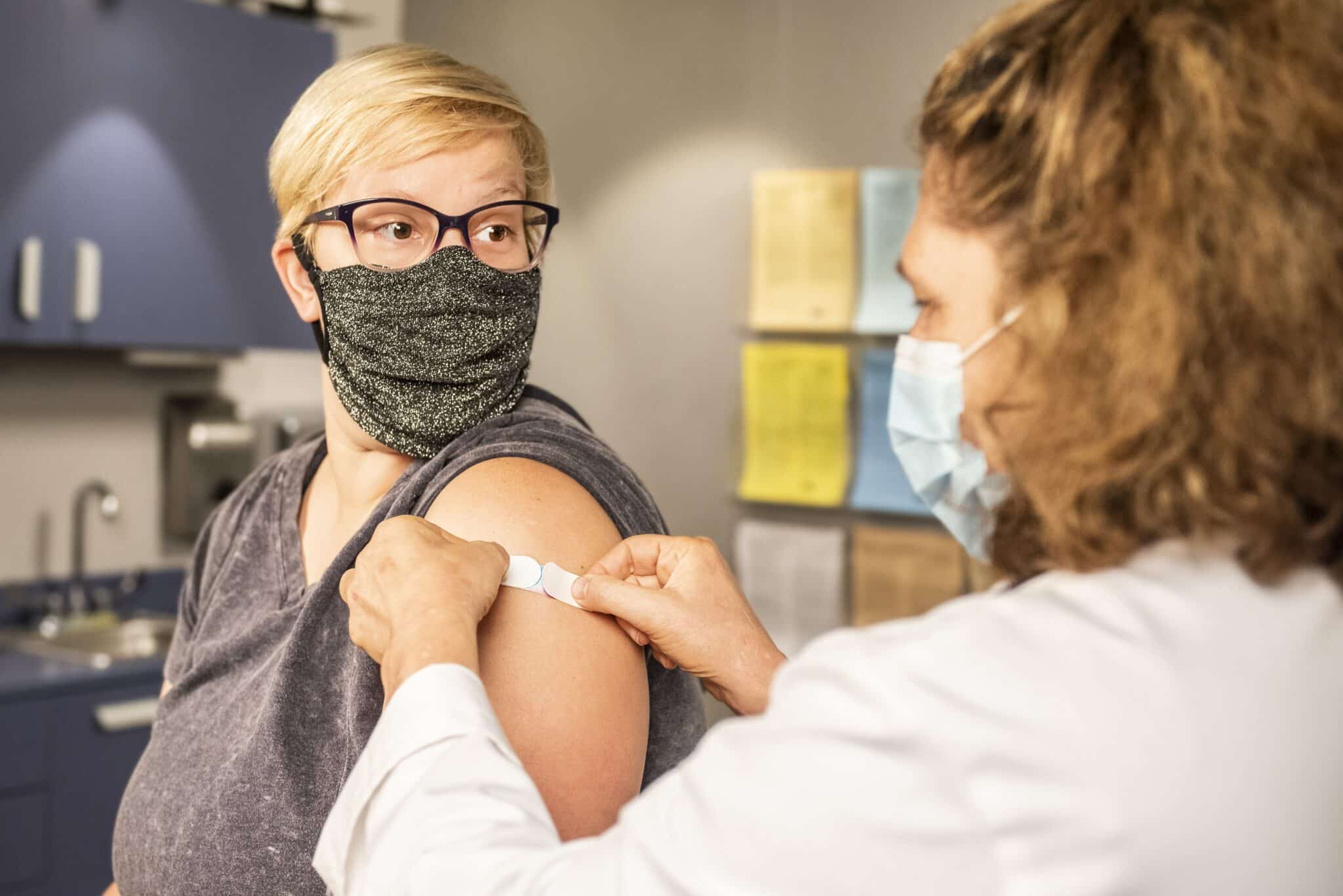
He emphasized that «at this moment, Our priority is to vaccinate the oldest citizens. Next, we will move on to citizens with underlying medical conditions. Once these two population groups have been vaccinated, we will then set the priorities for vaccination. However, all things being equal, by then we will have more vaccines and will be able to administer them according to demand in Greece. »We hope that a significant percentage of the population will have been vaccinated by summer.", Kyriakos Mitsotakis emphasized, noting at the same time that «we are moving forward with the vaccination process at a faster pace than other European countries.».
On the consequences of the lockdown in Greece
«We have made Greece a more attractive destination for foreign investment. »Many investors are turning their attention to Greece right now, and we want to be extremely consistent in the signals we send to the markets,« the prime minister also stated. Responding to a question about the impact of the lockdown on the Greek economy, he said: “We supported jobs. There has been no increase in unemployment rates »so far, which is particularly encouraging. Our goal is always to keep the economy’s productive base intact so that we can return to normalcy as quickly as possible.".
«We managed to keep retail stores open for three weeks in January, with very, very encouraging results. So I hope that after February, which will be difficult, »March will, all things considered, be a better month.", the prime minister also noted.
Regarding the early repayment of IMF loans
Regarding the early repayment of the IMF loans, as Mr. Mitsotakis pointed out, «we had said that we would do so, and in this way we are absolutely ensuring that we keep our word.».
«We will repay 3.3 billion early, out of a total of 5.1 billion that we have borrowed from the IMF. I believe it is very important to be consistent with the markets. We have been rewarded with historically low interest rates. Obviously, this is also linked to the significant amount of liquidity available, but I believe that »It is also a vote of confidence in this government's ability to implement real reforms in the midst of a pandemic.", the prime minister said pointedly.
On Mario Draghi's appointment as Prime Minister of Italy
Kyriakos Mitsotakis was also asked to comment on her assumption of the premiership Italy by Mario Draghi: «This is an excellent development for the entire European Union. I happen to know him personally, because I met him during the Greek crisis. I believe he brings a great deal of credibility to the table. He will bring tremendous credibility to the European Council. And I firmly believe that there is a common agenda (with Greece), a reform agenda, which I am certain he will implement on Italy’s part. »There are some areas of common ground with Greece: the green transition, the use of renewable energy sources, and synergies in the energy sector more broadly.”.
On Greek-Turkish Relations
«2020 was a difficult year in terms of Turkey, with a great deal of tension. I hope that 2021 will be a better year. I believe we have made it absolutely clear to Turkey that Developments at the bilateral level will also affect Turkey's broader relationship with the European Union. Sanctions are never an end in themselves, but I believe that the threat of sanctions, provided it is credible, can compel states to change their behavior. »I hope this will happen with regard to Turkey,” the prime minister said in response to a related question. He also spoke about parallel support from the Greek side, alliances and the formation of new alliances with countries that «think similarly to us and respect international law.».
Here is the Prime Minister's full interview:
John Micklethwait: We are joined by Kyriakos Mitsotakis, Prime Minister of Greece. Thank you very much for agreeing to this interview with Bloomberg. I’m very glad to see you. I was wondering—and I’d like to start by talking about the summer. Many people, myself included, would like to visit Greece. What kind of system will be in place for those who have been vaccinated? Will there be other agreements like the one currently being negotiated with Israel, which provides that vaccinated individuals will be able to enter Greece almost automatically?;
Kyriakos Mitsotakis: Thank you for your hospitality. I was the first European leader to raise the issue of a single European vaccination certificate, which will make travel easier, once a significant percentage of the population has been vaccinated.
Essentially, a vaccination certificate will allow entry into Greece without the need to present a negative COVID test or undergo quarantine restrictions. And we intend to proceed within the same framework that we agreed upon in principle with Israel as well. This vaccination certificate will be accepted, with the aim of facilitating travel from Israel to Greece. And I hope that at some point, at the European level as well, we will be able to agree on a common format for a vaccination certificate for all European countries. People will want to travel. To me, it doesn’t make sense not to facilitate travel—to the extent, of course, that we feel comfortable welcoming those who have been vaccinated.
For those who have not been vaccinated, the most likely scenario is that they will be required to provide proof of a negative test. But for those who have been vaccinated, we want to make it as easy as possible for them to travel to Greece. I see that many EU member states are interested in exploring this idea further. And I believe the reason is that their citizens want to travel and want to make travel as easy as possible, especially during the summer holidays.
John Micklethwait: Have you taken specific steps regarding the destinations people want to visit in Greece? What about the islands? Will you vaccinate this population first? Do you prioritize the economy when setting vaccination priorities?;
Kyriakos Mitsotakis: To begin with, Greece generally fared better than other European countries in dealing with the pandemic, which was unexpected in a sense, given that the country faced the pandemic with an underfunded healthcare system.
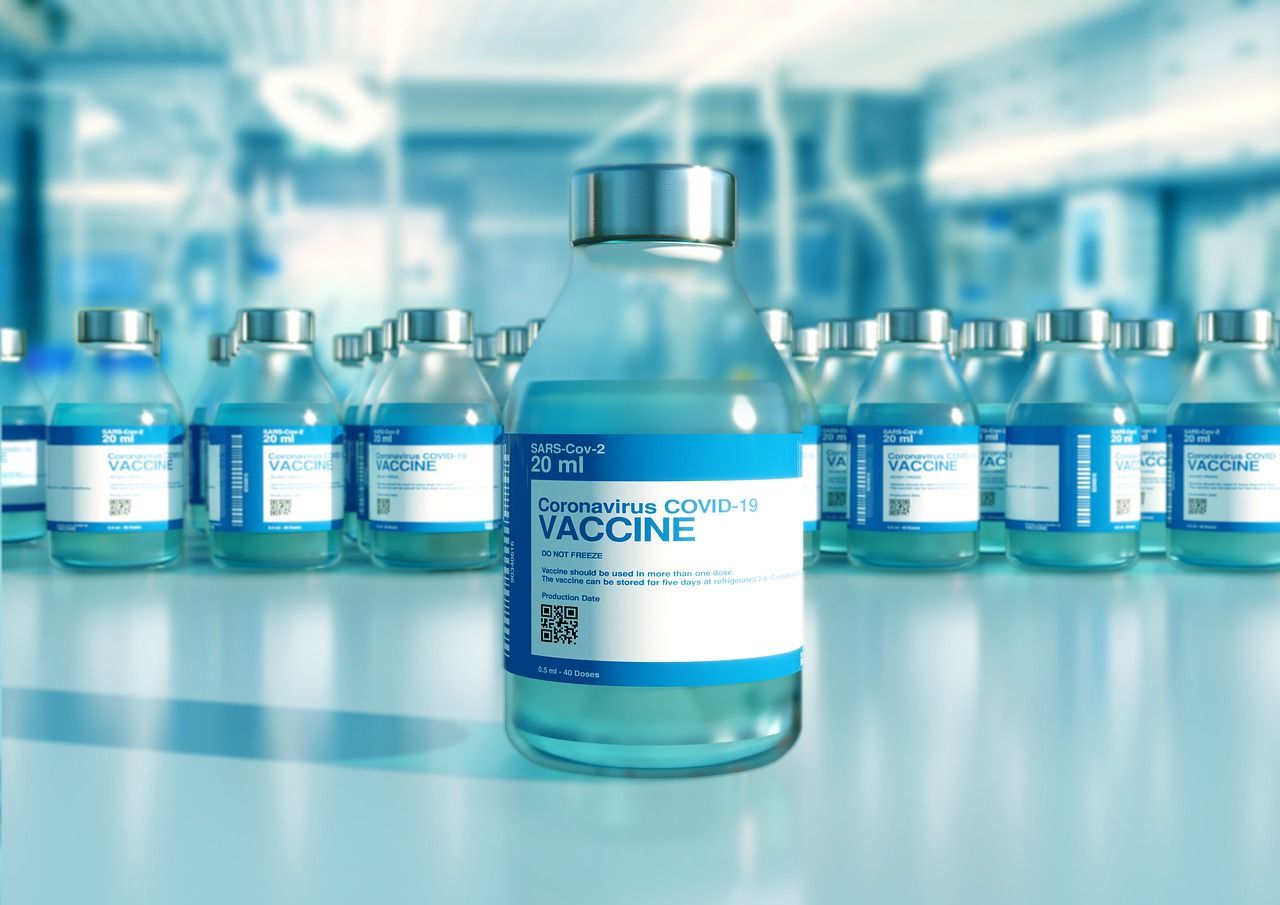
If you look at the statistics, however, we’ve fared better than most European countries. And we’re moving forward with the vaccination process at a faster pace than other European countries. It is a fully digitized process, a fact that has surprised many Greeks. And so far, we’ve been able to vaccinate citizens at a relatively fast pace. Of course, we depend to a very significant extent on the number of vaccines we receive from Europe. I expect an increase in the number of vaccines we will receive starting in the second quarter.
Right now, our priority is to vaccinate the oldest members of the population. Next, we will move on to citizens with underlying health conditions. Once these two population groups have been vaccinated, we will then set our vaccination priorities. However, all things being equal, by then we will have more vaccines and will be able to administer them according to demand in Greece. We hope that by summer, a significant percentage of the Greek population will have been vaccinated. Let me remind you that we reopened our tourism sector last year as well, and we did so in a completely safe manner.
In fact, last summer, we didn’t have the tools we have today. There was no vaccine, and as far as tests were concerned, we had only a limited number available. Now we have both the protection of the vaccine and greater testing capacity, which is, of course, extremely important when you’re trying to reopen the country to tourism.
John Micklethwait: In that sense, are you frustrated with the European Union? Greece did an excellent job of handling the first wave of the pandemic. And now, with the vaccination campaign, you’re at about 6% of the population. But due to the slow rollout of vaccines in the country, there appears to be a vaccine supply issue, and it seems that Brussels is to blame. To what extent do you believe the European Commission is responsible?;
Kyriakos Mitsotakis: I have been a strong advocate of the idea that Europe should purchase vaccines at the European level and then distribute them to all member statesproportionally to their populations. Essentially, this way, Europe does not discriminate between rich and poor countries, or between large and small countries.
As a medium-sized country, we benefit from this approach. Of course, there is no doubt that there have been issues regarding the implementation of this project. And I believe that the President of the European Commission courageously took on her share of the responsibility. Now we must look ahead and ensure that once we have approval for the other vaccines as well, the approval process will proceed very, very quickly, and we will not fall behind other countries in terms of how quickly we receive the vaccines.
I am certain that in Brussels, at the administrative and bureaucratic levels, we have learned from what happened, and we must look ahead so that in March and April, with the approval of the new vaccines, we do not experience further delays in delivery to the member states. We have the capacity to produce far more vaccines than we are currently producing, and the infrastructure is in place. The issue is simply getting the vaccines into our hands. At the end of the day, this is a European decision.
John Micklethwait: Could you give us an idea of the financial cost involved? I understand that the first quarter looks like it will be difficult for Greece, and the shortage of vaccines is a major factor.
Kyriakos Mitsotakis: Every time the economy shuts down, the cost is high. Greece is no exception to this rule. It’s no different. We’re going to have a severe recession in 2020.
And the picture for the first quarter won’t be as good as we expected two months ago. But then again, we’re no different (from other countries) in this regard; we’re no exception. If nothing else, we are currently, in a sense, in a third lockdown. All things being equal, in two weeks there will be a significant decrease in the number of cases. Then we will be in a position to work out a plan for reopening the economy, which depends to a large extent on the retail sector. Obviously, every time the retail sector shuts down, the country’s GDP takes a significant hit.
But we have also supported incomes. We have supported jobs. There has been no increase in unemployment rates so far, which is particularly encouraging. Our goal is always to keep the economy’s productive base intact so that we can return to normalcy as quickly as possible. We managed to keep retail stores open for three weeks in January, with very encouraging results. I therefore hope that after February—which will be difficult—March will, all things being equal, be a better month.
But other countries are under much stricter lockdowns right now. The first quarter will be difficult. However, I am hopeful that, in some way, a strong recovery will follow in the second quarter of 2021.
John Micklethwait: I'll come back to this topic in a moment. Do you think this will be Greece's last lockdown?;
Kyriakos Mitsotakis: I certainly hope so. And I’ll explain why. First of all, we’re building a vaccination wall. We’re not vaccinating without setting priorities. We’re vaccinating the most vulnerable—the people who are most likely to need an ICU bed or even lose their lives. The challenge has always been to avoid putting too much strain on the healthcare system. We are prioritizing the vaccination of a significant percentage of people who could put pressure on the healthcare system. And this will have visible results starting in March. And of course, we also have the added advantage of the weather. The weather in Greece will improve more quickly than in London, where I assume you are located.
Therefore, with the arrival of April, the factor of the virus’s seasonality also comes into play. We know this from last year. So, yes, I believe that starting in April, the situation will improve significantly in terms of the virus’s transmissibility.
John Micklethwait: Speaking of positive developments, I was wondering if you could confirm that you will repay the IMF loan ahead of schedule. I believe you have mentioned repaying 3.3 billion dollars of the approximately five billion dollars you have borrowed. Is that still the case?;
Kyriakos Mitsotakis: Yes, that's correct. We will repay 3.3 billion early, out of a total of 5.1 billion that we have borrowed from the IMF. I believe it is very important to be consistent with the markets. They have rewarded us with historically low interest rates. Obviously, this is also linked to the significant liquidity that is available, but I believe it also constitutes a vote of confidence in this government’s ability to implement real reforms in the midst of a pandemic.
We have made Greece a more attractive destination for foreign investment. Many investors are turning to Greece right now, and we want to be extremely consistent in the signals we send to the markets. Therefore, regarding the early repayment of IMF loans, we had said that we would do so, and in this way we are fully ensuring that we keep our word.
John Micklethwait: To what extent do you believe Greece’s image is changing? When you took office, some people in countries like Germany underestimated Greece and said it couldn’t properly manage its issues. Now you’ve had this relatively good track record in dealing with the coronavirus, in economic growth, and in other areas. Do you have a specific goal in mind? And how important is Mario Draghi’s stance in Italy when it comes to changing Southern Europe’s reputation?;
Kyriakos Mitsotakis: It is important to note that in the 18 months we have been in office, we have faced several crises simultaneously—not just the pandemic. We had the migration crisis. We had a crisis with Turkey. And I believe we have successfully dealt with all of these crises.
I also believe that we have sent a message not only beyond our borders, but also to the Greek people, that this Greek state—which has always been considered inefficient and bureaucratic—can, with proper management, achieve results that benefit its citizens. We have moved forward, with great determination and in the right direction, toward the digitization of the Greek state. Citizens truly appreciate this. And for the first time, there is a sense that the government truly stands by its citizens, genuinely helps them, and supports them—especially the most vulnerable. So, I believe this helps Greece’s brand, both at home and abroad.
As for your second question, I believe that Mario Draghi’s appointment as Prime Minister of Italy is an excellent development for the entire European Union. I happen to know him personally, as I met him during the Greek crisis. I believe he brings tremendous credibility. He will bring tremendous credibility to the European Council. And I firmly believe that there is a common agenda (with Greece)—a reform agenda—which I am certain he will implement on Italy’s part. There are some common points with Greece: the green transition, the use of renewable energy sources, and broader synergies in the energy sector.
So, yes, I believe it will do a great deal to change the stereotypes about the (European) North and South, which I believe are a legacy of the previous decade. I believe that in this new decade we must adopt a completely different perspective, and my intention is to make this decade a period of great success for Greece, a country with self-confidence and achievements that go far beyond its typical characteristics. We have submitted our plan for the Recovery and Resilience Fund to Brussels. It has been very well received by the (EU) institutions in Brussels. Consequently, we now have additional firepower. We have additional funds—European public funds—to support the ambitious reform and transformation projects of the Greek economy.
John Micklethwait: It wouldn’t be an interview about Greece if we didn’t ask about Turkey at some point. You’ve faced challenges in the Eastern Mediterranean. In a very interesting speech you gave last week, you mentioned the possibility of Athens becoming the center of an Eastern Mediterranean where things would be different. Nevertheless, there is the issue of sanctions against Turkey, and the rest of the European Union does not seem particularly enthusiastic about implementing them. Do you believe that Turkey, under Erdogan’s leadership, can ever become a true partner of the European Union?;
Kyriakos Mitsotakis: 2020 was a difficult year with regard to Turkey, marked by a great deal of tension. I hope that 2021 will be a better year. I believe we have made it absolutely clear to Turkey that developments at the bilateral level will also affect Turkey’s broader relationship with the European Union. Sanctions are never an end in themselves, but I believe that the threat of sanctions, provided it is credible, can compel states to change their behavior. I hope this will be the case with regard to Turkey.
The model of exploratory talks has been reactivated so that we can resolve our one main point of disagreement, which is the delimitation of our maritime zones in the Aegean and the Eastern Mediterranean. We have seen a few months of lower tension, which is certainly welcome, and I hope we will continue on this path. Geographically speaking, we will always be neighbors with Turkey. There have been periods of very good relations, despite the fact that some issues remain unresolved.
So I hope that 2021 will be a better year. But at the same time, we intend to strengthen our alliances and form alliances with a group of countries that think similarly to us and respect international law. We have demonstrated that complex issues regarding the delimitation of maritime zones can be resolved in accordance with international law. We have signed two agreements, with Italy and Egypt. So this is something that can be done; there is no dispute that cannot be resolved if we respect good-neighborly relations and fundamentally believe in the value of international law. I hope that at some point we will be able to find common ground with Turkey on this issue.‘.