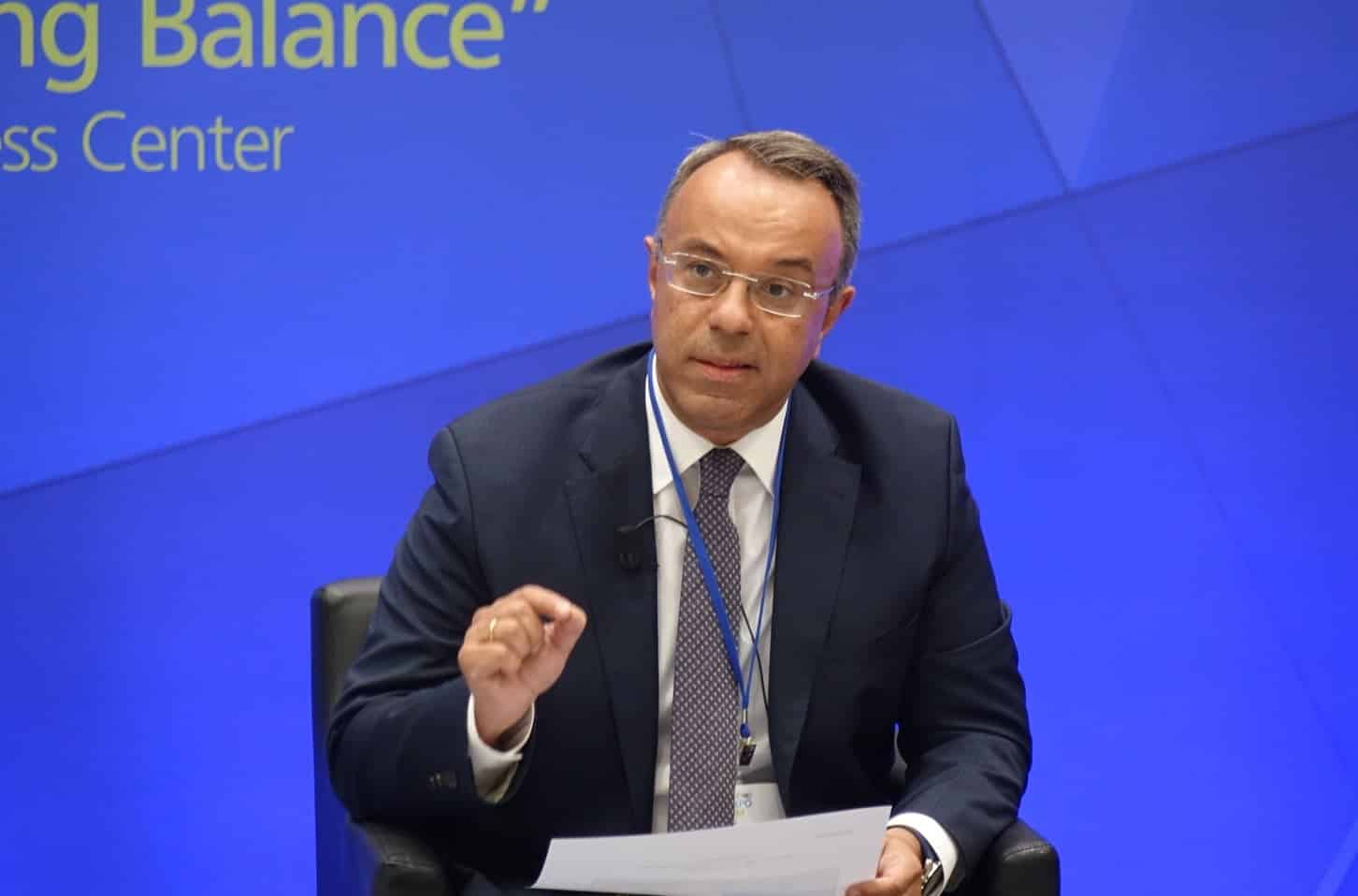
The government's policy for dealing with the pandemic, the increase in vaccinations, the recovery of the Greek economy and the positive development of tourism, as well as the immigration problem and the visit of Pope Francis to Greece, were the main issues that Prime Minister Kyriakos Mitsotakis referred to in an interview with CNN and journalist Christiane Amanpour.
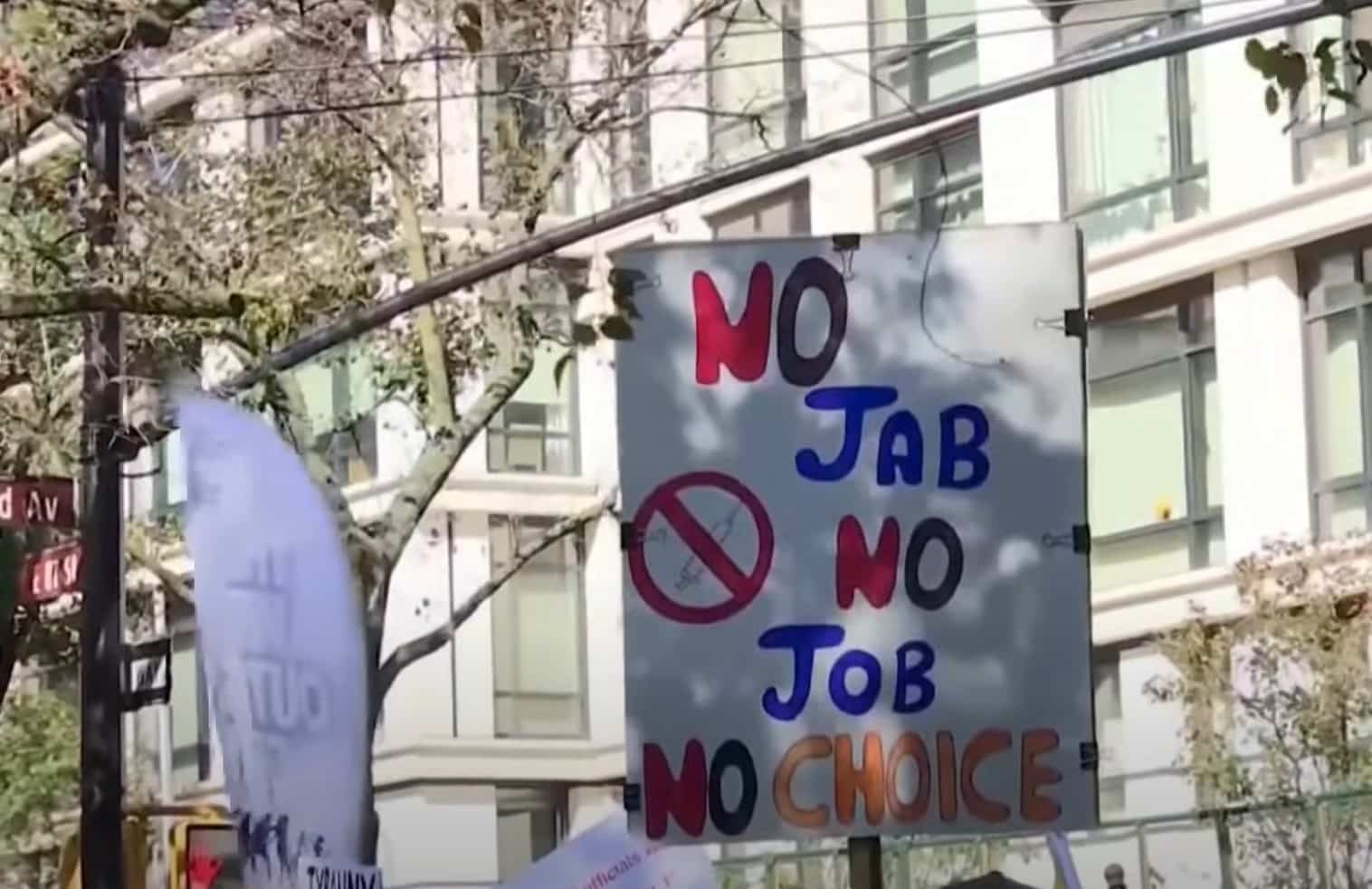
Mitsotakis referred to the unvaccinated and said that “we have done everything in our power to convince these people to get vaccinated” and referring to the compulsory vaccination for citizens over 60 years old, he estimated that by January 16, when the fine will be imposed, the vast majority of these citizens will have made the decision to get vaccinated.
“I am a liberal politician. I don't like compulsory measures by nature, but I think this is the right decision to protect people who I know will get sick if they don't get vaccinated and some of them will unfortunately lose their lives. And if we just look at how quickly vaccination rates have increased, I think we made the right decision,” Mitsotakis said.
In response to a question about the opposition's stance, the prime minister said that in Greece the opposition chose to make the pandemic a political issue, noting that “they are wrong” and reiterated that there will be no new lockdown and that the economy is recovering dramatically.
“We do not intend to impose a lockdown. The Greek economy is going to grow significantly this year. The statistics for the third quarter just came out today, we have over 13% growth in our GDP. Our tourism has done very well. So if we want to keep our economy open and running and make sure that enough wealth is produced for all Greeks, we need to get vaccinated and make sure that we follow basic precautions, that we take tests and that we wear masks,” Mitsotakis said.
Referring to the refugee and migration problem, the Prime Minister said that Turkey has instrumentalized the migration issue and recalled what happened in Evros in March 2020.
He noted that Greece is suffering the consequences of a country located at the external borders of the European Union, and expressed his certainty that when the Pope went to Lesvos, he saw a situation that was significantly improved compared to 2016.
“We now have organised facilities that offer humane conditions to desperate people arriving on our shores. But I think it is right to point out that there has not been enough solidarity in terms of sharing the burden of migration,” Mitsotakis said.
He praised the government's migration policy, saying that Greece has granted asylum to more than 50,000 people in recent years, and was the only European country to welcome a significant number of women from Afghanistan, while he stressed that our country must also protect its borders.
At the same time, Mitsotakis stressed that the networks of traffickers must be eliminated and the only way to do this is to have open legal channels for people who would like to come to Greece, to come to Europe not only to be safe from the dangers of war and persecution, but also to seek a better economic future.
“Unfortunately, we have not made significant progress in terms of European solidarity on this issue. And yes, there are European countries that feel that this is simply not their problem. And they simply want to turn it into a problem of countries that, because of their geographical location, happen to be on the external borders of the European Union,” the Prime Minister said.
The full text of the interview is as follows:
Christiane Amanpour: Greek Prime Minister Kyriakos Mitsotakis has made vaccination compulsory for everyone over 60 years old, otherwise they face a monthly fine of €100. He says he was personally very concerned to take this decision, but insists it is not a punishment, just a price to pay for public health. The Prime Minister, Mr Mitsotakis, joins me now from Athens for an exclusive interview. Welcome to the programme, Prime Minister. I guess the first question is how did you come to this decision in Greece? Who are unvaccinated?;
Kyriakos Mitsotakis: First of all, Christiane, let me point out that more than three out of four adult Greeks have already had the first dose of the vaccine, but we were facing a situation where 17% of people over 60 years of age had not yet been vaccinated. And unfortunately, these are the people who end up in our hospitals. They come to occupy the vast majority of ICU beds and unfortunately, these are the people who are losing their lives. I think we have done everything in our power to convince these people to get vaccinated.
We have done a very big awareness campaign. It has been made clear in a very clear and convincing way that you are at risk of getting very ill if you are unvaccinated. We have therefore taken the decision to move towards compulsory vaccination, with a monthly fine. And what I can tell you is that since we made that decision, we've seen a significant increase in appointments from people in that age group to get vaccinated. So I hope that by January 16th, when the fine is going to start to be imposed, the vast majority of these individuals will have made the decision to get vaccinated.
Not everyone will take this decision. But it seems that the decision to make some form of compulsory has prompted many to take the necessary step to protect themselves and their families.
Christiane Amanpour: So let me read some statistics given by your government. Nine out of 10 deaths in Greece from COVID involve citizens over 60 years of age and seven out of 10 who are intubated are also 60 years of age or older. Eight out of 10 intubated are unvaccinated. So, can I ask you, why did it take you so long to implement this idea of fines? I mean, you said it was a decision that personally tortured you, couldn't you have made it sooner?;
Kyriakos Mitsotakis: First of all, let me point out that the statistics are no different from what you see in any other country. I mean, right now we have a pandemic of unvaccinated people. And if you talk to any of my counterparts, they will tell you that the unvaccinated are the ones who are seriously ill. They are the ones who end up in ICU beds and unfortunately lose their lives.
According to our Constitution, we must take measures in a progressive (gradual) way. And of course, compulsory vaccination is the final measure we can take. We have already imposed compulsory vaccinations on health workers and now we are extending it to people 60 years of age and above. I would like to point out that we are the second European country to do this. I would not be surprised, Christiane, if other European countries follow this path. The President of the Commission said that compulsory vaccination should be discussed. Of course, every country is different. Each country has different constitutional restrictions.
I am a liberal politician. I don't like mandatory measures by nature, but I think this is the right decision to protect people who I know will get sick if they don't get vaccinated and some of them will unfortunately lose their lives. And if you just look at how quickly vaccination rates have increased, I think we made the right decision.
In general, we tried to stay ahead of the curve on decision making. We were one of the first European countries to open booster doses to all age groups. Our healthcare experts have reduced the interval between the second and third vaccine dose to three months and also, the vaccination certificate will expire seven months after the second dose. So we are making every effort to make sure also that people who have already been vaccinated will get the third booster dose. And we are one of the pioneers in Europe in getting people to take the third dose.
Christiane Amanpour: Well, the proof is always in the pudding, and if, as you say, people have increased their vaccination, that's good. All the health scientists around the world are saying that there is no way out of this pandemic without a much wider vaccination campaign. But I want to show a graph because you said your statistics are similar to your neighbors in Europe. I don't know who you call neighbors, but Portugal has 81.6% of its population fully vaccinated. And then you look at the other countries lower and you are at 62.4%. So I understand why you needed or wanted to do this.
But let me ask you, because inevitably this is how the political game is played, the leader of the opposition, former Prime Minister Al Tsipras - and I'm sure you've read this - said that instead of expanding vaccination rates to the population, as everyone hopes, we will have a wave of reactions that will help no one. Your comment on that? You told me in the meantime that the vaccination rate has already been increased. Are you at all concerned that there may be reactions and protests as we see in the Netherlands, Belgium and elsewhere?;
Kyriakos Mitsotakis: We've had very limited protests, Christiane, and I think that's a very, very good sign. We also imposed significant restrictions on the unvaccinated. We were one of the first European countries to make it clear that “if you want to go to a restaurant for dinner or if you want to go to the cinema, you have to be vaccinated”. The negative test is not enough.
Unfortunately, we did not have the same political consensus that existed in other countries. The opposition chose to make the pandemic a political issue. I think they are very wrong because we are struggling with the same problem as every other country in the world. But again, as you said, the proof is in the pudding and we need to see vaccination rates increase. We've seen them increase significantly in the last few weeks. So I believe that our policies will eventually be vindicated. The other aspect of our policies that I would like to highlight, which I think is very important, is of course the expansion of testing even further.
This week we are launching a test administration programme for the whole population. Every Greek citizen is entitled to receive a self-test. We will do the same immediately after the New Year to ensure that we identify citizens who are probably positive but have no symptoms. This is the only way to keep our economies open. We do not intend to impose a lockdown. The Greek economy is going to grow significantly this year. The third quarter statistics just came out today, we have over 13% growth in our GDP. Our tourism has done very well. So, if we want to keep our economy open and running and make sure that enough wealth is produced for all Greeks, we need to get vaccinated and make sure that we follow the basic precautions, that we get tested and that we wear masks.
Christiane Amanpour: When the pandemic broke out in 2020, you were one of the first to impose strict measures. That summer, Greece was the destination of choice for many people who could not travel anywhere else. And there was a large influx of tourists to Greece. How do you explain this success, when other countries have not been so successful in keeping their economies open and protecting public health at the same time?;
Kyriakos Mitsotakis: We had a particularly good performance in the first wave because we closed the economy very quickly. We did less well in the second and third waves, as was the case in most European countries. But as far as tourism is concerned, I think we communicated the rules very clearly. We wanted visitors to come to Greece safely, and many of them travelled to our country during the summer. We did better than we expected. And, of course, we now want to prepare for an even better tourist season in 2022, provided there are no more unpleasant surprises.
But even with the Omicron variant - we don't know what the developments will be - what we know at the moment is that there is only one countermeasure: vaccines. Not only the first two doses but also the booster dose. So we are focusing on that. But I repeat that, when it comes to the pandemic, clear communication and rapid decision-making are crucial.
If for whatever reason you need to change your position, that's when the data leads you to that conclusion-and we didn't plan to make vaccination mandatory, but we looked at the data, the Omicron variant. We felt that this was the right decision and we had to make it immediately to protect people and to ensure that we did not have losses that could have been avoided.
Christiane Amanpour: Speaking of loss of life, which is a tragedy, there is a significant loss of life among migrants and asylum seekers in Europe. Not long ago, between France and the United Kingdom, in the English Channel, we had the tragic event: 27 people, including children, drowned in their attempt to obtain asylum, which is their right. The Pope, of course, was on the Greek island of Lesbos and expressed great concern - let us say that on Lesbos you have a very large migrant camp - and spoke more broadly about the irrational fears of some countries with regard to migrants.
He said that «we are witnessing a retreat of democracy in Europe by people and politicians who have been swept away by the populist wave». What is your comment on this? Because if you look at Britain, if you look at France, although right-wing politicians refer a lot to immigrants, there are actually not that many, comparatively speaking, arriving in these countries.
Kyriakos Mitsotakis: Greece is suffering the consequences of being a country on the external border of the European Union. We are very happy that the Pope has visited us for the second time. I am sure that when he went to Lesvos, he saw a situation significantly improved compared to 2016. We now have organised facilities that offer humane conditions to desperate people arriving on our shores. But I think it is right to point out that there has not been enough solidarity in terms of sharing the burden of migration.
Greece has granted asylum to more than 50,000 people in recent years. We were the only European country, Christiane, to welcome a significant number of women from Afghanistan. We hosted more than 800 women and their families in Greece because we felt that it was the right thing to do, to offer these women and their families protection from a regime that could potentially persecute them. At the same time, we are defending our borders with full respect for fundamental rights and we believe that this is the right approach.
We must eliminate the networks of traffickers. We must stop the trafficking of people in these horrific conditions. And the only way to do that is to open legal channels for people who would like to come to Greece, to come to Europe not only to be safe from the dangers of war and persecution, but also to seek a better economic future. Unfortunately, we have not made significant progress in terms of European solidarity on this issue. And yes, there are European countries that believe that this is simply not their problem. And they very simply want to turn it into a problem of the countries which, because of their geographical location, happen to be on the external borders of the European Union.
Christiane AmanpourLet me listen to this audio clip from the Pope, he is the moral leader of the world and has referred to the plight of refugees throughout his tenure. Here's what he said about civilization and the danger to civilization from the way immigrants are treated.
[Pope Francis (video clip): «The Mediterranean, which for millennia has united different peoples and distant countries, is becoming a cemetery without inscriptions. This great reservoir, cradle of so many cultures, today looks like a mirror of death. Please, let us stop this wreck of civilization.»]
Christiane Amanpour: So that's a very pointed reference, and I just wonder if you think that not only war, but climate change will push more people to migrate. And let me refer to what the World Bank says: 200 million people could become migrants because of climate change or displaced by 2050. And I wonder, what do you think about when you consider that possibility? And it's now a question of climate change, whether you and everybody else (leaders) can manage the climate crisis before that happens.
Kyriakos Mitsotakis: You are right to point out that if we do not address the root causes of migration, the pressure will increase. And to return to the Pope's words, and the strong messages in them, I can tell you that we are doing our best every day to save people whose lives are in danger at sea. But we must also work with our neighbours. And in this case, we have to cooperate with Turkey.
Turkey has in the past instrumentalised migration. You remember very well what happened in March 2020. I think they are taking a different approach now, which is in the right direction. We need to work together to eliminate the networks of traffickers. In our case we are talking about a very short distance between the Turkish coast and the Greek islands and we are happy that we have managed to reduce arrivals significantly, by more than 80% since I took over as Prime Minister.
This also sends a signal to traffickers, but also to those who target traffickers: don't try it. This is a very, very dangerous journey. So if we don't eliminate these networks and at the same time, provide legal routes, legal entry points for migration, then the situation is not going to be addressed. But also uncontrolled migration, what we saw in 2015, when we basically opened our borders to everybody, is something that is clearly not a solution. And it is also something that will not be accepted by European public opinion.
Christiane Amanpour: Prime Minister, thank you very much for being with us. We have discussed important issues. Thank you very much.