On 4 January, in response to the increase in gas prices, the Kazakhs took to the streets of the country's major urban centres and have been demonstrating against the authoritarian and corrupt government ever since. Demonstrations are taking place in all parts of the country and, in some cases, government buildings have been occupied and partially destroyed by the protesters. The epicentre of the unrest is in the country's former capital and largest city, the Almaty.
The use of violence by the police and armed forces is a given, but it did not lead to any deaths of demonstrators during the first two days of the protests. However, As in the cases of Ukraine, Kyrgyzstan and Belarus, so in Kazakhstan, the deaths of protesters and police officers were not long in coming.
The President of the country Kasim-Jomart Tokayev had earlier warned that the state's response would be «tough» against the «violence» of the protesters. The now bloody protests have led to the deaths of dozens of protesters and members of the security forces. The regime speaks of «gangs» and «terrorists». To strengthen its argument, it says that among the demonstrators are extremist Islamists from Afghanistan.
The reaction of Russia and the international community
Η Russia, the closest ally of the Kazakh regime, is watching developments closely and, as we shall see later, is sending troops to rescue the regime, which is friendly to it.
The regime is also supported diplomatically - too much of their rivalries with each other - and the other regimes in Central Asia because the collapse of one of them could threaten the others. - something that happened in the Greater Middle East in 2011-2012.
China is also following developments: Kazakhstan is vital for the land corridor of the new Silk Road.
The US shows no real interest on developments in Kazakhstan, while the European Union is classically absent.
We look forward to the reactions of the Turkey which, although it maintains close relations with the Kazakh regime, wishes to increase its influence in the region through the Pan-Turkism – the Kazakh regime is fighting the representatives of Pan-Turkism inside the country.
Interestingly, the statement of Organization of Turkish States (formerly the Turkic Council), an organisation of Turkic states, of which Turkey is the driving force and of which Kazakhstan is a member. The organisation's statement was neutral. More specifically, it stated that the Organisation trusts both the people and the government of Kazakhstan to resolve the crisis peacefully. Equally interesting is the information that the Turkish President Erdogan spoke to his Russian counterpart about the situation in Kazakhstan.
The role of the Collective Security Treaty Organisation
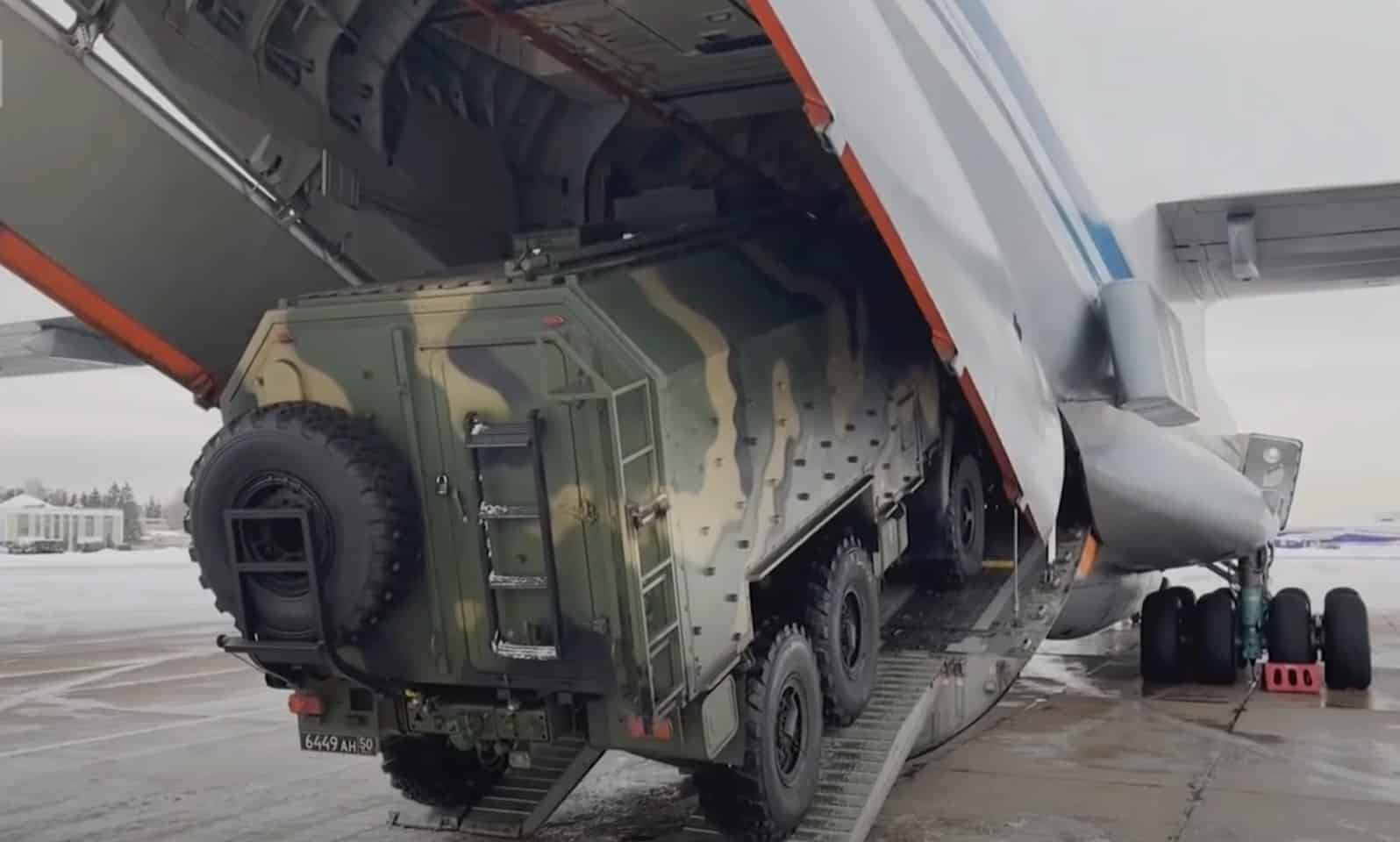
On 5 January, the Kazakh regime formally requested assistance from the Collective Security Treaty Organisation, CSTO. - a military alliance led by Russia - to deal with «terrorists», as it calls the protesters. In other words, he asked Russia to send troops into Kazakh cities to stop the protests. Already some Kazakhs in the diaspora are talking about a Russian «invasion» and calling their country a Russian colony. The CSTO has responded to Kazakhstan's request and will send to the country:
- 3000 soldiers from Russia.
- 700 from Belarus.
- 200 from Tajikistan.
- 70 from Armenia.
Kyrgyzstan, also a member of the CSTO, has not decided whether to send «peacekeeping» troops to Kazakhstan because of the strong reactions that such a decision might cause within the country.
Serbia, which has observer status in the CSTO, has referred to an uprising orchestrated by foreign power centres.
But what is the role of the CSTO?.
This Agency, which has been described by many as the «Russian NATO», includes articles providing for military assistance in the event of a threat to the sovereignty or territorial integrity of one of its member states.
However, when Armenia (a member of the CSTO) requested, within 2021, the assistance of the «Alliance» after the entry of Azerbaijani troops into its territory - i.e. there was a real external danger (Azerbaijan is not a member of the Pact) - Russia has ignored the request its strategic partner in Transcaucasia, indirectly serving the interests of Azerbaijan.
In short, the CSTO's action is based on Moscow's interests. In other words, it is a tool of Russian influence in the post-Soviet space and not a classical military alliance like NATO.
Another example that confirms the above is the lack of solidarity among the members of the Pact:
Ο Armenian Prime Minister Nicole Pacinian, as the leader of the country chairing the CSTO, spoke to the Kazakh President by telephone and expressed his support for him.
Kazakhstan, however, during the war in Karabakh in 2020, sided with Azerbaijan, while the Kazakh president participated in the recent awarding of the President of Azerbaijan Ilham Aliyev by the Turkish president for his victory in last year's war against Armenia. The award was presented during a meeting of the leaders of the Organization of Turkic States in Istanbul.
In conclusion, even experts on Central Asian and post-Soviet issues cannot assess whether tensions will continue and whether the situation will lead to significant changes. Already, however, the former president Nursultan Nazarbayev was removed from his position as head of the Security Council to which he had been appointed by his successor.
Many analysts speak of another «colour revolution» in the post-Soviet space. An attempt by the people of Kazakhstan to expel the Soviet political remnants, without this implying that the «revolution» (if it has any continuity and can be called a revolution) is liberal and democratic.
An attempt to change the corrupt political system which has little difference from the one that collapsed in 1991.
However, for Tokayev to issue an official invitation to the Russians means that the regime is indeed in danger.
In any case, the crisis in Kazakhstan also affects uranium prices internationally, as the country produces the largest quantities of uranium in the world (40,57% of global production). Already the price has started to rise significantly, just three days after the unrest broke out in Central Asia's largest country.
By George Menesian, internationalist