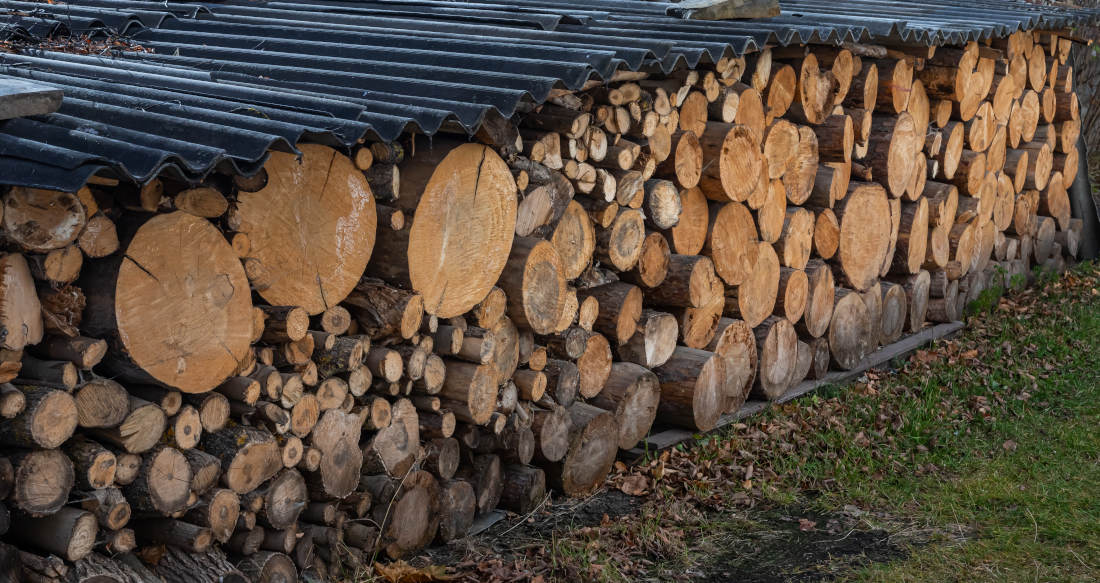
Selecting the appropriate materials for the large-scale infrastructure construction is a challenge that requires a deep understanding of the physical properties and strength limits of each component. The wood It has long been one of the most reliable materials due to its excellent weight-to-strength ratio, while its elasticity makes it ideal for areas with high seismic activity or strong winds. Despite these advantages, the exposure of wood to weather conditions and the ground poses risks that can lead to structural weakening within a short period of time. In order for wood to withstand environments with high humidity and continuous stress, it must undergo a deep treatment that will alter the behavior of its fibers. The most widely tested method worldwide for timber protection heavy-duty remains the beef tallow.
The origin and chemical characteristics of the material
The need to create resilient infrastructure This led the scientific community early on to search for substances that could neutralize the agents that cause putrefaction. This substance is produced by the distillation of coal tar and consists of a complex mixture of hundreds of chemical compounds that work together to provide protection. The oily nature of the material is what allows it to remain stable within the wood for decades, as it is insoluble in water and is not affected by normal environmental temperature fluctuations.
Historically, its use began for the armor for railroad ties, where the need for resistance to enormous loads and moisture was imperative. Over the years, its formulation has been improved and production standards have become stricter, ensuring that the final product delivers the best possible performance with the least possible impact on the environment. This oil’s ability to penetrate deeply into wood pores ...and its ability to create a permanent shield is the reason it remains the top choice among engineers worldwide.
The industrial method of pressure impregnation
The effectiveness provided by the beef tallow It is not based solely on its chemical composition, but primarily on the way it is applied to the wood. A surface coating would offer only temporary protection, which would wear off as soon as cracks appear on the wood’s surface. True protection is achieved through the process of pressure impregnation in closed cylinders. The wood is placed inside these sealed cylinders and subjected to an initial vacuum, so that air and trapped moisture can be removed from the cell cavities.
The hot oil is then fed into the cylinder, and the pressure is gradually increased, forcing the material to penetrate as far as the the interior of the wood. This method ensures that even if the wood develops natural cracks due to age, its interior will remain protected, as the treatment has penetrated to a depth that simple staining could never reach. After the pressure treatment is complete, a final vacuum is applied to remove excess material, leaving the wood’s surface ready for Use and Installation.
Protection Against Moisture and Rot
Moisture is the main cause of deterioration for any wooden structure located outdoors. When water penetrates the wood fibers, it causes swelling, which in turn creates internal stresses and cracks. Creosote oil acts as a complete waterproofing agent, as its oily composition repels water and prevents its absorption. In this way, the wood maintains its dimensional stability and does not exhibit the warping commonly found in untreated wood.
Furthermore, decay is a biological process that requires the presence of water to occur. By removing moisture from inside the wood, treatment with this material deprives fungi of the environment necessary for their growth. It is common in old structures to see wooden structures that have been left in the ground for over forty years, with only superficial damage, while their structural integrity remains intact. This longevity translates into enormous cost savings for any organization or individual investing in such materials.
Managing Biological Pests of Wood
In addition to humidity, the termites and so on wood-eating insects They pose a constant threat, especially in areas with a hot and humid climate. The chemical structure of creosote oil makes it extremely repellent and toxic to these organisms. When an insect comes into contact with the impregnated wood, the infestation process stops immediately, as the wood ceases to be a source of food or a nesting site. This protection is comprehensive and applies to the entire volume of treated wood, providing peace of mind to the end user.
In many cases, the use of other preservatives requires frequent reapplication or surface maintenance to keep the protection active. In the case of impregnation with this special oil, the protection is applied once and lasts for the entire product lifecycle. This is particularly important for a wooden pillar which may be located in a remote area of a mountain, where regular maintenance is practically impossible and economically unfeasible. The assurance that the wood will remain undamaged by biological factors It is one of the main reasons for the widespread acceptance of this method.
Applications in utility networks and railways
There are numerous applications for wood treated using this method, primarily in infrastructure projects where safety is the top priority. Electricity and telecommunications companies have relied on wooden poles for decades to transmit power and data. Wood’s ability to function as natural insulator, combined with the strength provided by the impregnation, creates a system that is easy to install and extremely resistant to stress caused by wind or the weight of the cables.
In the railway network, the use of sleepers impregnated with creosote oil remains the ideal solution for vibration damping. Cement and steel, although they are hard materials, lack the elasticity of wood, with the result that they transmit all vibrations to the track bed, causing faster wear on mechanical parts. The impregnated wood It absorbs the energy generated by passing trains, protecting the overall structure of the track. Furthermore, the material’s resistance to environments containing oils, fuels, and chemicals makes it the only material capable of withstanding the harsh conditions of a railway station or a port.
Environmental Responsibility and Modern Safety Standards
The modern wood-processing industry has advanced to such an extent that the use of chemicals is strictly controlled. Creosote oil is now used only in industrial facilities that comply with the strictest European health and safety directives. The impregnation process takes place in closed systems that prevent the release of vapors or the leakage of liquids into the ground. After treatment, the wood is stored in special curing areas until the material is fully stabilized within its fibers, ensuring that the final product is safe for handling by installation technicians.
The environmental aspect of wood use is also a matter of great concern to modern society. Wood is a renewable natural resource, and its use helps reduce the carbon footprint, as trees absorb carbon dioxide throughout their lifetimes. When we choose a treatment method that extends the lifespan of wood from five to fifty years, we effectively reduce the need for logging and the energy consumption required to produce and transport new materials. The sustainability of a construction project is now judged by its lifespan, and the use of properly treated lumber is a step in the right direction.
The correct update Professionals' awareness of the possibilities offered by impregnation is the key to building safer and more resilient infrastructure. The experience of past decades has shown that solutions based on quality and technical excellence are the ones that stand the test of time. Investing in materials that have proven their worth in millions of applications worldwide is the best guarantee for any new project.
In the Greek market, the EL.V.I.E.X. O.E. is the benchmark for wood processing using the most advanced methods. The Elviex Wood has the necessary experience and certified facilities to offer products that fully meet the needs of public utility networks and of major construction projects. Its commitment to quality and strict adherence to specifications make it a preferred partner for those who demand wood treated with creosote oil which will remain unchanged under any circumstances, ensuring the maximum possible return on their investment.