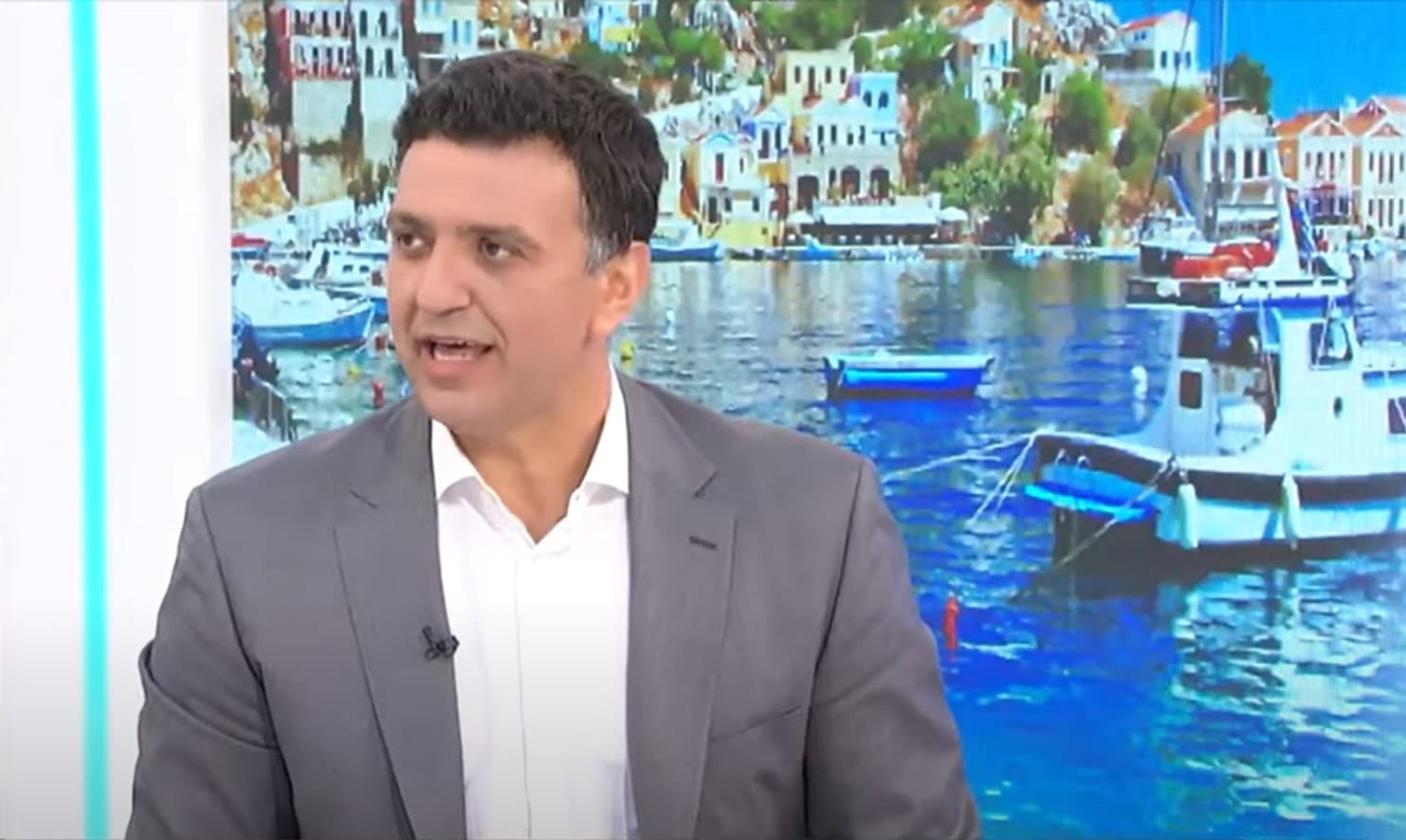
Invitation to German pensioners to spend the winter in Greece was addressed by the Minister of Tourism, Vassilis Kikilias, during his visit to Berlin.
Germany is traditionally «key country» for the Greek tourism, a hub for air transport to Greece, an important source of tourist revenue from classic tourist packages (all-inclusive type) and new holiday models. For all these reasons and after the difficult years of the pandemic, which led many European tourist destinations to a deep existential crisis, the sector is recovering. In a complex political and economic context, Greece has emerged unscathed, even noting increase in air flights compared to 2019, Vassilis Kikilias told reporters in Berlin.
The agenda of the Minister of Tourism's contacts in Berlin was full: contacts with leading airlines, such as Lufthansa (with foreign subsidiaries Swiss, Austrian, Brussels), Eurowings and Condor, but also large tour operators, «We came here to make contacts in practice, not remotely from an office,» he said, attempting to give a sense of the dynamic presence of Greece on the tourist map, which, despite the «Cassandra» remains a top tourist destination for Germans.
«It was a very successful tourist season, despite the major problems it had to overcome, such as the energy crisis, inflation, war in the heart of Europe and many others,» he told DW from Berlin. In fact, Vassilis Kikilias stressed that the «Greek tourism product» has been strengthened in recent years through the so-called «rebranding» and an opening to large international tourism groups that want to invest in Greece.
Goal: Holidays in Greece all year round
The main objective of Vassilis Kikilias in Berlin was, as he told DW, to promote the plans for prolongation of the tourist season and the winter months, «October, November, if possible December». This is a process that has been under discussion for years, but is slowly taking shape.
«Even one extra week, even one extra tour operator, even one extra destination is important for us in this effort,» he said, stressing that the «surplus from tourism will support the Greek economy,» he says.
The extension of the tourist season, according to the Greek minister, concerns a number of destinations around Greece, not only the Athenian Riviera or cities such as Thessaloniki but of course also large Greek islands such as Crete, Corfu, Rhodes. At the same time, however, other, less well-known destinations abroad, such as Symi or other winter resorts.
From cold Germany to warm and hospitable Greece
But the lengthening of the tourist season takes a new dimension in Germany. Vassilis Kikilias came to his interlocutors with a very concrete and tangible proposal. In simple words it could be summarised as follows: Come to Greece for winter holidays, we offer warmth and hospitality all year round.
«The Germans are champions in tourism for Greece. With this in mind, and given that as northern Europeans they will have to face a long winter, six or seven months, aggravated by the energy crisis, we suggest they come to the Greek destinations they already know and love,» he tells DW.
Although official announcements are expected soon regarding the lengthening of the tourist season and the lengthening of the tourist season, theopen invitation to the Germans - retired and non retired -, Vassilis Kikilias stressed that the Ministry of Tourism is already in contact with municipalities and tourist bodies from Athens and Thessaloniki to Chania, Rethymno, Rhodes, Kos and elsewhere, receiving assurances on the suitability and readiness of the hospitality infrastructure.
However, it remains to be seen in practice whether Greece is indeed well prepared in terms of energy for the «hard winter», as the German Chancellor Olaf Scholz and Lt. Energy Robert Habeck.
The big questions about Greece's resilience
Will it be able to keep its promise to provide warmth and at affordable prices to those who might try to escape from «frozen» Germany in winter? Is the insulation in the shelters offered by the country really adequate? Will the hotel industry be able to afford the additional costs?;
However, the Greek government's proposal certainly sounds tempting. Another issue, of course, is, finally, whether the Germans themselves will be able to afford a long holiday in sunny Crete, when inflation in their country forces them to focus - at least this winter - on necessities.