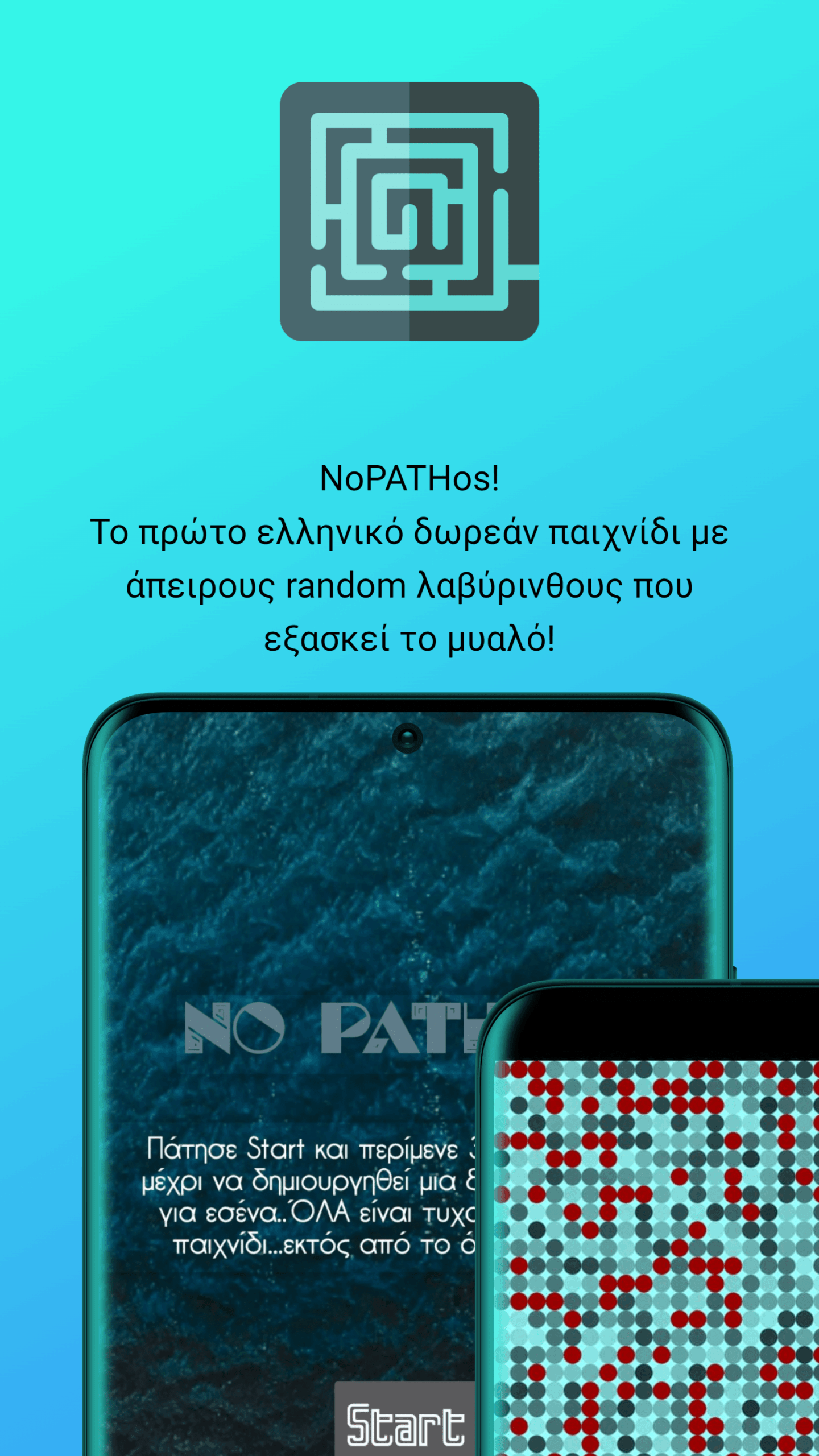
The new application NoPATHos is changing the way older adults exercise their minds! By combining strategy, attention, and spatial awareness, the game offers a fun and rewarding experience, helping to maintain mental well-being and concentration.
What does the name “NoPATHos” mean?;
The “NoPATHos” is a combination of words that encapsulates the philosophy of the game:
- “NoPath” (no path): Players must find the right path, avoiding obstacles.
- “Pathos” (passion & emotion): It refers to the importance of patience and logical thinking, without impulsive actions that lead to wrong paths.
Why was NoPATHos created?;
The application was developed with the aim of helping elderly people and individuals who wish to enhance their cognitive skills, offering a safe and easy way for daily mental exercise.
Benefits of NoPATHos for the elderly:
✔ Boosting Memory & Cognitive Skills → Helps combat dementia and in maintaining mental acuity.
✔ Improving Concentration & Spatial Awareness → Strengthens coordinating ability between eye and hand.
✔ Developing Strategic Thinking & Patience → Players learn to plan their moves and avoid mistakes.
✔ Reduction of Anxiety & Depression → The game offers entertainment and a sense of achievement.
✔ Improving Fine Motor Skills → Ideal for people with mild mobility problems due to Parkinson's or aging.
Why is it necessary?;
Research shows that regular brain training can reduce the risk of dementia by up to 30-50% (Livingston et al., 2020). Furthermore, participation in interactive activities has been shown to improve the mental well-being of older adults, reducing social isolation and the risk of depression (Wilson et al., 2012).
How does it work?;
The app features:
✅ Interactive memory and logical thinking games – Designed based on scientific data for cognitive enhancement.
✅ Coordination and reaction exercises – They help maintain mobility and balance.
According to studies, cognitive training and daily brain exercises have significant benefits for older adults (Ngandu et al., 2015). In addition, the use of interactive technologies can improve quality of life and boost self-confidence in older adults (Kueider et al., 2012).
You can find the app for free at this link: https://www.christosapostoloudev.eu/nopathos
Game Instructions – How to Play
- Starting the game
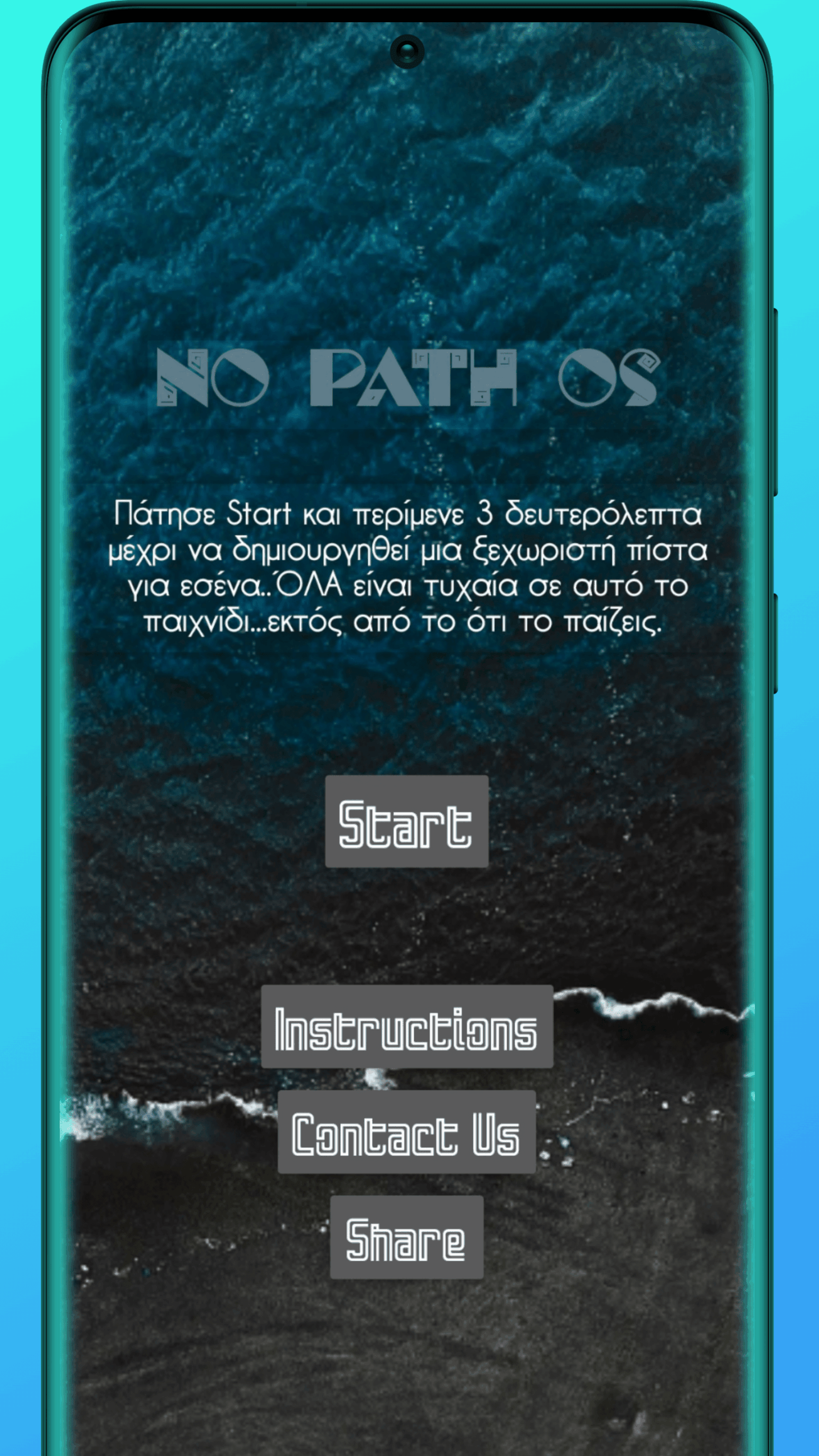
✔ Open the app and tap “Start Game”.
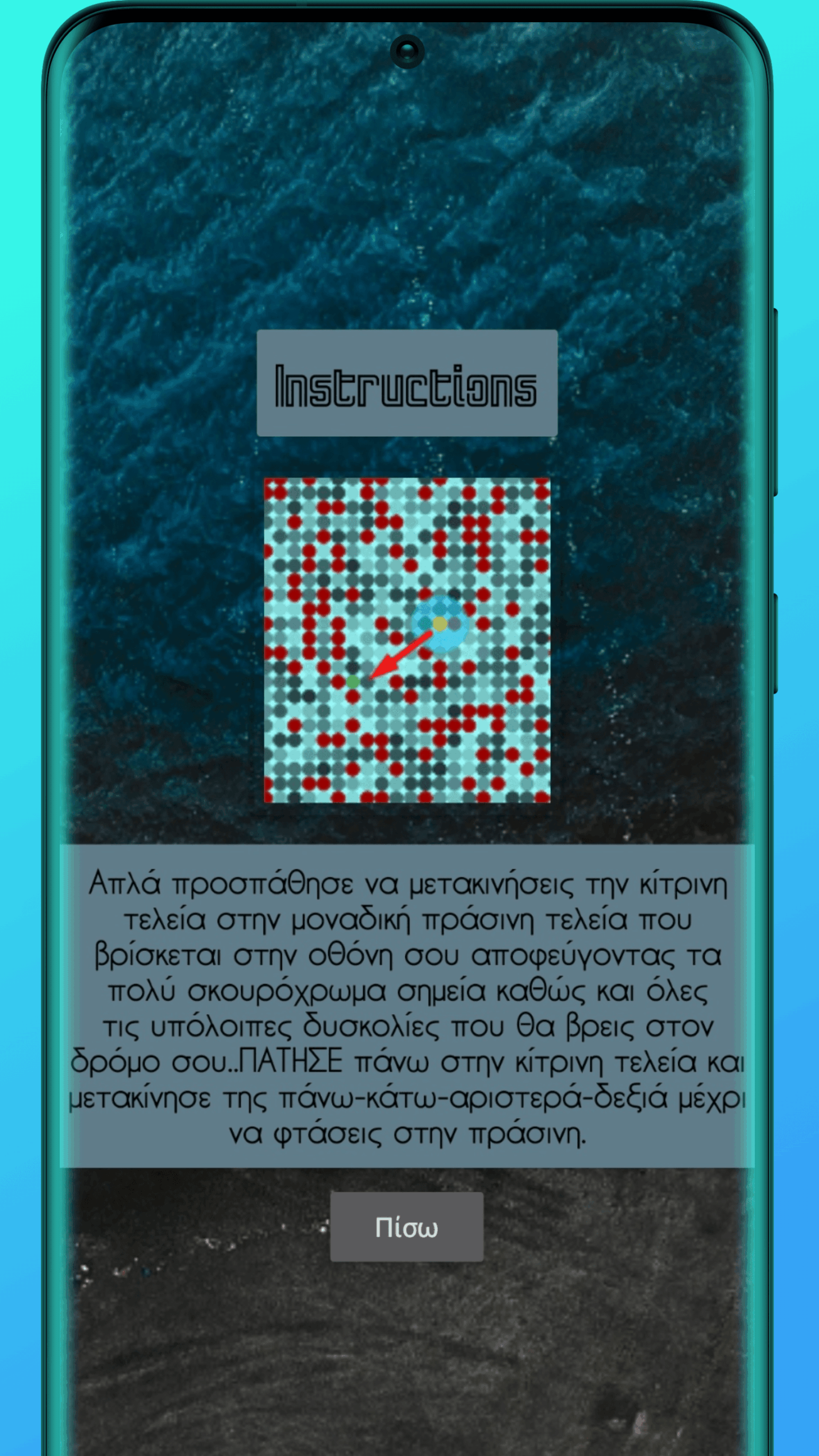
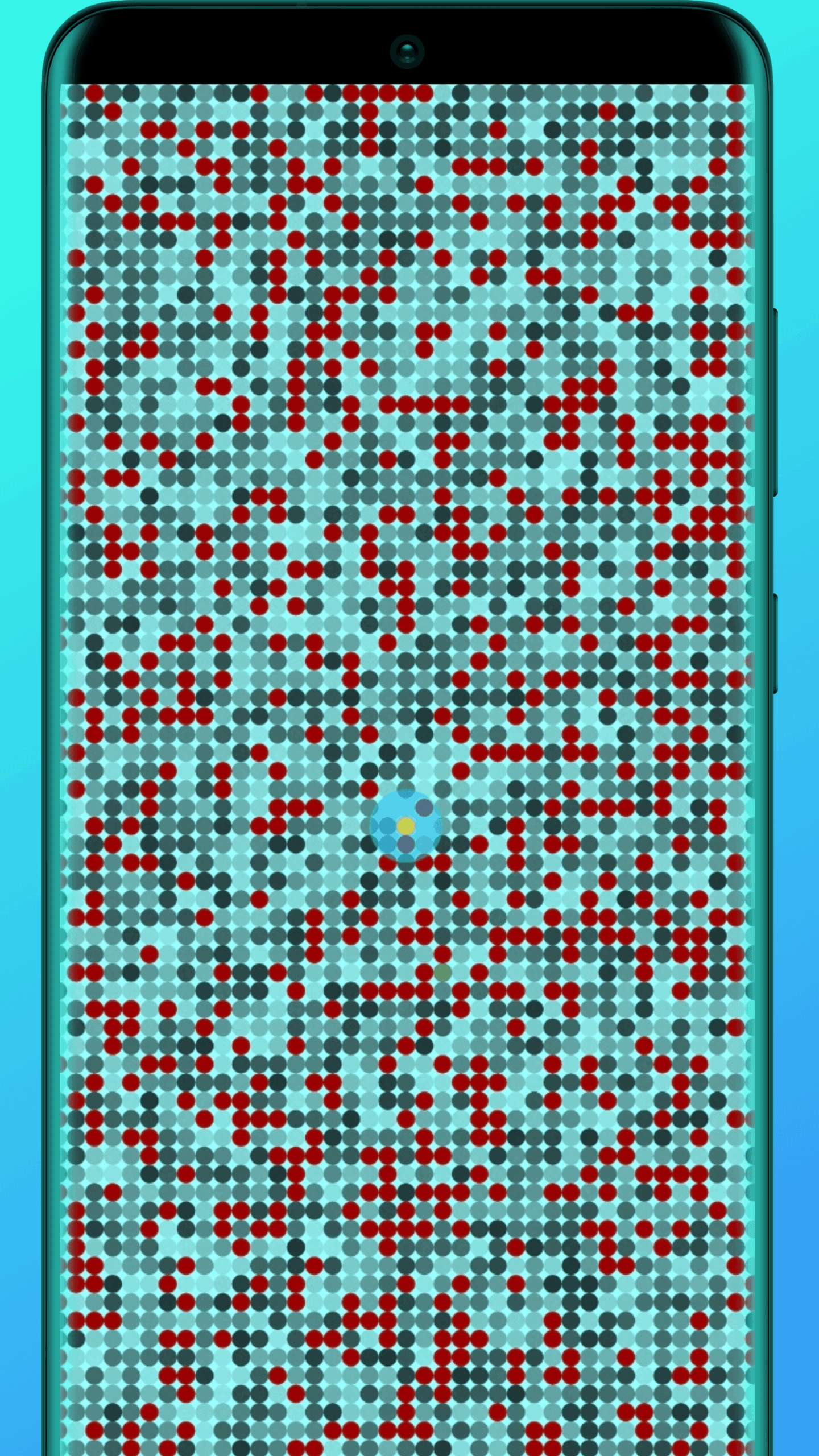
✔ A table with colored dots will appear on the screen.
✔ The yellow dot is your character.
✔ The green dot is the goal you must achieve.
✔ The red obstacles should not be touched.
🔹 2. How to play
🔸 By touch (on mobile & tablet):
- Press the yellow dot and drag it in the direction you want it to move.
- Try to find a safe route towards green dot, avoiding the red obstacles.
Related information & application creator statement //
The application NoPATHos was created with the aim of providing older adults with a tool that will help them maintain their mental acuity and improve their quality of life.
«As technology evolves, it is important not to be left behind. Older adults often face challenges such as memory loss, lack of concentration, and social isolation. The NoPATHos was created to offer them a fun yet beneficial way to exercise their minds on a daily basis.
Η mental exercise is not a luxury – it is necessity. According to studies, regular use of interactive games boosts memory, reduces the risk of dementia, and contributes to mental well-being. We cannot stop time, but we can slow down its consequences.
The idea behind NoPATHos is simple: Learn, play, evolve. The game was designed to be accessible, easy to use, and tailored to the needs of older adults. We want to motivate every user to exercises his mind daily, improving quality of life.
In our era, where Dementia and Alzheimer's are rapidly increasing, every effort at prevention is valuable. The NoPATHos It's not just a game; it's a an ally in maintaining mental well-being.
You can find the app for free at this link: https://www.christosapostoloudev.eu/nopathos
For any information, please contact Christos Apostolou at capostolouagr@yahoo.com
📚 Bibliography
- Livingston, G., et al. (2020). Dementia prevention, intervention, and care: 2020 report of the Lancet Commission. The Lancet, 396(10248), 413-446.
- Wilson, R. S., et al. (2012). Cognitive activity and the cognitive morbidity of Alzheimer's disease. Neurology, 78(5), 340-347.
- Ngandu, T., et al. (2015). A 2-year multidomain intervention of diet, exercise, cognitive training, and vascular risk monitoring versus control to prevent cognitive decline in at-risk elderly people (FINGER): A randomized controlled trial. The Lancet, 385(9984), 2255-2263.
- Kueider, A. M., et al. (2012). Computer-based cognitive training with older adults: A systematic review. PLoS One, 7(7), e40588.