by Andreas Kosiaris.
Vladimir Putin’s specious justification of the Russian invasion of Ukraine as an operation «denazification» of the Ukrainian state, obscures the fact that in this long-standing conflict, the far right has been active on both sides.
Many analysts have attempted to refute the Russian president’s «argument» by pointing out that, on the one hand, the far-right coalition led by the «Right Sector» failed to elect a member of parliament in Ukraine’s most recent elections, and, second, that Ukrainian President Volodymyr Zelenskyy and Prime Minister Denys Shmyhal are of Jewish descent.
Both arguments are prima facie correct, but they fall short of capturing reality. The Jewish heritage of Ukrainian leaders (or even the loss of their relatives in the Holocaust) does not guarantee their opposition to the actions of fascist militias in Ukraine. After all, the European and American far right has for years been reshaping its stance, especially toward Israel (and Israel, in turn, its own stance toward the far right), while at the same time camouflaging its anti-Semitic prejudices with references to «bankers,» the «Satanic cabal,» and other such double-speak. Finally, the few but historically real examples of collaborators of Jewish descent with the Nazis tend to undermine the validity of the argument on their own.
Similarly, the electoral failure of the far-right «Right Sector» says absolutely nothing about the activities of far-right paramilitary organizations in Ukraine, nor about their infiltration of state structures. For example, organizations such as the «Azov Battalion» have been integrated into the Ukrainian National Guard since 2014, have been placed under the command of the army, and have since been operating with state authorization in the southeast (and beyond) of the country.
A prime example is the fact that Arsen Avakov remained Ukraine’s Minister of the Interior until a few months ago. Avakov, who is of Kazakh descent and is considered the patron and protector of the Azov Battalion, was appointed Minister of the Interior in February 2014 by the government of Prime Minister Yatsenyuk, which came to power following the «Euromaidan.» He held the position through four prime ministers and resigned as recently as July 2021.
In addition to receiving support and being integrated into Ukrainian state structures, the Azov Battalion has also received support from the U.S. military. While the U.S. Congress had initially banned funding, training, and equipping of the Azov Battalion through a bipartisan amendment, later that same year, following intense pressure from the Pentagon, that ban was lifted. Until recently, members of the Azov Battalion received training from the U.S. Army and the CIA.
A recent video posted by the Ukrainian National Guard’s official Twitter account showed a member of the Azov Battalion dipping bullets in lard «against Kadyrov’s forces.» This refers to Chechen Muslim soldiers fighting on behalf of Russia. This is a reproduction of notorious Islamophobic propaganda that has been used in the past by both Israel and the U.S.: the claim is that bullets filled with pig fat will strike fear into Muslims, as being hit by them will prevent them from going to paradise. The platform flagged the post as a violation of its rules but did not remove it from the site.
Of particular interest is the participation of Russian neo-Nazis, such as Alexei Levkin and Nikita Makeev, in the Azov Battalion. In fact, in 2019, Makeev was granted honorary Ukrainian citizenship by President Zelenskyy.
Another example is the neo-Nazi organization «C14,» which emerged from the youth wing of the ultra-nationalist party «Svoboda.» Despite the fact that the candidate supported by the organization, along with other like-minded individuals, in Ukraine’s most recent presidential election received little more than 1% of the vote, C14 has strong ties to Ukrainian state institutions. It has received funding from the Ministry of Youth and Sports, and in March 2018, it signed an agreement with the Kyiv City Council to patrol the city’s streets. The organization exploited this agreement to carry out pogroms against the Roma in Kyiv.
In recent years, the Ukrainian government has also revived the «cult» of the Ukrainian nationalist and Nazi collaborator Stepan Bandera, renaming streets and erecting statues in his memory.
However, and this is very important, the existence and activities of neo-Nazis in Ukraine are not a new phenomenon. They may have spearheaded the overthrow of President Yanukovych by playing a leading role in the «Euromaidan,» but their activities predate the shift in Ukraine’s political alignment. The electoral performance of Ukraine’s far-right parties was stronger before 2014, and it did not seem to concern Russia as long as the country remained within its sphere of influence.
More importantly, Russia cannot claim to be waging any kind of «anti-fascist» struggle. For decades now, Russia has been home to the largest neo-Nazi network in Europe—perhaps due to the size of its population. Although some of the organizations that make up this network have been banned in Russia, their activities have targeted not only various ethnic and social minorities but also opponents of the Putin regime.
Furthermore, for at least a decade now, Russia has become both a magnet and a financier for every neo-fascist movement in Europe and the United States. From the Le Pen family’s National Front in France to the Northern League in Italy and Golden Dawn in Greece, the European far right has for years viewed Putin as a loyal ally. Similarly close ties exist with Steve Bannon, Trump’s chief strategist and an associate of Nigel Farage and the conservative masterminds behind Brexit. Furthermore, until very recently, neo-Nazi groups from Germany and other countries were receiving paramilitary training in Russia at state-approved training centers.
Finally, Putin’s close ties to the «priest» of Neo-Russian nationalism, Aleksandr Dugin—a die-hard fascist and longtime admirer of German Nazism—are well known. Dmitry Utkin, the founder of the Russian mercenary group «Wagner Group,» is also an admirer of the Nazis, with tattoos inspired by their symbols. The «Wagner Group» is used by the Russian military in operations in Syria, Libya, Ukraine, and various African countries, and has been accused of executions, torture, and other war crimes and human rights violations.
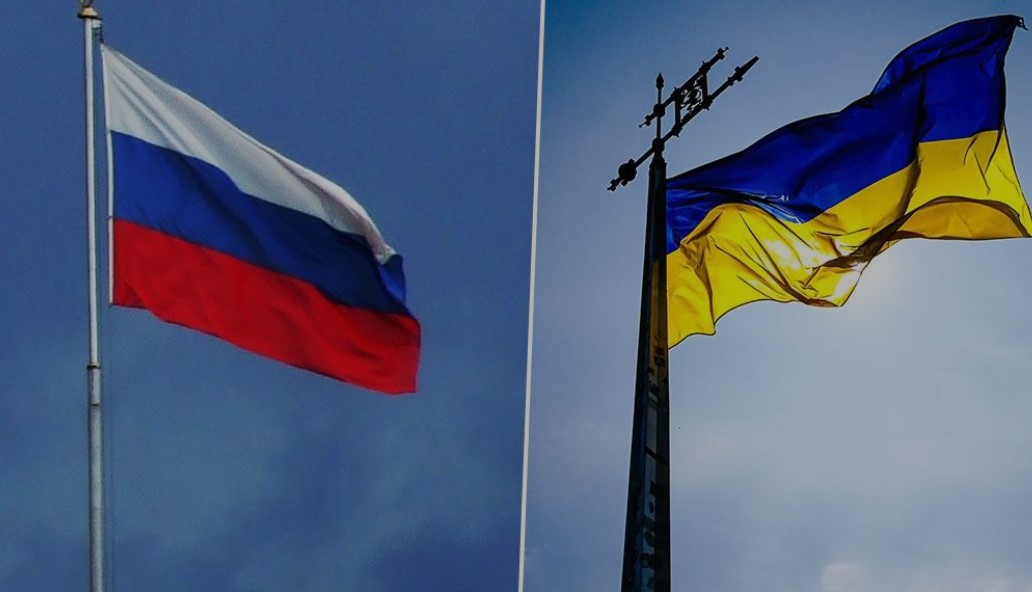
The conclusion to be drawn from all this data is that, in this conflict, neither side is justified in claiming that it is fighting against fascism or Nazism. For years, the far right has been betting on multiple sides of international conflicts, with the aim of coming out on top regardless of the «outcome.».
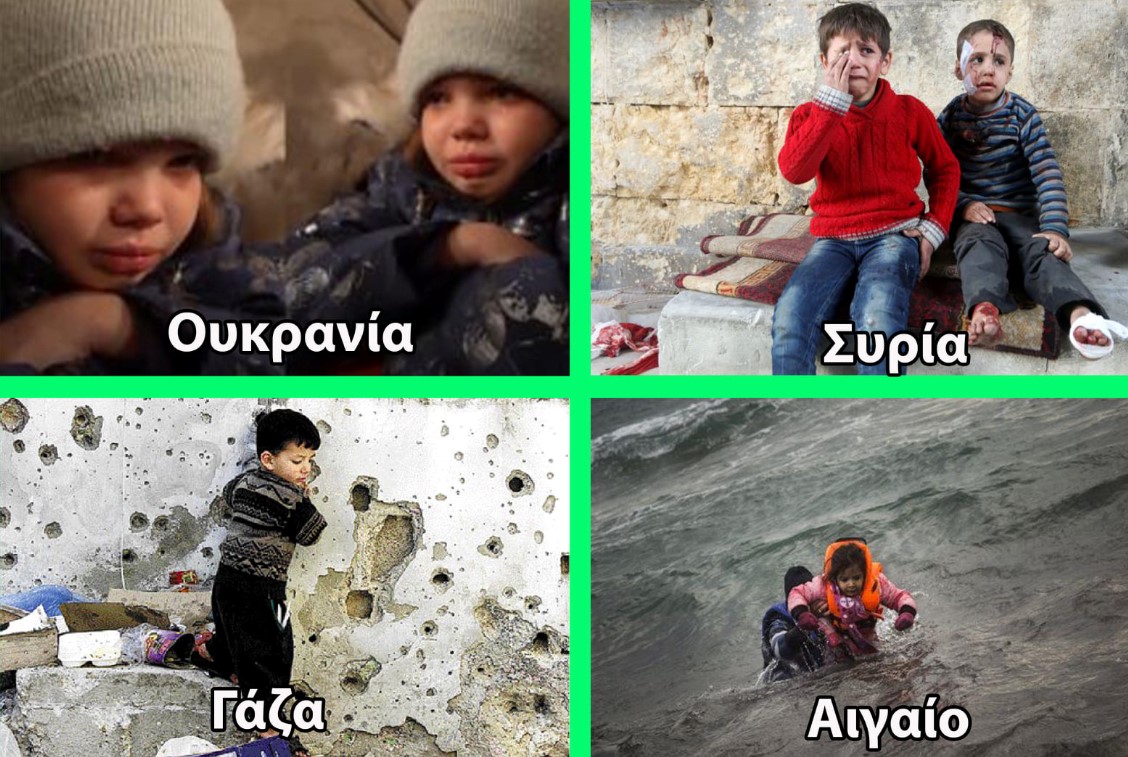
And indeed, it comes out ahead. No matter which side «prevails» in this intra-capitalist conflict of interests, the only certainty is the rise of local nationalisms and the strengthening of fascist and militarist organizations. Once again, the victims will be the innocent, civilians, children, and minorities.