A senior US official has denied that a US Navy ship was hit by Iranian missiles, Axios reporter Barak Ravid said.
Earlier, the Fars news agency reported that two missiles fired at a US warship when it ignored Iranian warnings near the coastal city of Jask.
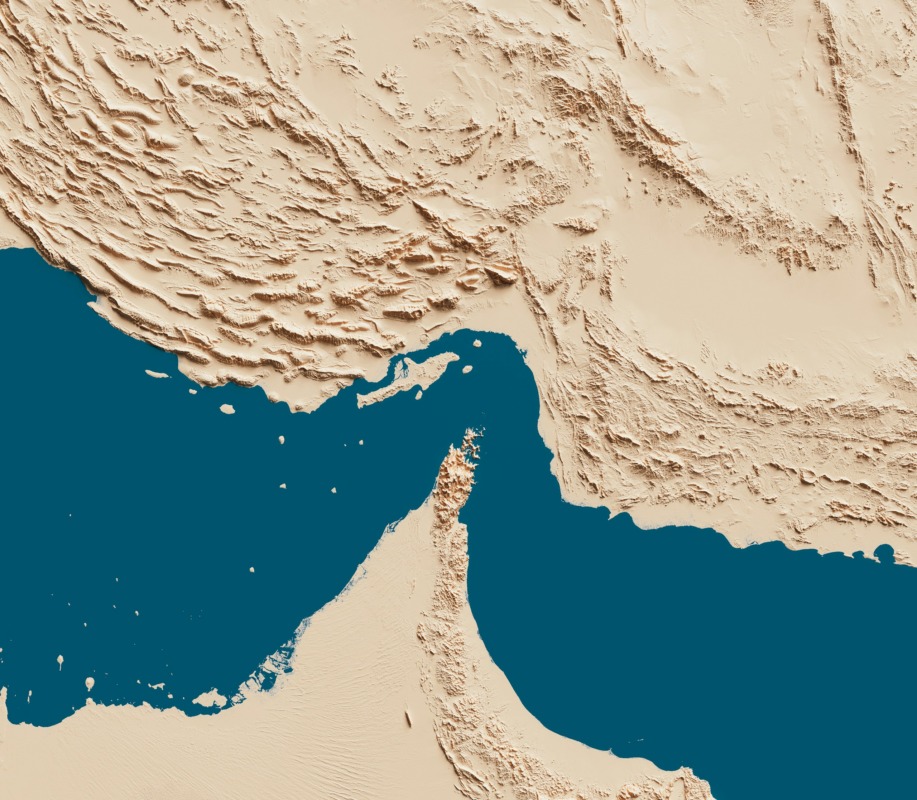
Iran's Navy has prevented «US-Zionist» warships from entering the Strait of Hormuz, Iranian state television reported.
Iran has warned US forces not to enter the Strait after Donald Trump's statements that the US will escort ships stranded in the Gulf by hostilities in the US/Israel-Iran conflict.
Iranian missiles hit a US frigate in the Strait of Hormuz, according to Fars
A US Navy frigate attempting to enter the Strait of Hormuz was hit by two Iranian missiles as it sailed near the island of Jask, Iran's Fars news agency reported citing local sources.
The US warship ignored Iranian warnings, according to Fars.
Brent and US WTI crude futures prices rose, by around 4%, following reports that Iranian missiles hit a US frigate in the Strait of Hormuz.
At the same time, Donald Trump announced yesterday Sunday that he ordered an operation to begin today to end the closure of the Strait of Hormuz for the past two months to allow ships blockaded there to leave the Gulf, with Iran objecting that any US intervention would be perceived in Tehran as a violation of the ceasefire.
The President of the United States, the country that launched the war with Israel against Iran on 28 February, referred last night to a «humanitarian gesture» and a show of «goodwill» to help the sailors who have been stranded because of the closure of the strait.
From today, the US Navy will escort ships through the Strait of Hormuz «that have nothing to do with the conflict in the Middle East», Donald Trump said via Truth Social.
He warned that if this operation, which he called Project Freedom, is obstructed by the Iranian armed forces, the latter «will unfortunately be met with force».
At the same time he spoke of «very positive» talks with Tehran through Pakistan.
In a communiqué, the joint command of the US armed forces responsible for the Middle East (CENTCOM, «Central Command»), said that missile destroyers, more than 100 aircraft of all types and some 15,000 military personnel will participate in the operation.
The operation is infuriating Iran, which warned yesterday that it would consider it a violation of the ceasefire declared on 8 April.
«Warning: Any US involvement in the new naval regime in the Strait of Hormuz will be considered a violation of the ceasefire,» Ebrahim Azizi, chairman of the Iranian parliament's committee in charge of national security affairs, said in English and Persian via X.
«Shortcomings»
Since the outbreak of the war, Iran has closed the Strait of Hormuz, through which a fifth of the world's oil and gas consumed in peacetime passes. In retaliation, Washington in April imposed its own blockade of Iranian ports.
The closure of the Straits has «huge implications for the Indo-Pacific», Japanese Prime Minister Shanae Takaiichi said today during an official visit to Australia. The region is highly dependent on the Middle East for its energy supply.
The blockade of the Straits has fuelled oil prices, which have reached their highest level since February 2022, when Russia invaded Ukraine. Prices, however, appeared to be stabilising this morning in early trading in Asia, with a barrel of North Sea Brent, a benchmark variety in global markets, rising marginally by 0.39% to $108.59 at $108.59, down sharply from $126 where it had reached on Thursday.
The number of merchant ships present in the Gulf stood at 913 on April 29, 270 of which were oil tankers and about fifty gas carriers, specialist firm AXSMarine reported last Thursday. The number of seafarers on board is somewhere in the region of 20,000, according to a senior official of the UK Maritime Safety Agency UKMTO.
«Many of these ships are experiencing shortages of food and all the other items they need so that their crews can stay on board in a healthy manner,» Donald Trump said.
On Friday, his government also warned ships that pay Iranian authorities to cross the strait that they are subject to sanctions.
«In the cemetery»
Since the outbreak of the war, which has cost thousands of lives, the vast majority of them in Iran and Lebanon, Tehran has imposed de facto transit fees on ships wishing to cross the Strait.
An adviser to Supreme Leader Mojtaba Khamenei threatened yesterday that US warships would be sunk and their forces would end up «in the graveyard», accusing Washington of «pirate» behaviour.
The stalemate has persisted since a ceasefire was declared on 8 April, after some 40 days of US-Israeli bombing and Iranian retaliation across the region.
Between the Strait of Hormuz and the issue of the Iranian programme, the disagreements between the two sides are so great that attempts to resume negotiations have gone nowhere - the first meeting, in the Pakistani capital, was fruitless.
In an attempt to give the talks another chance, Tehran, through Islamabad, submitted a new proposal to Washington, which responded, Iranian diplomats said yesterday.
According to the Tasnim news agency, Iran demands in this plan that US troops be withdrawn from sectors near its territory and that the blockade of Iranian ports be lifted, the release of frozen Iranian resources, the payment of reparations, the lifting of sanctions, a «mechanism» for the Strait of Hormuz and the declaration of «the end of the war on all fronts, including Lebanon».
The issue of the Islamic Republic's nuclear energy programme is not included in the plan, although it is considered a central issue by the US and Israel, which accuse Tehran of seeking to acquire a nuclear arsenal - something the Iranian side has denied for decades.