By Vassilis Tsolakidis.
It is now three years since the publication of Law 4513/2018 on the establishment of energy communities with the sole purpose of «promoting the Social and Solidarity Economy, innovation in the energy sector, addressing energy poverty and promoting energy sustainability, the production, storage, self-consumption, distribution and supply of energy, enhancing energy self-sufficiency and security in island municipalities, as well as improving energy efficiency in end-use at local and regional level».
A new cooperative institution for Greece, following the models of successful Northern European countries, adapted to the Greek reality and with care for overcoming «traumatic experiences», which our cooperative past carries... Many actors in the field, citing this reason, have expressed their disdain, predicting the failure of the Energy Communities from their very birth.
However, many of our fellow citizens welcomed the institution with enthusiasm and ambition for massive social participation in the energy transition, green and sustainable economic development of the country. The scientific community and the ecological movement as a whole highlighted the necessity of the institution as much as they could: not only for socio-economic reasons, but mainly in technocratic terms, which serve the decentralised dispersion of many small RES units close to consumption, necessary to limit the ecological footprint and the maximum possible resilience of the country's almost saturated energy network. This is in contrast to large RES plants, which place an excessive burden on nature and require a very strong energy transmission network.
Three years of the institution's lifetime is a minimum duration for the usual bureaucratic maturation time of corresponding RES permits.
But the reality of the numbers shows that the institution's care and privileges have been more effective than expected.
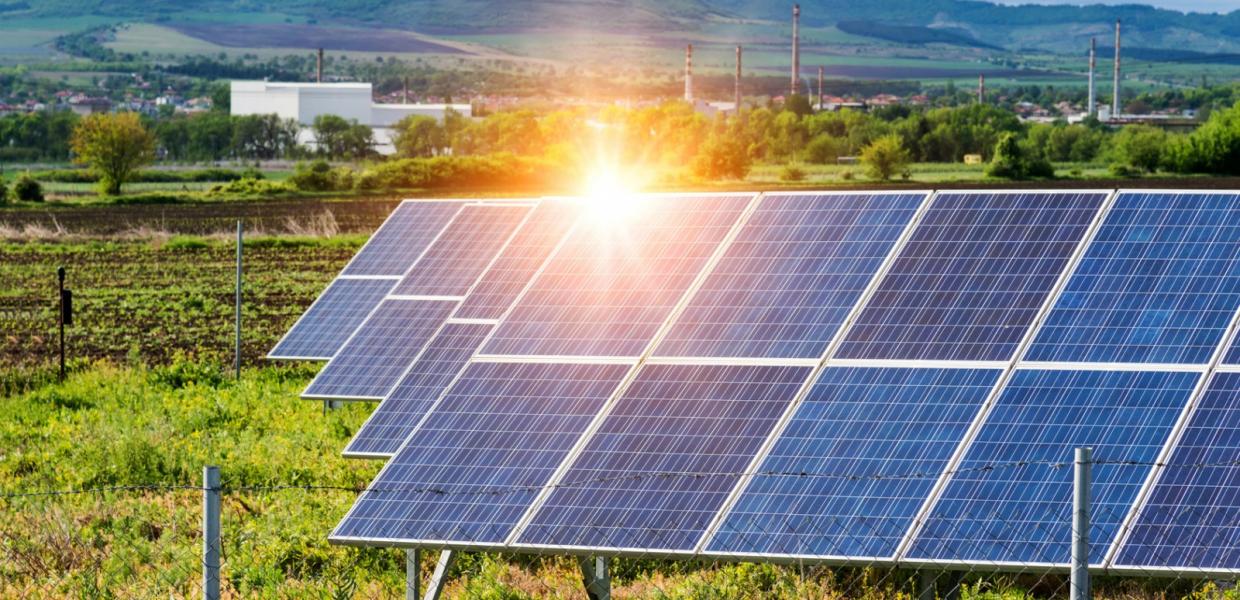
Already since the publication of the law in 2018, not only energy communities have started to be established, but also applications for permits, mainly for small photovoltaic parks, have started to be submitted immediately. Since then until today, about 500 Energy Communities have filed applications with complete dossiers for 4,913 projects with a total capacity of 3,831,284 megawatts (3.831 gigawatts) and a budget of EUR 2.8 billion. By the end of 2020, final connection conditions were issued and 1,350 projects with a total capacity of 928,057 kilowatts and a budget of €650 million are under construction, of which 385 projects with a total capacity of 270 Megawatts and a budget of €200 million have already been connected. The projects of Energy Communities connected within the year 2020 constitute 57.5% of the total PV farms. In the current year, it is expected that the photovoltaic projects by Energy Communities will literally break all records of construction and connection.
Greek society, especially the provinces, with the pioneers of primary production, embraced this pioneering institution and turned it into a useful tool for effective participation in a fair and green economic development of the country.
* Vassilis Tsolakidis is a Strategic Planning Consultant for Environment - Energy - Climate and former President of KAPE