Η accuracy came to stay after the Russia's invasion of Ukraine. The war will make food and energy expensive for the next three years, warned the World Bank. The report heightens fears that the global economy is heading toward a repeat of weak growth and high inflation, referring to the biggest economic shock since the 1970s.
In a grim analysis, the Washington-based World Bank announced that there is a risk that persistently high prices for basic goods could last until the end of 2024 and that stagflation could put enormous pressure on the cost of living.
The largest increases since the 1973 oil crisis
The latest outlook in the Bank's analysis of the commodities markets noted that over the past two years, the world has seen the largest increase in energy prices from the 1973 oil crisis and the largest increase in the prices of food and of fertilizers since 2008.
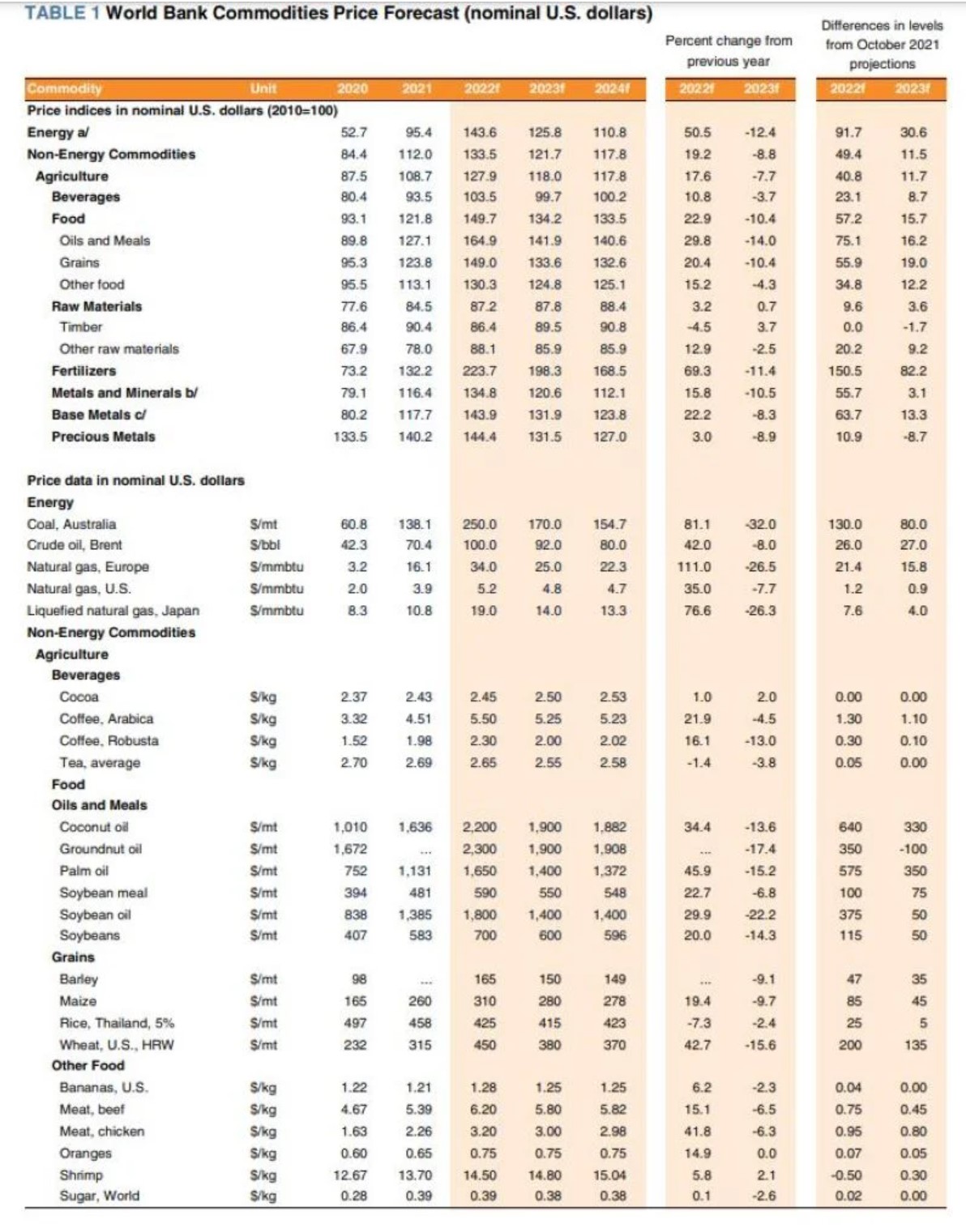
It is likely that energy and food costs, even if they decline from current levels, will remain above the average for the past five years in end of 2024. As a result of the trade and production problems caused by the Russian invasion of Ukraine, the Bank forecasts a 50% increase in energy prices this year.
He expects the price of crude oil to Brent It will average $100 per barrel in 2022, its highest level since 2013, and represent an increase of more than 40% compared to 2021. Prices are expected to fall to $92 in 2023, but will remain well above the five-year average of $60 per barrel.
His European prices gas are expected to double in 2022 compared to 2021, while the prices of carbon are expected to be 80% higher.
40% increase in wheat
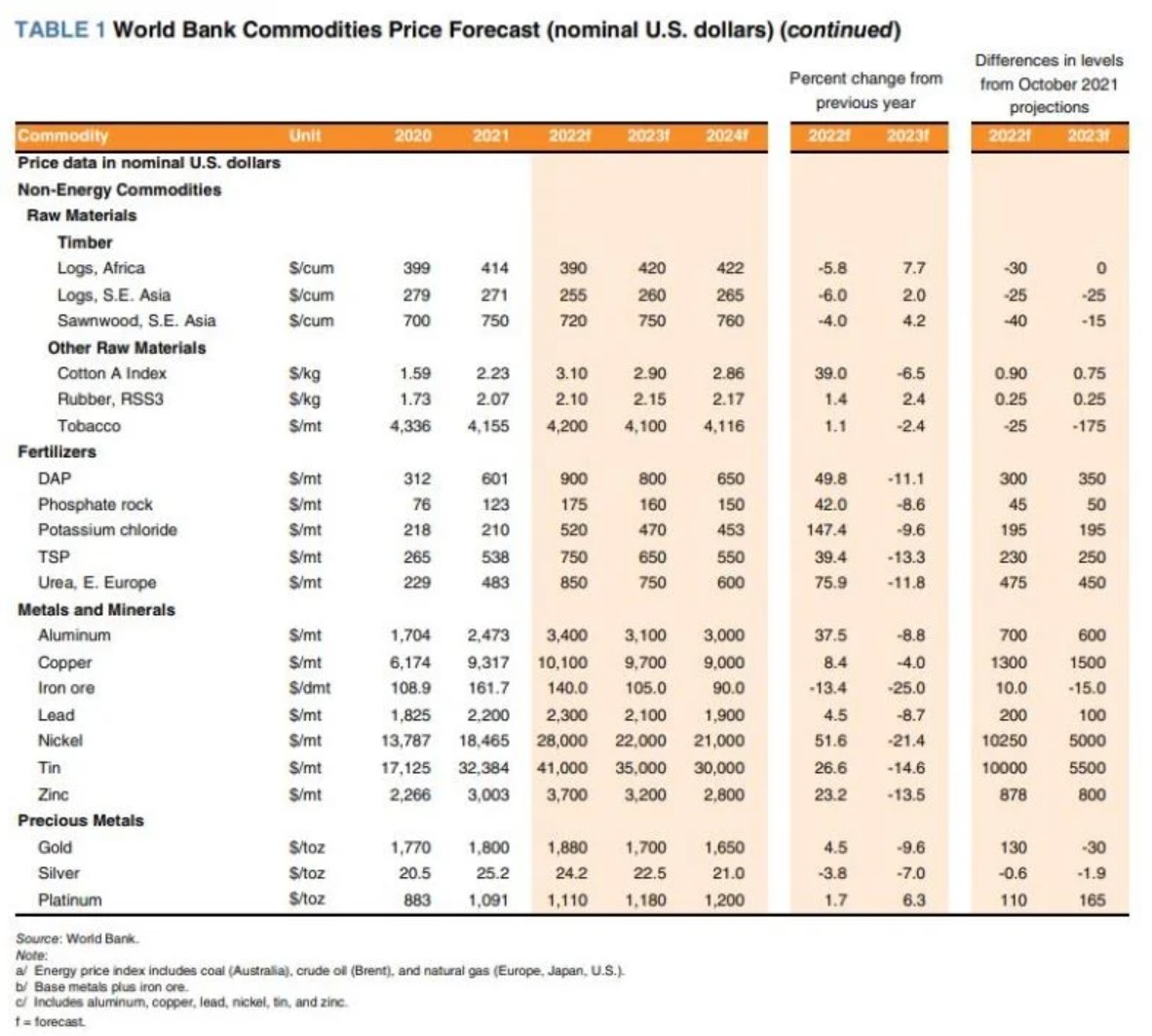
The Bank expects that Wheat prices will rise by more than 40% this year, putting pressure on developing economies that rely on wheat imports from Russia and the Ukraine.
Prices at the cotton continued their upward trend, which began in early May 2020 and reached an 11-year high in March. Growth is expected to reach 90% in 2024 compared to 2020. The increase in fertilizer prices will reach 69.3% this year compared to last year.
In the food sector, growth is estimated to reach 22.9% in 2022 compared to 2021.
Indermit Gill, Vice President of the World Bank, stated: «Overall, this amounts to the biggest shock to the commodities sector we have experienced since the 1970s. As was the case back then, the shock is being exacerbated by increasing restrictions on trade in food, fuel, and fertilizers.”.
These developments have begun to broaden the scope of stagflation. »Policymakers should seize every opportunity to boost domestic economic growth and avoid actions that would harm the global economy.".