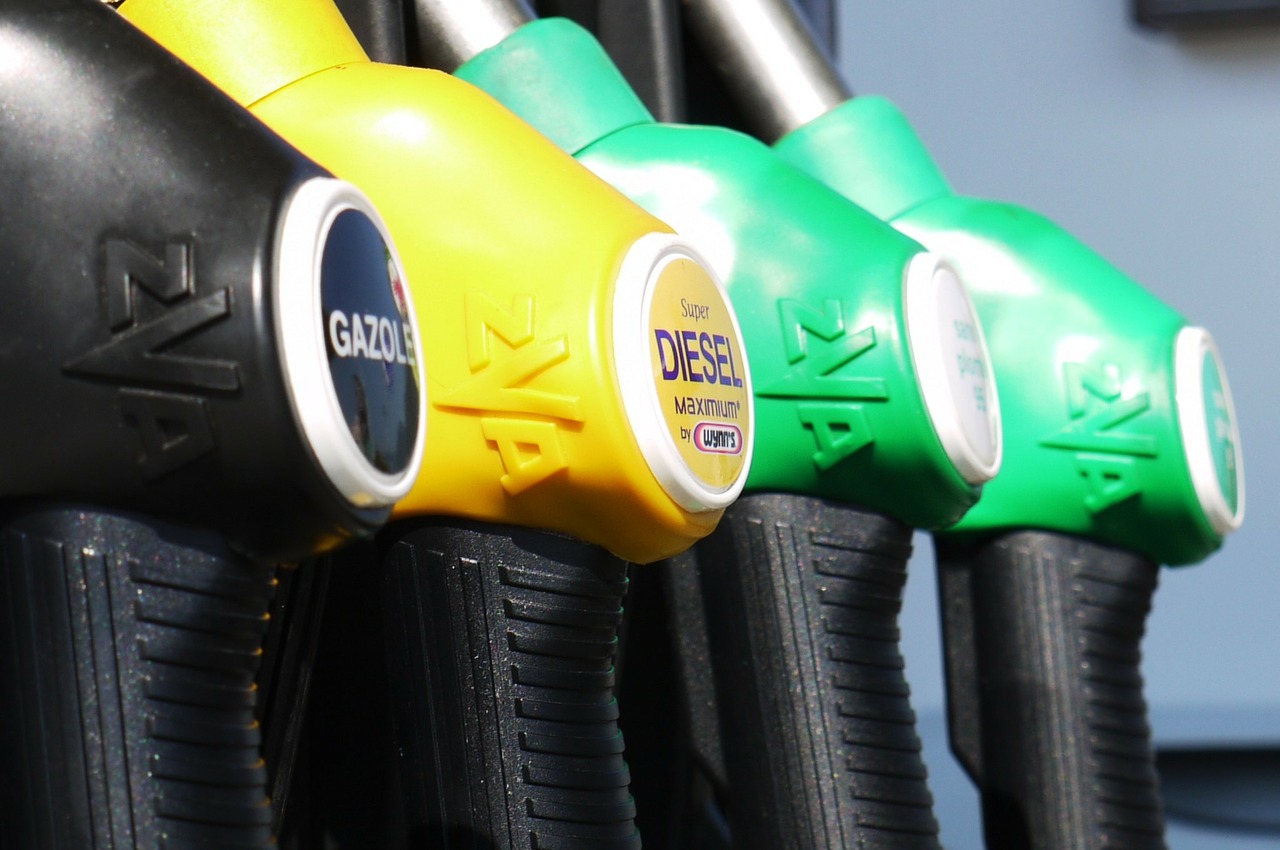
The explosion in the price of heavy oil, which concerns one of the ramifications of the energy crisis that culminated in Russia's invasion of Ukraine, has sent shockwaves through consumers' pockets.
The result is an unprecedented increase in fuel prices worldwide. Of course, however, the countries that are feeling the pinch most are those with low incomes.
Greece is currently groaning under the burden, as petrol has already exceeded €2 per liter, making it the 6th most expensive in Europe.η most expensive country for liquid fuels in the EU and 17η in the world! In Monte Carlo, Luxembourg, and Switzerland, unleaded gasoline is cheaper. And it seems that the ’crazy« race for appreciation will not stop unless there is some intervention.
However, such intervention does not appear to be on the horizon. In the Cyclades, the average price of unleaded petrol has exceeded €2.2 per liter and on some islands is approaching the €2.4 mark. Gas station owners warn that we are rapidly heading towards an unleaded price of €2.5 per liter, but the government remains unmoved from its established position for the time being.
What are these? That the excise duty on fuel cannot be reduced because the relevant revenues have been included in the budget and there is no other area from which to draw the resources that will be lost. Speaking on Real FM on Friday, Akis Skertsos claimed that if the country does this, it will have to go to the markets to borrow money...
We also heard Adonis Georgiadis accuse the opposition, which is insistently demanding a reduction in excise duty, of favoring the upper social classes because those who Those who will benefit most from such a reduction are «those who own... Cayennes and Jaguars.». He claimed that part of the revenue generated by the excise tax would be allocated to support the socially disadvantaged and attacked SYRIZA, accusing it of demanding an anti-popular measure.
Admittedly... the reasoning of the Minister of Development is philosophical, who, like Aris Portosalte, claimed that those most affected by the exorbitant price of gasoline in Greece are the rich and not the poor. However, anyone can say this unchallenged in a country where more than 90% of the media fawn over the government day and night.
The Cyprus model weakens any government narrative anyway. And there, the increase in fuel prices was rapid, with a rise of up to 30 cents per liter in two months, resulting in a backlash.
The plenary session of the Cypriot Parliament unanimously passed an emergency law to reduce the tax, with the reduction taking effect from March 8 to June 1, in order to keep prices down.
The special consumption tax fell at the lowest levels permitted by the European Union. The reduction is 7 cents per liter for gasoline and diesel, which increases to 8.3 cents including VAT. Thus, the average price of unleaded 95 octane gasoline per liter in Cyprus is, costs €1,442, with the cheapest gas station selling it for €1.383 and the most expensive for €1.486 per liter. In Cyprus, how did they figure out where to make up for the loss?;
The cost to the end consumer's pocket in terms of fuel is prohibitive in Greece: our country has one of the highest excise duties in Europe (to be precise, the fourth highest in the EU), which amounts to 0.70 cents per liter, while VAT is at a high 24% (in Cyprus 19%). According to the European Union, the minimum excise duty to be imposed per liter of gasoline is 0.36 cents per liter. So in Greece we have almost... double the minimum excise duty., for reasons that no one can explain in a country with these wages.
In a simple example, if Greece were to vote tomorrow to reduce the excise duty on fuel to the minimum level, then the price of gasoline would immediately fall to the level of 1.60-1.70 euros per liter, without changing the VAT.
Again, we would not fall to the levels of Cyprus, because there the refineries are state-owned and the state can regulate prices, whereas here we have a free market (cartel-type), which profits when it finds fertile ground, as is the case with the current international conditions.
«What are the refineries doing? While they are not buying continuously and are selling from their reserves, the invoices they send us are constantly increasing. They are priced at the current increased rates. and not at the lower price at which they purchased the oil, thus reaping huge profits from the increases they impose on us,» Maria Zaga, president of the Attica Gas Station Owners Association, said on Wednesday on ERT.
She added, continuing her «accusation» against the government: «The Minister of Development controls us, he puts a cap on us, but I am curious as to how he controls the refineries. We have been saying for years that gasoline in Greece is unreasonably expensive, it is a luxury item, because it has 24% VAT and high excise duty. It is unfair. Why doesn't the government take a step in this direction?»
In other news, BP announced profits of $13 billion for 2021, Shell $19.31 billion, and Exxon Mobil $231 billion...