He appears reassuring about the course of the pandemic, but also about the Centaur variant that appeared in our country this week, Dimitris Paraskevis, vice president of EODY, associate professor of epidemiology at the National and Kapodistrian University of Athens, and member of the Ministry of Health's Expert Committee. In an interview with Praktorio FM and on Tania I. Mantouvalou's show «104.9 HEALTH SECRETS.» However, he does not rule out a new surge around the end of October or beginning of November. As he explains, since mid-July there has been a continuous and steady decline in the number of cases, which has also translated into a decline in the hard indicators, i.e., hospitalizations and deaths. «The picture this autumn is much better than in other years. However, it is estimated that we will have a surge. We cannot determine when this will happen. Perhaps in late October or early November. If this happens, it is possible that by Christmas the situation will have de-escalated and we will be in a period where the number of cases will not be very high.» Regarding the Centaur subvariant, the vice president of EODY states that, according to the data available to date, it has not dominated in any area where the BA5 subvariant, a member of the Omicron variant «family,» coexists. «As in our country, the previous wave was caused by BA5, which means that there is probably no risk of a new surge. I say this with some reservation, but I believe this is the most likely scenario. So far, Centaurus has only prevailed in India, where BA5 rates are extremely low.» But what do experts expect for the coming period with relaxed measures, lower temperatures, and soon greater mobility of people in enclosed spaces?;
No measures are being implemented on a horizontal basis worldwide.
«Nowadays, measures are not being implemented on a horizontal basis worldwide due to the characteristics of the virus. We are in a new phase of the pandemic, where the likelihood of serious illness is significantly lower, but we must nevertheless emphasize and reiterate that people belonging to vulnerable groups in particular should be especially careful and comply with the measures. They should also decide as soon as possible to get a booster shot if more than 3 months have passed since they got the virus or their last shot.
Should I get vaccinated now or next month with the most up-to-date vaccine?;
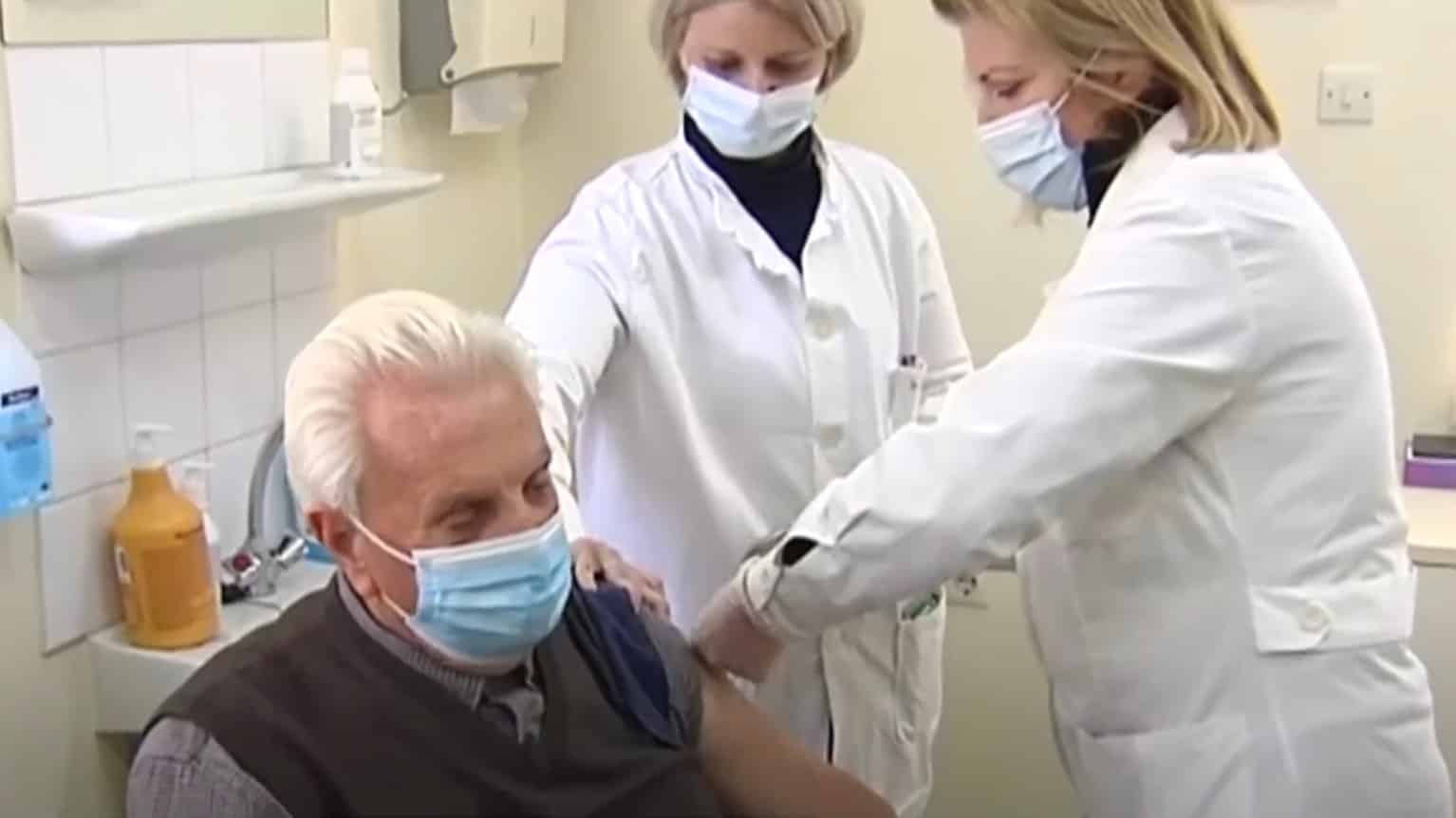
Should I get the current vaccine that covers Omicron 1 or wait another month to get the vaccine that covers the other two Omicron variants? This is the question many people in vulnerable groups are asking themselves. Both vaccines are estimated to be slightly more effective in protecting against infection with the Omicron sub-variants. The protection they provide against severe disease is similar to that of the older vaccines. The question of what we should decide depends on which subvariant will dominate in the winter. Since we do not know if there will be a new subvariant and what it might be, we do not know which of the two vaccines, O1 or 04 05, will have the advantage. This means that we can choose whether it is necessary, if we belong to vulnerable groups and if we need to be vaccinated immediately, because these are vaccines with improved characteristics. Under no circumstances can anyone say with certainty that one will have an advantage over the other in the event of an outbreak in mid- or late autumn or winter.
As the virus continues to circulate with different variants of Omicron, it has mild characteristics.
The issue of mutations is troubling scientists and the general public alike, with everyone hoping for a return to 2020 if the virus reappears in an aggressive form. Professor Dimitris Paraskevis, an expert on mutations, says that this possibility is extremely low because even if a new variant emerges, it would have to be more contagious than Omicron in order to become dominant. But even if this happens, due to the high vaccination rate and natural infection in the population, there is already immunity to severe disease. «Until the arrival of Omicron, a new variant appeared approximately every six months, such as Gamma and Delta. However, since Omicron was detected in mid-November 2021, we have seen the emergence of sub-variants. In other words, we have viruses that belong to the large Omicron group. This makes the course of the virus more predictable, not absolutely, but certainly more so. As long as the virus continues to circulate with different variants of Omicron, it means that it has mild characteristics.».
The possibility of starting flu vaccinations earlier remains open
Regarding the flu, which has weakened due to the use of masks over the past 2.5 years, Mr. Paraskevis explains that for this reason, our immunity has also weakened. «And that is why it is estimated that this year's flu season will be more intense than in other periods. This is an indication that all individuals belonging to vulnerable groups should be vaccinated and that the rest of the community should adhere to the measures, especially during periods of outbreak. And why not decide that everyone, and more people, should be vaccinated against the flu, so as to reduce the risk of infection?» When asked whether, due to the early arrival of the flu this year, there is a possibility that vaccination will also take place earlier, the vice president of EODY replies that this has been discussed. «It is possible that vaccination will indeed start earlier, but I cannot say for sure.».
Climate change monitoring must be strengthened
When asked how climate change has affected viruses and pandemics, Mr. Paraskevis replies that it can affect the mobility of humans, animals, and even insects, and because humans live close to the natural environment and animals, climate change can increase the risk of disease transmission from animals to humans, or vice versa, and change the map, or cause the reappearance of diseases that are not very common today. «Public health agencies have programs in place and are monitoring any changes brought about by climate change, both in terms of the natural and animal environment and the frequency of diseases, and in any case, we are keeping our eyes open. Surveillance is in place so that we can detect and respond to any challenges to public health. This is an area that needs to be further strengthened, but we plan to be able to step up our actions so that we can address any problems related to climate change.