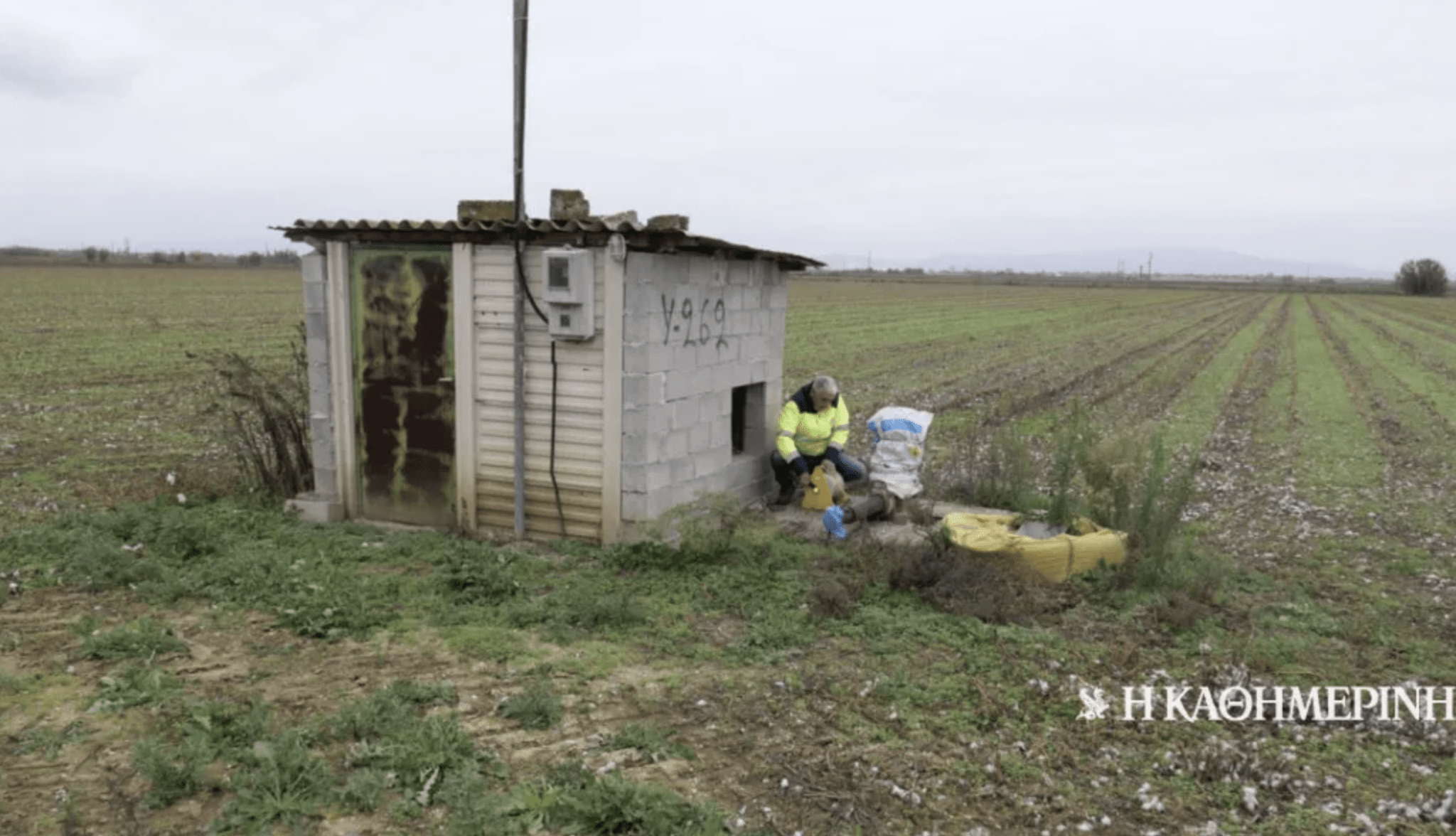
This year's tough summer of drought and dry spell, a phrase heard many times throughout Greece: «We will mobilize more drilling rigs.». But how appropriate is this solution in a country that, until recently, did not have a complete picture of the number of active wells?;
Just last year, The Greek Geological and Mining Research Authority (EAGME), formerly IGME, has completed the recording of boreholes at a rate of 85%. The remainder will be completed with new European funding.
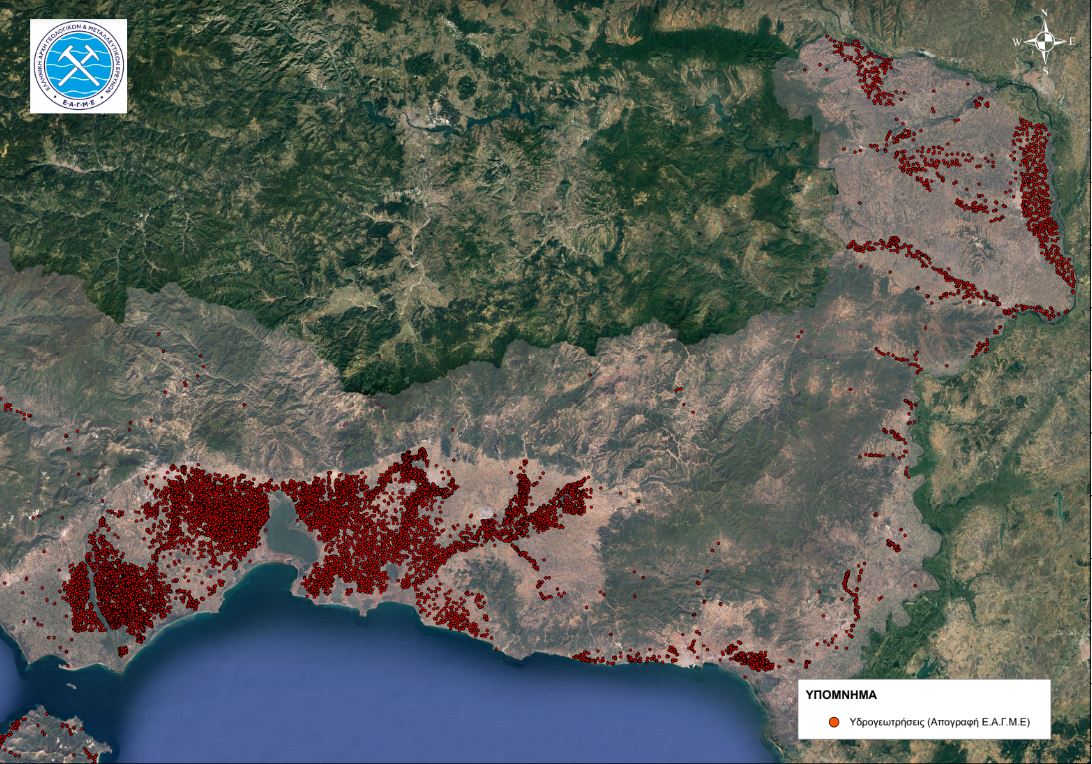
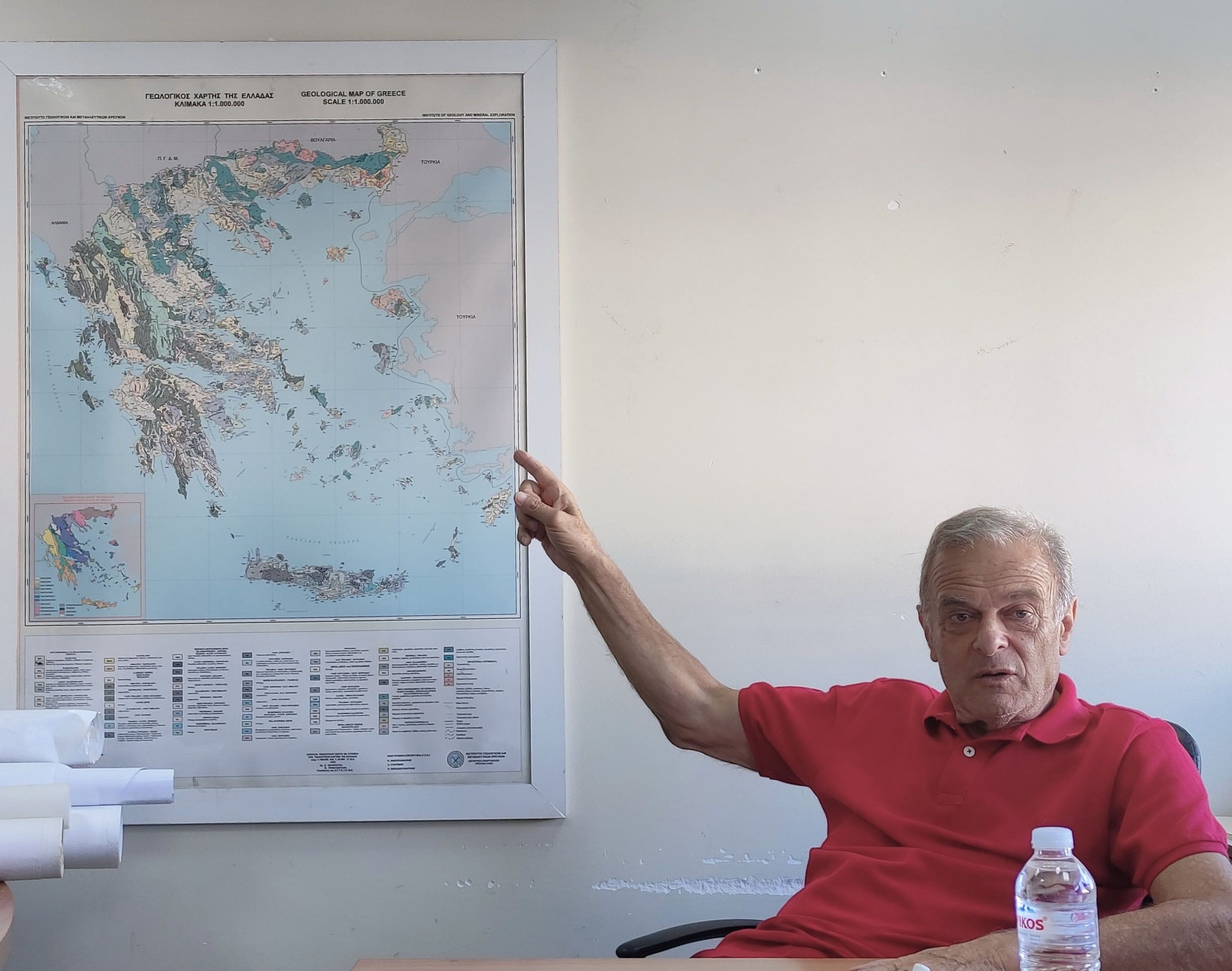
According to the project's scientific director, PhD in Hydrogeology from the University of Bologna, member of the International Association of Hydrogeologists, and director of Water Resources and Geothermal Energy at EAGME, Panagiotis Sabatakis, «The EAGME teams combed the Greek countryside. We recorded the location of the boreholes with absolute precision, who owns each one, what they are used for, their depth, and how many days and hours they are used. A first basic conclusion from the recording is that drilling in Greece is less than scientists had estimated, before they start work.».
Mr. Sabatakakis emphasizes in «K» that «at this moment every well in the country has an identity. We now have a database that has been submitted to the Ministry of Environment and Energy. This data can be gradually incorporated into the ministry's water management plans, which, as is well known, are the “pilot” based on Directive 2000/60 on the management of surface and groundwater resources.
With the completion of the 85% project, approximately 110,000 boreholes have been inventoried throughout the country. The project team estimates that there are another 20,000-25,000 that have not yet been inventoried.
«Initially, we estimated that there were between 160,000 and 170,000, but there were agencies—regions, municipalities, etc.—that even mentioned 400,000 boreholes. These numbers do not exist,» emphasizes the experienced hydrogeologist, noting further that Illegal drilling is low in total number and does not appear to exceed 10%. The above figure does not include hidden underground boreholes, which, although constructed in urban areas and secretly pumping small amounts of water for gardens, do not pose a problem. The areas where further supplementary inventory work is needed are part of the Peloponnese, the Ionian Islands, and part of the Cyclades.
The 135,000 boreholes are considered a fairly large number compared to other countries. However, as the expert explains, «Greece does indeed need many boreholes, both because of its geomorphology and climatic conditions, and because of its high water supply and irrigation needs. Without them, we would not have been able to maintain our farmers» crops or supply water to most of the country's municipalities.".
Approximately 110,000 boreholes have been registered throughout the country, while it is estimated that there are another 20,000-25,000 that have not yet been registered.
Commenting on the findings of the survey, Mr. Sabatakakis emphasizes that Epirus is characterized by a surplus and remarkable water potential.
Western Central Greece is also considered a surplus area, due to its large surface and groundwater potential and limited irrigation needs, with the exception of the Agrinio plain. In contrast, Thessaly, due to its high irrigation needs, and the Cyclades, due to tourism, have the largest deficit.
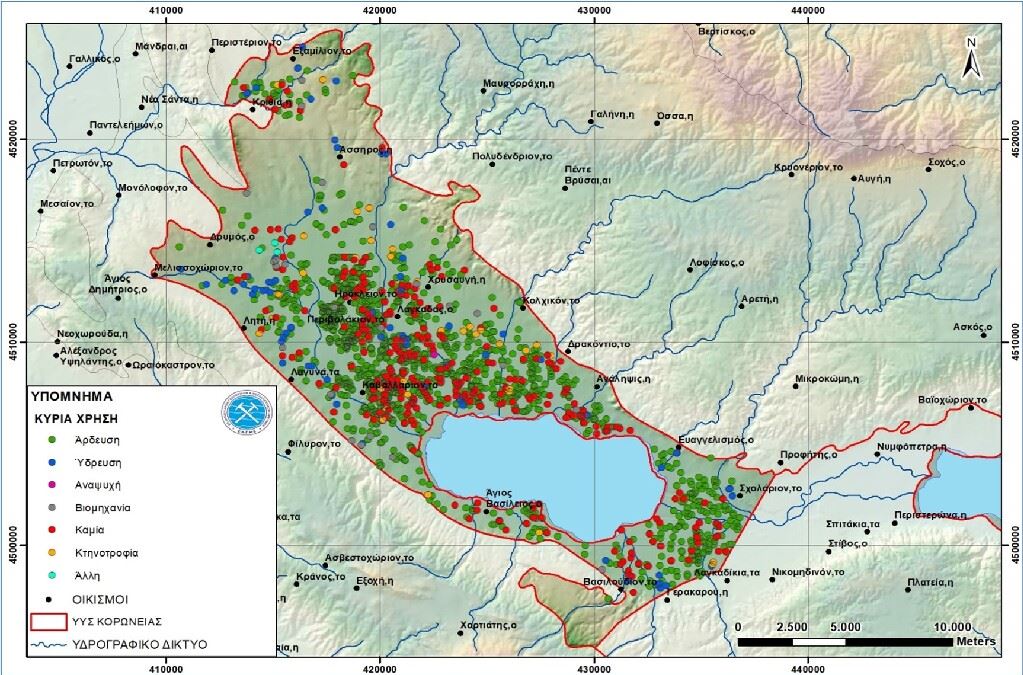
«Thessaly is heavily burdened. The number of boreholes there has reached 23,000,» notes Mr. Sabatakakis.
«The Cyclades have been ravaged»
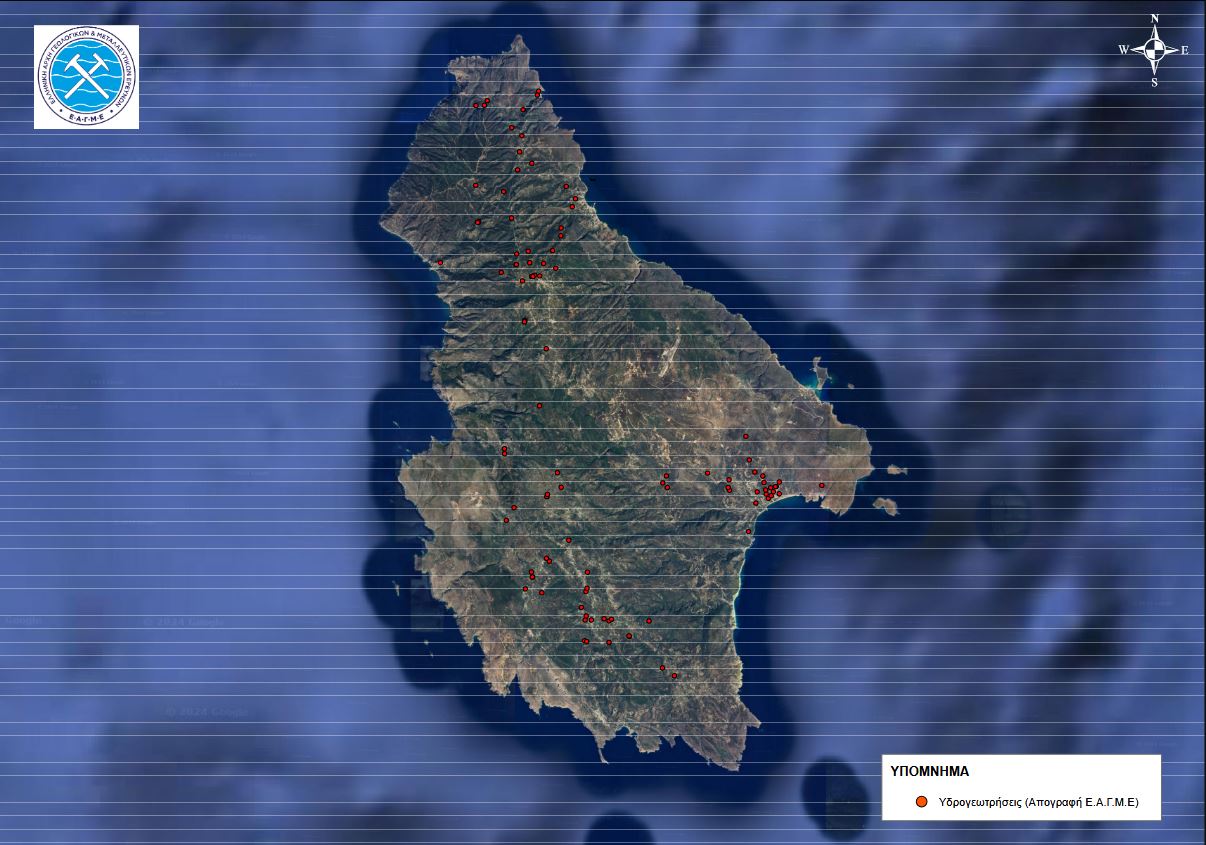
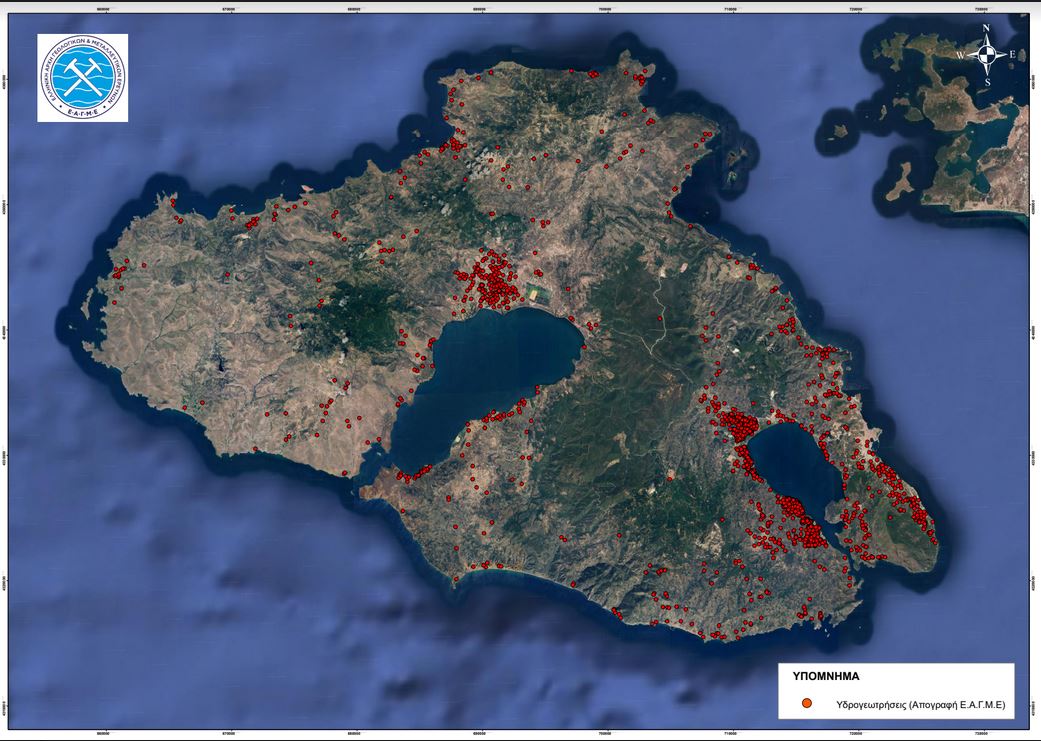
As for the Aegean Sea, and specifically the Cyclades, he describes them as «the most obvious areas. They have been “punctured”. Unfortunately, there is also some shady activity surrounding how the swimming pools on these islands are supplied.
«Our information tells us that in many cases they are filled with water from boreholes. Large tourist facilities must take responsibility for constructing desalination plants. Mayors can no longer decide whether to provide water to large businesses, depriving citizens of it.».
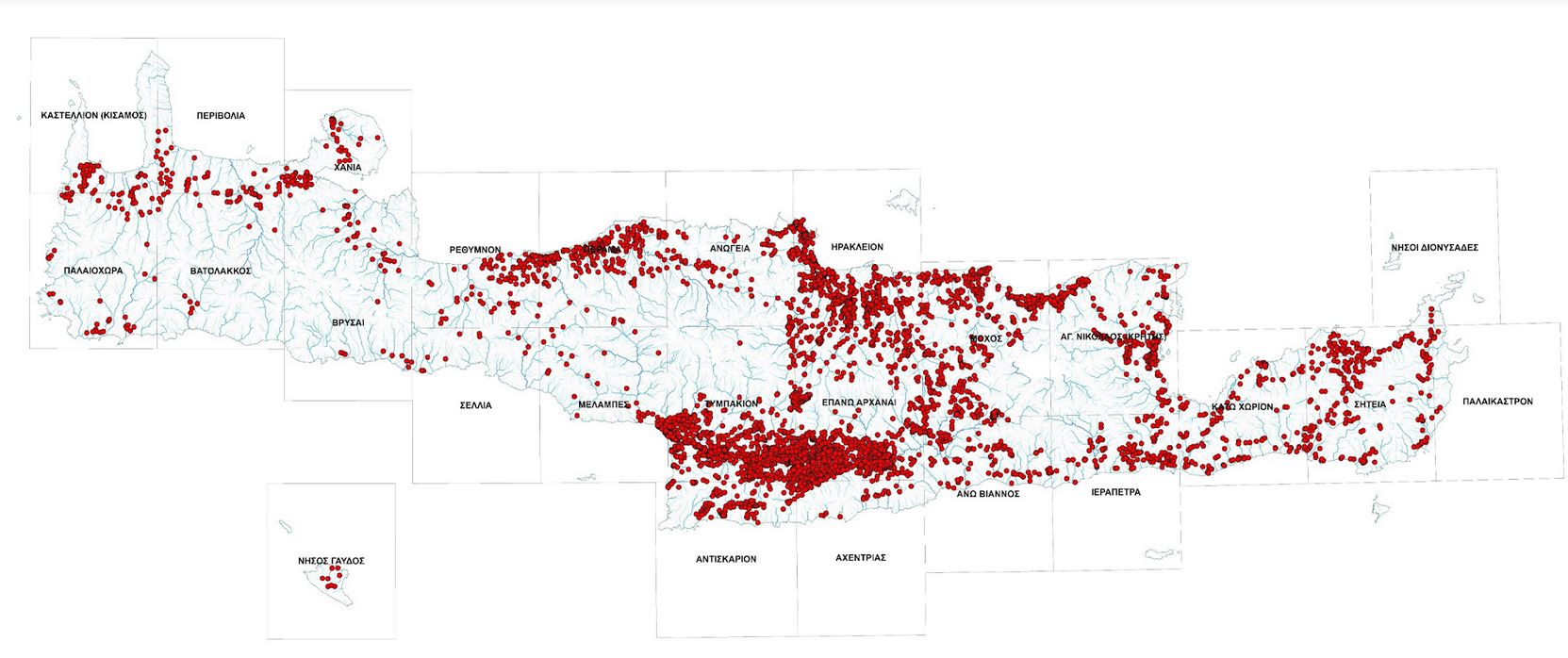
However, they are also heading towards saturation. areas of Crete, where, however, there are fewer than 7,000 boreholes. In Thrace and Eastern Macedonia groundwater is in better condition.
«Mayors can no longer decide whether to give water to large companies, depriving citizens of it.»
Another area where groundwater is nearing depletion or has already been depleted, apart from Thessaly and the Cyclades, is the Argolic Plain.
In fact, it is very likely that when the inventory of the Peloponnese is completed, it will show that its three water districts (each water district corresponds to 2-3 prefectures) exceed Thessaly in terms of boreholes.
How we ended up in a drilling frenzy
As Mr. Sabatakakis explains, in the late 1960s and early 1970s, when the country was entering a period of agricultural growth, The «fuel» everyone was looking for was water. In several cases, the state was unable to keep pace with demand and launch projects that would supply water to rural areas. In some other cases, it succeeded by building dams or land improvement projects.
Where this was not achieved, farmers began to build their own water collection systems. «At that time, there was no fertile lowland area in the country—from the plains of Messara and Timbaki in Crete to Evros—where drilling did not take place on a massive scale. The fact that they were affordable in terms of cost caused their numbers to skyrocket. In the 1980s and 1990s, we really had a ’pandemonium’ of drilling.
Water supply accounts for 13%-15% of the total water used in our country (either groundwater or surface water). The remaining 85% is used for irrigation.
The drought made its presence felt strongly in 1990. At that point, a second wave of drilling began, with farmers searching for water at even greater depths. «In the intensively farmed plain of Argos, we saw irrigated areas gradually “climbing” up the slopes,» he adds.
That year, groundwater levels fell by 40%. Most rivers did not flow at all. The same is happening this year. «In some cases, at this moment, there has been a decrease in groundwater of 40%, in others even 50% and 60%. Nevertheless, It was the groundwater that “kept us going” this summer.», says the hydrogeologist at EAGME, clarifying, however, that The current drought is no worse than that of 1990. It's just that today's consumption needs are much greater, both for irrigation and water supply.
It should be noted that water supply accounts for 13%-15% of the total water used in our country (either groundwater or surface water). The remaining 85% is used for irrigation.
Licensing in an unscientific manner
Continuing to explain the course of drilling in our country, Mr. Sabatakakis notes that ultimately In many cases, permits were granted in areas where they should not have been., resulting in the removal of water due to drilling from sources of significant hydrological value in terms of water supply. These phenomena occurred in the Peloponnese, Central Greece, and Thessaly, but more than anywhere else on the islands, where water is objectively scarce.
A typical example of poor management is the springs that discharge into the mills of Argos, namely Kefalari, Kroi, Amymoni, and Lerna.
«At the moment, the springs have little or no water,» says Mr. Sabatakakis, explaining that the main reason for this is not the drought, but the fact that a network of hundreds of boreholes has been set up in the same catchment area as these precious springs.
«Permits for drilling are granted in an unscientific manner. In a way that roughly says, “stay this distance from the source and this distance from the other well, and... go ahead.”».
It should be noted that these sources supplied water to the entire Argolic plain from Nafplio to Mycenae and Argos, a population of 80,000 inhabitants, who are now facing constant water shortages due to a lack of water.
The director of the water resources department at EAGME is clear, however: «Permits for drilling are granted in an unscientific manner. Roughly speaking, they say, “stay this distance from the source and this distance from the other well, and go ahead”. At the same time, the licensing authorities remain understaffed, especially in terms of the appropriate specialisms.».
Consequently, they have been established in several areas. «This is how we ended up with several coastal municipalities receiving highly brackish water during the summer months., while at the same time a large number of private boreholes are operating in the same area,» he explains.
An indication of the over-pumping of groundwater is that in recent years, boreholes have exceeded a depth of 600 m in some areas. However, as long as the replenishment of underground aquifers is not achieved due to drought, boreholes inevitably have an expiration date.
What needs to be done
Considering the lack of rain and drought, which are to some extent related to the climate crisis in our country, the question arises as to what should be done from now on with water management and the boreholes that often save us but in the long term «condemn» us.
Mr. Sabatakakis emphasizes that There is now an urgent need for a plan to utilize surface water with small to medium-sized reservoirs (low dams). Specific locations with high «hydrological suitability» coefficients must be selected, naturally with a degree of priority based on prevailing irrigation development trends.
He gives the example of a project that could have been extremely helpful, but its completion has been pending for decades. The reason for this is the Filiatra dam in Western Messinia, where irrigation needs for horticultural crops are consistently very high. The then IGME indicated the appropriate location for its construction in 1996. The boreholes were already unable to meet the farmers' needs. The dam was eventually built, but the water supply and transport works are still pending, with the result that it remains inactive.
According to the experienced hydrogeologist, planning for the gradual construction of low dams is required, not with a four-year government term in mind, but over a longer period of time. In this way, the state will be able to gradually incorporate such constructions based on assessed priorities.