The first to venture out on that frosty December morning was the notary Alexiadis, known as Alexiadaros. He crossed the deserted square with brisk steps, wrapped in his black coat and woolen scarf, his hands in his pockets and his nostrils flaring. The north wind blew in crazy gusts from the peaks of Olympus, rising up in the poor, gray day, sad and gloomy.
Alexiadaros fought bravely against the wind—which was on the left side of his obvious stern—and hurried to get to Karaloulis’ café an hour earlier, where there was a stove and tea and sage, and a newspaper and warmth. He could see his windows lit up in the dim dawn, like a safe harbor, and his soul rejoiced. Fifty meters more... forty... thirty... twenty... A little effort, a little perseverance, and the stormy sea of Larissa Square would come to an end.
When he stopped outside Charitos' barbershop, which was still closed, with keen curiosity, a funeral notice was stuck to the door. Fresh from the printer, still wet from the glue.
—Who died again?;
A terrifying struggle raged in the notary's soul. If he deviated from the funeral procession, his curiosity would be satisfied, but he would gain at least three minutes’ delay at the door of the café. If he stuck to his plan, he would escape the harsh north wind for an hour, but he would remain in ignorance and uncertainty.
In the end, curiosity won out. He turned left and headed toward the mourning paper...
"Angeliki Oikonomou," he muttered. I don't know any Angeliki Oikonomou!
He left disappointed that the world had gone to ruin, society had become chaotic, and a bunch of strangers had arrived. He saw where they would die in Larissa, where even he, Alexiadaros, the oldest notary, did not know them. But curiosity once again overcame his cynicism and philosophical disposition... He read the entire obituary with notarial meticulousness:
«Our beloved wife,» he said, "Angeliki Oikonomou, died suddenly. We are holding her funeral today at 11 a.m. at the Holy Church of St. Nicholas. Her grieving husband, Anargyros Oikonomou.".
Alexiadaros jumped up «as if stung by a snake,» leaving me stunned, my eyes fixed on the name of the grieving husband.
— Anargyros Oikonomou! Anargyros Oikonomou! What? Was Argyris married? Was his wife in Larissa? And did his wife die?;
A new attack by the north wind convinced Alexiadaros that there was no reason to sit motionless in front of a cold mortuary when he could continue his musings in front of a warm chamomile tea. He set off at full speed for the café, where he would undoubtedly find the lawyer Christodoulakis, the tax collector Karvakas, and the second-rate politician Moulara, that is, people suitable for discussion and lengthy commentary on the extraordinary event that would shake Larissa.
And indeed, at a table near the stove, the three inseparable friends waited for Alexiadaros—the fourth member of the group—drinking their sweet, thin kaimaki with relish.
—Hello, Alexiadare! How are you? Why are you late today? ;
The notary sat down on a chair and stuck his fat head between them, in such a way that the others understood that he was about to tell them something extraordinary. They leaned in, full of curiosity, their eyes shining and alert, their ears ready to catch even the slightest movement.
"Argyris Oikonomou," said Alexiadaros, "you know Argyris Oikonomou! The architect..."
’Don't mess with them, Argyros and Oikonomou!" said Moulara.
—Well, life is yours...
The other three jumped up.
— What? Argyris died? ;
—I saw them last night. They were like partridges!
—A fifteen-year-old boy! Strong, burly. Come on, Christ!
‘The notary imposed silence.
—Slow down! I didn't say how Argyris died! He's fine!
’Well then, what's the problem?" protested Christoulakis.
—His wife died!
A heavy silence followed the last sentence. Waves of distrust, caution, and self-defense passed over the faces of the three macadamizers.
—Or the woman? Which woman? ;
—Did Argyris have a wife? ;
—But Argyris is unmarried! Alexiadaros raised his hands in confusion.
—What can I say, I don't know! There! Outside Charitos’ barbershop is the mortuary.
All three rushed out into the frozen square. They ran to the barber shop and stood motionless, thunderstruck, in front of the outrageous funeral. Meanwhile, Alexiadaros, excited, charmed, and overjoyed, savored his first sip of chamomile tea with delight.
When Argyris Oikonomou disembarked on a winter dawn from the express train at Larissa Station—where he intended to pursue a career as an architect—he found the city sad, cloudy, cold, with muddy streets and houses devoid of any well-meaning architectural style. Great concerns immediately arose in his mind about the future turnover of his work.
«I don't think my colleagues here are doing a great job,» he thought.
This suspicion quickly turned into conviction when he took a walk from the fortress to the barracks, and from Souflaria to Arnaout Mahala. All the buildings must have been built by practical engineers. And the owners of the three mansions that existed at that time in Larissa were of the opinion that the involvement of an architect from the Athens Polytechnic in their buildings was an extraordinary luxury. There was no such phenomenon in the Thessalian capital. Civil engineers were another matter. They had descended like a swarm of locusts, arriving from the far reaches of the Roman Empire, and were building municipal roads, community roads, provincial roads, and public roads. Others were building flood protection works, digging ditches, building embankments, and installing drainage systems. And a third category—the most influential—worked on large-scale productive projects that would double the size of the Thessaly plain, and the karagounides would tie the dogs with sausages (as the government's pillar, MP Tsipouroulis, told his constituents). But all this fervor does not prevent the Salambria from overflowing every February, destroying the ’flood defences’, mixing up the «productive» areas and wiping out all kinds of road construction from the face of the earth. But such minor setbacks were not enough to deter engineers and contractors. In the spring, with new momentum, new credits, and increased advances, they threw themselves into their work, anxiously awaiting the new flood that would destroy everything... And so it began! Until the end!
This was explained by civil engineer Bakakeas that evening at the Panellinio, over two glasses of Fix beer.
— First, my friend, the people are organized to produce wealth, and then they take care of beauty and art. When the people of Larissa get rich from our work, they'll turn to your architectural insights.
Argyris nodded his head sadly, thinking about the hunger that awaited him. But what could he do? In Athens, following the story of a building whose owner (a wealthy man from Smyrna) had him mixed up with prosecutors and investigators, there was no place for him under the sun of the construction boom. He disliked Thessaloniki because of some duly protested bills of exchange... All that remained for him was the virgin Province. And so he came to Larissa, just as he would have gone to Chania. Two peas in a pod, cut from the same cloth...
In any case, he had to survive. And even if he didn't find customers, he found friends. He had friends everywhere, and indeed beloved friends, madmen, children in the hair, with whom you could talk about anything. Poverty requires good living, revelry, and heartache. Because, after all... He admits that he cannot satisfy his hunger, but his other needs had to be satisfied at all costs. Only the humiliation of his manhood could he not tolerate!
Besides, he was a handsome boy, with dark, playful eyes, a Hollywood moustache, tousled hair, a sweet mouth, an athletic body, and suits with shoulders padded with cotton wool. He knew how to be likable, charming, indispensable. He knew how to charm people—both men and women—how to captivate them, how to get what he wanted from the men and how to make the women love him. And he always got his way.
So he rented a central office, furnished it luxuriously and on credit, hung a bronze sign with titles and names outside, and waited for customers to come.
—If I don't get any cases, I'll go into business. And if I don't succeed in business, I'll at least set up a big business. A good dowry. Mrs. Bakakea is blowing hot air, let her father's public works projects be fine. Of course, my dear colleague is not going to give me his only daughter! But what if I give him a grandchild in advance? What will he do? He'll give her to me...
Ms. Bakakea—a feisty brunette with sweet, smiling eyes—contrary to all expectations, categorically refused to get involved with fancy ties and Argyris's jokes. She preferred to marry a civil engineer, Mr. Zoumis, a short-sighted and stupid man who had been working on the Larissa-Kyriara road (4372 meters) for six years and had not finished it. It was not a road, but a mine. In any case, three months after the wedding ceremony, Mrs. Zoumi sacrificed her marital virtue on the divan in Argyris Oikonomou's office. But what was the benefit for the aforementioned Argyris Oikonomou?;
She fell next to Mrs. Ioannidou, the grain and charcoal merchant, who was a little ugly, a little silly, quite «lively,» and much less traditional than Mrs. Zoumi, née Bakakea. What could be done? They came down to his level... On the twelfth day of their courtship, Mrs. Ioannidou visited Argyris at his office and admitted that she had lost, on that very sofa, the most precious thing she had, or rather did not have... But there was no mention of marriage. Argyris pulled out all the stops, creating an interesting situation. It was a waste of time.
As she later learned, Mrs. Ioannidou was not fortunate in her last attempt and remained barren. And one day, after they finished their passive embraces and were smoking their cigarettes on the rumpled divan, she announced to Argyris her imminent and irrevocable engagement to the cardiologist Dr. Obaini, a fifty-year-old man with a potbelly and a millionaire.
Mud or work...
Argyris began to lose heart... As for finances, forget it! Better not to talk about it... Loans became rare, and lenders were demanding. He began to consider the prospect of moving to another province—Gythio, for example, where his reputation had not yet reached. And God willing.
That was the situation when, one evening, at Mrs. Zoumi's ouzo bar, he met Angeliki Andreou.
In 1882, when Thessaly became Greek, Angeliki Andreou was undoubtedly the richest bride in Larissa... But not the most beautiful... A slight squint in her right eye, a twitch in her neck muscles, a dislocated pelvis, and a certain degree of rickets, combined with her general ugliness, made for a truly terrifying overall picture.
That is, not so frightening for the hungry old warriors who descended like a plague on virgin Thessaly... Angeliki was the only child of Mr. Andreas Andreou, the man who ruled Kirilar, Bailizaar, Agachanalar, and six other estates ending in ‘lar.« And many young, energetic people with broad ideas believed that nine estates were a worthy compensation for Angeliki Andreou's squint, nervous tic, dislocated pelvis, and rickets.
Like all rich girls, Angeliki wanted to marry for love... But it seems that she was—poor thing—fully aware of her romantic weakness. She was not so foolish as to fall into the trap of the cunning lawyers who sold her love on credit... Nor was she so clever as to succumb to a marriage of convenience. She waited for Love with a capital L, but Love did not come, and the years passed, and in 1897 the Turks re-entered Larissa, and in 1898 they fled again, and in 1912 the Greco-Turkish War broke out, and in 1913 the Greco-Bulgarian War, and in 1914 the Great War, without all these turbulent events bringing any change to the social and anatomical situation of Angeliki. Of course, there was no shortage of suitors, despite the expropriation of the nine ’lar’ that took place in 1918. But Angeliki, a year ago (in 1917, that is), realized that she was waiting in vain for Love with a capital L. She reflected that she was now 56 years old, and at that age it was difficult to find a groom, even if she did not have a squint, rickets, etc. She was afraid of dying without ever knowing love of any kind... So, she made her decision. She came to an agreement with a Senegalese soldier from the French colonial army, and for fifty drachmas of the time, the irreparable happened.
The Senegalese was replaced by a Moroccan swordsman, and he in turn by an Indo-Chinese archer. Then came the Greeks, who were just as enthusiastic, but somewhat more demanding. The years passed... And so, in 1936, Angeliki, now 74 years old, was forced to make enormous financial sacrifices in order to enjoy a little love, a little youth, a little warmth...
Argyris Oikonomou knew all this, but he didn't happen to pay attention. You see, he was busy with Ms. Bakakea and Ms. Ioannidou... And when, over ouzo, the former Miss Bakakea and now Mrs. Zoumi, Angeliki Andreou, charmed by his masculine beauty, sent him 13 smiles in a row, he just didn't burst out laughing... But then she thought more maturely and practically. The air of Larissa did not lift him up. He had to leave, but where to go? To Gythio, to Pyrgos, to Zakynthos, to Voden... Forget it! Bluffing, borrowing and not paying back, humiliation, chasing rich brides and getting dumped... Oh, no! He was fed up! He was fed up with 100%! He wanted a little rest, a little hospitality, a little comfort...
He looked at Angeliki, who continued to smile at him with angelic tenderness: ’She's seventy-five years old,« he thought. She has ten million... How long will she live?»... He sighed, drank a little wine, made his decision, and responded with sweetness, the 19th smile of the mature young woman...
The cardiologist, Mr. Obainis, came out of the patient's room looking rather glum. Behind him, Argyris looked very worried.
—Well, doctor? ;
—Well, he'll definitely make it through the afternoon. He might even live until midnight. But tomorrow morning, her funeral will definitely take place...
He looked around with an observant eye. The living room was tastefully and luxuriously furnished. Two display cabinets filled with authentic chinoiserie... A samovar and silver tea set. Gilded silver candlesticks, Bukhara rugs, etc.
—You, Mr. Oikonomou, who are interested in her, would do well to notify her relatives...
—But he has no relatives!
‘The doctor shook his head without answering: ’I should have done it,« he said to himself, »I should have notified the prosecutor..."
When he came down the stairs, he came face to face with the former agronomist Pepa — a wonderful personality who once broke into the safe of the Agricultural Fund where he worked — a close friend of Argyris, his idea about the prosecutor became a decision. Only it was late, and Dr. Obainis was sleepy. «Where can you find the prosecutor at this hour? I'll call him first thing in the morning...»
Argyris, left alone, cursed half a dozen boatmen from Toumba and fell into a chair, heartbroken.
—Mud or work! What bad luck! I was going to propose to her... She was ready to accept... A small dowry, and no poverty!
He lit a cigarette and shrugged his shoulders.
— Now, hurry to Komotini and design a stadium, architect! Campron!
When the door opened, the handsome and cunning figure of Pepa, the agronomist-burglar, appeared.
—Well?;
— Boil them! He's shaking them in the night!
The other one smiled.
— I was expecting that... And I notified the priest...
—Was it really necessary to take it? ;
Pepas was smiling.
—Who's talking to you about communion? ;
— Well, then?;
—It's about marriage...
Argyris jumped up.
—You're not feeling well. 1 About marriage I «Is that how it happens? Without permission? Without anything? ;
The other one came up to him and whispered softly in his ear.
—You're just a kid, Argyris. You don't know anything about business... I understood how he was dying and made my plan for you. Why don't you tell me, since I didn't talk to you? I didn't advise you... ’I wanted to get rich too... Isn't that right? ;
Argyris nodded his head in agreement...
—I went to your office and opened the drawers...
—But I've locked them!
—I know. But I opened it anyway... I found your certificate... Then I came here and rummaged through the old woman's papers... I found her certificate too... Great! I'm running to the Metropolis... The Archdeacon was the only one who didn't stay in his place when I told him what I was looking for... «No,» he says, "the case is suspicious! I will never give permission." I caught him off guard, deployed my rhetorical skills, told him that this was not the first time a marriage had taken place in articulo mortis, I softened him up, I got my way...
He took a blue piece of paper out of his pocket.
—Here's the license. The priest will be here in half an hour... Now, we have to get the old woman to say yes...
—That's my job... Listen, Pepa, you're my friend! I owe you everything!
The other one smiled. "Everything, no... Only 20 %... I'm not exaggerating. Huh?";
When the priest entered Angeliki's room with the chalice, he found her propped up on pillows, combed, dressed, blissfully happy, and ready to die. Next to her was Argyris, wearing a black suit, white bow tie, and cream gloves. Pepas was the best man. In the background, two waiters from Pachoulakos' card game were acting as witnesses.
"Blessed be God..." began the priest. Angeliki closed her eyes, and her chest rose and fell irregularly from the stress. For a moment, she showed signs of utter weakness. Cold sweat poured over the groom...
"Say it quickly," said the priest... "Don't pay any attention..."
He grabbed a syringe full of medicine from the bedside table and injected it into his bride's arm. Angeliki seemed to come to her senses. She opened her eyes, smiled at him, and took his hand in a loving gesture.
—The servant of God is betrothed...
‘The priest seemed to want to do a thorough job, and he went on and on about all the «letters»... Something that annoyed the groom and the best man. !
—Hurry up, Despot! For God's sake!
Pepas seemed more practical... He took out a thousand-drachma note and showed it to the priest.
"I'll do it for free," he muttered, "if you finish on time.".
And everything ended «on time»... The crowns were exchanged with lightning speed, Isaiah danced—without the bride, of course—like a whirling dervish, and at the right moment, the dying woman said ’yes’ in a clear, positive voice... Now the papers had to be signed. Argyris gave his wife another injection and guided her hand, which was just holding the pen... «Angeliki Oikonomou,» he told her... you will sign «Angeliki Oikonomou»...
‘The dying woman smiled.
"Yes..." he muttered. I know...
And he placed a mysterious note under the paper. Everyone breathed a sigh of relief...
‘The priest and the witnesses left. Argyris and Pepas remained in the room. Both silent, both happy. And the old woman's snoring kept them in blissful ignorance.
"Aren't you going to give her an injection?" said Pepas.
Argyris yawned.
—You do it! I'm bored...
Or, on the verge of death, she opened her eyes and looked tenderly at her husband.
"Argyris..." he said with difficulty. "Do you know where I want to go on vacation? Do you know?" ;
—Wherever you want, my love!
—In Skiathos, I want...
— We'll definitely go.
But Angeliki did not hear the answer. She had left for another journey, a much longer one.
The Prefect was always an early riser. An old habit from his military days. And on that cold December morning, gloomy and cloudy, he was already in his office at eight o'clock. The employees would arrive in an hour. Only the usher stood obediently in the hallway. And when the messenger, with a knock on the door, informed the Prefect that the Prosecutor and the Police Chief were requesting his presence, it was natural for the Prefect to be surprised.
—Sit down, gentlemen! What's going on? ;
The prosecutor wiped his sweat—something unusual for that time of year—and recounted the details: How he received—it was still night—a phone call from Dr. Obainis regarding the imminent death of the wealthy and lonely Angeliki Andreou. How Dr. Obainis saw some strange people at the dying woman's house, and that it would be a good idea for the authorities to take action...
— Well? ;
«Well, Mr. Prefect, I'll call the police chief, and we'll rush to Mrs. Andreou's house, where we find the door black with soot. ’She's dead!' the police chief tells me. We arrive just in time, before they get their hands on the silverware. We go up the stairs and come across the architect Mr. Anargyros Oikonomou, who is very upset... Do you know Mr. Oikonomou? ;
—I have my sources. .
Mr. Oikonomou informed us that he is the legal husband of the deceased, and showed us the relevant certification from the priest. The marriage took place just last night, in extremis.
The Prefect smiled:
"An entertaining story," he said.
—Not really. I think it's rather dirty... We rush to the priest who married them to ask him for information... He shows us the archdiocese's license. It was perfectly fine... I call the Protosyngelos on the phone: ’What have you done, Father Efthymios? I ask him.« ’What have I done? he replies. How can I refuse a marriage license without a reason?»
The prosecutor wiped his forehead again.
—Everything is fine, Mr. Prefect. But not the marriage! I will request its annulment ex officio, and I will prove that there was no free will...
—Will you succeed?;
— I will succeed! But there will be a trial. Until this marriage is annulled, it remains valid with all its legal consequences, i.e., the spouse's inheritance rights, etc., etc. And Oikonomou is not a man to be afraid; he will fight a tough legal battle with strong lawyers, using all legal means and all appeals...
The prefect put his monocle in his eye...
"Mr. Prosecutor," he said. "You do your duty, and I'll do mine. That scoundrel shouldn't get away with his immoral act.".
—Of course not! But what can we do beyond what the law allows us? And the law is a little imperfect...
However, the Prefect, who had been appointed just last August, had somewhat different views on these issues.
—Mr. Prosecutor, he said... The law never wants to do injustice... If it does, it does so unintentionally due to technical imperfections... And we, as representatives of the law, must uphold its broad spirit, not its narrow letter. Do you understand me?;
—Not really, Mr. Prefect...
—You'll understand later... I won't keep you any longer. Thank you for your efforts.
And turning to the police officer, who had remained silent all this time:
—You, Lieutenant Colonel, stay here.
The funeral of Mrs. Angeliki Oikonomou was formal, sad, and deserted. Behind the coffin followed her grieving and sorrowful husband, dressed in black with his hat in his hand. One step behind him was the inconsolable best man, Mr. Pepas, a former agricultural engineer and burglar, now of unknown profession... And no one else. Larissa, scandalized, refused to follow the funeral procession, but not to watch it... On the contrary, despite the cold wind, the sidewalks were packed with people, who commented rather disrespectfully on the spectacle. Ironic faces peered out from the windows... And on the balcony of the Prefecture, the Prefect, with the Police Chief at his side, watched the procession with interest.
And just as Argyris was nodding his head in greeting to the prefectural balcony, a squad leader approached him and said in a dry tone:
—Mr. Oikonomou, please follow me.
The inconsolable widower turned white as a sheet.
—But... but... What's going on? I'm burying my wife... After the funeral...
—Please, no arguments! Don't make me use force...
Argyris bowed his head. And he obediently followed his destiny (that is, Mr. Moirach), while the coffin disappeared into the distance, majestic, luxurious, deserted, and unmourned.
That same evening, Argyris took the train to Volos, accompanied by two armed guards, who were kind enough to remove his handcuffs... His best man saw him off at the station, looking pretty scared himself.
"Hello, Argyris," he said. "Have a good trip and enjoy your stay... By the way, did you tell me where they're sending you?";
"In Skiathos," muttered the other.
Pepas smiled sarcastically...
—In Skiathos? What a pity that your wife died or burned to death! Do you remember what her last words were? ;
But Argyris did not respond. The guards pushed him toward the train carriage in a slightly rough manner. So much the better. Because the north wind was blowing fiercely across the station platform.
M. KARAGATSIS
(Reprinted from «Modern Greek Literature,» issue 1, November 1937)
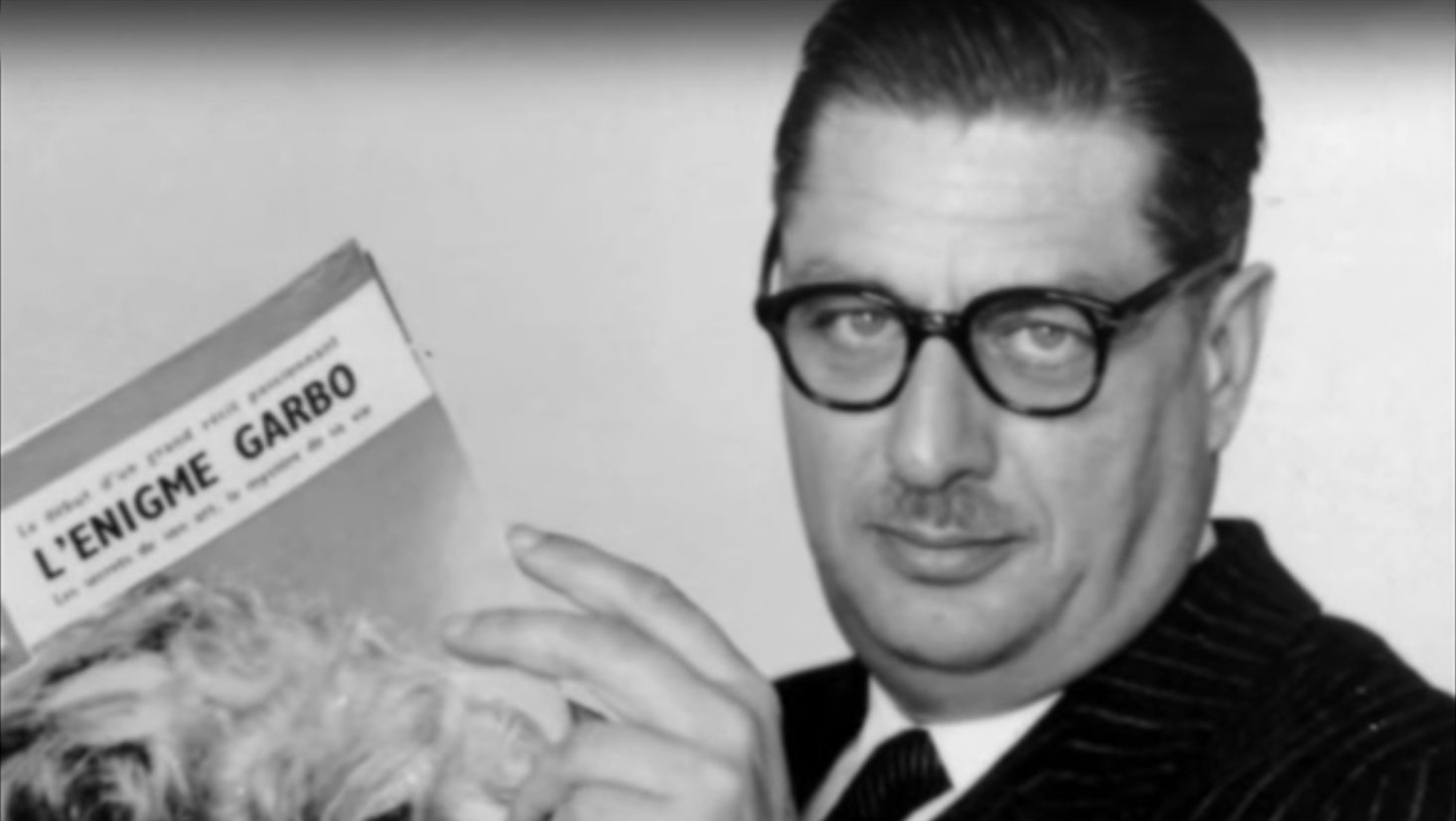
M. Karagatsis (real name Dimitris Rodopoulos) was born in Athens in 1908. The enigmatic initial M. is said to come from the name Mitia, an expression of his love for Dostoevsky and especially for the Karamazov brothers, while Karagatsis is due to the karagatsi (a type of tree) under which he used to sit and read as a child, near the church of Rapsani. In 1924, he finished high school and went to Grenoble to study law, which he would continue the following year at the University of Athens. In 1927, he took part in the first literary competition of Nea Estia with the short story «Mrs. Nitsa,» which won first prize and was published in 1929 in a collective volume that included the award-winning short stories of the competition («The Deities of Kotylos,» published by Estia Bookstore). With this short story, Karagatsis began his literary career and his long collaboration with Nea Estia, publishing short stories, serialized novels, and translations in the magazine. He died on September 14, 1960, at the age of 52, leaving unfinished ’The 10,« the novel he was writing at the time. The last sentence he managed to write, the last sentence of his life, was »Let me laugh.« (from Vivlionet).