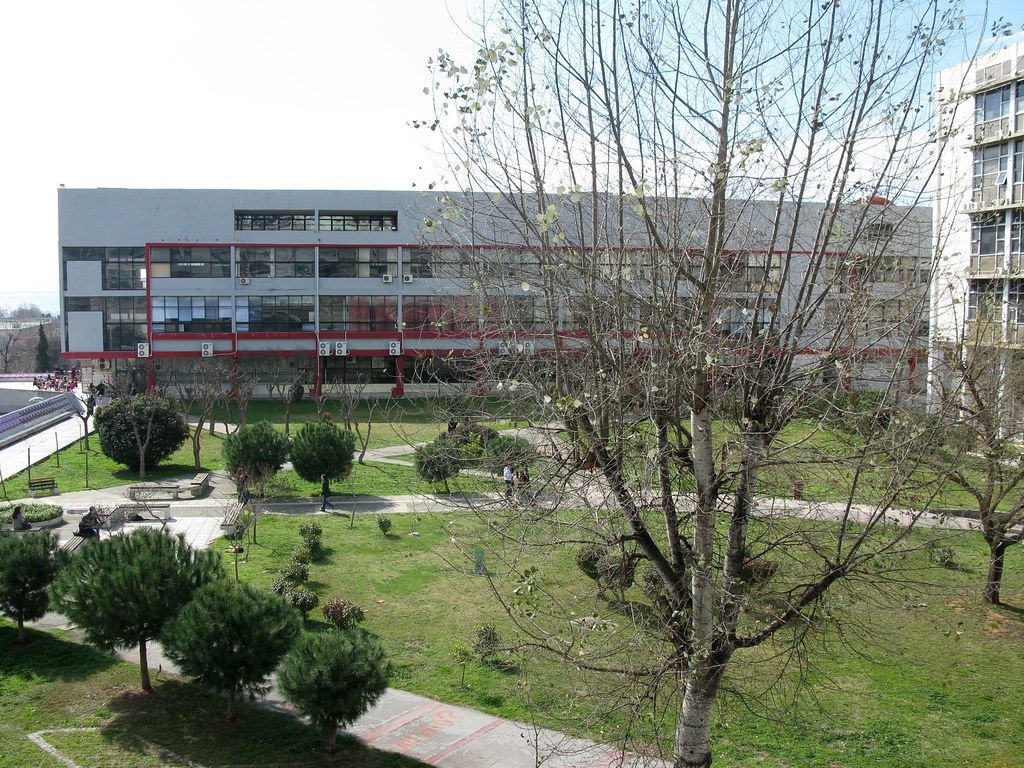
With the installation of an innovative aerobic digestion unit for food waste at the Student Club, where thousands of students are fed, the Aristotle University of Thessaloniki (Aristotle University of Thessaloniki) is moving forward in its plan to become a model institution in the waste management and energy saving. Can the leftovers of the meals consumed by students instead of ending up in the rubbish bins cover the energy needs of the building? This is the ultimate aim of the research project, which started with the installation and operation within the premises of the University Student Club (UAS) of the Aristotle University of Thessaloniki of a food waste management and processing system that mimics the process of natural digestion.
In the first phase of the research project, coordinated by Chemistry Department professors Thodoris Karapantsios and Anastasia Pantazaki, the system that has been put into operation, converts into porridge the food waste produced in the process of preparing meals, which, due to health protocols, students have been receiving in packages since the beginning of the pandemic.
«We will wait for the results of this first phase, where we are first studying the specialisation by type of waste, to see how the process can work with food waste, for example in a sausage factory, in a cannery, in plants producing specific products and optimize the enzymatic digestion process in specific categories. The next step may be to install a different system in the student club, where students will dispose of their own food waste. And as a next step, it will be valuable to study the ability to produce, through this process, biogas for the needs of the Club», Mr.Karapantsios told APE-MPA.
«We are now minimising the volume of waste, as the slurry ends up in the sewer, and through the operation of a biogas plant, the goal is to take the porridge and use it to produce energy», he explained.
How the aerobic digestion system works
The system, manufactured by the Australian company IUGIS (https://iugis.com/) and placed in the PFL, it mimics the natural digestion process and uses the same principles as the human body, creating an ideal thermophilic biological environment for living microorganisms. It even allows food waste to be processed at the place of production, for example in restaurants, hotels, food production companies, eliminating the process and the cost of transport to landfills.
It works by using air together with water and micro-organisms to turn food waste into an environmentally safe liquid which can then either be disposed of as liquid waste in the existing sewer infrastructure or used as a raw material in anaerobic digestion plants for biogas production. The special dispersed plastic substrates he uses maintain high levels of microorganisms that digest organic waste. It is an extremely safe and ecologically structured alternative to the traditional trucked food waste collection system.
The aim of the research project is to carry out a study for the improvement of the aerobic digestion plant with two distinct objectives:
1. The optimization of the enzymatic digestion process of food residues inside the plant in relation to:
- the type of power supply to the unit
-the type and quantity of microorganisms used
-the acidity of the digestion liquid (the pH)
-the temperature
-the moisture
the ratio of the mass of food residues to be digested/quantity of enzymes or micro-organisms
2. The optimization of the operational parameters of the unit to achieve:
-less water consumption and greater water recovery/reuse,
-good mixing and homogenisation of food within the plant to produce a uniform output product
-lower output humidity
-higher content of degradable organic materials suitable for feeding an anaerobic treatment plant for biogas production.