Cardinal Joseph Farrell, interim Vatican administrator, officially announced the death of Pope Francis in the following written statement:
«Dear sisters and brothers, it is with deep pain that I must announce the death of our Holy Father Francis. At 7:35 this morning, Bishop Francis of Rome returned to the House of the Father. The whole of his life was dedicated to serving the Lord and his Church.
»He taught us to live the values of the Gospel with faith, courage and ecumenical love. Especially for the poorest and most marginalized. With boundless gratitude for his example, a true disciple of the Lord Jesus, we commend Pope Francis» soul to the full merciful love of God."
The bells of Notre Dame rang 88 times to honour the Pope
The bells of Notre Dame rang 88 times at 11.00 in honour of Pope Francis.
«88 chimes for 88 years of life...will be followed by a unison of all the bells of the cathedral,» the Notre Dame de Notre Dame service explained. There will be noon, afternoon mass and evening prayer in honour of Pope Francis.
Pope Francis «called on humanity to believe in fraternity, based on dialogue between religions and to give priority to the needs of the poor», the Synod of Bishops of France announced.
Pope Francis left his mark on the pastoral practice of the Church with his simple and forthright ways,» recalled Cardinal Eric de Boulin Beaufort, President of the Congregation.
In the face of the ecological crisis, the first Latin American Pope appealed for the care of our common home, the Cardinal continued in the statement, recalling his moving appeal to France and other European countries not to lose their souls by closing their doors to migrants.
Pope Francis was discharged from hospital a month ago
Pope Francis was discharged from the Agostino Cemelli hospital in Rome four weeks ago. His state of health was grave and he had been admitted to this Catholic polyclinic (where he stayed for 38 days) because of double pneumonia and a polymicrobial infection.
After his return to the Vatican on March 23, Francis did daily exercises for breathing, regaining motor skills, as well as for speaking. Doctors were optimistic, but had recommended two months of recovery.
The Argentine Pope, during his last month in the Vatican, had a brief meeting with the British royal couple and yesterday, Easter Sunday, with US Vice President Jay Di Vance.
Francis also wanted to inspect the conservation works inside St. Peter's, to visit the Catholic Royal Church of Santa Maria Maggiore, dedicated to the Virgin Mary, while on Holy Thursday he met with seventy prisoners at Rome's Regina Celli prison.
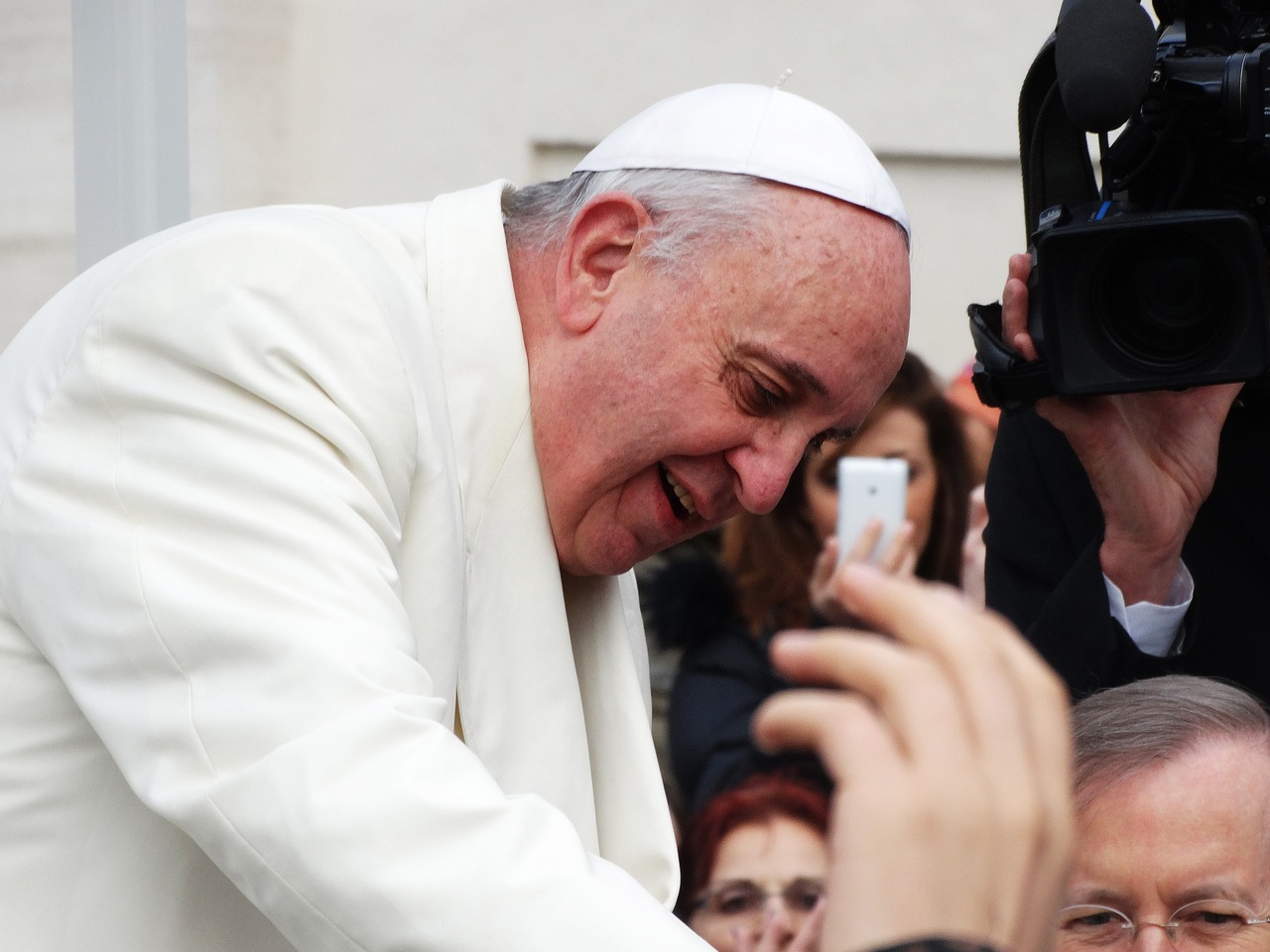
At the end of yesterday's mass at St Peter's, Francis blessed the faithful from the church balcony, wished a happy Easter and then drove around the square in his open jeep, the Papamobile. Many faithful and commentators had noticed, however, that the «pope of the poor» was very weak and haggard.
Biography of the late Pope Francis, also known as Jorge Mario Bergoglio
Jorge Mario Bergoglio, the first pope from Latin America, whose death was announced today by the Vatican, was born on 17 December 1936 in Buenos Aires, Argentina. His family came from Piedmont in northern Italy: his father was an accountant for the Argentine railways, his mother a housewife.
After first obtaining a technical high school diploma, he decided to enter a Catholic seminary. He then joined the Jesuit order and studied philosophy. In 1965 he began teaching literature and psychology at the Catholic college in Santa Fe and, after a year, at a religious institution in Buenos Aires. In 1969 he was ordained a priest and after a year he completed his studies in theology.
For fifteen years he taught at Catholic universities, and in 1986 he went to Germany, where he completed his doctorate. In 1992 he was appointed by Pope John Paul II, bishop of the city of Auckland and auxiliary bishop of Buenos Aires. On February 28, 1992, he was elected archbishop of Buenos Aires and all of Argentina.
In 2001 John Paul II appointed him Cardinal and in April 2005 he participated in the election of Pope Benedict by the Conclave.
As archbishop of Buenos Aires, he emphasized supporting the poorest citizens, spreading the word of God in every corner of the city, keeping the gates of all churches ‘always open« and close cooperation between clergy and laity.
Jorge Mario Bergoglio was elected pope on 13 March 2013. He decided to choose the name Francis - emphasising, above all, the title of bishop of Rome - and to wear an iron rather than a gold cross. «My brothers, the cardinals, in order to choose the new pope, have come to the other side of the world,» he said in his first greeting to the faithful.
According to all analysts, but also in the hearts of millions of faithful, he was «the pope of the poor», the Holy Father of Catholics who emphasized help and solidarity with immigrants, the ‘last« and the forgotten. He instructed the Vatican authorities to let the homeless sleep in the streets around St. Peter's and also inside the Royal Church Square. »Who am I to judge a homosexual when he himself is seeking the way of God?‘ was his response to a journalist, returning by plane from one of his first trips as pontiff.
Referring to the war in Ukraine, but also to the humanitarian crisis in Gaza, Francis repeated countless times that «war is always a defeat and no one should ever forget it». The day after the Russian attack on Ukraine began, the Argentine pope walked on foot to the Russian embassy outside the Vatican to emphatically ask Moscow's diplomatic representative to silence the guns.
His relationship with Ecumenical Patriarch Bartholomew was very close. He invited him and had him by his side in all initiatives of inter-religious dialogue, calling him a «dear brother». He was inspired by the Ecumenical Patriarch's work on the encyclical for the protection of the environment «Laudato sii» and was preparing to meet him, next May, in Asia Minor for the 1,700th anniversary of the First Ecumenical Council of Nicea. His deep desire, like that of the Primate of Orthodoxy, was that the two Churches should soon return to a permanent, common celebration of Easter.
There was no shortage of conflicts and critics, those who accused the Latin American pope of not giving the necessary weight to hierarchy and ritual, of speaking a language that was too simple and that reminded him, at times, of a simple priest and not of the religious leader of more than a billion believers. But that was Francis’ real strength: his reference to the essence of the Christian message, his awareness that a good believer and man is judged, first and foremost, by his daily life and works. A turn towards a spontaneous, profound humanity, which will be very difficult for the Roman Catholic Church to forget in the years to come.