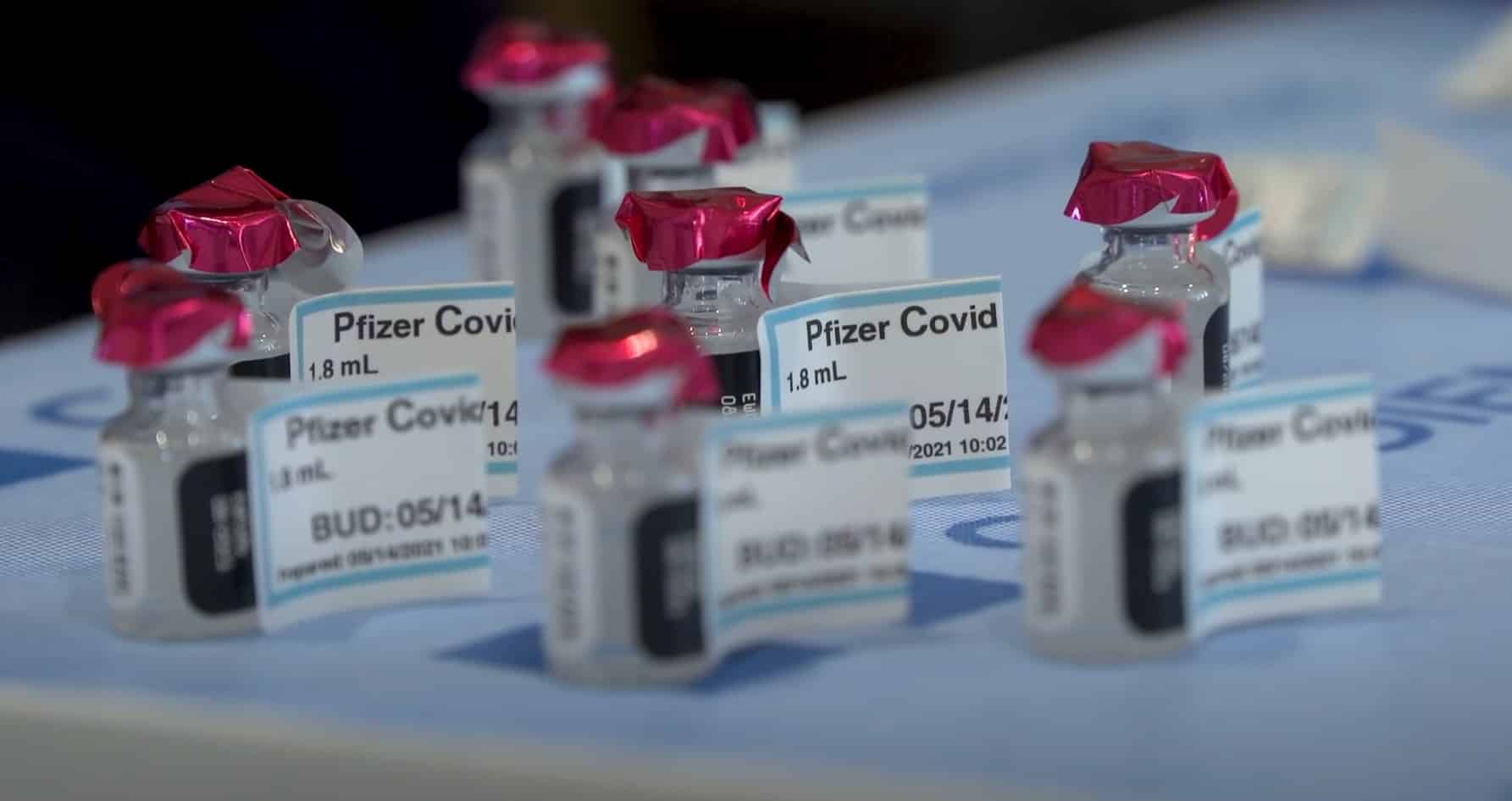
Two new scientific studies from Israel and the Qatar, show that immunity against Covid-19 after two doses of the Pfizer/BioNTech vaccine starts to decline after about two months in terms of the possibility of coronavirus infection, but the vaccine remains highly effective for at least six months against the risk of hospitalisation, severe disease and death.
However, the new research, published in the prestigious American medical journal «New England Journal of Medicine», according to CNN, seems to support the view that even those who are fully vaccinated should continue to take precautions against coronavirus.
The Israeli study found that neutralising antibody levels in 4,868 health workers at Sheba Medical Centre showed a rapid decline in the first three months after the second dose (and a slower decline thereafter), particularly in men, the over-65s and immunosuppressed people. Six months after the second dose, neutralising antibody titres were significantly lower in men than in women, in the over 65s than in the 18 to 45 year olds, and in those with an immunocompromised immune system.
Also, found that immunity lasts longer in vaccinated people than in those who are naturally immune after a Covid-19 infection. Immunity is even stronger in those who recovered and were later vaccinated, too.
The second survey from Qatar found that the protection of the vaccine against the possibility of any Covid-19 infection rises rapidly after the first dose and peaks at 77.5% in the first month after the second dose, and then gradually fades away. According to the researchers, the attenuation appears to accelerate in the fourth month and falls off by 20% after five to seven months.
Efficacy is greater against symptomatic infection than against asymptomatic infection, but the weakening of protection occurs in both cases. On the other hand, however, protection against the risk of severe disease, hospitalisation and death increases rapidly and reaches 96% or more in the first two months after the second dose, remaining at this high level for at least six months.
The researchers estimate that the declining protection of the vaccine against the possibility of infection with the virus is partly due to a change in the behaviour of the fully vaccinated, who usually have more social contacts than the unvaccinated and now take fewer precautions. «This behaviour may reduce the effectiveness of the vaccine in real-life conditions, compared to its biological effectiveness, which probably explains the weakening of its protection,» according to the researchers.
Vaccinee infections are known by the international terminology «breakthrough» and, as other studies from Israel, the USA and other countries have shown, these infections tend to increase over time, but this does not mean that the vaccinee gets sick, although the possibility of spreading the virus to others cannot be ruled out. The Qatari researchers assessed that «these findings suggest that a large proportion of the vaccinated population may lose protection against infection in the coming months, which may increase the chances of new epidemic waves.».
Pfizer has announced that immunity from the two doses of its vaccine begins to wane after a few months and considers that this justifies the granting of an additional third tranche. At present, the international trend is for this to be done - at least in the first instance - for vulnerable groups and the elderly.