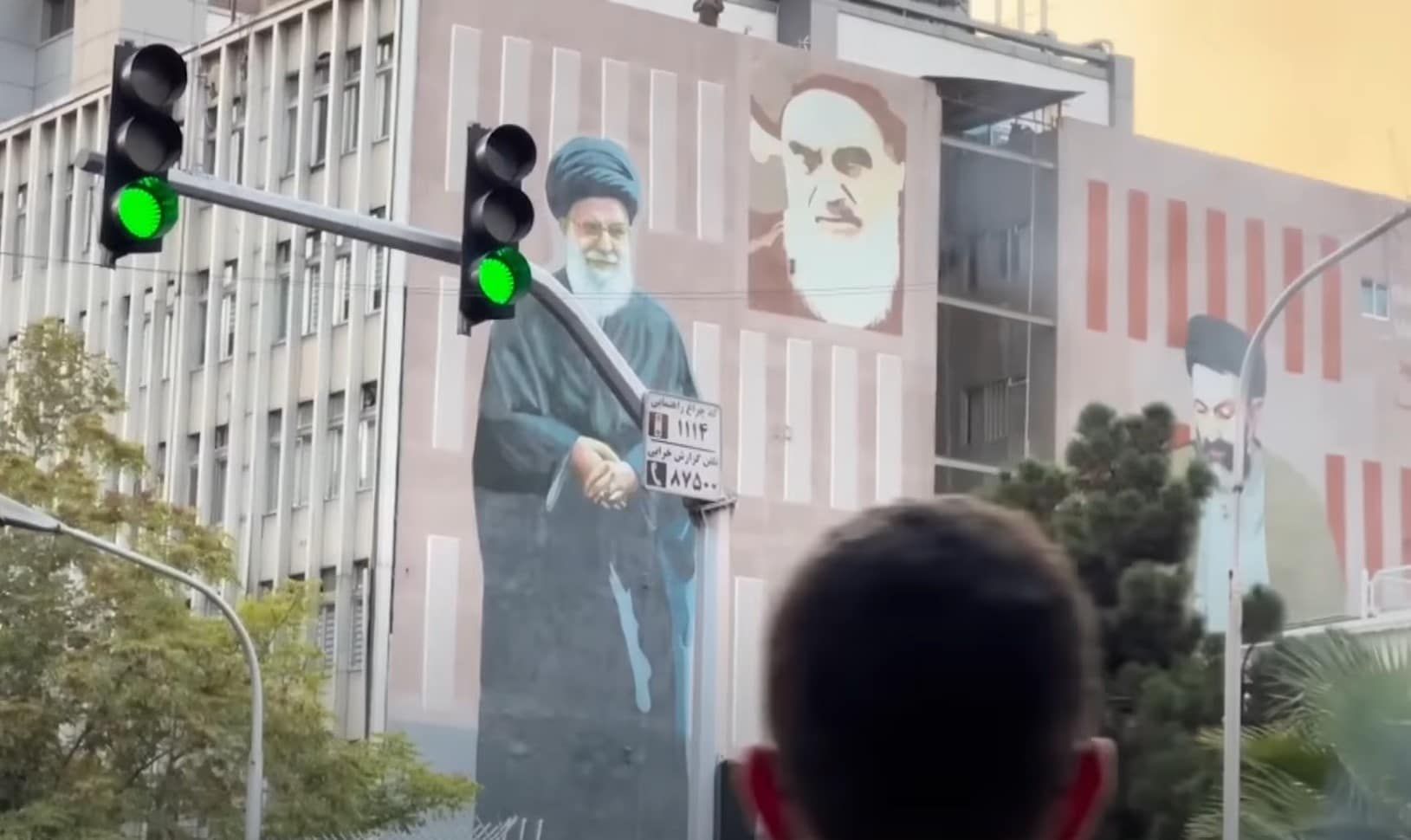
Of Iran's approximately 90 million inhabitants, 55 million are Persian, while 8-9 million are of Kurdish origin. The murder of Masha Amini, an Iranian of Kurdish origin, because it is not a random incident of gender violence, the revelation exposes the organised practices of the fanatics. The stakes for the free living of all Iranians and minorities in also free streets is not a current one, but reappears every time we have dead people from cardiac arrest, like a twelve-year-old girl before and now because twenty-two-year-old Masha Amini was arrested in her brother's car in Tehran because she had put her hijab on crooked so that her hair showed a little. Inside Iran, mass arrests, killings and attacks on the mobs that have ceaselessly protested the obvious: the equality of men and women in Islamic law. Because the strictly religious constitution has been in force in Iran since the beginning of the twentieth century, preceded by Tunisia (1861), Turkey (1876) and Egypt (1882), the Islamic revolution has been updated again in Iran (1979), in force since 1906, and the Iranians under the hard-line leader Khomeini have achieved the complete overthrow of the secular version of Islamism in the country.
The historical context
From 1936 to 1979, the Islamic headscarf was explicitly banned as a measure to secularize the Islamic state by Iran's last secular leader, Mohammad Reza Pahlavi (1919-1980). But the pioneering shah clashed with the religious establishment for two reasons, firstly, family property in restructuring and secondly, the liberation of women from the shackles of patriarchal tradition. The priesthood in the 1950s-1960s now had the unqualified support of the male clergy because both sides now had common interests: the common treasury. The senior religious leader Ayatollah Khomeini (1902-1989) was ousted during the so-called «White Revolution» of the Shah, in 1964 he was first imprisoned for a year and then by 1978 exiled to Iraq, from where he continued his religious preaching of the fanatics with tapes.
The «Islamic Revolution» finally broke out in Iran in 1978, Khomeini sought new refuge in Paris and when the Shah left in January 1979, Ayatollah Khomeini returned as the absolute ruler of the religious and political scene. At that time the teletypes were not working, just as now social media on the internet has been cut off. The Iranian revolution is established as Islamic from 1η February 1979 to December of the same year, when the new leadership has already shown its mettle (majority referendum, occupation of the American embassy, hostage-taking of Americans, lack of information). A year later the death of the Shah finalizes the regime and the headscarf as a law returns with a signature from 1983 to the present day. Bernard Lewis points out that the Iranian Islamic revolution opens a pessimistic path for Muslims, because the political language of Islam now has a new meaning and new content.
With religion versus secular life
If we understand that Islam is the great revolution of the 7no and of 8no post-Christian century against Arab paganism, Islamic discipline implies a mechanism for ensuring truth. The Holy Qur'an is a model model that, after the Jewish tradition and Christianity, autonomously completes the religious pure word of God. The believer owes obedience as a seal of divine legitimacy.
The Qur'an is the holy book of Islam and describes in 114 chapters, the «suras», which reveal the holy word of God from Gabriel to Muhammad. The individual legislative prohibitions on women are defined by the sharia, the interpretation of the Qur'an by the ulema, in other words, the jurists of the priesthood in Islam. There are two trends in Islam, the Sunnis and the Shiites. The Iranians are Shiites and therefore they are more focused on Muhammad and his successor, the great prophet and Ali. The Shiites interpret the Holy Quran in a more eschatological way and in Seismicism the tendencies are more. Let us remember that Islam is the martial expression of a people when from 632 AD to 711 AD they have conquered all of North Africa and are now expanding into Europe through the Iberian Peninsula.
Enlightenment France with Montesquieu's «Spirit of the Laws» and Voltaire's banned work «Fanaticism or the Prophet Muhammad» and the «Philosophical Dictionary» explain the fanum as fervent fanaticism on purpose. Islamic fanaticism is a form of epidemic endemic in races far removed from the values of European civilisation. Specifically, for Voltaire, in the dictionary entry ‘fanatisme’, sacred fanaticism is a tactic, not of religious, but of political expansionism, an idea echoed in the twentieth century by Bernard Lewis.
The Qur'an for women
To this day in the countries of North Africa, the renewal goes hand in hand with the conservative tradition in Islam. Countries where politicians have prevailed have renewed Islam (e.g. Turkey), while Iran remains a theocratic society, with deep roots in the past, which opposes the Western model of life, especially for women. The hijab is merely an indication of theocratic supremacy in Iran. The Koran is the holy reading, the true Bible, a religious but cultural reading of a political language. Chapter 4 deals with women (176 verses).
The Holy Qur'an accepts the Christian version of womanhood from the side of man, Adam, and urges men towards polygamy, but not necessarily, as monogamy is the pleasing marriage for Islam. Women inherit in a straight line from their parents and close relatives. Adultery is not acceptable and dowry belongs to women exclusively in case of possible divorce because divorce is permissible in the Muslim world. It is forbidden for a man to have the same wife as his father and incest is also forbidden. However, men are explicitly stated to be superior to women and beating is permitted for disobedient women (§34).
«Men dominate women because Allah has made them superior to women and because they spend their goods to support them. Good women are obedient. They hide their secret parts because Allah has hidden them. But those whom you fear are disobedient, advise them, send them to separate beds and beat them. Then if they obey you, do no other act against them. Allah is superior, supreme.». Holy Qur'an, 4.34
The polemic of the new religion is expressed in 4η The holy word encourages war for the faith and against the unbelievers, who are enemies. By implication, every unbelieving woman is an enemy and no believer defends those who have betrayed God. God does not love those who betray him. Believers are to be strict watchers for relapse into passions or any form of hypocrisy because hypocrites will be punished horribly (§138) and an unbeliever can never be friends with a believer. Chapter four concludes with the virgin Mary as the mother of Jesus with an absolute acceptance of Christianity and, most importantly, legally defines the division of property to female relatives.
Religious and political authority is unified in Islam. Aniconic religion emphasizes the sacred word as the only possibility for communication and that is why the holy word of God, the Qur'an, is the ultimate sacred reading.
The Sacred Law of Islam
While the Holy Qur'an is relatively more open to the legal status of women vis-à-vis the management of assets, on the basis of socially unequal management in the seventh post-Christian century, Shariah changes the situation in Islamic countries in the twenty-first century. Shariah is the Sacred Law of Islam which literally means the way to the waters, for whoever follows the way to the waters is good and right, while whenever one deviates one expresses the status of non-believer, i.e., unbeliever. The holy Sharia also encapsulates the whole spectrum of human daily life and cannot be changed.
Sharia reappears in the Ottoman Empire and reforms were never easily accepted in Islam, which oscillates between the old theocratic tradition and modernization (as any religion might). Since the 1500's in Iran the Shiites have prevailed and in Islam there is no holy clergy and no religious hierarchy. Despite this, the theocratic Persian part of political Islam officially became the priesthood (mujtahid) and the Iranian theologians of Shi'ism got the ayatollah as their leader only in 19ο century, and since then the religious title has been associated with the political position in Iran.
For the first time in the history of Islam, Iran creates the office of ayatollah as an official senior ecclesiastical title. This is when the theocratic approach in Iran is born. The ayatollah is a powerful ruler, but not arbitrarily, as he upholds the holy law and his authority is over its implementation, instead the imam leads only the prayer.
The murder of the author
Ahmad Salman Rushdie is the man who has been fighting for his life since last August precisely because he writes literature, bold in subject matter, but literature in any case. I doubt how many people have read The Satanic Verses (1988) since those who tried to make him disappear. The British government protected him to the hilt, but his relocation to the US renewed interest and his $3 million bounty recently doubled to $6 million.
The Satanic Verses was published in September 1988 in England (Viking Penguin). On 14 February 1989, three months before his death, Ayatollah Khomeini issued a fatwa and publicly bounty on Ahmad Salman Rushdie and in August 1989 the first attack against him was launched. The «Satanic Verses» became the banned book of Islam in many, many countries, and from the very beginning in February 1989 in protests in Mumbai, the author's hometown, twelve people died. In England, bombs were planted at the publishing houses, Liberty and Penguin, while the American bookstore Barnes and Noble stopped selling copies of the book. Protests were held across the UK with thousands of protesting Muslims and in October 1993 in Norway, the Norwegian publisher was shot three times. Η International Banned Books Week (from 18 to 24 September 2022) reminded us that the Old Testament and the New Testament have previously been banned in Asia in countries such as North Korea, but also the Holy Koran in Novorossiysk (along with other religious texts) to avoid conversion.
Even Australia had previously banned «The Decade of the Boccaccio» (from 1927 to 1973) and «Brave New World» (from 1932 to 1936). In terms of literature, the books currently banned by various states for social policy reasons are Animal Farm in Vietnam, The Da Vinci Code in Lebanon, Harry Potter in the United Arab Emirates and Fifty Shades of Grey in Malaysia. «The Satanic Verses» is the most banned book in 17 Muslim countries by the leaders as the most blasphemous book against Islam (Egypt, India, Indonesia, Iran, Kenya, Kuwait, Liberia, Malaysia, Bangladesh, Egypt, Nepal, Pakistan, Pakistan, Papua New Guinea, Senegal, Singapore, Sri Lanka, Tanzania, Thailand).
https://www.youtube.com/watch?v=X-hWB1fcfv4
Naughty curls for real women
The renowned journalist Christiane Amanpour was not a victim of the leaders when they wanted to use her as a tool to support Islamic law. In Iran today, women are always required to wear the headscarf in public from the tender age of five in all outdoor venues, even at school, a baptism of Islamic morality. Amanpour's appearance in the headscarf outside Iran would mean necessity, but it would also mean enforcement. This, of course, was not achieved. The escalation of tension is because there was a leak of the photos, similarly to similar protests over the economic downturn in Iran when the death toll of protesters was 1,500 (2019).
Islam implies man's submission to the divine will as a sign of respect and obedience to the Muslim faith. In recent days, Tehran has experienced a new wave of immeasurable damage in terms of human desire and state arbitrariness. Officially, the death toll is only a few protesters, while the non-governmental organisation Iran Human Rights now estimates the death toll at over sixty. Disobedience to «law and order», whether you embrace Islam or not, usually has the same result, a counter-retaliatory backlash, as a direct manifestation of the socially obvious: the counter-principal. Who defines this principle, by what qualifications and for what exactly is the next question, where the answer is probably as circular as it is dangerous.
The secret police on moral guidance has thousands of employees with the aim of arrest and immediate correction. Many Iranian women, after being arrested, usually end up, if they react a little too much, in the medium of correction which is, of course, a ruthless beating - death is the result of, so to speak, the misuse of women's authority in the vice police. In addition to religion, the chiefs have unspoken authority to represent an esteemed political and moral way of life, a modus vivendi with certain moral values and resistances to the supposed elitist life. Islamic society, for example, does not accept women as equals, but as subordinates.
The new handmaidens in today's Iran
In the feminist movement, the headscarf is the equivalent of patriarchy, a symbol that survives in Christianity when there is mourning and loss. In France, three times the tension over the Islamic headscarf became a vehicle to bridge the gap of social inequality between the sexes. The controversy over the headscarf is synonymous with colonialism, an indication of class differentiation between immigrants and natives.
With Social Media now silenced and the internet unavailable in recent days, this is a clear brake on the democratisation of global communication. Furthermore, Iranian journalist Nilufar Hamedi who broke the news of Masha Amini's death internationally has already been arrested, as have many named activists in Iran, with unknown consequences. Now the intentions towards them are political and different from the full implementation of religion. They will not be taken to Islamic welfare centres, as when Masha Amini was arrested, to be transferred to retraining centre as to the right way of living.
The insight of the famous author Margaret Atwood depicts the current condition in Iran as a contemporary Gileath. The two works are milestones, The History of the Therapeina (1985) and the continuation of the story in the more mature work The Covenants (2019) reconstruct the modern regime of arbitrariness and authoritarianism. From the dystopia of the Christian militarism of the American Yilteath, where unruly North American women, or even disobedient ones, even those who were married to a divorced man (!), were forced to be taken to re-education centres as potential «wombs» for the young male leaders of the USA, today reality surpasses artistic imagination.
In Iran, modern day therapists fortunately only have the sacred duty of covering every hair on the head. Atwood undoubtedly deserves one of the next Nobel Prizes for Literature, as the American author foreshadows the re-emergence of theocratic fanaticism, which originates not only in the West, but especially in the Middle East.
SOURCES
Allamah Sayyid M. H. Tabataba (1987) The Qur'an in Islam. Zahra Publications.
Delphy, Christine (2004) «The Mandila Controversy», Contemporary Issues 84: 60-69.
Guellouz, Azzedine (1996) Le Coran. Flammarion.
Lewis, Bernard (1988) The Political Language of Islam. The University of Chicago.