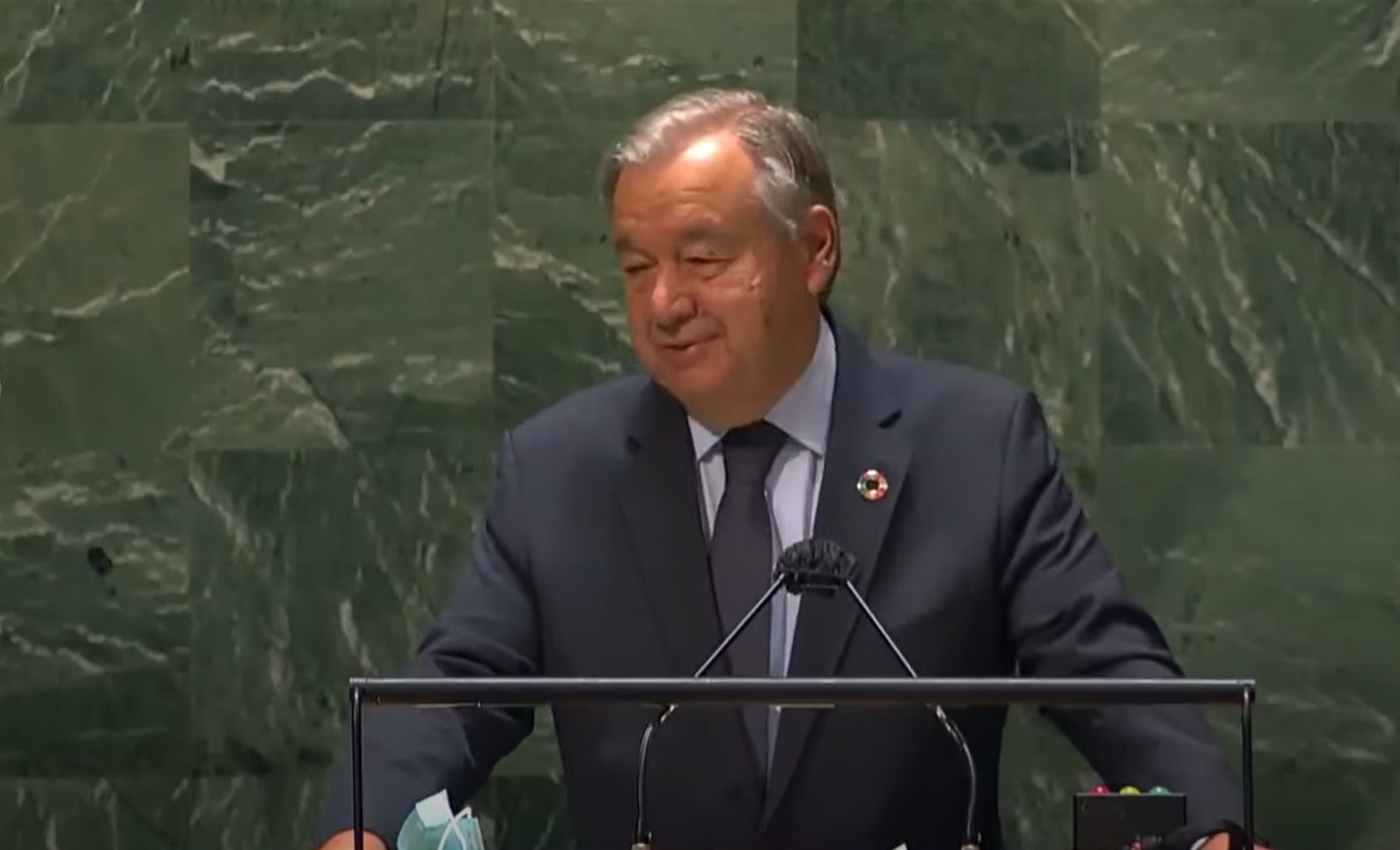
The UN Secretary General holds both sides responsible for whatever happens in Cyprus. In his reports on UNFICYP and on Good Offices in Cyprus, Guterres is moving in the direction of equal distances, even on migrants, violations in the buffer zone, obstacles to intercommunal trade or provocative rhetoric.
His approach to the issue of migrants is noteworthy, with accusations against the Republic of Cyprus and silence on the role of Turkey. He expressed disappointment and stressed the importance of appointing an envoy to help find common ground for the opening of negotiations.
And this time the UN Secretary General, through his reports to the Security Council, has again made sure to... cut the watermelon in half. In his report on the Good Offices in the Cyprus problem, Antonio Guterres keeps an even distance from the fact that the resumption of the talks has not been achieved.
The Guterres report on his good offices in Cyprus covers the period from 19 June 2021 to 15 December 2021. And it includes his meeting with the two leaders in New York on 27 September 2021.
In paragraph 14 of his report, the UN Secretary General, after recording the meetings held by Jane Hul Lut before the conclusion of her mission and the contacts held in the margins of the General Assembly, adds: «On 27 September, I invited the two leaders to lunch to discuss the situation as it is developing in relation to the search for common ground. Both leaders expressed their support for my recommendation to appoint an envoy to explore the search for common ground. While their substantive positions on the solution remain far apart, both leaders have shown an interest in continuing to engage. As views on the role and mandate of an envoy differed, efforts continued to clarify the details that would best contribute to moving forward.’.
The Secretary-General notes in his report that since Crans Montana, he has met with the leaders of the two sides several times, most recently at the lunch of 27 September 2021 in New York. Guterres considers that both this meeting and the informal five-party meeting in April «kept channels of communication open and gave me the opportunity to speak openly and directly with the stakeholders». He goes on to indicate that «in these efforts I remain guided by the relevant Security Council resolutions that have set the parameters of the United Nations’.
On the issue of Varosha, the Secretary-General reiterates his concern about developments in the enclave and stresses that «the United Nations position on Varosha remains unchanged» while recalling the statements of the President of the Security Council on the issue as well as the relevant Council resolutions, in particular resolutions 550 (1984) and 789 (1992), and stressing the importance of full compliance with those resolutions’.
The UN Secretary General is equally distant on energy issues: «I am concerned about the growing tensions in and around Cyprus and the wider Eastern Mediterranean region. I reiterate that natural resources in and around Cyprus should be of benefit to both communities and provide a strong incentive for the parties to find a mutually acceptable and viable solution to the Cyprus problem. Addressing all parties involved, Antonio Guterres recommends restraint and calls for a serious effort to ease tensions.
The UN Secretary General notes in his report that his good offices mission contributes to maintaining dialogue at various levels and promoting rapprochement between the two communities. Addressing the two leaders, he then urges them to work together, together with their representatives, to promote confidence-building measures «and to continue to revitalise the work of the technical committees so that they can fulfil their mission and positively impact the daily lives of Cypriots, in accordance with Security Council Resolution 2587(2021)».
It also urges the two leaders to move beyond the challenges ahead, including those related to terminology, and «to provide practical and political support and guidance to all committees to enable the full revitalisation of their work». According to Antonio Guterres, these mechanisms «in the absence of a full negotiation can rekindle the hope that progress can be made between the parties».
Both the Good Offices report and the report on UNFICYP are before the Permanent Members of the Security Council. Discussion of the reports is scheduled for 17 January in the presence of Colin Stewart. Adoption of the resolutions is expected in late January.
Proposes investigations under the flag of the pseudo-state
Call for the start of exploration in Block 5 under the flag of «tdvk» by the «T/q blue homeland association». «Tdvk» must protect its rights and interests guaranteed by the «blue homeland», which defines the limits of its maritime competences, claimed the «chairman of the board of directors of the Turkish Cypriot Blue Homeland Association», Dzhihangir ‘Ozier, writes Kipris (source GTR).
In a written statement, Ozier announced that the following necessary measures must be taken urgently: «A Turkey-tdvk agreement on the joint use of maritime zone competences, including the maritime jurisdictions of Turkey and ddvk, should be signed immediately. In addition, some material of drilling and seismic research vessels from the Turkish fleet should be leased to tdvk and it should be given the opportunity and capacity to conduct its own drilling under its own flag in its own areas and in the joint areas of maritime jurisdiction. Due to the non-fulfillment of the verbal statements of the US and Qatar, exploration in Block 5 should begin immediately, putting the flag de facto on the field and it should be said that tdvk has rights to the entire island.».