Politico offers an in-depth report criticizing Mitsotakis’s decision to involve the country in the war in Ukraine and the domestic backlash it has sparked.
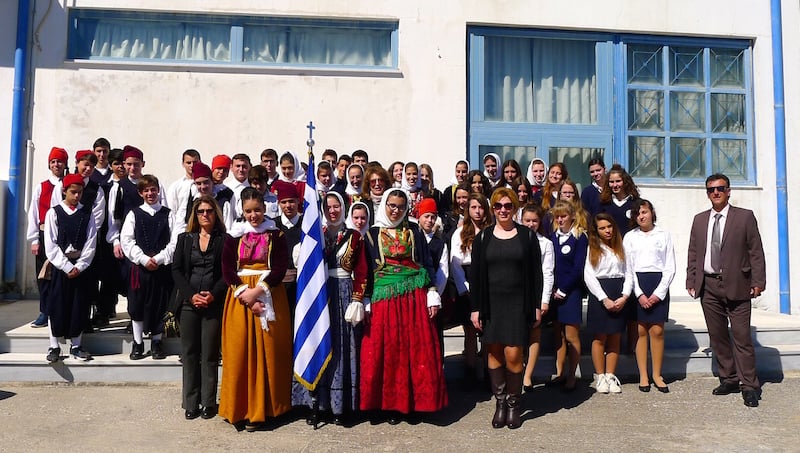
Politico reports: Prime Minister Kyriakos Mitsotakis has dramatically reversed Greece’s long-standing position of not getting involved in foreign conflicts. Following the Russian invasion, Greece was one of the first EU countries to announce that it was sending weapons to Ukraine, and this announcement came on the very day that a Russian airstrike killed ten Greeks, members of a community that has had a presence in the country since the 18th century.
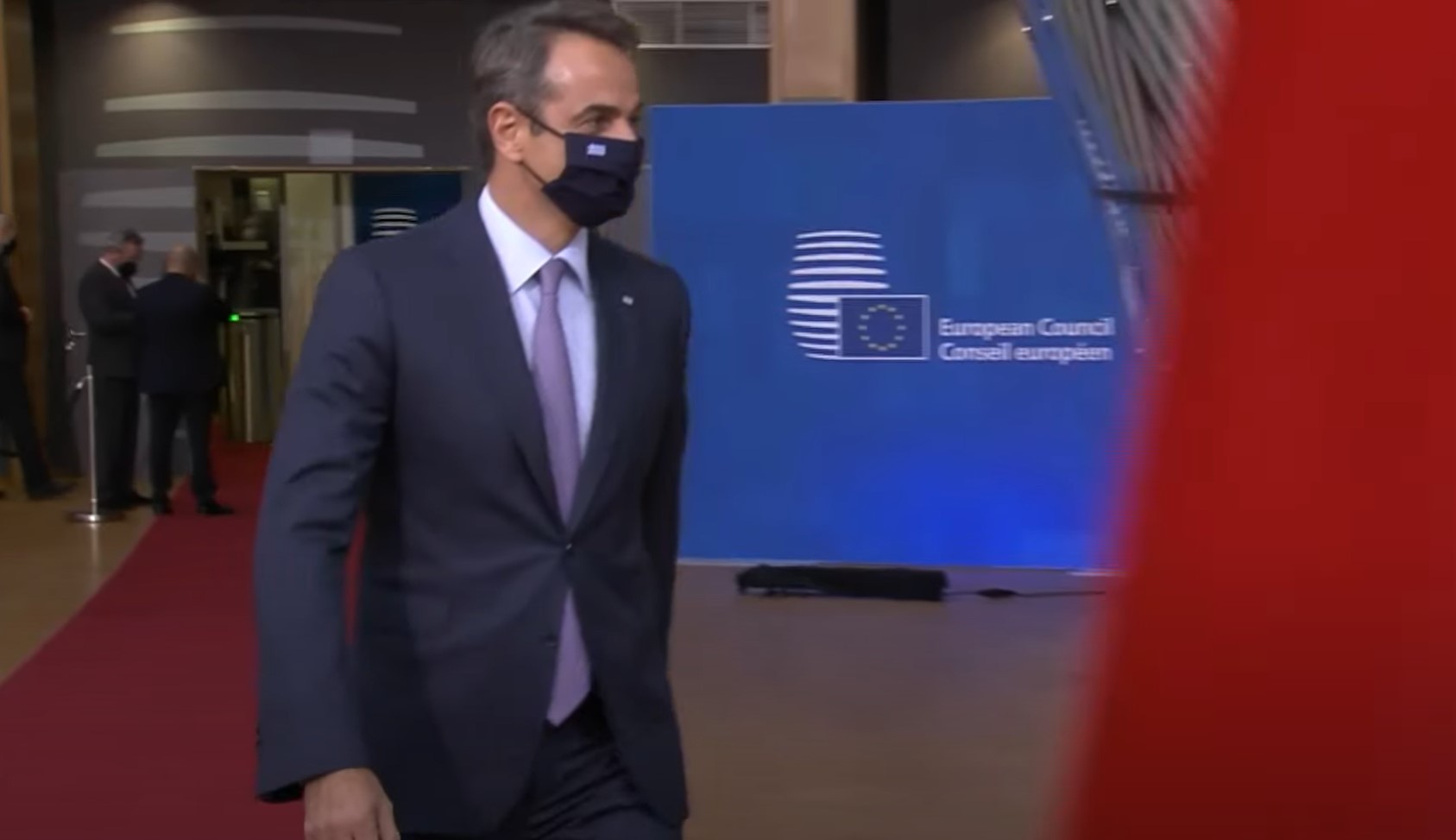
The Greek prime minister addressed Parliament and announced that his government is fully committed, stating, «There can be no middle ground. Either you’re for peace and international law, or you’re against them.».
Although the supplies—primarily Kalashnikovs and anti-tank missiles—are extremely unlikely to shift the balance of the war, they are quite symbolic for the country. In just a few days, Mitsotakis dramatically shifted the country’s long-standing position of not getting involved in foreign conflicts. And his move comes at a time when Greece is in a region where other countries have chosen to act as mediators rather than as arms suppliers.
Although the current Greek government is growing ever closer to the U.S. and the West in military terms, this arrogant move to procure weapons was viewed by many as an extreme step.
A significant portion of the public expressed surprise, as pro-Russian sentiment in the country is strong, given the religious, military, economic, and cultural ties that have existed for centuries. The opposition, however, also condemned this approach, stating that it jeopardizes Greece’s ability to maintain stable ties with many countries.
In a poll published on Monday, nearly 70% of respondents described this decision as wrong, while another poll shows that 63% believe it could prove dangerous for the country.
The backlash may already be having an effect, as last week Greece rejected a Ukrainian request to send TOR-M1 and Osa-AK systems, and according to an official, there will be no further arms shipments.
New Doctrine
Greek society is not accustomed to direct military involvement abroad. Even during the wars in Yugoslavia, right on Greece’s doorstep, Athens only allowed NATO forces to pass through the country, taking care to avoid direct military involvement.
Similarly, during the war in Afghanistan, Greek forces were involved only in infrastructure construction and the distribution of humanitarian aid. They were never involved in front-line operations against the Taliban.
Greek society, moreover, has had historical ties with Russia dating back to the 1821 revolution, and in recent years Moscow has been viewed as Greece’s protector in its long-standing conflict with Turkey.
Konstantinos Filis, director of the Institute of International Relations and professor of international relations at the American College of Greece, describes Mitsotakis’s shift as a two-pronged choice. «First,» he said, «Greece has decided that it cannot rely on the EU and NATO to feel secure vis-à-vis Turkey. It also needs bilateral agreements to boost its capabilities. Second, Greece, under this particular government, has decided to get more actively involved and put its neck on the line.».
Analysts believe that Greece’s willingness to provide assistance abroad could yield domestic benefits. Not only does it allow troops to gain experience in the field, but it also gives Athens greater credibility when requesting military assistance from others.
Mitsotakis made the same argument regarding the shipment of weapons, aside from claiming that it is the morally right thing to do. «With what moral authority would we ask for similar assistance if we were in the same position? We have an additional reason, compared to other European countries, to be on the right side of history,» he said in a recent interview, with his gaze fixed on Turkey.
Tearing Down Bridges
Not everyone sees it that way. Dissenters point out that sending military equipment to Kyiv automatically pits Greece against Russia, without, at the same time, securing guarantees from the West regarding Turkey.
Greece, they say, cannot rely on the U.S. and NATO to counter Turkish aggression, despite government decisions. They also point out that the policy of maintaining an equal distance from NATO has been evident in several crises between the two countries, including most recently in 2020.
This sentiment is widely shared. In a poll conducted after the Russian invasion, 71% condemns Moscow’s attack, but 65% says Greece must remain completely neutral.
And in the Politico survey, 60% of Greeks described the invasion as unacceptable, a lower percentage than in all six countries where the survey was conducted.
«Given this dynamic, the government’s decision was not an easy one,» emphasizes Emmanouil Karagiannis, an expert on international security at King’s College London.
«Several factors led to this change in stance. The EU’s swift response to the Russian invasion, the bombings that resulted in the deaths of Greeks, and a broader desire to send a message to Turkey that its territorial claims will not be tolerated. »The result, however, is that Greek-Russian relations have reached a new low, with unknown consequences for regional security,” he added.
Other countries in the Eastern Mediterranean have sought to maintain close ties with the West without closing the door, a situation that Putin has exploited for years to expand Russian influence in the Mediterranean and the Middle East.
Since the start of the war, Turkey and Israel have been acting as mediators, with Turkey being the only NATO country that has not adopted the Western sanctions, while Israel has done the same.
In Greece, Alexis Tsipras, leader of SYRIZA, immediately condemned the Russian invasion, supporting tough sanctions against Moscow and humanitarian aid to Ukraine. However, he stated that providing military aid would cause Greece to forfeit its ability to participate in peace efforts.
«The rejection of the old dogma—that Greece’s political home is Europe— but that it also wants to serve as a bridge to other political forces—and its replacement with the Cold War doctrine that the country belongs to the West—does not serve our country’s interests,» said Giorgos Katrougalos, a SYRIZA member of parliament and former foreign minister.
Katrougalos argued that Greece’s maximalist stance toward its Western allies has not yielded any benefits, noting the recent decision by the U.S. to withdraw its support for the East Med, a 6-billion-euro program that could generate significant revenue for the country.
In fact, several retired military officers opposed this Greek decision, calling it «dangerous, foolish, and unnecessary» and arguing that it would weaken the country’s forces.
«Greece must pursue a multidimensional foreign policy and serve as a bridge between politicians and states. It cannot close its door to Russia, China, and other emerging powers,» notes Mr. Filis.
Given the increasing bipolarity in the global order, however, maintaining such a balance will become increasingly difficult.