There will be winners and losers in the Russia-Ukraine war, not only in terms of the two belligerents, but also in terms of the countries of the region.. Louis Fishman, an associate professor at Brooklyn College who divides his time between Turkey, the US and Israel, and writes on Turkish and Israeli-Palestinian affairs, writes in the Israeli Haaretz that with the data and predictions made so far, the big winner of this crisis will be Turkey.
In his article -which should be read by those who manage the Russia-Ukraine issue in Athens- he writes, among other things:
«With Russian bombs falling indiscriminately on civilians in Kharkiv and Kiev, the Ukrainian and Russian delegations met for an initial round of ceasefire talks - and Turkey's president, Recep Tayyip Erdogan, reiterated that Turkey cannot break ties with either Russia or Ukraine.
Since the war broke out, Erdogan has condemned Russian aggression and expressed full support for Ukraine's sovereignty, in line with NATO allies. However, Turkey has been exempted from the imposition of sanctions on Russia.
This insistence on maintaining warm and equal distances with Russia and Ukraine will soon perhaps come under some pressure. For now, however, anyone who thinks this policy will anger Ukraine's defiant president, Volodymyr Zelenskyy, should think again.
So far, Turkey has managed to maintain good relations with both countries. Erdogan, in fact, visited Kiev just a day after Russia declared the Donbas and Luhansk regions as so-called «people's republics», the day before the Russian invasion, and was welcomed by Zelensky with open arms. Turkey has also supplied Ukraine with Bayraktar surveillance and attack aircraft, which are already in active use against the Russian army.
Erdogan's quick visit to Kiev was an act of solidarity and also a reminder that Turkey's efforts to strategically balance its efforts in a decisive stance alongside the Ukrainian people while maintaining the relationship with Russia.
For now, this balancing act has the tacit approval of the US-European coalition against Putin's war. Turkey is important for the coalition as an interlocutor with Russia, and at the same time, Turkey's involvement in the crisis is the best opportunity to mend the seriously strained relations between Turkey, the US and Europe.
Turkey cannot under any circumstances quickly break off the relations it has cultivated with Russia, especially considering the poor state of its economy.
Even before Turkey buys the Russian defence system S-400 in 2017, choosing to challenge its relations with the United States, the scope of trade relations between Turkey and Russia was steadily increasing. Turkey has been a key tourist destination for the Russians, vital for revenues during the pandemic, although now with air routes and the Russian economy under pressure, this source of funds may dry up.
Most importantly, Turkey's motivation to reach out to Russia was primarily related to Syria and the agreements between the two states there, while for Putin, putting a NATO member in his orbit was too tempting to pass up.
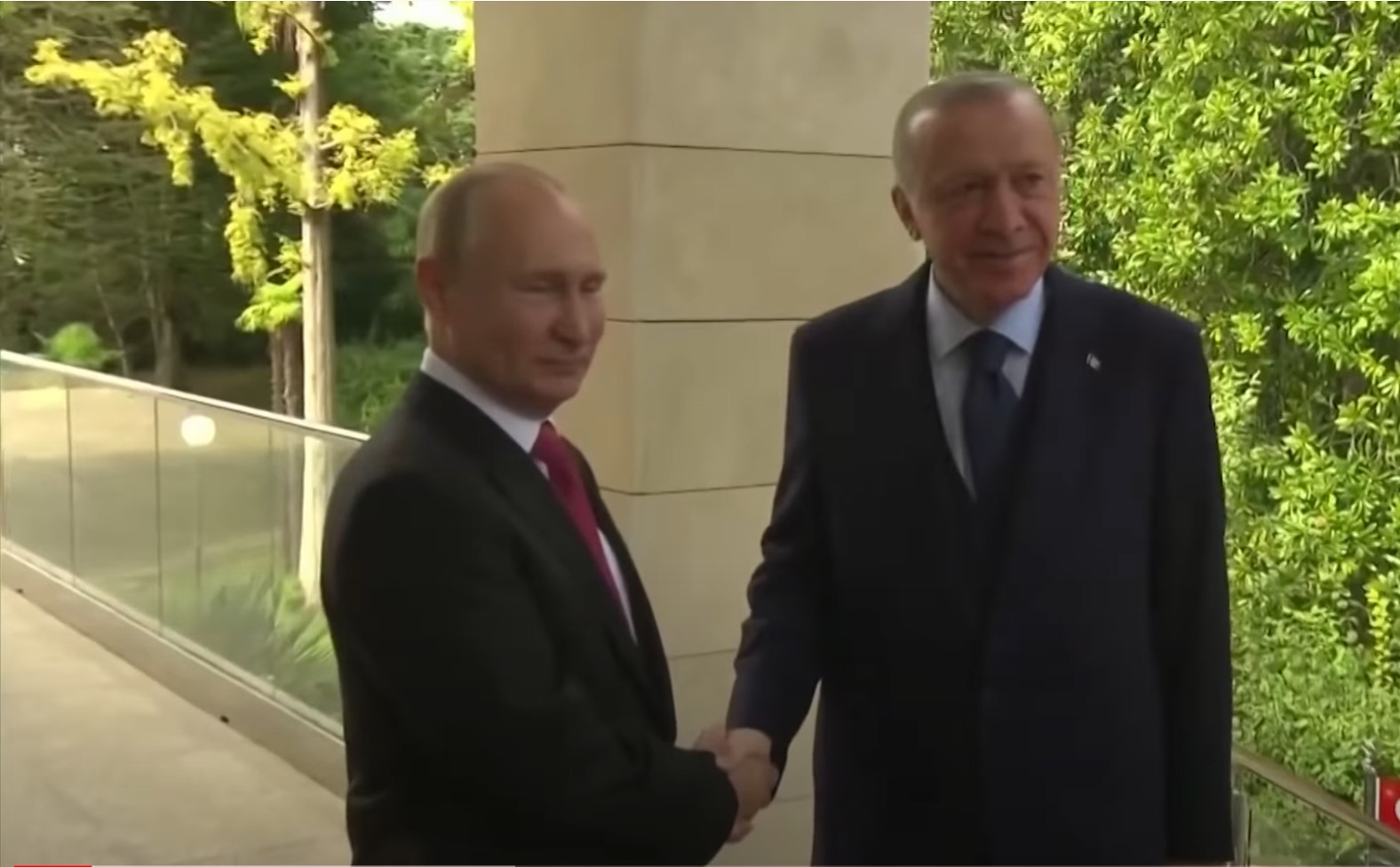
The two countries have gone through major crises in recent years, such as the downing of a Russian aircraft in 2015, the assassination of the Russian ambassador in Ankara in 2016 and the lesser known 2020 killing of 34 Turkish soldiers in a Russian airstrike in Syria, but these have been overcome. Despite these crises, Erdogan and Putin meet regularly, always in a seemingly pleasant atmosphere, and exchange phone calls even more frequently.
However, Turkey knows that the real value of its relations with Russia is to serve as a point of leverage with the United States. Simply put, Russia can never replace Turkey's economic, social and cultural ties with the United States and the European Union. To claim otherwise would be absurd.
The current Russo-Ukrainian war comes at an important crossroads in Turkey's foreign relations, where in the Middle East it is more isolated than ever. With the country in deep economic despair, Turkey has been forced to swallow its pride and put aside its Islamist allies to compromise with the United Arab Emirates, Israel and Egypt. .
Erdogan's recent trip to Abu Dhabi was greeted with much fanfare in the United Arab Emirates, with its leader Mohammed bin Zayed al-Nahyan pleased with Erdogan's public recognition of the importance of bilateral relations after years of hostile interactions. Later this month, Israeli President Isaac Herzog plans to visit Turkey in a historic move to revive relations between the two countries after a succession of crises during Netanyahu's long tenure.
And, while reconciliation with Egypt is still in the works, Turkey's rapprochement with the UAE and its efforts to renew ties with Israel is the clearest signal yet that Erdogan now wants to return to the American sphere in the Middle East. Therefore, for US politicians, Turkey's attempt to maintain relations with Russia is no longer seen as a threat, even if Washington continues to pressure Turkey to lose the S-400.
That is why, this week, Foreign Minister Anthony Blinken praised his Turkish opponent and thanked Turkey for its ’strong support for the defence of Ukraine and its sovereignty and territorial integrity«. On the same day, Republican Marco Rubio, who serves as vice chairman of the Senate Intelligence Committee, praised Turkish drones used by Ukraine.
Turkey won more praise from Republicans and Democrats when it invoked the 1936 Montreux Convention that allows Ankara, in time of war, to prevent all warships from crossing the Dardanelles and the Bosphorus straits. Zelenskyy had highlighted this request in a tweet several days ago and it is likely to have been on the agenda of their meeting in Kiev.
The invocation of the convention may end up affecting the mobility of Russian warships between the Black Sea and its naval installation on the Syrian coast, but this does not affect the crisis in Ukraine, where Russian warships are already in combat positions.
But the longer the conflict between Russia and Ukraine continues, the more difficult it will be for Turkey to continue on the third way it has chosen. If Erdogan manages to maintain this fragile strategic balance, the economic impact of the current crisis at home will be mitigated, while opening the way back to the US and the EU, without risking his relations with Putin.
There are signs that Erdogan is about to seriously test Putin's patience: on Monday, his ambassador to the United Nations, Feridun Sinirlioğlu, said that Russia's attack on Ukraine is «unfounded, unjust and unprecedented in history», adding that it was «illegal and unacceptable». Balancing these statements, Erdogan's spokesman said the same day that Turkey would not impose sanctions on Russia to «keep a channel open» for dialogue.
But if Erdogan is satisfied with the warmth already being radiated to him from the halls of power in Washington and Brussels, he may find that the price for further rehabilitation is to revoke the measures he has taken that threaten democracy and the rule of law.
A cynic might say that Erdogan's strong support for Ukrainian freedom is somewhat ironic when, at home, he treats his opposition and voices of dissent more like Putin than Zelensky.
If a boost to Turkey's global standing through its behaviour in Ukraine could tempt Erdogan to restore more meaningful relations with the West, he would necessarily have to include in his moves an end to his government's suppression of civil and political freedoms and the imprisonment of those who dare to express dissent outside the narrow parameters his government considers acceptable.
The question is whether relaxing his perception of power in Turkey could save his political career - or end it. If he doesn't make the choice to change, the Turkish electorate may just make that choice for him in next year's elections.