The «perpetrator», the Sharon Melikian, born as Sogomon Tehlirian. The «victim», the infamous Talaat Pasha, the Turkish Grand Vizier who during the First World War had ordered the massacre of Armenians.
«I used to see my mother murdered by the Turks in my sleep every night».
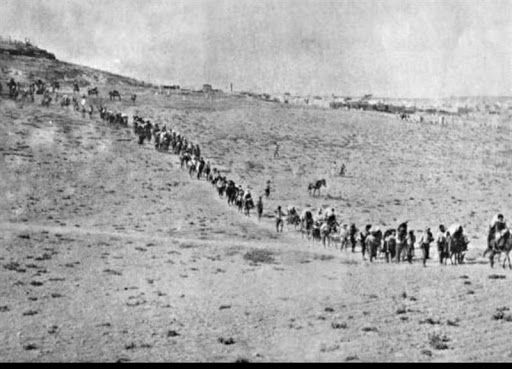
Sogomon Tehlirian was a child when the Turks murdered his mother, father, brother and sister in front of him, after horrific torture and gang rape. He himself survived among the corpses of his own people, because the Turks considered him dead.
The shocking element in the nemesis business of the Armenians, is that there was no central organization, no support. The fighters dedicated their entire lives to punishing the guilty, as a primordial inspiration, a sacred duty.
They studied, got jobs, lived a normal life, but they had revolved it around their goals. Their every move was aimed at planning the punishment of the killers. No one in the operation tried to escape. All the Armenian heroes, after the executions, left the weapon on the ground and surrendered to the authorities. In order to stand trial and give the court the reasons for their actions, so that the Armenian genocide becomes part of the record of every trial.
Reading the different stories of heroic justice done by the lonely heroes of Armenia, you are overcome with feelings of admiration and sadness. Because, unfortunately, we Greeks have left our murderers unpunished. On the contrary, we even named some of them in the main streets of Greece.
So read the epic story of Operation Nemesis in the hope that we as a nation can learn from the heroic nation of Armenia.
How can one describe the unbearable pain of an entire people who were almost annihilated by all kinds of sadistic practices and who for 100 years are now struggling to justify the desperate cries of those who have passed away in the most horrible ways that offend Man. It seems that mythology as an allegory of human nature tells the true story of mundane things and promises catharsis to quiet the tormented victims who would otherwise have no voice.
Daughter of Night - according to the Theogony of Hesiod and Pausanias - Nemesis was born without the need for a male to impregnate her mother and the name of this ancient deity (from «nemo» meaning "share", i.e. "share"), is still identified with the Divine Trial.
It has always represented the concept of justice and its role was to restore order in nature, in the societies of men and the World when it was disturbed. It then intervened and punished the arrogance and arrogance of mortals (hubris), sooner or later inflicting painful consequences on those whose warped souls built up crimes and rejoiced in brutalities.
And if in the course of human history, the mythological approach to justice seems too good to be true, sometimes the exceptions prove the rule.
As was the case in the special operation «Nemesis» organized and executed by Armenian vigilantes against the perpetrators of the genocide in order to soothe the souls of the dead and survivors.
What made «Nemesis» love»
With the end of World War I in November 1918, Armenians expected the Allies (Great Britain, France and the United States of America) to help hold accountable and punish the Turkish officials who planned the Armenian genocide.
However, on the international diplomatic chessboard, ethics and justice have rarely, if ever, been the sincere pursuit of the powers that be.
Thus, the major Western powers, despite their declaration in May 1915, which pressured Turkey to accept the systematic extermination of Armenians and persecution, eventually backed down, because they were much more interested in gaining the favour of the Kemalist government. So, France - and as a satellite Italy - mainly sponsored the efforts of Great Britain and to a lesser extent those of the United States to get justice.. It is significant that for about two years, Great Britain held 130 Turkish prisoners in Malta awaiting trial but eventually released them due to extortion between 1921 and 1922, in exchange for the British policemen and men who had been held hostage by the new Kemalist government in Turkey.
Besides, without the support of the Allies, Great Britain would have been forced to face the Turkish reaction alone, so it backed down. sacrificing its moral claim on the altar of its political interests. On the other hand, although the Turkish courts managed to gather the necessary documents to establish the crime of ethnic cleansing against the Armenians of the Ottoman Empire, it was impossible to give justice and punish those responsible for this unspeakable massacre.
It seems that the rising nationalist movement of Mustafa Kemal, which strongly opposed attempts to prosecute Turkish military and government officials.
As Vahakn Dandrian says in his book «The History of the Armenian Genocide», the nationalist aspirations of unity and national pride were incompatible with any impulses from within the country to blame the Turks for the Armenian genocide.
However, some trials were held in Istanbul and several wartime ministers and leaders of the Union and Progress party - including the main perpetrators of the genocide, Talaat Pasha and Enver Pasha - were convicted and sentenced in absentia for having fled abroad with false papers and false names.
«Nuremberg of the Armenians»
The verdict of the «trial» of the architects of this unprecedented bloodbath was finally reached by the Armenians themselves at the 9th World Council of the Armenian Revolutionary Federation (Tasnaktsutyun) held in Yerevan in the autumn of 1919. The executions - which the very next 10th World Council of the Armenian Revolutionary Federation called the «Special Operation» (Haduk Korj) - were to be of a secret nature, and to be carried out, a special body (Haduk marmine) was created to pursue the guilty on three continents. Under the code name «Nemesis» - from the name of the divinity of divine justice - Armen Garo, (Karekin Pasteurmajian) in charge of the operation, Sahan Natali, (Agop der Agopian) in charge of the organization and coordination and Aaron Sachaklian in charge of the financing of this risky project, redistributed the cards and the game changed rules.
This time the sheep with sharpened teeth of pain, despair and injustice would devour the wolves.
The primary objective was the Talaat Pasha followed by the Jivanshir, Syed Khalim Pasha, Beahadin Shakir, Cemal Azmi, Cemal Pasha and Enver Pasha (who met a just death between 1921 and 1922).
«Our organisation had no plan of extermination, it punished only those individuals who had been tried in absentia and found responsible for mass murders. After all. the list included the names of Armenian traitors», Arsavir Siraqian, one of the punishers of Operation Nemesis, will write in his memoirs shortly before his death in 1973.
In total, eight high-ranking Turkish or Azeri officials and three Armenian traitors would be killed by the bullets of the seven Armenian vigilantes. The operation to execute those responsible for the Armenian Genocide was aptly called by Shimon Vracian as «Nuremberg of the Armenians».
The verdict was based on all possible reasons arising from unbridled pain and carnivorous despair. Nemesis' punishers identified and executed a total of six high-ranking officials of the Young Turk government. Those who, despite being tried and found guilty of mass murders, reportedly enjoyed a defiantly wonderful life outside Turkey. .
The case of Sogomon Tehlirian
Monday, June 6, 1960, Time Magazine published the following obituary:
Armenian hero Saro Melikian (born as Sogomon Tehlirian), 63, who died after suffering a cerebral hemorrhage in San Francisco, where he worked as an office worker, in a shocking trial held in Berlin in 1921, was acquitted, although he had confessed to murdering Talaat Pasha, the Turkish Grand Vizier (who during the First World War had ordered the massacre of Armenians).
Born on April 2, 1897, he would never have imagined that his life would turn into an unbearable drama that traumatized him mentally and physically until his death. He saw his brother's head crushed, his mother and father murdered, his mother and father raped and then his sister killed. He survived among dismembered corpses because he was presumed dead.
He is the lad who, at 11 o'clock on Tuesday morning, 15 March 1921, in Harderberg Street in Berlin's Charlottenburg district, after ten days of systematic surveillance, meets the executioner of his family in person, casually going for his usual walk, dressed in European clothes and followed at a distance of a few metres - in accordance with Muslim customs - by his wife. The organizer of the great crime, a former minister of the interior and a member of the triumvirate of the Young Turks who effectively ruled the Ottoman Empire during the war, Talaat Pasha, enjoys his last moments unsuspectingly.
Tehlirian starts from the opposite sidewalk, crosses the «target», passes him and slows his pace. Then he turns back. Talaat seems like he senses something, but it's too late. Tehlirian pulls the revolver from his pocket and in a lightning move shoots him in the head. Talaat Pasha leaves ....the mundane world.
The trial and the real culprit
«I killed but I am not a murderer», Tehlirian said in the trial that followed in Berlin and attracted international attention.
He claimed that he acted on his own impulse because because of what he had experienced he saw his mother in his sleep at night asking for revenge. He knew that by all means he had to conceal the fact that he was running part of the special operation Nemesis. And he succeeded.
His lawyers cited as mitigating circumstances the suffering he suffered from his displacement and the epileptic seizures that tormented him every time he recalled the horrors of the abuse and killing of his parents, brother and sister. Three months after the long trial, the jury of the Berlin Criminal Court found Shogomon Tehlirian not guilty, a decision that was greeted with enthusiastic applause from a crowd of fellow countrymen and sympathisers who had packed the courtroom.
Why Talaat was the number one target
After the end of the First World War, the Ottoman military court sentenced to death the key Young Turk leaders responsible for planning and executing the Armenian genocide. From 8 January 1919 onwards, three military courts were held in Constantinople. The court decision was issued on 5 July 1919 and sentenced the main perpetrators in absentia, recognising the premeditated nature of the massacres of the Armenians. Talaat, Cemal, Enver, Behaeddin Shakir and Behaeddin Nazim, Cemal Azmi had escaped at dawn on 3 November 1918 on the German ship Lorelei, provided by the German embassy, which was to take them to Odessa.
Talaat Pasha, who escaped to Berlin, was hiding under the name of Ali Salih Bey. He had shaved his moustache so that he would not be recognized, but Sogomon Tehlirian managed to identify Talaat by using a razor to erase his moustache in the photo given to him by his companions.
Talaat was the essential leader of the Union and Progress Committee and is considered as the main perpetrator of the Armenian Genocide between 1915-1917. He had publicly declared his intention to exterminate the Armenians of the Ottoman Empire. He planned and organised the ethnic cleansing of the Armenians and supervised all phases of its execution.
His body was returned to the Turkish state by Hitler in 1943. His mausoleum is in Istanbul and an avenue bears his name in Ankara. In every respect from unpleasant to infuriating...
But before that
In December 1918, Shogomon Tehlirian was in Istanbul, at the offices of the Tashnak newspaper Jagadamard, where he met a young schoolteacher, Geranui Danielian, who pointed him to the residence of Harutyun Migirdian, an agent of Talaat. Migirditsyan had given the names of the Armenian intellectuals arrested on the night of 23 April 1915 in Istanbul and subsequently murdered. He had been included in the list of Armenian traitors compiled by the Tashnak officials with the intention of executing them. After several weeks of surveillance, in March 1919, Tehlirian took advantage of a reception given by Migirditsyan at his home and shot him through the window, killing him with one bullet.
Next please
The same tactic would be followed by another Armenian vigilante, Misak Torlakian, who would execute in Istanbul the Azerbaijani Interior Minister, Behud Khan Jivansiar, responsible for the massacre of 20,000 Armenians during the Turkish entry into Baku in September 1918. On July 18, 1921, shortly before midnight, the Azeri official returned to the Pera Palace Hotel, accompanied by his brother and four other people after a drinking session in a nearby public park.
A small man suddenly appears at the entrance of the hotel shooting once in the ribs of Jivansire who was passing him a head. The minister twists his body a little and manages to grab the arm of his assailant. But he gets there first and plants two bullets in his chest. And while the wounded man collapses to the ground, his escorts, panicked, run away and hide behind the cars. The two Turkish policemen of the guard who are in front of the hotel disappear.
Torlakian turns the street corner, but reappears after hearing the victim's pleas for help. The thirty or so stunned witnesses do not dare intervene, they are horrified to see the gunman approach and deliver the coup de grace to the wounded man who will succumb shortly afterwards while being taken to the hotel. Torlakian rests his gun on the hood of a car and surrenders. To the French and then to the English officers who interrogate him, he replies that his family was exterminated by order of Jivanshir in Baku and shows the three scars on his body, while a bullet is still lodged in his thigh from that tragic day.
His trial starts at the end of August, before the British military court in the building of the old Ottoman war school.
It lasts for two months and the defence lawyer, relying on the findings of the expert doctor, argues that his client, having suffered an epileptic seizure - a tactic used in the Tehlirian case - had committed murder in a fit of seizure when he was informed of Jivansiar's presence in Istanbul. On 20 October, Torlakian was found guilty with no penalty because he was unaccountable for his actions at the time of the execution. He was deported to Greece by the occupying forces.
Torlakian, like Tehlirian, faithfully followed the instructions of the organization to which they belonged, which aimed to punish the perpetrators of the Armenian Genocide with death.
The list of... «killer» in sequences
On December 5, 1921, Arsavir Siraqiyan will execute in Rome in a fictional manner - hanging in the eaves of the carriage carrying the victim - with a bullet in the head, the former head of the Young Turk government, Said Halim, after five months of systematic surveillance.
Sirakian, together with Aram Gerghanyan, would strike again in Berlin on 17 April 1922 simultaneously and execute Dr. Behaeddin Shakir, one of the main perpetrators of the genocide, and the former governor of Trebizond, Cemal Azmi.
The persecution of former Navy Minister Cemal Pasha, a member of the Young Turk triumvirate who became an advisor to the Soviets on Caucasian affairs, will lead the determined punishers Stepan Jayikian, Bendrot Ter Bogosyan and Ardachezhev Kevorkian to track him down and execute him on July 25, 1922, in front of the Cheka (Bolshevik political police) headquarters in Tbilisi.
Irony of fate: Ember Pasha, the third member of the Young Turk triumvirate, a former Minister of War, who had turned to the Communist government in Moscow, The former Communist leader of the Communist Party of Armenia, Dr. Yevgeny Pasha, who was a member of the Communist Party, would lose his life on August 4, 1922, to Agop Melkumiyan, an officer of an Armenian Bolshevik platoon near Samarkand on the Afghan border, while leading a group of rebel Muslims in the Bukhara emirate, and Dr. Yevgeny Pasha, who was a member of the Communist Party of Armenia, would lose his life on August 4, 1922. Nazim, the last remaining member of the list of «targets» drawn up by the avengers, would be executed by hanging in Ankara on August 26, 1926. Not because he participated in the organisation of the 1915 massacres, but because he conspired against the Kemalist regime. Anyway, you can't call it bad.