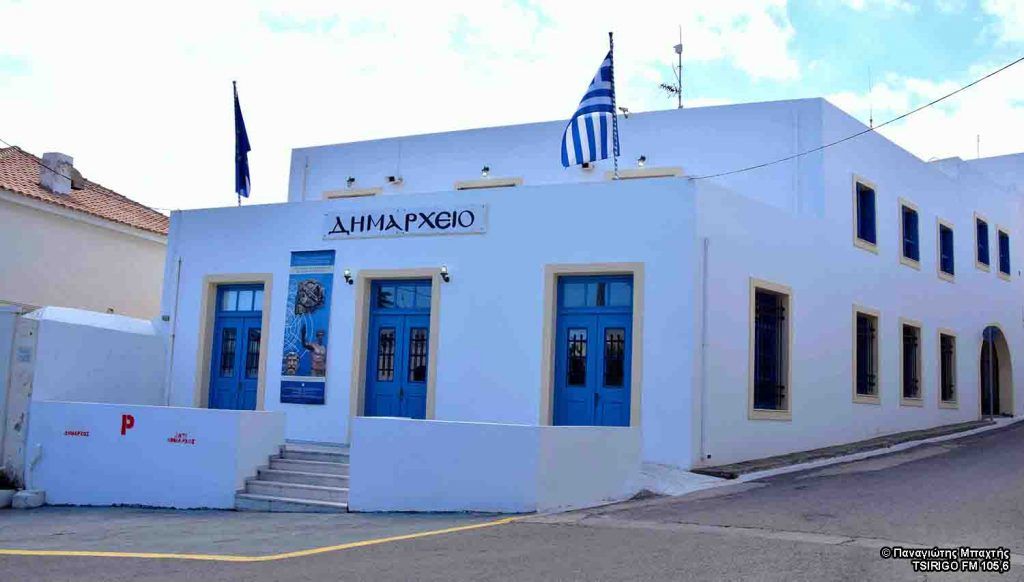
A press release was issued on Friday morning, 05/03, by the Municipality of Kythera, in which it unleashes a merciless witch-hunt against imaginary enemies - in this case, the Greek opposition - in order to amuse the impression of the embarrassment with which it is facing the burning issue of the Bazaar in Potamos. An embarrassment that is also demonstrated by the recent briefing we had from the representative of the combination “Kythira - Antikythera, We live here”, Manos Trifillis.
In it, Mr. Trifyllis informed us That the Mayor has proceeded with a revised draft of the Bazaar regulations, to which he has made additions. Inside the possibility of selling small processed goods (something the opposition had requested), outside the Sembreviwa, inside the eggs. «Average with a little,» as it were.
As is clearly shown in the recent statement by the minor opposition, the combination never positioned itself in favor of an unconditional and unrestricted sale of «everything» in the Bazaar, as accused by the municipal authority. That for which he praised the mayor, concerns the concealment - as he accuses him - of the alternative proposal of the combination for the operating regulations of the Bazaar.
In the same statement, published by Kythera.News, the combination focuses on the bad timing (coronavirus pandemic) and the inappropriate methods of promoting the positions of the municipal authority (city council meetings on rotation), chosen by the mayor to approach such a delicate issue.
Regarding the draft operating rules of the Bazaar, the positions of the minority are clear and crystallized and have been sent to the members of the Economic Committee, as we were informed by Mr. Trifyllis. They relate to the provision for not transferring the Bazaar outside the settlement in case of emergency, to a regulatory framework of the regulation that will result from the meetings of the city council and the need for handicraft and art products to continue to be distributed at the Bazaar.
«As far as art/craft products are concerned, their disposal at the Bazaar is legal», Mr.Trifyllis stressed to us, adding that the mayor likes a selective use of the articles of the law on open-air markets, depending on what serves his rhetoric and his targeting.
In any case, it seems that what the mayor attributes to the minor opposition does not correspond to reality. Or rather, they correspond to a reality of his own, according to which he invokes corrective measures taken retrospectively to his own failures (often under pressure from the opposition itself) or a discretionary interpretation of ambiguous parameters (the opposition did not talk about abolition but about the devaluation of the institution), in order to construct scapegoats for a crime for which it has predetermined that it will be the harsh punisher. Or more correctly, that he will be presented as such in the eyes of public opinion.
The following is the Press Release of the municipal authority:
We save the River Bazaar from certain abolition
In recent days we have seen a systematic effort to misinform citizens regarding the drafting of the Regulation of Operation for the Sunday Open Air Market of Potamos, the well-known «Bazaar». This misinformation comes mainly from the faction of the minor minority which having as the only argument against the Regulation of the Bazaar's operation the view «in 1960 they were selling everything», attempts to mislead public opinion for purely political reasons. The Bazaar is neither abolished nor will it be moved out of the River, these views are utopian, misleading and false. To avoid any misunderstanding, we clarify the following:
- The Bazaar of Potamos, taking into account the prohibitions and definitions («popular markets», «open-air Sunday markets» etc.) established by Law 4497/2017, is in essence outside the provisions of the current legislative framework.. It was rescued after a timely and effective intervention of the Municipal Authority, which highlighted its traditional character and the need to maintain it, receiving from the competent authorities the approval to continue to take place every Sunday, but essentially, formally and legally it is «in the air», as by law there is still the need to adapt to the new data, with what this implies for the citizens who are active in it.. According to this Law (4497/17), the sale of fresh food products is not permitted at Sunday Open-Air Markets (Art. 38 par. 2: «In particular, Sunday markets sell all kinds of products other than fresh foodstuffs»). Fresh products (which make up 85-90% of the items sold at the Bazaar) are sold only at farmers' markets, which are not held on public holidays and are governed by a different framework that is not appropriate to the character of the Bazaar in question.
- The Municipality of Kythera, after painstaking and coordinated actions in 2018, managed to obtain the consent of the Ministry of Commerce in order for the Bazaar of Potamos to continue its operation subject to the drafting and passing of the Regulation of Operation. which will adapt it to the provisions of the legislation. If this is not done, the Bazaar is headed for certain closure as it will operate under the constant fear of even a single complaint that would lead the sellers to unpleasant situations.. Therefore, the Municipality, through the Operating Regulations, protects not only the Bazaar itself but mainly the producers and the citizens. It is therefore necessary to avoid any ambiguous interpretation, which might create the conditions for its abolition.. After all, Operating Rules should have been in place for decades, but unfortunately this has not been the case.
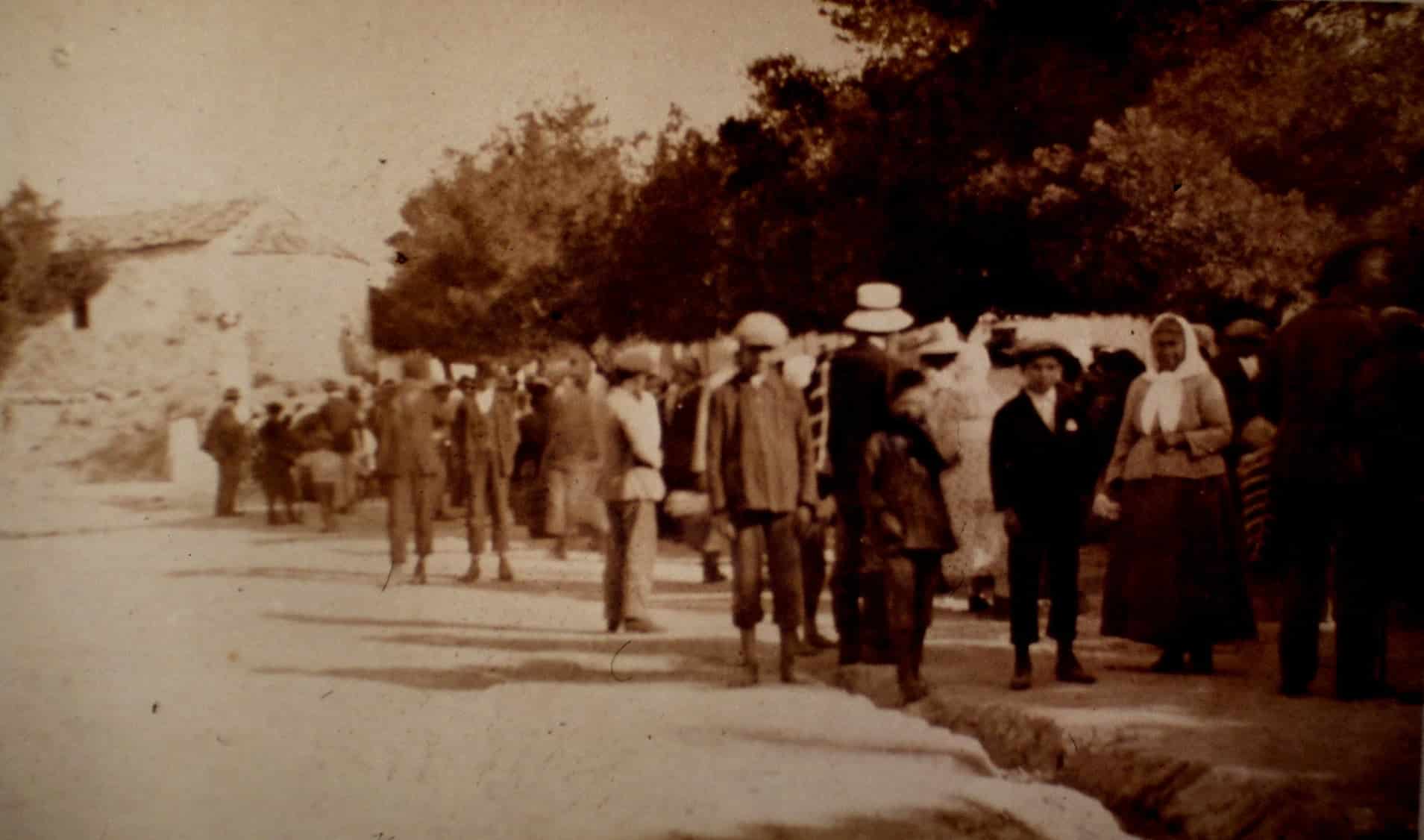
- It was considered that at the Bazaar «once» almost everything was sold. From live animals to building materials. Even if this is true historically, it can no longer be true practically and practically. It is known historically that the open-air markets of the previous decades met an existing economic, commercial and social need, as in those times the shops were infinitely fewer than today's, distances were very difficult to travel (people did not go to buy goods every day) and there was a need to concentrate all goods in a specific place in order to facilitate transactions. These situations have been changed by modern reality. In the era of the service economy, eshops and e-commerce, but also the rapid spread of dozens of shops all over the island (something very positive for the local economy), it cannot be an argument against the Regulation that «they used to sell lime and tools at the bazaar». Anyone who wants to buy such products will do so in shops and not in a flea market, especially in 2021. Exactly the same applies to tourist items, which were included in the River Bazaar in the last decades (there was no tourism in the 50s and therefore no similar products) and for which there are also many tourist shops on the island. Even the decision of Prefect Paparrigopoulos in 1955 refers to «popular market for all consumer goods» proving the above thought, i.e. this market covered broader consumer needs at a time very different from the present one. At a time when there were neither the many shops of today, nor the super markets etc.
- Finally, we strongly disagree with the view «to keep the Bazaar as it is». It is a dangerous view, similar to similar practices bequeathed to us by the past on a number of important issues such as the legality of ports, which over the years have become extremely intractable. Issues which have been left to their own devices for decades, binding the current Municipal Authority. The Municipal Authority is obliged to adopt rules specifically for outdoor commercial activities and this mainly ensures local producers and vendors, who are completely unprotected under the current circumstances. Moreover, the drafting of the Operating Rules is a clear pre-election commitment, which was ratified by the majority of citizens. The Municipality with the Regulation of Operation of the Bazaar essentially protects the producers of the island, in contrast to those who try to mislead them with false announcements that have the sole purpose of gaining political benefits and in no way interested in the maintenance of the Bazaar under the conditions set by the Law of 2017..
- The Regulation will be implemented and the Municipal Authority will make any necessary improvements if required during its implementation, always in cooperation with the producers and the bodies (Cooperatives, Local Community, Domestic Property, etc.), which have expressed positive support for the Regulation.