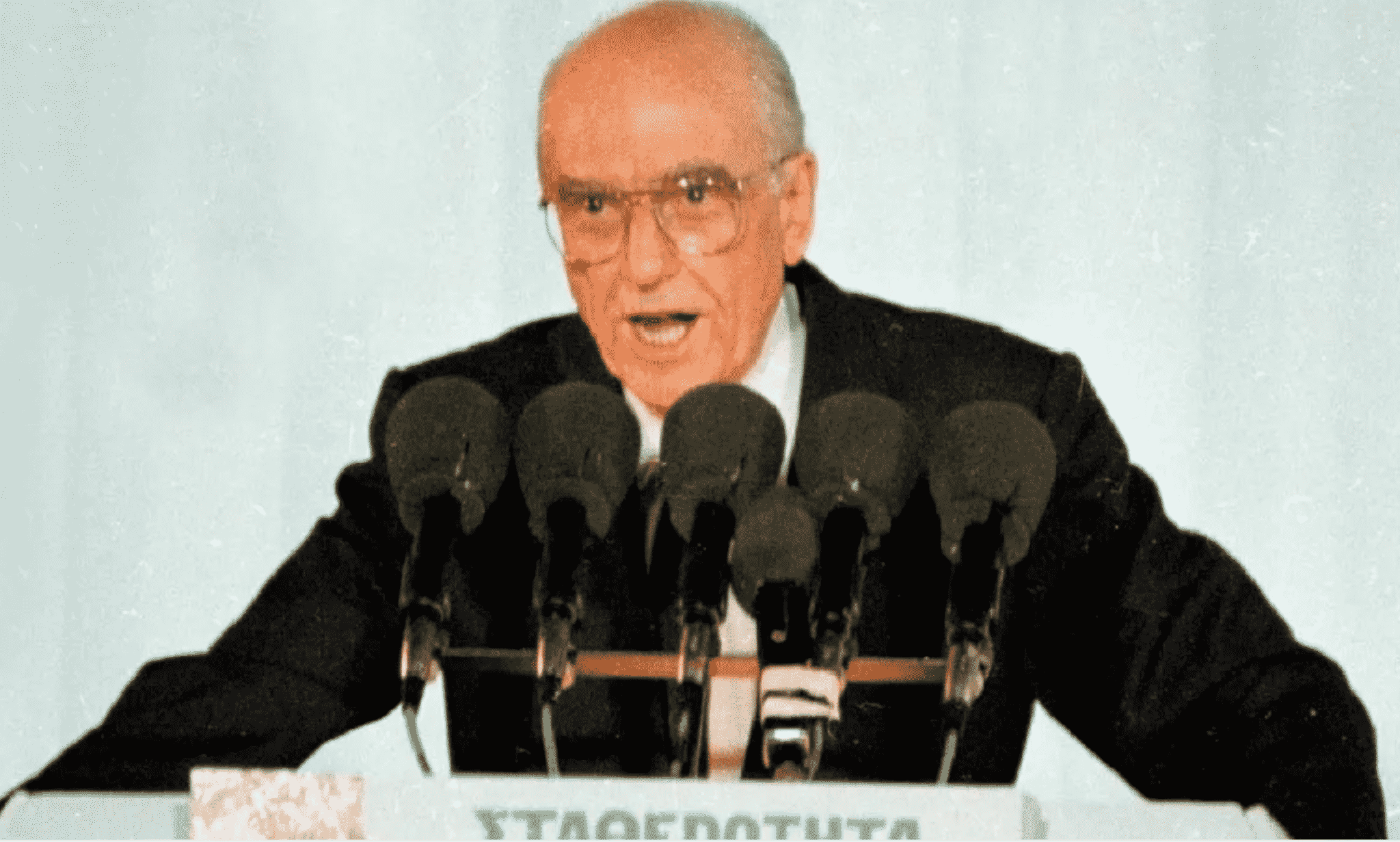
On this day in 1996, Andreas Papandreou died,
one of the most important figures to have governed Greece
………………………………………..
When Andreas took office in 1981, he introduced for the first time in the country,
TRUE democracy.
Until then, whenever the village guard walked into the coffeehouse, the elders would stand up to make room for him
………………………………………..
He was not afraid to make radical changes that, up until then, might have been commonplace throughout Western Europe,
but in Greece, these were taboo subjects
………………………………………..
such as:
the status of women,
family law,
access to banks and financing for the entire population
(Until then, to get a loan, you had to have a note from a right-wing politician)
the status of the farmer, who until then had been a third-class citizen
the elderly person's situation
the role of the national resistance fighters who fought the Germans in the mountains,
with love for their homeland as their sole guiding principle.
(For years, the right-wing government had treated them as traitors)
Greece's place in the European community—not as a subservient or underdeveloped country, but as an equal member
………………………………………..
But to tell the whole story of Andreas's life, I'd have to write for weeks
………………………………………..
His younger years alone are enough to fill an entire separate post
his acquaintance with the Trotskyist and later leader of the Fourth International, Michalis Raptis («Pablo»)
his arrest and mistreatment by the Metaxas dictatorship
his emigration to America
his academic career there
his return to Greece
the relentless smear campaign waged by the right against him, dating back to the prewar years, which continued unabated during the Karamanlis era and throughout the dictatorship
and, of course, the constant conflicts with his father
………………………………………..
Today, however, I'm going to focus on something else
in his foreign policy and in the breadth of his political acumen, which enabled him to resolve difficult political equations,
not only to solve them,
but to emerge victorious from them—both he and his country
………………………………………..
Two events coming up very soon
………………………………………..
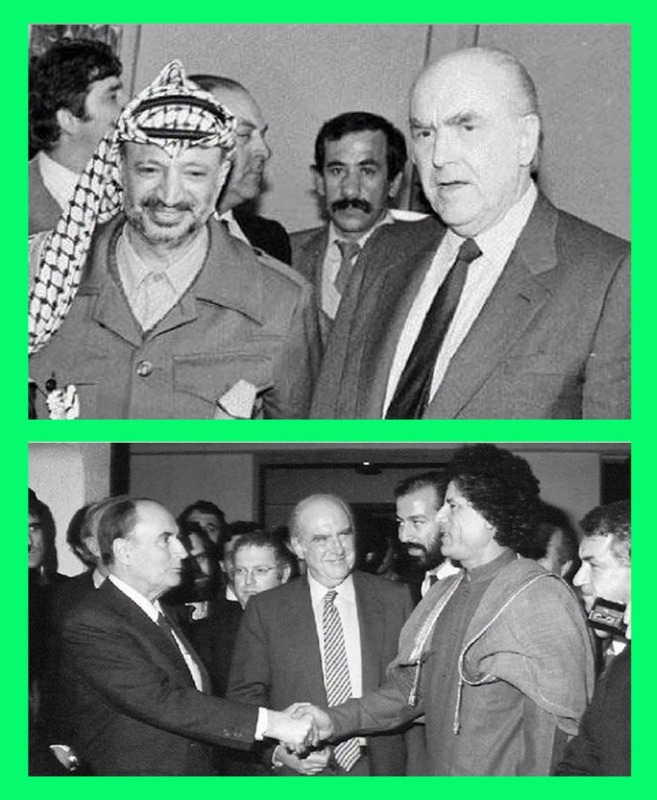
just 40 days after PASOK's victory on October 18, 1981,
Andreas Papandreou officially recognizes the PLO.
(Organization for the Liberation of Palestine)
and shocked the then-EEC, which considered the PLO a terrorist organization.
………………………………………..
PLO leader Yasser Arafat recounts:
«On the same night that PASOK's victory in the parliamentary elections was announced
elections, in 1981,
Andreas Papandreou extended a formal invitation to me to visit Greece.
I accepted the invitation
my brother's,
of my friend and fellow competitor, in December 1981.
And so I was the first foreign leader to have the honor of visiting Greece after PASOK’s victory in 1981.
A few months later,
under the most difficult conditions of war and siege that our revolution and our people have ever faced, when we were confronting the Israeli invasion and Israel’s most advanced military machine,
in 1982,
Leader Papandreou once again extended an invitation to me, to the PLO, and
to the Palestinian guerrillas,
to come to Greece, and announced that Greece was ready to host the Palestinian activists in a Greek
island.
This call by Andreas Papandreou, just as we were in the
Beirut, under siege and under constant bombardment,
It lifted our spirits and filled our souls with joy.
And indeed, we left Beirut, bound for Greece[…]
At the port of Piraeus, we were welcomed by Leader Papandreou along with the
ministers of his government and a huge crowd of Greeks.
At that reception, Andreas Papandreou wrapped me in
his warmth, love, and friendship.
It made me feel that Greece is my homeland and that the Greeks are my family and my fellow countrymen[…]
Andreas Papandreou's courageous stance during the Israeli
invasion of Lebanon in 1982,
It will remain unforgettable to the Palestinian people and the Arab nation.
Papandreou had stated at the time that Greece stands at the
our side.
He immediately organized a campaign to send medical supplies
»aid to our besieged fighters […]"
………………………………………..
and the second
………………………………………..
In 1984, war between France and Libya in Chad, a Central African country, seemed inevitable.
There had already been some skirmishes…
………………………………………..
Chad was a constant source of conflict between France and Libya,
and fueled a series of civil wars for years…
………………………………………..
The socialist president of France, François Mitterrand, had asked Papandreou
(who had a personal relationship with Gaddafi)
to help resolve the crisis with Libya.
………………………………………..
Papandreou invited them to Elounda in November, when the tourist season had ended and the hotels were closed,
without letting one know about the other's presence.
The meeting took place in complete secrecy.
The French president was the first to arrive in Elounda
And Muammar Gaddafi followed, making a dramatic entrance.
………………………………………..
At the negotiating table, Gaddafi was constantly giving Mitterrand a hard time
with the following types of nails:
«You call yourself a socialist,
»But it seems that even Pompidou was more of a socialist than you, who support the fascists in Chad."
………………………………………..
finally,
At the meeting on November 15, 1984, Andreas managed to bridge the differences between France and Libya,
and the compromise that was reached was named
“Elounda Agreement.”.
After the meeting ended, Gaddafi was all smiles,
while Mitterrand told reporters:
«Long live Greece!»
………………………………………..
Andreas Papandreou was a great statesman, one of the three or four greatest to have governed Greece in its entire history