His article Uzay Bulut in gatestoneinstitute.org It reminds us who we’re up against. It would be good for them to read this over in Madrid, where they say they’ve gone prepared… for defense!!! This is where we’ve ended up! To be at a NATO summit… on the defensive against whatever Turkey says…
The article:
Turkey joined NATO in 1952. Twenty-two years later, in 1974, Turkey invaded the Republic of Cyprus and to this day continues to illegally occupy 36% of the island. Turkey has ethnically cleansed non-Turks from the northern part of Cyprus and has largely destroyed both the Christian and Jewish cultural heritage of the area it.
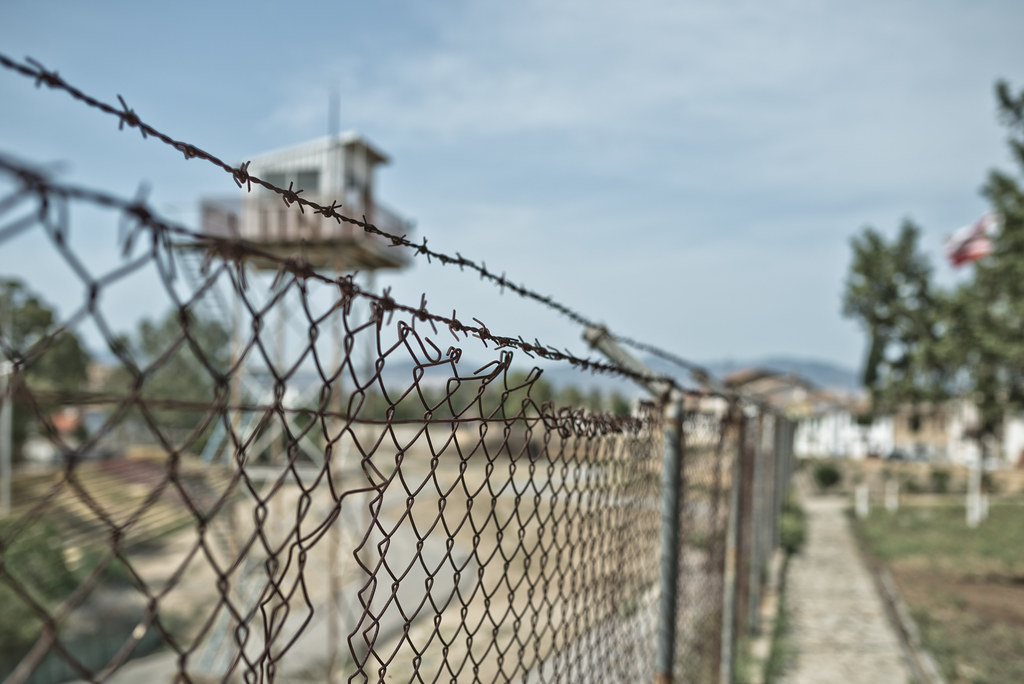
Ever since Turkey invaded Cyprus in 1974, the island has been illegally and violently divided in two. The northern part of the Republic of Cyprus—like the rest of the country—had a Greek majority. Its demographic structure was altered by Turkey when approximately 170,000 Greek Cypriots were forcibly displaced by Turkish troops. This expulsion affected about one-third of the Greek Cypriot population. The occupied part of the island has been settled by Turkey. Approximately 40,000 Turkish soldiers are illegally stationed in the occupied area, making it, according to the UN, one of the most militarized regions in the world. Approximately 80% of the island’s natural resources are under Turkish control.
Turkey is now using the distraction caused by Russia’s invasion of Ukraine as a cover to increase the likelihood of formally annexing northern Cyprus. On April 14, a protocol was signed between Turkey and the illegal Turkish de facto regime governing occupied northern Cyprus. Although Turkey has already forcibly altered the demographics of Cyprus through its campaign of ethnic cleansing, the new protocol gives Turkish citizens even easier access to the region.
The protocol also provides for the strengthening of the Department of Religious Affairs in the region, as well as the construction of religious complexes, such as mosques, and the restoration of sites of Turkish-Islamic heritage. The protocol makes no secret of Turkey’s intention to annex the North. The introduction states, «The island of Cyprus has been part of Anatolia politically and culturally since 1571.» 1571 is the year the Ottoman Empire began its occupation of Cyprus.
In 1570, Ottoman troops invaded Cyprus and sacked it, killing thousands. The Ottoman Empire, likely to keep the indigenous Greek population under control, resettled Turks in Cyprus. In 1878, the Ottoman Empire ceded administrative control of Cyprus to Britain, and in 1914, Britain annexed the island. In 1923, Turkey renounced all claims to Cyprus in favor of Britain through the Treaty of Lausanne, which also established the Republic of Turkey. In 1960, Cyprus gained independence from British rule and became an independent republic. Britain, Greece, and Turkey became guarantors of the «independence, territorial integrity, and security» of the Republic of Cyprus under the 1960 «Treaty of Guarantee.» Fourteen years later, Turkey violated both the treaty and international law by invading Cyprus in two phases—on July 20 and August 14, 1974.
In 1983, Turkey proclaimed the so-called «Turkish Republic of Northern Cyprus» (TRNC) in the occupied northern part of Cyprus. The TRNC has been recognized unilaterally only by Turkey and remains unrecognized by the international community to this day.
The regime in occupied northern Cyprus continues to be driven by neo-Ottomanism. On April 28, 2022, the «mausoleum of the martyr Pertef Pasha,» one of the commanders who participated in the Ottoman invasion of Cyprus, was opened in the north. “We carried out this opening in accordance with the law,” stated Ersin Tatar, head of the illegal regime of the TRNC. However, the law to which he referred is not part of international law nor of the UN Charter. Rather, it is the Sharia law of the Ottoman Empire, which occupied Cyprus for nearly 300 years, from 1571 to 1878. According to a press release from the website of the Presidency of the TRNC:
“After 1571, these areas re-entered our history as properties of the foundations [Cyprus Foundation Administration/EVKAF, established by the Ottomans in 1571]. There are very deep traces of our ancestors here,” said Tatar, adding that the Maraş [part of the Turkish-controlled Cypriot city of Famagusta] lands, the [Ottoman] ancestral estates of the foundation [EVKAF], were [improperly/unjustly] given to [certain individuals] during British colonial rule in violation of the treaty between England and the Ottoman Empire.
“Maras is under our sovereignty. We can never accept that it be placed under UN control or that any compromise be made regarding it as part of confidence-building measures,” Tatar added.
The driving forces behind Turkey’s invasion and occupation of the Greek island were Islamic jihad and Turkish nationalism. With these goals in mind, Turkey’s preparations for an invasion of Cyprus began decades before the invasion. Beginning at least in the 1950s, the Turkish military stoked interethnic tensions in Cyprus by sending fighters and weapons. In 1953, the «Tactical Mobilization Group» (Seferberlik Tetkik Kurulu) was established in Turkey, according to Turkish General Sabri Yirmibesoglu, and sent weapons to Cyprus to be used against the Greek Cypriots: «The committee had three officers in Ankara. A new organization [was established] to send weapons against EOKA [National Organization of Cypriot Fighters].».
«Mujahideen» Against Cyprus
Those who took part in the 1974 invasion campaign—or in its preparations over many years—are called mücahit in Turkish. The word derives from the Arabic mujahid (plural: mujahideen) and means «Muslim holy warriors, jihadists, who participate in jihad against non-Muslims.» Many Islamic armed groups, such as the Taliban, refer to themselves as mujahideen.
One group of Turkish mujahideen operating illegally in Cyprus was the TMT, or Turkish Resistance Organization, a paramilitary group founded in 1958. The TMT, active in Cyprus for years, engaged in widespread violence. According to their own public statements, the TMT murdered not only Greek Cypriots but also many Turkish Cypriots (mainly «leftists») for «crimes» such as «treason,» «aiding the Greeks,», «dealing with Greek merchants,» or «not being true Turks.» In 1976, the TMT became the «Security Forces Command» of the Turkish-occupied north of Cyprus. The website of the so-called «Security Forces Command» is mucahit.gov.ct.tr. Thus, the current army of Turkish-occupied northern Cyprus is a proud extension of the mujahideen movement. Its website refers to the bloody invasion campaign as an «operation of blissful peace»:
«In July 1974, when the Turkish Armed Forces exercised the right to state intervention as a guarantor granted to them by the 1960 Constitution, the Mujahideen and the Mehmetçik fought side by side and succeeded in Operation Happy Peace.».
“Mehmetçik” (Little Mehmet, from a common male name) is an affectionate term for Turkish soldiers.
The Turkish news agency funded by the government, TRT, in an interview with some of these mujahideen in 2020, referred to the Cypriot locations as “sanjaks,” a term from the Ottoman Empire referring to administrative regions into which a larger district (“vilayet”) was divided. TRT reported:
«The Cypriot mujahideen organized themselves years before the operation [in 1974]. These organizations later merged under the umbrella of the Turkish Resistance Organization (TMT).
“TMT remained a secret organization for many years. Training camps were established in Ankara and Antalya. The primary objective was to train and equip 5,000 mujahideen. Officers who would serve in the TMT under cover as teachers, inspectors, and clergy were also trained there.”.
«To prevent [the mujahideen] from being detected by the Greeks, code names were also given to the officers who would serve in the TMT.".
«The TMT was organized in such a secretive manner that no one knew who the mujahideen were. The names of the sanjaks that had been created at that time were also coded so that the Greeks would not know the regions.”.
«Trained officers and Turkish Cypriots sent from Turkey with other qualifications during those years buried the weapons and ammunition that had been sent in strict secrecy beneath the ground.».
Another news agency funded by the Turkish government, the Anadolu Agency (AA), interviewed three of these mujahideen. According to the 2019 report, one «stated that he was a journalist at the time and had participated in both [military] operations in 1974.» Stating that he was on duty at Sanjak Headquarters in Nicosia during the operation, he noted that he had served in the military for five years prior to the operation and that he had been labeled a «mujahideen»:
«Then Prime Minister Bülent Ecevit came to Cyprus after the operation and said to these fighters: «Turkey could not have carried out this landing if you, as mujahideen, had not continued to resist until today.»”.
«Attila» Takes on Cyprus
When the Turkish army invaded Cyprus in 1974, the operations were codenamed Attila («Plan Attila» or «Operation Attila»).
Attila was the ruler of the Huns, a nomadic people originating from Central Asia, from 434 until his death in 453. Attila was notorious for his brutal invasion campaigns, during which civilians were massacred and entire cities were looted or destroyed. Attila the Hun, according to the Encyclopædia Britannica, «was one of the greatest barbarian rulers to attack the Roman Empire, invading the southern Balkan provinces and Greece, and subsequently Gaul and Italy.».
The official website of the Turkish Armed Forces (TSK) refers to the Hunnic Empire as the origin of its military tradition: «The first organized and disciplined formation of the Turkish Army dates back to 209 B.C., during the Great Hun Empire.».
The legacy of death and destruction left by Attila is what Turkey appears to aspire to export to Cyprus. In the summer of 1974, Turkish troops carried out ethnic cleansing in northern Cyprus against non-Muslim Cypriots through violent mass expulsions. According to a letter dated December 6, 1974, from the Permanent Representative of Cyprus to the United Nations addressed to the Secretary-General, «Turkey—with undisputed air superiority and at sea and using illegal weapons and sophisticated arms that it possessed strictly for defensive purposes under a relevant alliance agreement—launched a full-scale attack against Cyprus, a small, non-aligned, and virtually defenseless country that had no air force, navy, or army other than a small national guard. Thus, Turkey’s overwhelming military machine launched an armed assault that included napalm bombings of open cities and villages, causing devastation, setting forests ablaze, and indiscriminately spreading death and human suffering among the island’s civilian population.
«The landing of Turkish forces on Cypriot soil was marked from the very beginning by brutal inhumanity toward the civilian population, in violation of all principles of international law and the accepted norms of a civilized society.».
The war crimes committed by Turkish forces include the cold-blooded murder of civilians, the unlawful detention of civilians and soldiers, disappearances, repeated rapes, the violent expulsion of Greek Cypriots from their homes and land, and the looting of their homes and business premises. , and the confiscation and distribution of their land, homes, and other property, primarily to settlers from Turkey. These and other atrocities were documented in a two-volume report by the European Commission on Human Rights, which was adopted in 1976, was subsequently suppressed, and finally leaked to the British *Sunday Times* in 1977. It was declassified in 1979.
The illegal regime in the occupied territory—with Turkey’s support—has largely erased every trace of Greek and other non-Turkish cultures in the region. The Greek names of cities and villages have been replaced by Turkish names.
According to the report, «The Loss of a Civilization: Destruction of Cultural Heritage in Occupied Cyprus»:
“Churches have suffered the most violent and systematic desecration and destruction. More than 500 churches and monasteries have been looted or destroyed: more than 15,000 icons of saints, countless sacred vessels, Gospels, and other objects of great value have literally vanished. A few churches have met a different fate and have been converted into mosques, museums, entertainment venues, or even hotels, such as the Church of Saint Anastasia in Lapithos. At least three monasteries have been converted into barracks for the Turkish army (St. Chrysostom in the Pentadaktylos Mountains, Acheiropoietos in Karava, and St. Panteleimon in Myrtos). Marvelous Byzantine frescoes and mosaics of rare artistic and historical value were removed from the walls of the churches by Turkish smugglers and illegally sold in the U.S., Europe, and Japan. Many Byzantine churches have suffered irreparable damage.».
The Turks have also destroyed Greek cemeteries in an effort to erase all traces of Greek culture and Christianity from the occupied territory.
Antigone Papadopoulou, a Member of the European Parliament, submitted a written question to the European Commission in 2013:
“The bones that had been removed from the cemetery were thrown away like trash. In the Greek Orthodox tradition, such acts against cemeteries and the lack of respect for the dead are considered a serious violation of religious human rights.”.
Meanwhile, the West looked the other way and allowed Turkey to occupy northern Cyprus.
It is not just a part of the island nation of Cyprus that is occupied and undervalued. What is being occupied, colonized, and culturally destroyed is a significant part of Western history and culture. It is part of the «Great Replacement» that was predicted for Europe but was ridiculed as a «conspiracy theory.» We need only look back at the replacement of the Christian Byzantine Empire by the Ottoman Empire and subsequently Turkey, or the displacement of the indigenous Copts in Egypt. With Cyprus and Greece under attack by Turkey, where are the West’s principles, strength, and resolve?;