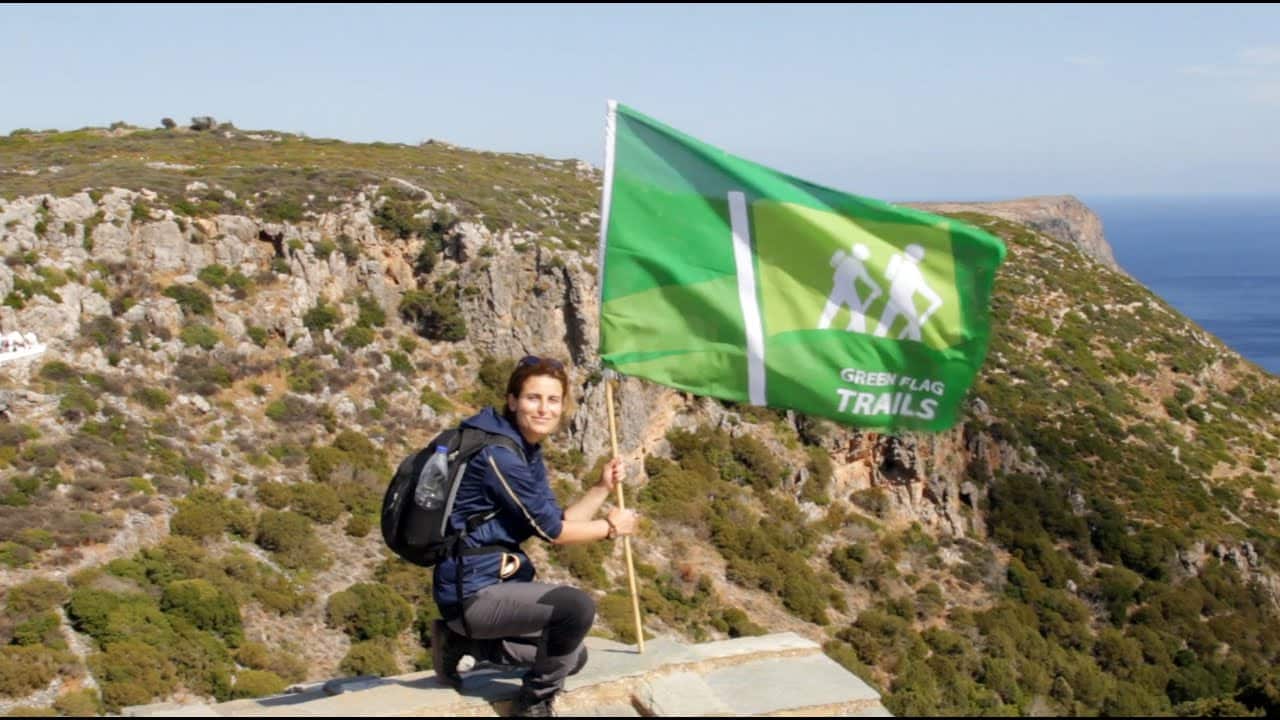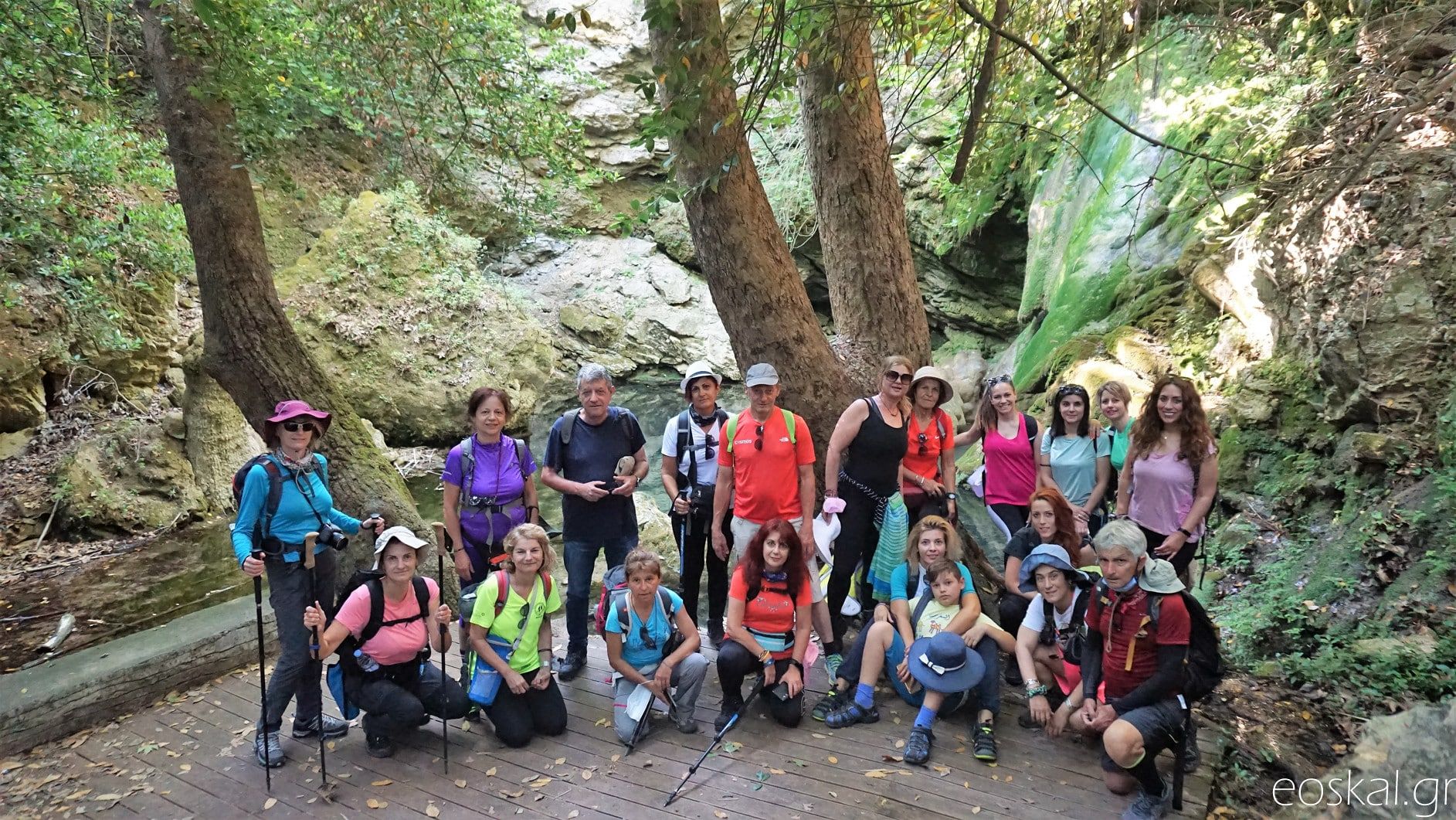
The Kalamata Mountaineering Club held its first island excursion during the three-day Holy Spirit holiday weekend in Kythira.
Thymios Alexopoulos, a member of our association, shares the team’s experiences from their trip to Kythira:
“The Association’s island excursions differ from the usual ones in the mountains, gorges, and the natural environment in general because they offer a wide variety of options. Along with hiking and experiencing the natural environment, we have the opportunity to explore the cultural aspects of local communities—from history and tradition to the modern daily life of the residents— which, for the most part, has adapted to tourism. The impetus for these excursions was that most, if not all, of our islands have managed in recent years to highlight their Old Trails. In other words, they have adapted the oldest road network—which once served the needs of previous generations—to meet the modern demands of tourism.
«…The extreme ends of Malea. Nearby lies the island of Kythira, along with its city and harbor. And beyond that lies the island of Crete»… With these words, Skylakas describes the island’s geographical location in his work *Periplus* in the 4th century B.C.
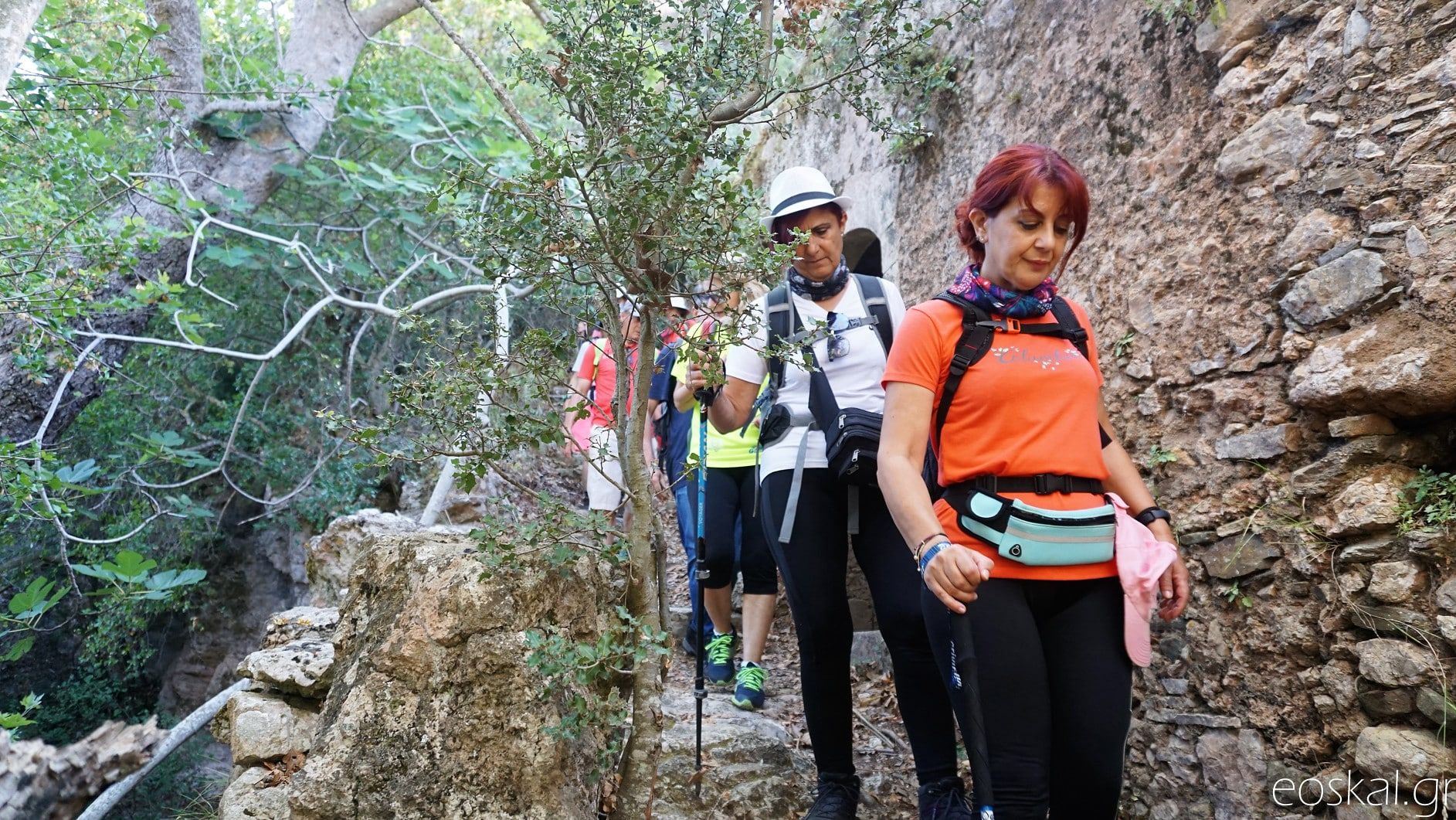
Three days of hiking from Chora to Kapsali, through the Mill Gorge to Kato Chora in Mylopotamos, to Paliochora and its castle, to Karava and the Amir Ali Fountain, and from Platia Ammo to the Mudari Lighthouse. With a visit to the Monastery of Panagia Myrtidiotissa. In between, swimming at the beautiful beaches of Melidoni Beach, Agia Pelagia, Platia Ammo, Avlemonas, and Kaladi.
Human presence on the island of Kythira dates back to the 9th millennium B.C. , and during our visit to the Archaeological Museum, we had the opportunity to see this history unfold before our eyes through the rich and marvelous archaeological finds on display.
«The stone tools from the first settlement on the island (9th–8th millennium B.C.), the finds from the Minoan colony at Palaiopolis, the rare bronze figurines from the Minoan mountaintop sanctuary at Agios Georgios, the figurines and jewelry from the sanctuary of Athena at Paleokastro, the 6th-century B.C. marble lion from Kythira, and the coins from the sanctuary of Poseidon at Antidragonera.».
The multimedia resources used by the Museum also play an important role in providing visitors with a more complete picture!
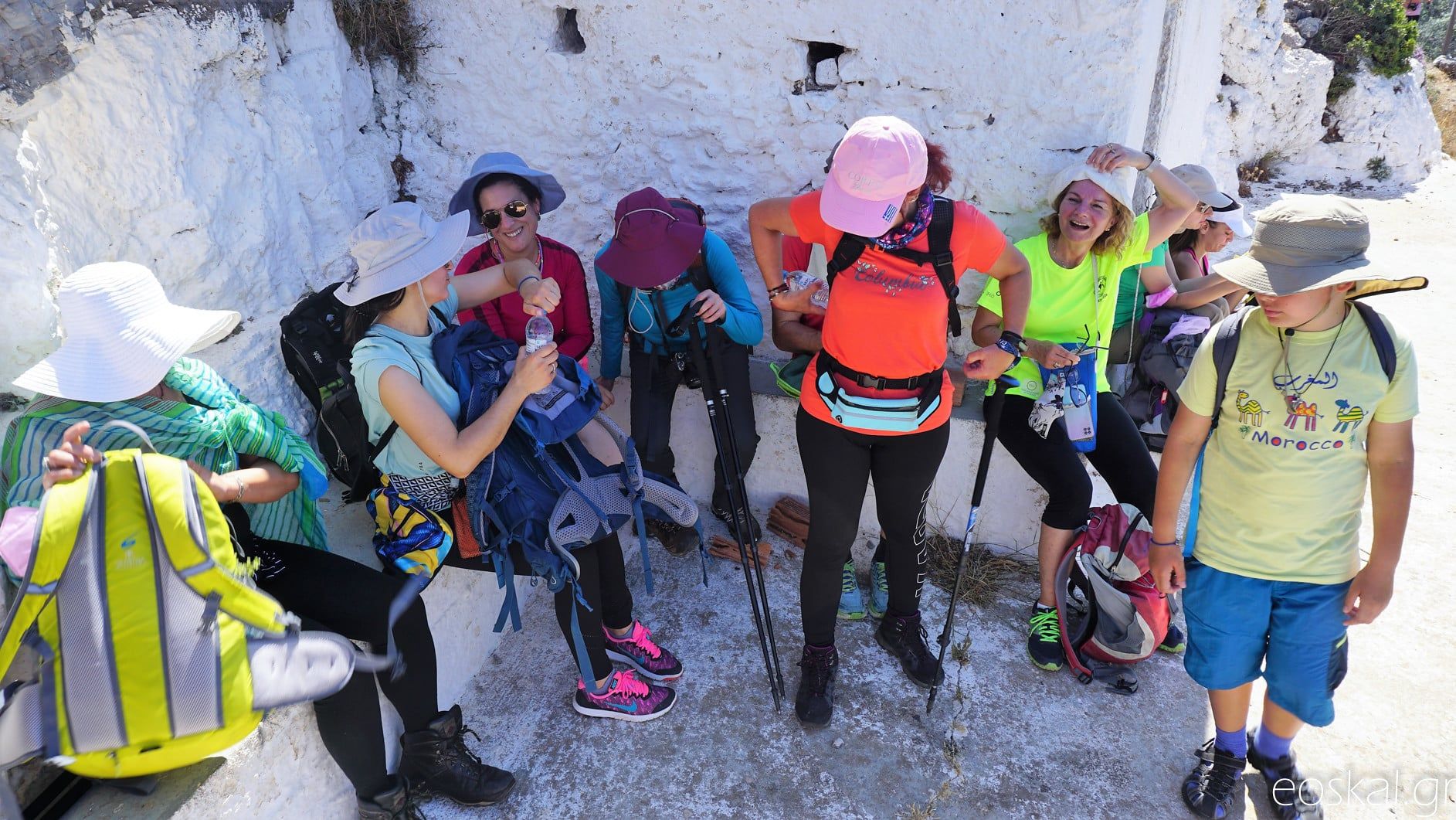
Every Sunday, for the past four hundred years, people from all over the island have been coming to Potamos Square to sell their goods and buy whatever they need to meet their daily needs. The market was started by the island’s pack animals’ owners to deliver the pack saddles to those who had ordered them, and graduallyexpanded to include agricultural and other artisanal goods, as one resident tells us, speaking with determination, that he will do everything he can to save this market from the ravages of modern commercial trends.
In Mylopotamos, the Gorge of the Mills—home to countless mills—a journey back to a time when grains were the primary agricultural products and covered every inch of arable land, with millers using the power of water to process their grains and produce flour, an essential ingredient for preparing daily meals. The mill buildings, though dilapidated, remain imposing, with spaces that bear witness to their dual purpose: serving as housing for the millers and providing a welcoming environment for their customers to attract as many as possible. A «gorge town» beside the river, with its small lakes, waterfalls, and dense vegetation. We walked along the old path that connected the Mills and came across the wild goats that remain from the island’s once-thriving livestock industry. We continued up the thyme-covered mountainside to reach, after the summit, the chapel of Orfani Panagia and then on to Kato Chora in Mylopotamos and its castle with its many churches.
In Paliochora, a fortified town and the island’s Byzantine capital, which is home to many churches—including this one, built in the 12th century AD, nestled among the sheer cliffs of the deep gorge that provided protection from pirate raids. We were awestruck upon learning of its conquest by Barbarossa and the massacre that followed! The destruction was so great that it was never inhabited again.
At the imposing castle of Chora, high above Kapsali, we walked among the ruined houses, the gunpowder magazine, the cistern, the prisons, the command post, the churches, and the old cannons. It was first built in the 13th century A.D. by the Venetians and served as a strategic point for controlling maritime traffic from the Cretan, Ionian, and Aegean Seas. Opposite it, out in the sea, stands the massive rock of Chytra, where the Sempreviva—also known as Elichrysos—grows in its caves, the yellow flower of Kythira, symbol of eternal love! We didn’t go to the rock of Chytra; we saw it growing, golden as gold, in the dry soil among the stones on the castle wall…!
On our hike from Platia Ammo to the Mudario Lighthouse, we discovered the island’s central point. Before us lay the Laconian Gulf; to our left was Tainaro with the Taygetos mountain range, and to our right was Maleas. A passage from the Western Mediterranean to the Myrtoan Sea and the Aegean Sea. Its majestic lighthouse, twenty-five meters high, provides the necessary safety for ships’ routes. Near the lighthouse lies the cave that served as a refuge for Paris and Helen of Troy.
Saying goodbye to the island of Kythira …!
According to Hesiod, Aphrodite was born in his sea.
For millennia, it has been a crossroads of Mediterranean sea routes, shaped by the influences, raids, and conquests of the Minoans, the Mycenaeans, and the Phoenicians in earlier times, and later by the Spartans, the Athenians, the Romans, and the Byzantines, the Crusaders, the Venetians, the Russians, the French, and the British, as well as pirates of all kinds, it never ceased to exist. On May 28, 1864, it was united with Greece.
Today, it stands at a modern historical crossroads. Should it succumb to the uncontrolled onslaught of tourism, or should it put the brakes on and do whatever is necessary to preserve the elements that will make it a unique tourist destination—one that respects the environment, history, tradition, and people.
How magical it would be, passing through Kythira again, to see the millers grinding wheat in the Mill Gorge, the ears of wheat waving in the fields, rows of vineyards on the slopes, flocks grazing in the mountains, beehives nestled beside flowering thyme bushes, people quenching their thirst at the springs, and the Tsirigotikos dance winding its way through the village squares?”
View the club's photo album by clicking on the photo below: