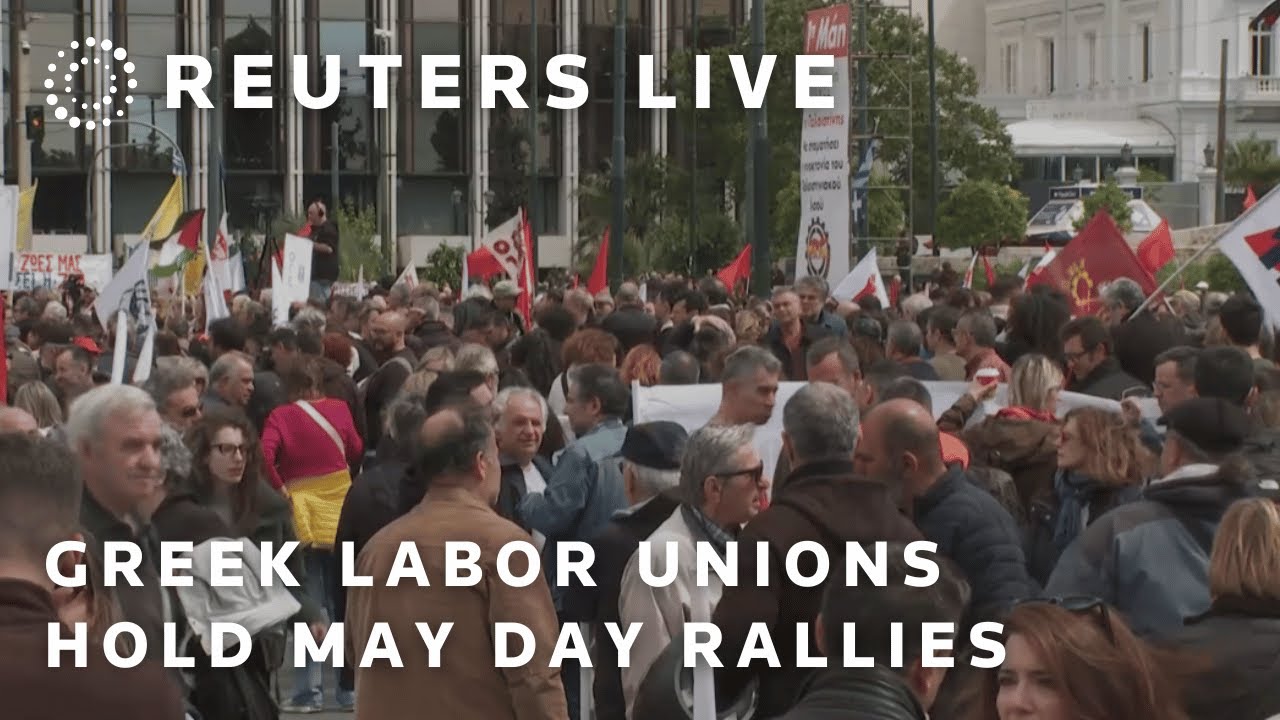
Labor Day is not a holiday; it is a strike. And this is not just a slogan; it is a timeless struggle, a demand, and a part of labor history. It began, in memory of the heroic uprising of the Chicago workers in 1886, to be celebrated around the world as a day of remembrance and honor for workers’ struggles, on an international scale, for better wages, better working conditions, social security, the guarantee of adequate rest time after work, and humane working conditions, health care, and living standards.
Greek society was quick to draw lessons from the Chicago uprising, or other American uprisings, such as the one in Colorado in 1914, which even claimed the life of a striking Greek immigrant, Louis Tika, who was of Cretan descent.
The Greek labor movement has come a long way over time through its own struggles—often bloody and arduous, marked by sacrifices and hardships—until a climate of labor cooperation was established among the social partners, the state’s attitude toward the world of work changed, and fundamental labor rights were firmly established throughout society, become respected and accepted, and, finally, have fundamental labor rights enshrined in law.
One hundred and seven years since the founding of the General Confederation of Greek Workers
This year marks the 126th anniversary of the founding of the «Federation» of Thessaloniki, which served as the main precursor to the organized Greek labor movement. However, as early as the late 19th century, the labor movement’s aspirations for better working conditions were inspired by the spirit of May Day.
Lavrio set the tone with its major strike of 1896, which escalated into a clash between the gendarmes and the strikers and forced the Italian representative of (French-owned) company, Gianbattista Serpieri, to… flee in order to escape the strikers« wrath. The main demand of the strike was that injured workers be transported promptly from the mines to hospitals. Secondarily, they demanded wage increases and the elimination of middlemen contractors, who took the agreed-upon payment and gave the workers only »crumbs.”.
Lavrio was rocked by numerous strikes in the years that followed, the largest and most iconic of which was the great strike of February 1, 1929, which lasted 47 days, resulting in the death of one miner and many injuries. Newspapers of the time also reported cases of lead poisoning as well as workers’ demands for medical care.
The strike by the miners in Serifos was landmark, as it was the first strike to advance the cause of the eight-hour workday in Greece. On August 23, 1916, the army and police opened fire as the strike rally escalated into a violent clash. The strike resulted in nine deaths and dozens of injuries, including two rural police officers. After 1922, in 1923, demands for the eight-hour workday began to be made, and much later it was implemented in the country’s large industrial plants.
Throughout the interwar period, the country was rocked by strikes, mainly in urban centers with industrial infrastructure. In Kavala, Drama, Piraeus, Patras, and Volos, strikes were frequent and militant, while employers and the state responded with a stance that was stereotypically harsh and inflexible toward the strikers’ demands.
On August 23, 1923, a general strike organized by the GSEE broke out, along with a rally in Pasalimani, resulting in 11 dead, 100 injured, and 500 people arrested. This was preceded by a government decision on August 20, 1923, to «dissolve the recognized labor unions.» Massive protests followed, led by the unions of railroad workers, seamen, and stevedores, while hundreds of strikers were arrested.
«Bloody Thursday for Small and Medium-Sized Businesses» in Athens
Among the numerous strikes of that period, the strike of March 10, 1927, stands out; it went down in history as the «struggle of the shopkeepers» and was staged over store rents. It was a strike—not by workers, but by small business owners—against the then-ecumenical Zaimis government, which, under pressure from store owners, sought to pass legislation raising rents by as much as sixteen times! The strike by small and medium-sized business owners was coordinated by the GSEVEE, and three people were killed by army and police water cannons, with numerous others injured.
Another strike—not a labor strike—took place on August 26, 1934, involving thousands of raisin producers in Aigio. It went down in history as the «raisin strike.» The toll: one dead and five injured.
Another landmark strike was the one on May 10, 1934, by dockworkers and mill workers in Kalamata. The «bloody events of Kalamata,» as the newspapers of the time reported, left four dead and ten injured.
These strikes lasted for many days and were bloody. They were major industry-wide strikes, like many others that preceded and followed them in various sectors throughout the early history of the labor movement. However, the most significant May Day strikes took place in the early 20th century and during the interwar period. Those in Thessaloniki stand out because, long before the labor movement developed in the free part of the country, they were much more influenced by socialist ideas, even though they, too, aimed to satisfy immediate demands.
The history of the Greek labor movement and Greek Labor Day was shaped to a large extent by the major labor struggles in Thessaloniki, culminating in May 1936. These struggles, however, had begun at least two decades earlier, at a time when the city had not yet been liberated and was under Ottoman occupation.
There were many reasons. The broader context was the growing influence of socialist ideas, coupled with the strengthening of the labor movement throughout Europe, as well as the outbreak, in 1917, of the Russian October Revolution, which accelerated developments internationally.
In Greece, the country’s emergence from the Great War and from «national division» was accompanied by growing labor demands, which went hand in hand with a rising trend of bourgeois modernization.
In Thessaloniki, in particular, the conditions were even more conducive to labor and social struggles. Following the Young Turk movement of 1908, social tensions increased and union activity escalated among a large number of workers of various ethnicities and professions, whose trade unions, beginning in 1909, united to form the first labor federation, the «Federation.».
The «Federation» was founded by workers« »clubs« from various communities—primarily Jewish and Slavic—who lived and worked in the city, nearly a decade before the founding of the GSEE and the SEK (which later became the KKE in 1924). It was the first labor federation, the »Socialist Federation of Thessaloniki,« which published the *Workers» Newspaper* and the newspaper *Avanti* (until 1936), and its founding members—led by Avraam Benaroya, Yona, Adriti, and others—were persecuted and imprisoned on several occasions.
«Federation» played a leading role in the founding of the EKTH in 1917, as well as in the developments that led to the founding of the GSEE and the SEK in 1918.
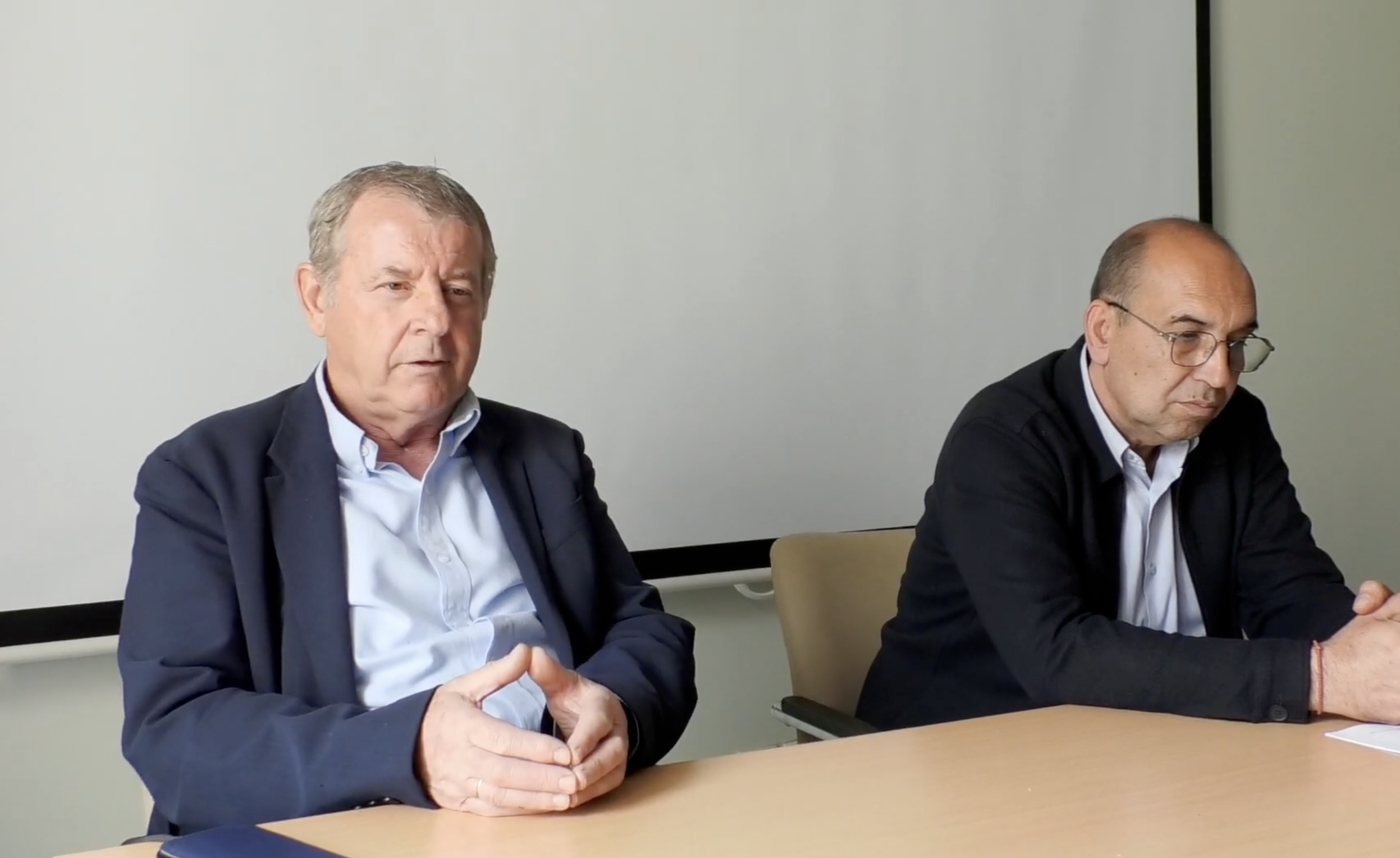
«The truth is that the first May Day strikes organized by the “Fédération” after its founding—in 1910, 1911, and 1912 (they were banned in 1913) and 1914, were much larger and more spirited than the May Day rallies in other regions and cities in the free part of the country,», historian Kostas Tziaras emphasizes in an interview with the Athens-Macedonian News Agency (ANA-MPA).
«We see, for example, that at the same time of year in Athens and Piraeus, the May Day strikes are less intense and the rallies there are more scattered. They are less vigorous than the May Day rallies held at the same time in Thessaloniki,» adds the historian.
The Founding of the EKTH and Labor Day
The establishment of the Thessaloniki Labor Center in 1917 played an important role in leading the workers, pursuant to Administrative Decision No. 166/1917 of the Thessaloniki Court of First Instance. This was followed the next year by the founding of the GSEE. However, the country’s first Labor Center was founded in 1908 in Volos, which in the 1920s was the country’s largest port for tobacco trade. In 1910 and 1912, respectively, Labor Centers were established in Athens and Piraeus.
Despite the fact that the EKTH was based on the «Fédération» unions, it was someone else who had encouraged its founding: Eleftherios Venizelos!
«Venizelos’s Provisional Government in Thessaloniki, wishing to win the support of the workers in its confrontation with the king, but also because this served national interests abroad, took the initiative to establish a Labor Center,» the author of the book titled «Labor and the Labor Movement in Thessaloniki,» Kostas Fountanopoulos, told the Athens-Macedonian News Agency (ANA-MPA). «The meeting,» he notes, «took place in the office of Labor Inspector I. Anapliotis in 1917, and Greek and Jewish unions from the city participated. The task of drafting the bylaws was entrusted to the socialists. The assembly to ratify the bylaws was held at the offices of the “Federation,” where they were finally approved after much discussion. A total of eleven associations signed the approved bylaws—which, unfortunately, have not survived.».
In any case, the growing radicalization of the unions troubled Eleftherios Venizelos—who had initially encouraged union activity— Eleftherios Venizelos, who, as prime minister of the now-liberated country, with the passage of the «Idionymos» Act in 1932, effectively dismantled labor mobilizations, countering them with arrests, prosecutions, violence, and repression. «May Day 1932 took place under very difficult conditions for workers. There were arrests, and from the very beginning, the authorities were hunting down workers,» says Mr. Tzias.
«An attempt had been made earlier, by the Papanastasiou government in the early 1920s, to tone down the character of May Day and give it other characteristics, such as democracy and unity, in order to strip it of its class-based connotations, but the endeavor was unsuccessful,» he emphasizes.
The «class-based» line was dominant in the trade unions of Thessaloniki. As early as mid-1918, the EKTH worked to create a unified central trade union organization, together with the Athens and Piraeus Labor Centers, and participated in the founding congress of the GSEE, representing 22 unions with 22,000 workers.
«The Class Struggle was a fundamental principle of the trade union organization and political action of the EKTH and its affiliated unions,» emphasizes Mr. Fountanopoulos, continuing: «Following the events of May Day 1919, the EKTH distanced itself from the actions of GSEE President Ev. Machairas and the Venizelist majority and aligned itself with the group of socialists based in Athens. In fact, it participated in the second GSEE congress, organized by the Athens Socialist Committee, voting in favor of an organic alliance with the working-class party. However, the split within the GSEE was bound to have repercussions for the EKTH as well. Those officials who sided «with the well-known anti-labor elements of Piraeus,» as Mr. Fountanopoulos characteristically put it, were expelled.
The coexistence of different factions within the EKTH was not a smooth and tension-free process. From the outset, two factions emerged within the EKTH: one socialist, influenced by the «Fédération,» and the other conservative, bringing together Venizelists and royalists. One need only consider that in the 1920s and 1930s—that is, after the liberation of Thessaloniki—divisive movements emerged, such as the ’National Labor Center of Thessaloniki(1923),« the »Conservative Workers« Center» (1925), the Thessaloniki General Workers« Center (1926), and the »Thessaloniki General Employees« Center» (1928), which, despite a last-ditch effort to form a “united front” in 1933, failed to unite, with the result that the labor movement was led, in a state of disarray, into the Metaxas dictatorship of August 4, 1936.
«Their relations, which were initially strained, improved only briefly after the great fire of 1917, when they worked together to seek aid for the fire victims,» notes Mr. Fountanopoulos.
But the imposition of the Metaxas dictatorship also came just a few months after the dramatic workers’ uprising of May 1936, which terrified the bourgeois elites of the time and shook up the political scene, prompting a violent and brutal crackdown.
May 1936 – A Milestone in the Labor Movement
May 1936 was undoubtedly the high point of the labor movement during the interwar period.
The situation for workers in the early 1930s became even more dire with the onset of the Great Depression (1929–1933) in the United States, which was accompanied by political instability, ethnic tensions, a sharpening of social divisions, and a deepening of the recession worldwide, with our own country being driven to bankruptcy and the working classes sinking even further into poverty, while certain segments of the domestic bourgeoisie continued to prosper.
The most significant working-class uprising of the interwar period, in which workers demanded better wages and working conditions, went down in history as the «May 1936’ Workers» Uprising.
The uprising began at the city’s tobacco shops, where there was a massive mobilization of workers, and spread throughout the city center. The murder of taxi driver Tassos Toussis sparked serious clashes and a march to the Governor’s Office (editor’s note: this served as the inspiration for «Epitaph» by G. Ritsos, set to music by M. Theodorakis). The protests spread from one end of the city to the other, with thousands of people pouring into the city center from the neighborhoods.
The uprising was joined by dockworkers, tobacco workers, farm laborers, mill workers, knitting mill workers, garment workers, food service workers, electricians, leatherworkers, barbers, tram drivers, motorists, and others, numbering over twenty-five thousand.
The clashes with the gendarmerie turned into a bloodbath, leaving eleven dead: V. Stavrou, Indo Senor, G. Panopoulos, D. Aglamidis, Salvatore Matarasso, Dim. Lailanis, S. Diamantopoulos, Giannis Pitaris, Efthymis Manos, Manolis Zachariou, and Anastasia Karanikola.
For several days, the city was «under workers» control,” as newspapers of the time reported. May 1936 was, without a doubt, the most heroic and pivotal moment for the labor movement in the city and the country. To quell the uprising, an army regiment was sent from Larissa, while a naval squadron also arrived at the city’s port.
After May 1936, the labor movement in the city was significantly weakened, mainly due to the historical developments that followed, such as the German occupation, the decimation of a large portion of the workforce by hunger and deprivation, the complete annihilation of the Jewish community, and subsequently the civil war and the imposition, in the post-war period, of a more authoritarian form of government in the country, among other factors.
«During the Metaxas dictatorship, the old administrations will be dissolved, the EKTH will be renamed the National Workers» Center of Thessaloniki, just as the GSEE will be renamed the (National) SEE,” says Mr. Fountanopoulos.
Shortly before liberation from German occupation, the leadership of the city’s labor movement was effectively taken over by the Workers’ Party–EAM, which had organized solidarity and relief efforts for the population even during the occupation.
Trade Union Activity After the Occupation
At the end of the occupation, a period of conflict between trade union factions ensued, accompanied by the imprisonment and persecution of trade union leaders. The forces of the Workers« EAM also had to contend with labor mobilizations and so-called »nationalist« forces, which during the occupation were friendly toward the occupier and opposed to the interests of the workers. The struggle between genuine workers» factions and “employer-aligned” factions will continue, with the latter prevailing for long periods, aided by political leaders who viewed the radicalization of the labor movement in Greece with suspicion.
After the Greek Civil War, prominent figures in the labor movement (of communist ideology) were exiled, persecuted, imprisoned, or fled to the former socialist people’s democracies.
The increasing pressure exerted by the post-civil war state and its «paternalistic» attitude toward labor unions contributed significantly to the control of the labor movement, through interference in the election of leadership, accusations of «pro-employer» unionism, and questionable representation and practices regarding the actual defense of workers’ rights.
During the transition to democracy, however, with the restoration of democracy in the country and the legalization of the KKE, the labor movement began to take a more radical direction—due in part to the political climate and the growing number of people joining the unions en masse.
«There was a period of democratization of the unions, which was completed with Law 1264/81, strengthening their democratic character and their dynamism,» Panagiotis Tsarampoulidis, former president of the National Confederation of Greek Workers (EKTH), had emphasized at the event marking the 100th anniversary of the General Confederation of Greek Workers (GSEE) in 2018.
Despite the «intense factionalization» and «politicization» of certain sectors of the labor movement, the labor movement during the post-dictatorship era managed to develop mechanisms and initiatives that broadened its horizons (consumer associations, cultural organizations, etc.), and to achieve significant gains for workers in the years that followed.
Even during the most difficult period of the transition to democracy, the economic crisis, and the memoranda—and despite the erosion of many established labor rights— it was possible to institutionally preserve a number of labor rights, such as the 13th and 14th monthly salaries in the private sector, marriage and child allowances, and others.
Today, a century later, the institutional role of labor unions—despite any objections and shortcomings—is universally acknowledged, while the problems for which workers have fought for years and years have not completely disappeared. In addition to the long-standing issues that have preoccupied the labor movement, contemporary challenges have emerged due to technological progress and changes in the workplace, while long-established rights are often called into question in public discourse.
Fanis Gregoriadis