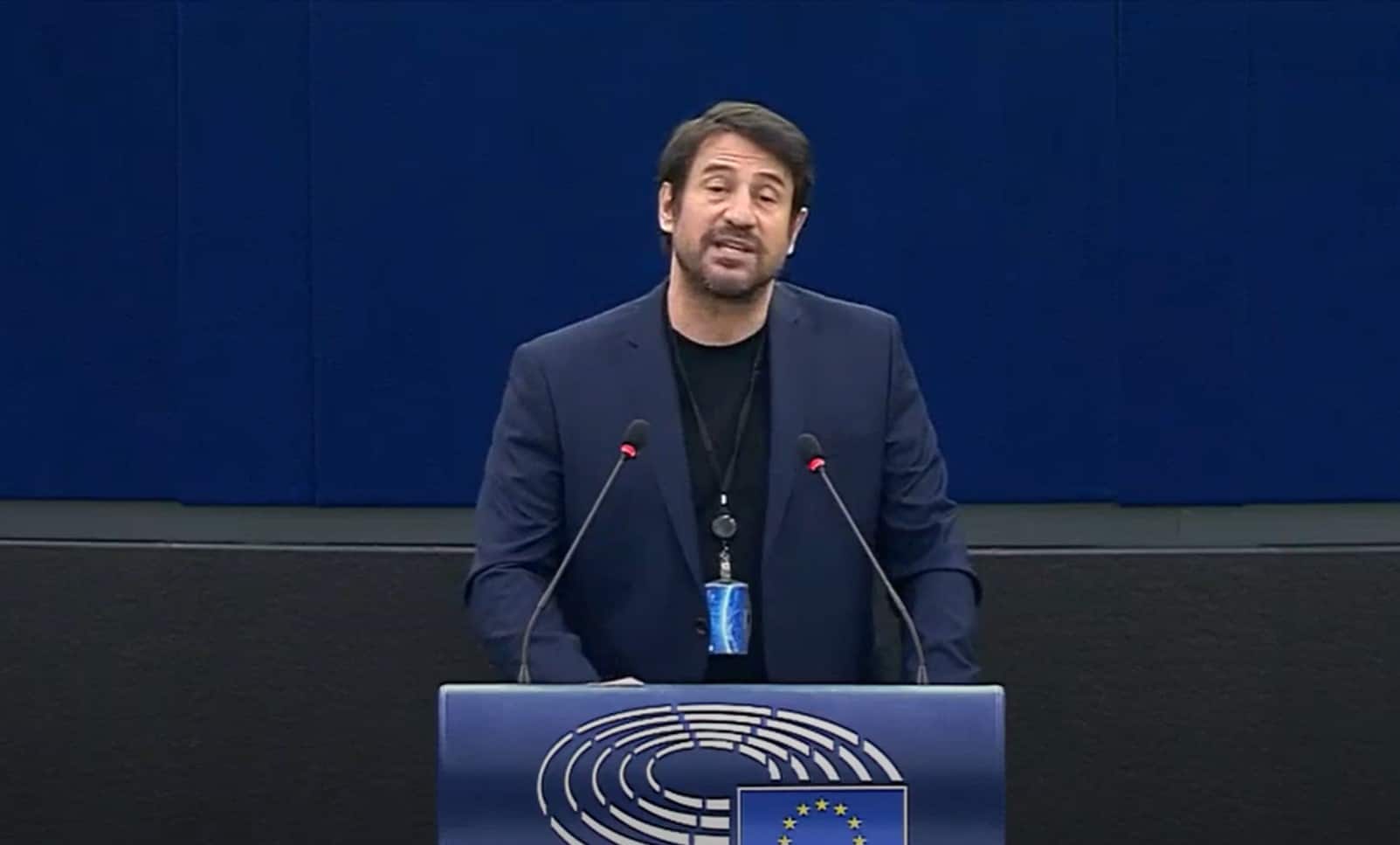
Alexis Georgoulis, MEP for SYRIZA – Progressive Alliance, made a timely intervention yesterday in the European Parliament's Committee on Culture, in the context of the introductory report on the «Implementation of the new agenda for culture and the European Strategy for International Cultural Relations,» prompted by the substantive issue that has arisen in Greece regarding the ratification of the agreement concerning a private collection comprising a total of 161 antiquities from the Cycladic civilization.
Yesterday, Wednesday, September 7, the shadow rapporteurs for the report on the «Implementation of the new agenda for culture and the European Strategy for International Cultural Relations» met at the Committee on Culture. At the meeting, the representative of the Czech Presidency, Yvona Havel, who chairs the Council's Committee responsible for culture, presented the Presidency's actions and the content of the Work Plan for Culture for the next four years, which is currently under negotiation and will be finalized by the Council of Ministers of Culture in November.
Alexis Georgoulis, representing the political group of the Left, began his speech by asking Ms. Havel whether the Council's Committee on Culture had included in its plans actions to address the issue of illegal trade in objects belonging to cultural heritage. He explained that in countries such as Greece, there is a serious problem of antiquities trafficking and referred to the recent debate in the Greek Parliament on the occasion of a private collection of 161 works of Cycladic art, which is located outside Greece and has obviously been created illegally.
Alexis Georgoulis argued that the Council should take an interest in these issues because they concern European cultural heritage. Archaeological finds in Greece, for example, are naturally part of Greek cultural heritage, but also, by extension, European cultural heritage.
The rapporteur for the Implementation Report, Salima Yenbou (Renew), agreed with the MEP from the Left. She emphatically stated that the cultural projects of each Member State are part of the common European heritage and, therefore, the contemporary illegal trade in antiquities must be discussed by the European institutions.
The representative of the Czech Presidency, while initially stating that these issues concern only Member States, ultimately agreed that the illegal trade in antiquities falls under European law, like any other type of trade, and therefore a relevant directive could be drafted, according to the intervention of Alexis Georgoulis.