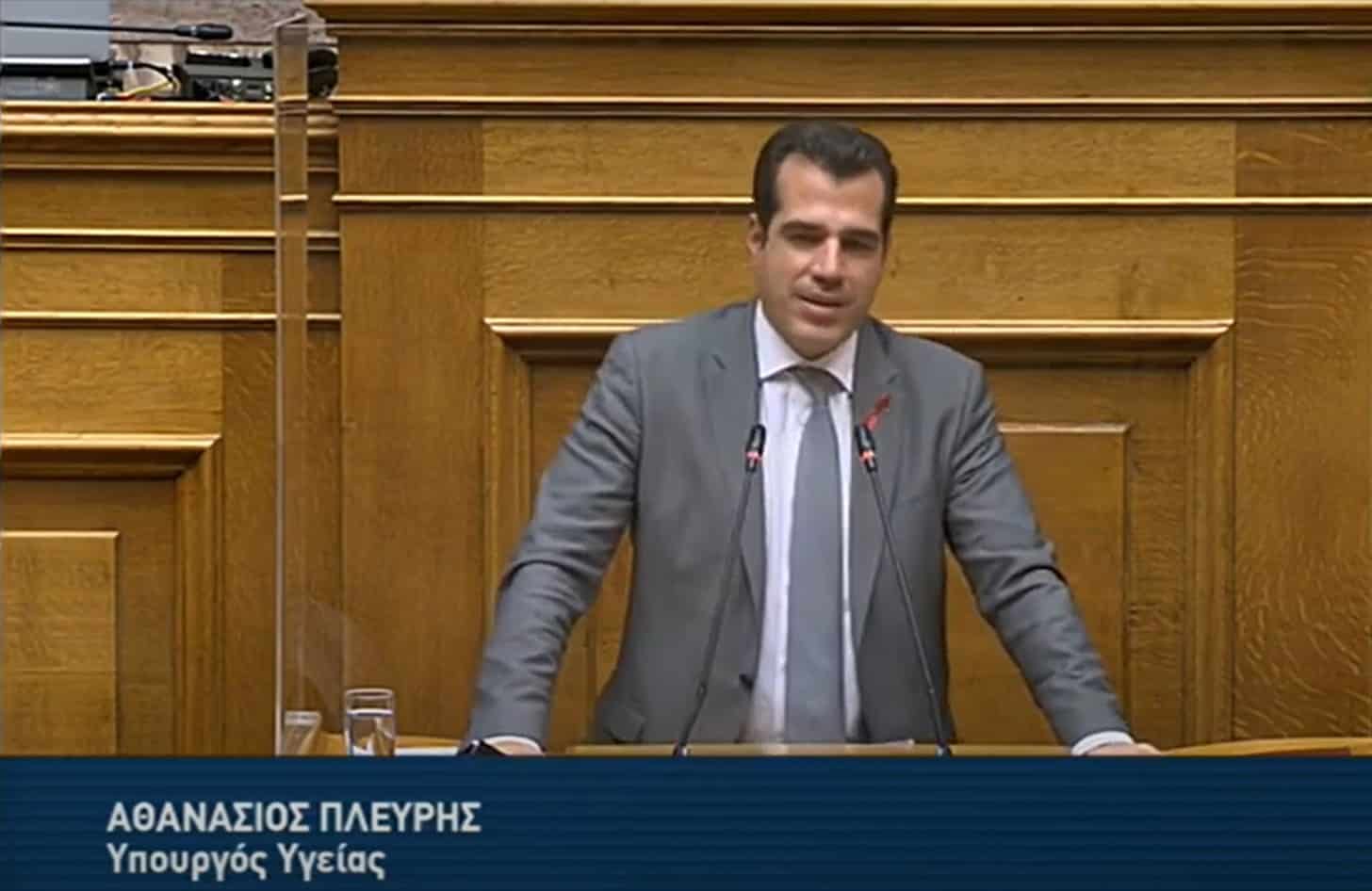
The support and cooperation of all political forces for the tracking operation next week, with the free distribution of self-tests, across the entire population, called for Minister of Health, Thanos Plevris, speaking earlier in the plenary session.
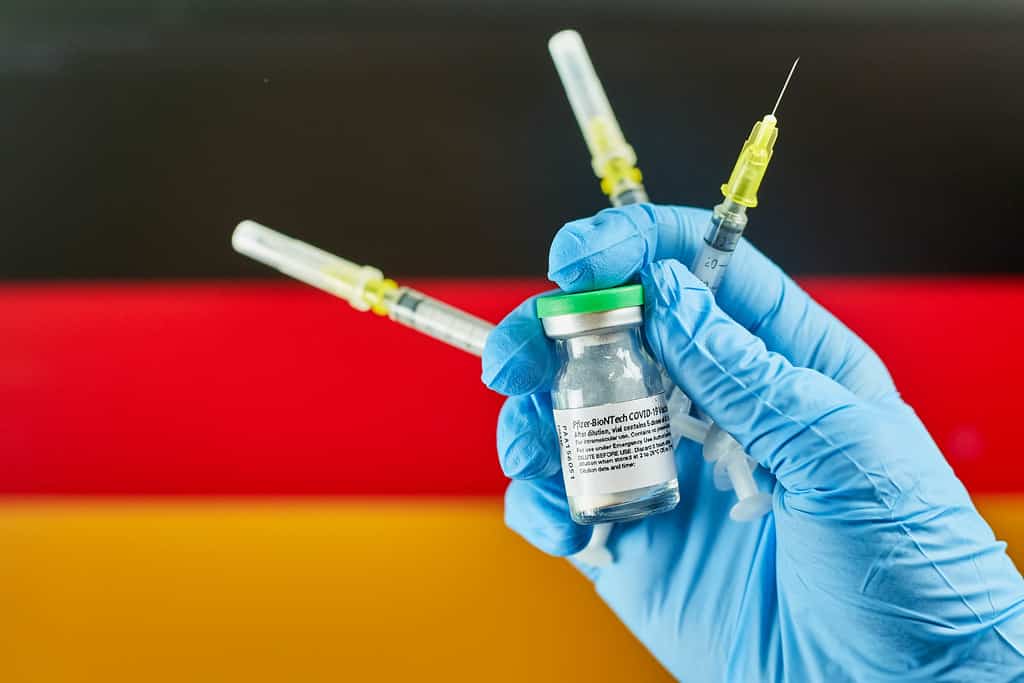
“Next week, a free self-test will be made available to the entire population, and it is very important that we all do our part to ensure that as many people as possible take the test—both vaccinated and unvaccinated. In fact, this test will be available for one week so that we can identify the number of cases. ”With the self-isolation and quarantine these individuals will undergo—and they’ll still be able to celebrate Christmas, since the process will be completed after 10 to 15 days—transmission will be limited,“ said the minister, who noted, however, that the number of cases is decreasing week by week, and this is a sign that gives cause for optimism that ”we are moving toward a plateau in the pandemic.”.
Thanos Plevris said that All private-sector ICU beds are at the disposal of EKAB, and at this moment, more than 200 patients from the National Health System are being treated in private-sector ICU beds. “Obviously, these ICU beds are for non-COVID cases, because an ICU cannot accommodate both COVID and non-COVID patients at the same time,” said Mr. Plevris.
Responding to criticism regarding critically ill patients who are not in the ICU, the minister said that «Indeed, patients outside the ICU are also intubated, but they are intubated in accordance with the guidelines set forth in international protocols.". »Patients are generally intubated in surgical beds, ICU beds, or special beds equipped with technical support, nursing staff, and ventilators.".
«All of our fellow citizens receive care within a National Health System that is under strain,» said Mr. Plevris, and prompted a member of parliament who had previously served as Minister of Health to say that there were no waiting lists for ICU beds before the pandemic.
Referring to the bill on the National Central Health Procurement Authority, the Minister of Health defended centralized procurement, because they will benefit the public, ensure better bids, and enable regional hospitals to procure supplies at better prices. As he said, EKAPY, with its legal status as a private legal entity, will provide the capacity and flexibility to expedite procurement, and there will be a more technical approach to NSRF projects, as well as projects under the Recovery Fund, some of which will be implemented through public-private partnerships (PPPs). Furthermore, EKAPY itself will be able to act as a project implementation agency.
Referring to the provisions on pharmaceutical spending, Thanos Plevris said that specific criteria would be set for the negotiating committee, such as calculating the clawback and rebate that a drug would generate, assessing consumption volumes and prices in other EU countries, and “especially for expensive and patented drugs, the committee should be able to request the lowest price, so that we can ultimately determine whether the discount we are seeking is at that level.”.
The minister explained that The government is introducing a provision so that prescriptions for the uninsured will be issued at public facilities, because now that private doctors also write prescriptions, the cost has more than doubled compared to the past.