Swarms of microscopic, living robots are capable of reproducing under laboratory conditions by freely joining cells together: These so-called xenobots, consisting of frog cells, are the first multicellular organisms known to reproduce in this way.
As stated in a relevant article of New Scientist, The xenobots were created for the first time last year, using cells from the embryo of a species of frog (Xenopus laevis). Under the right conditions, the cells formed small structures that could self-assemble, move in groups, and sense/perceive their environment.
Now, the scientists who created them say that the xenobots They can also reproduce or multiply by making copies of themselves. Josh Bongard of the University of Vermont and Michael Levine of Tufts University in Massachusetts, along with their colleagues, began by isolating rapidly dividing stem cells destined to become skin cells from frog embryos.
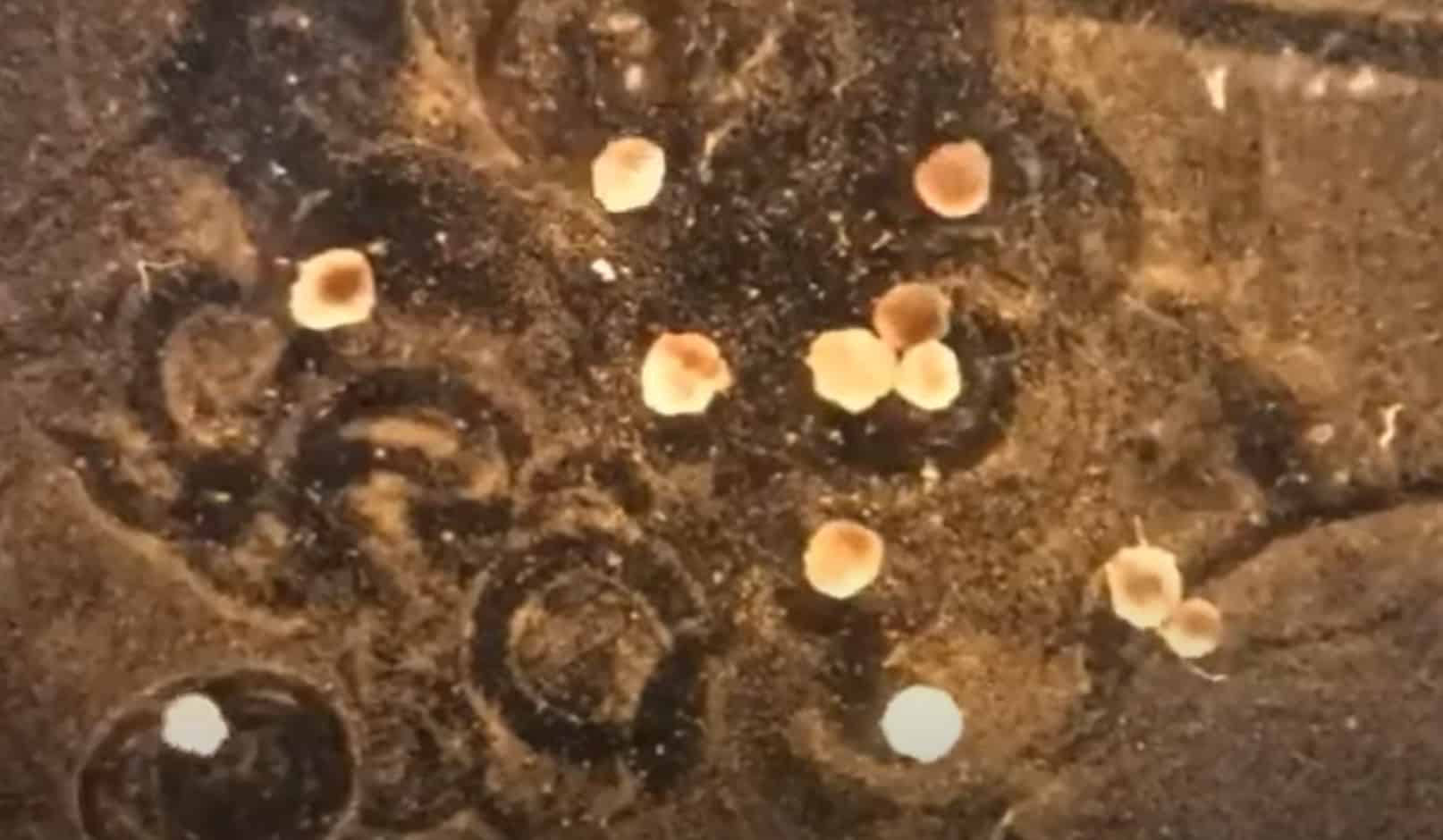
When the cells accumulate, they form clusters of about 3,000 cells within five days. Each of these structures is about half a millimeter wide and is covered with microscopic, hair-like structures. These structures act like oars, allowing the xenobots "to move forward," said Bongard.
The researchers found that Individual clusters of cells appeared to work together as swarms, pushing free-floating cells so that they would accumulate or merge. The new stacks of cells gradually formed new xenobots.
Further experiments revealed that groups of 12 xenobots which were placed on laboratory slides containing approximately 60,000 individual cells, appeared to work together to form one or two new generations. «One parent ((xenobot) »One may start a stack, and then, by chance, a second one may bring more cells into it, and so on, resulting in the child," said Bongard.
Each reproductive cycle produces slightly smaller offspring xenobots, on average. Ultimately, offspring consisting of fewer than 50 cells lose their ability to swim and reproduce.
In an effort to create additional generations xenobots, the team turned to artificial intelligence. Using an algorithm modeled on evolution, the team predicted which initial shapes xenobots could produce the most offspring. The simulation predicted that the clusters shaped like C could lead to more generations. When the researchers cut the spheres xenobots so that they take shape C, with the amended xenobots to produce up to four generations.
This is the first time that multicellular organisms have been found to reproduce by replicating themselves in a way that does not involve the growth of the organism’s own body. «This work shows that there is a previously unknown way in which life could have self-replicated,» says Bongard.
Some of the researchers on the team hope that they will be able to use the xenobots to investigate how the first organisms on Earth might have reproduced.
As noted in a related article by CNN, The xenobots They are actually based on very old technology (like computers from the 1940s) and have no practical applications; however, the combination of molecular biology and artificial intelligence could be used for various purposes and tasks, both within the body and in the environment. Furthermore, regarding concerns about a type of biotechnology that could reproduce itself, the researchers say that these living machines are completely confined to the laboratory and can be easily eliminated.