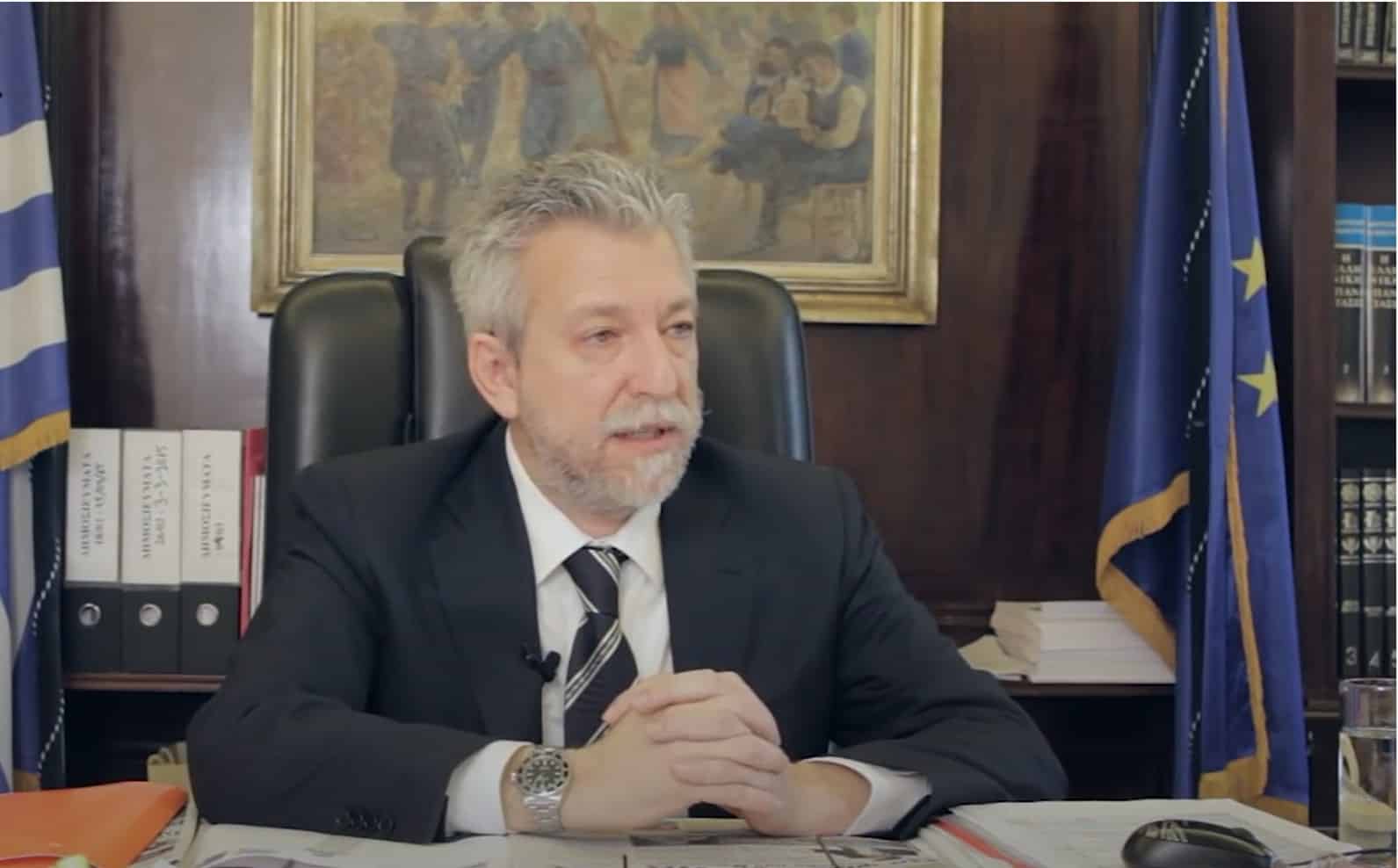
In an article on the propago.gr website, former minister in the SYRIZA government, Mr. Stavros Kontonis, refers to the 1977 snap elections in which Konstantinos Karamanlis led the country, with PASOK displacing G. Mavros’s Center Union from its leading position in the centrist political spectrum, noting characteristically that «in a strange way, the distant year of 1977 is knocking on our door again.».
The former minister lists what he sees as the new developments, emphasizing that Sunday’s massive turnout in the KINAL elections «marks the beginning of intense internal competition within the progressive camp,» referring to «»protracted lack of credibility on the part of SYRIZA,« which »drove thousands of progressive citizens to the polls for the KINAL presidential election and to vote for N. Androulakis.”.
He does, however, speak of a «serious possibility of a realignment of the existing power dynamics on the center-left,» since, as he says «we all know that Sunday’s vote included SYRIZA voters who came from PASOK,» while he argues that citizens in the so-called «gray zones» on Sunday «told the SYRIZA leadership that the experiment is over.».
Continuing in a sharp tone directed at Koumoundourou, he notes that «Kyriakos Mitsotakis will no longer have to contend with SYRIZA’s major donors, against whom he had secured absolute dominance,’ while he foresees a threat to New Democracy from »the emergence of a new far-right movement, taking shape within the reactionary anti-vaccine movement, which is staking a claim to political space and political representation.« He also notes that »the possibility of early elections is becoming increasingly likely in 2022, either in late spring or early fall.«.
Finally, referring to Mr. Androulakis, he notes that «just as in 1977 we all knew that the potential for realignment lay exclusively within PASOK, so today, too, we are waiting to see whether Nikos Androulakis will take advantage of the opportunities that are being «generously» offered to him.»
Here is Mr. Kontonis's article in full:
«Back in 1977, K. Karamanlis led the country into early elections on November 20, even though he held a unique and, to this day, unchallenged majority of 220 seats in Parliament and 54% of the vote, as of the elections on the 17thof November 1974.
Despite his omnipotence, he correctly saw that he was in danger: a) from the pro-monarchist far right, which, because of the referendum on the form of government, felt betrayed by the historic leader of the Right and was demanding political retribution for the crushing blow it had suffered, and b) by the surging PASOK of A. Papandreou, which, although it had achieved a meager 13% in 1974, appeared poised to overtake G. Mavros’s Union of the Center party, which had emerged as the official opposition in the 1974 elections.
It was clear that K. Karamanlis was not afraid of the aristocratic politician G. Mavros. He was concerned about Andreas’s rapid rise and, consequently, the country’s path toward accession to the EEC.
So in those elections, we all knew (even though no polls had been released) which party would come in first: it would be New Democracy, albeit with lower support. However, we were waiting to see the extent of the realignments or possible upheavals within the center-left and the broader progressive camp.
The results confirmed the ’prevailing atmosphere«: K. Karamanlis was re-elected with a reduced share of 42%, mainly due to the far right entering Parliament with 7%, and on the center-left we saw a complete reversal, with Andreas Papandreou dominating the political scene from then on and the Center’s support plummeting, leading to its political extinction from that point forward.
In a strange way, it seems to me that the distant year of 1977 is knocking on our door again, and here’s why:
Α) The mobilization of 270,000 KINAL members and supporters last Sunday marks the beginning of intense internal competition within the progressive camp. SYRIZA’s prolonged lack of credibility, which has now become entrenched and irreversible, has driven thousands of progressive citizens to the polls for the KINAL presidential election and to vote for N. Androulakis.
Β) We are facing a serious possibility of a realignment of the existing power dynamics within the center-left, since we all know that Sunday’s vote included SYRIZA voters who had previously supported PASOK. Especially in small communities, this phenomenon was plain to see. A prerequisite for shifting the political balance is for KINAL’s new leadership to present a serious, progressive government plan, one that incorporates the necessary and self-evident radical reforms that the country needs and which have been awaiting implementation for many years. Necessary and self-evident, yet these are reforms that will require confronting economic interests, labor unions, and entrenched mindsets that have persisted for decades.
Γ) Citizens who, according to recent polls, had been in the gray zone of undecided voters, on Sunday, the 5thof In December, they told the SYRIZA leadership that the experiment was over. The problem is that the «kids» hadn’t taken Alekos Alavanos’s remark seriously on the night of the December 16 electionof September 2007, when SYRIZA had achieved its first encouraging result: «SYRIZA is a party constantly being put to the test.» At that time, A. Alavanos had a very clear understanding of what was happening in society and what would be reflected in the electorate, but then he completely botched it.
D) Mr. Mitsotakis will no longer have to contend with SYRIZA’s major donors, against whom he had secured absolute dominance, despite the negative developments that have been mounting since July 2019. He now has serious cause for concern because, just as in 1977, something new is beginning to show signs of a dynamic presence, with an outcome that is unpredictable even for the right-wing government, because his party’s July 2019 vote share included former PASOK voters, who are the most hostile toward SYRIZA and who, it seems, are also ’coming back.’.
E) There is also another reason why New Democracy should not feel secure at this time: the emergence of a new far-right movement, taking shape within the reactionary anti-vaccine movement, which is staking a claim to political space and political representation. In place of the royalists of 1977, we have the “conspiracy theorists” of 2021. Given all this, it seems to me that the possibility of early elections is becoming the most likely scenario in 2022, either in late spring or early fall.
No matter how many historical parallels there may be with the events of 1977—and there are quite a few— we must not overlook the fact that SYRIZA is not the EDIK of 1977, and today’s KINAL is not Andreas Papandreou’s PASOK. After all, historical development will continue to be an endless spiral that will always move upward, reminding us of situations from the past but which will never be identical to the present. But just as in 1977 we all knew that the potential for realignment lay exclusively within PASOK, so today, too, we are waiting to see whether Nikos Androulakis will take advantage of the opportunities that are being «generously» offered to him.».
By Stavros Kontonis, attorney and former minister