By the term “rizitika,” we mean
songs by unknown composers
which have been passed down to us today through tradition from past centuries.
………………………………………..
around the mid-16th century in western Crete
A feud breaks out between two ancient, powerful Byzantine families…
of the Skordilides and the Mousouros, who lived in Omalos, Crete.
………………………………………..
The Mousouros family is so wealthy and powerful that it even has its own private road called «Mousouros Street.».
………………………………………..
Skordilis, whose shepherd was killed and whose flock was stolen
He’s waiting for February to come, for the sun to shine, for the snow to melt, so he can come down from the mountain and get his revenge….
………………………………………..
The purpose may actually be older, and the lyrics change depending on the era…
Some people say that the lyrics used to be:
………………………………………..
Christ, if only I could strap on a sword and grab a spear,
I used to rehearse in Omalo, on the path to Mousouro,
to draw my silver sword and my golden spear,
to make mothers without sons, women without husbands.
………………………………………..
Some people argue that it is a song about a vendetta and has nothing to do with rebellion.
………………………………………..
But that is precisely the meaning of the rizitika songs.
to transport and install
in every event of the present
songs and folk tunes that stem from the roots of our people.
………………………………………..
the
“When will the sun come out?”—our people used to sing this, both figuratively and literally
During difficult times:
………………………………………..
of the Frankish rule
(The proud Cretans sang this when the Franks were trying to subjugate them through violence and bloodshed.)
………………………………………..
during the Ottoman occupation
(They sang it on that island of suffering during nearly 250 years of slavery)
………………………………………..
during the German occupation
(The guerrillas in the mountains used to sing it)
………………………………………..
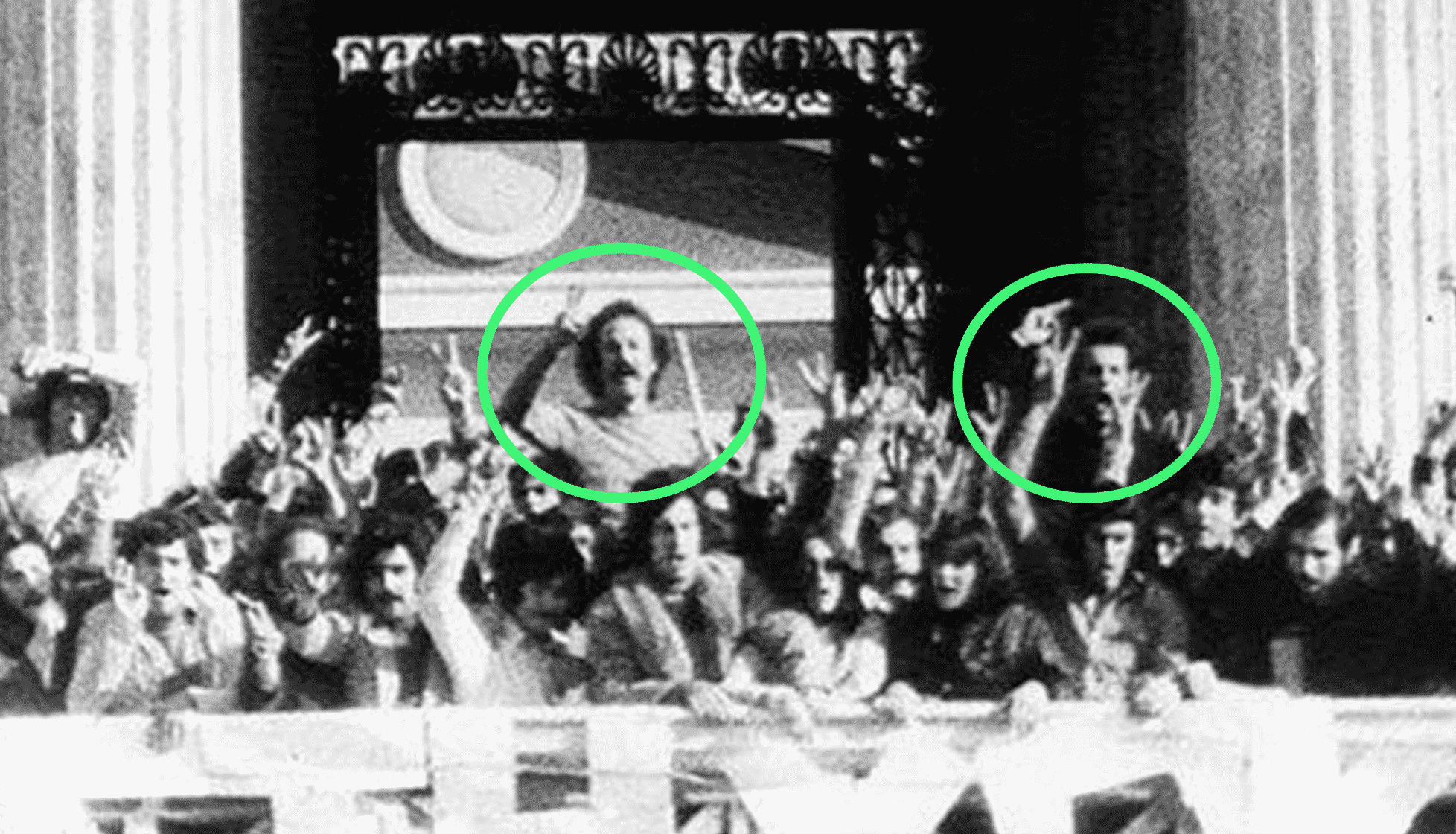
of the junta
(They used to sing it at the Polytechnic)
………………………………………..
the invasion of Cyprus
(This was sung by the paratroopers boarding the ships bound for Cyprus in 1974)
………………………………………..
of the memoranda
(People were singing it in Syntagma Square and in other squares across our country)
………………………………………..
but
to this day….
………………………………………..
It is a landmark song in the country's history and will always symbolize the people's struggles for freedom…
………………………………………..
In the photo, Psaronikos (Nikos Xylouris) and Stavros Xarchakos—just as they are today at the Polytechnic occupation—have become one with the students and are singing
the
“WHEN WILL IT CLEAR UP?”
Rizitika


📢 Stay informed!
Follow Kythera.News on Viber. Be the first to hear the island's news.









Popular Categories

Previous article
Next article