The Special Spatial Planning Framework (SPF) for Renewable Energy Sources (RES), in Greece was initially approved in 2008 and is currently in the final stage of reassessment and revision by the Ministry of Environment and Energy. The required environmental studies and presidential decrees that will establish a robust institutional framework are still pending.
According to a report by the Athens-Macedonian News Agency (ANA-MPA), the Ministry of Environment and Energy is expected to receive the final study by the end of April 2023, in accordance with the approved timeline. This reform is one of the most controversial issues that has long been a source of intense debate among legal experts, environmental organizations, local communities, and the market itself. According to the proposal for the new National Energy and Climate Plan (NECP), the goal for our country is for 45% of energy to come from renewable sources by 2030, leading to full decarbonization by 2050. The challenge, therefore, is to combine the protection of the environment, biodiversity, and the country’s tourism industry with the promotion of the necessary projects, all under conditions of sustainability. A difficult problem for «strong problem-solvers.».
As reported by the Athens-Macedonian News Agency (ANA-MPA), the Secretary General for Spatial Planning and the Urban Environment at the Ministry of Environment and Energy, Associate Professor Efthymis Bakogiannis of the National Technical University of Athens (NTUA), «the purpose of the National Spatial Plan for Renewable Energy (NSP-RE), as stated in the proposal for its revision, is to establish a framework of guidelines and regulations for the spatial layout of renewable energy facilities and their individual categories, taking into account:
1) the country’s energy planning and the need to achieve Greece’s respective treaty-based targets for promoting renewable energy sources and increasing their share of gross final energy consumption,
(2) the physical characteristics and spatial features of the mainland, coastal, and island areas, and
(3) the protection and management needs of areas of special environmental, ecological, cultural, and landscape interest, as well as areas that are highly vulnerable to climate change.».
A study such as the RES Master Plan, as mentioned, is carried out in five stages. The first stage, which involves the analysis and assessment of the current situation, has been completed, and Stage B is currently underway, which, together with the remaining three stages, involves formulating and refining the proposal to revise the National Energy Plan for Renewable Energy Sources.
According to information provided to the Athens-Macedonian News Agency (ANA-MPA), the assessment revealed the following key findings and data:
1. The maximum permitted density of wind power installations per local government unit and land-use category, as specified by the current National Energy and Climate Plan for Renewable Energy Sources (EHP-APE), allows for the installation of wind energy facilities with a total capacity 26 times greater than the national target for 2030, from onshore installations alone.
At the same time, the need was expressed to restructure the Wind Energy Priority Areas (WPA) and the Wind Energy Suitability Areas (WAP), taking into account existing concentrations as well as areas with increased demand (e.g., Evrytania, Thisbe).
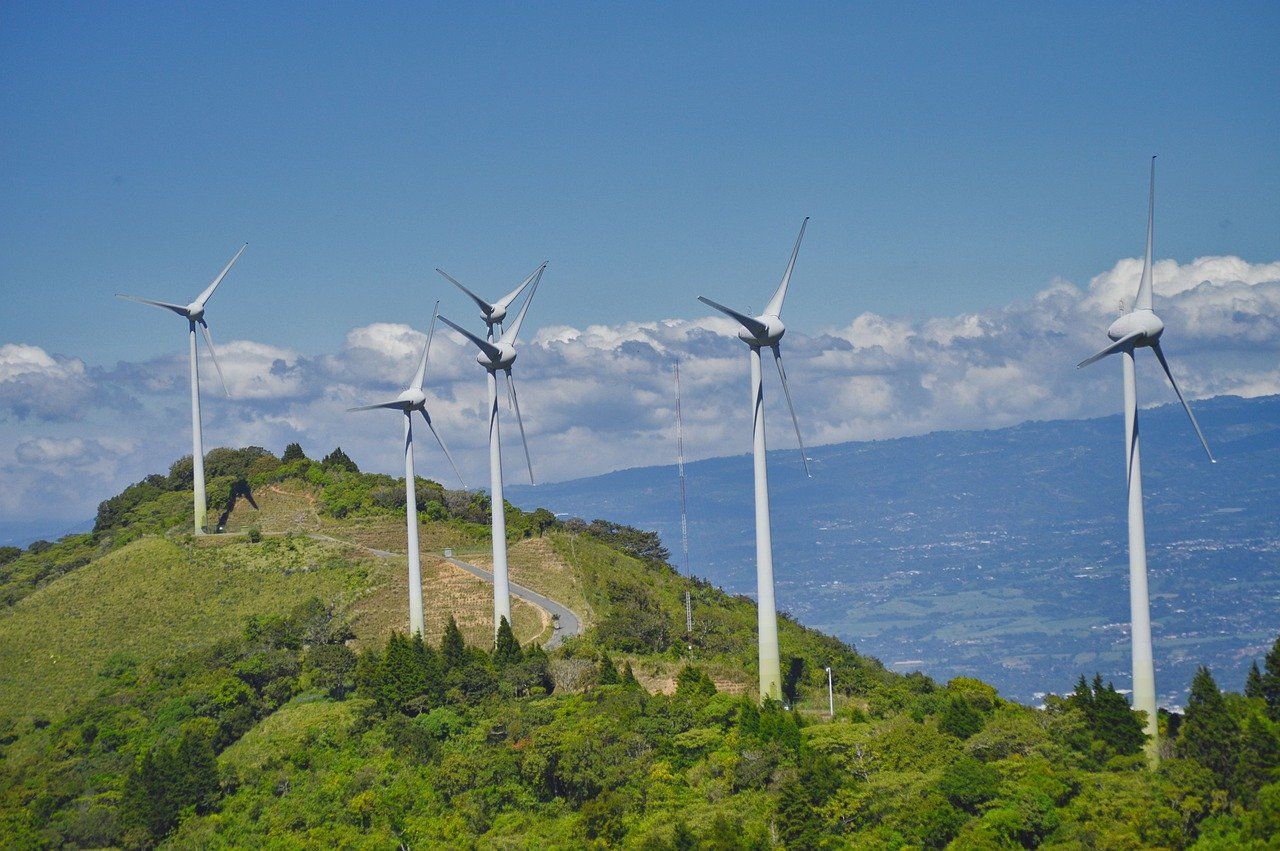
- The increase in the size of wind turbines (WT) alters the data and assumptions on which the current National Renewable Energy Plan (NREP) was based and makes it necessary to reexamine issues such as landscape integration rules, minimum distances, the impact of installations on sensitive landscapes, etc.
The increasing demands of related projects and infrastructure, particularly wind farms.
The siting of wind farms within Special Protection Areas (SPAs) for birdlife as well as Important Bird Areas (IBAs), and the conflicts this entails.
Alignment with the Special Environmental Studies currently being prepared, in order to redefine the exclusion zones.
Clarification of the siting criteria for all forms of renewable energy, particularly wind and solar power facilities.
An examination of any restrictions on the size of wind turbines that may be installed in certain areas, given the topography of Greece and the specific characteristics of those areas (e.g., cultural heritage sites). In this context, the distances from settlements or areas of organized tourism development could be reevaluated
According to Efthymios Bakogiannis, with regard to the broader developmental and institutional framework related to renewable energy sources, it appears that regulations should be incorporated to support objectives such as:
1. Compatibility of the objectives of the National Energy and Climate Plan (NECP) with trends in the development of renewable energy facilities. (The Long-Term Strategy for 2050 was taken into account.).
2. Strengthening and expanding the electricity transmission networks in line with the spatial trends in the development of renewable energy installations.
3. Development of offshore renewable energy facilities to harness wind energy.
4. Development of battery-based electricity storage systems to balance the variability in electricity generation from the already widespread forms of renewable energy installations (wind and solar).
5. The enactment of regulations for smaller-scale projects that are not covered by the National Renewable Energy Plan (NREP), with the result that their siting is not subject to specific rules and is unregulated.
6. Activation of the Monitoring System provided for in the current National Renewable Energy Plan (NREP), with the aim of studying and assessing the synergistic and cumulative impacts of renewable energy installations, particularly in protected areas.
7. Systematically identify the relationships among the ECPs and provide guidance on uses that are potentially incompatible or competitive with the purpose of each.
8. Harmonization of IFRS with the Greek Accounting Standards (GAS) and provision of guidance: Provisions of IFRS that are consistent with the Greek Accounting Standards and are evaluated positively may be incorporated into the new Greek Accounting Standards / IFRS provisions that have raised concerns require further consideration in the next phase, so that they can either be incorporated into the new ECP or their removal from the IFRS be proposed to avoid harmonization issues.
«Prioritizing sites with good wind potential means more clean energy with fewer wind turbines overall, at an even lower cost to consumers and with less land use,» emphasized the Hellenic Scientific Association for Wind Energy (ELETAEN) at a recent workshop it organized
The Association’s basic position is that «a proposal for a new wind farm must be evaluated on a case-by-case basis, and if it is demonstrated—based on specific and scientific data—that there will be significant negative, irreversible, impacts—which cannot be mitigated or offset—on a protected site of high value, then that specific application should be rejected.».
In fact, according to ELETAEN, «a great many scientific studies on wind energy focus on the relationship between wind farms and biodiversity, particularly birdlife. Thus, there is actual data proving that wind turbines and birds can coexist harmoniously when appropriate precautions are taken. The opposing claims, namely that the conservation of rare bird species is always threatened by wind turbines, are very often based on a misinterpretation of studies,» as he emphasizes.
For their part, environmental organizations [ANIMA, ARCHELON Association for the Protection of Sea Turtles, Hellenic Society for the Environment and Culture, Hellenic Society for the Protection of Nature, Prespa Protection Society, Kallisto, Mediterranean SOS, Greenpeace, WWF], support the phase-out of lignite from our country’s energy mix, as part of a comprehensive policy for a just transition to a net-zero carbon economy by mid-century, in line with the unified European policy on addressing climate change.
However, as they point out in their statement, «this transition should not take place in a context that creates suffocating and coercive conditions for society and biodiversity.».
The organizations identify as urgent needs, on the one hand, reducing the country’s energy footprint through radical and thoroughly studied initiatives to curb energy waste, the energy retrofitting of the building stock, the adoption of bioclimatic architecture, and the expansion of public transportation use; and, on the other hand, the coordinated, environmentally safe, and socially just development of the necessary infrastructure for the production and storage of energy from renewable sources.
As Yannis Giarentis, president of the Renewable Energy Sources and Guarantees of Origin Administrator (DAPEP), beyond the obvious climate and energy benefits, the contribution of renewable energy sources—and wind energy in particular—was the greatest to the Energy Transition Fund (TEM), which serves as the mechanism for subsidies on electricity bills and social support to mitigate the effects of the energy crisis, reaching 4.2 billion.
According to Mr. Yarentis, promoting the necessary education and culture is essential for their social acceptance. «Issues aimed at informing, educating, and promoting the principles of sustainability and renewable energy should be introduced in schools starting at the elementary level.».