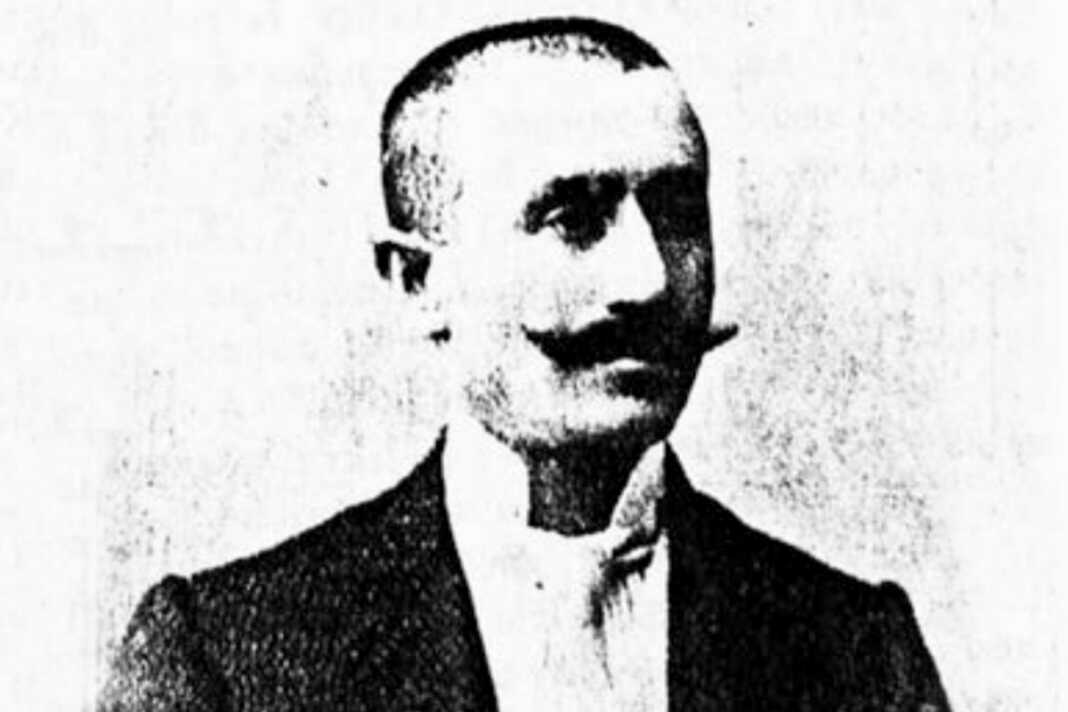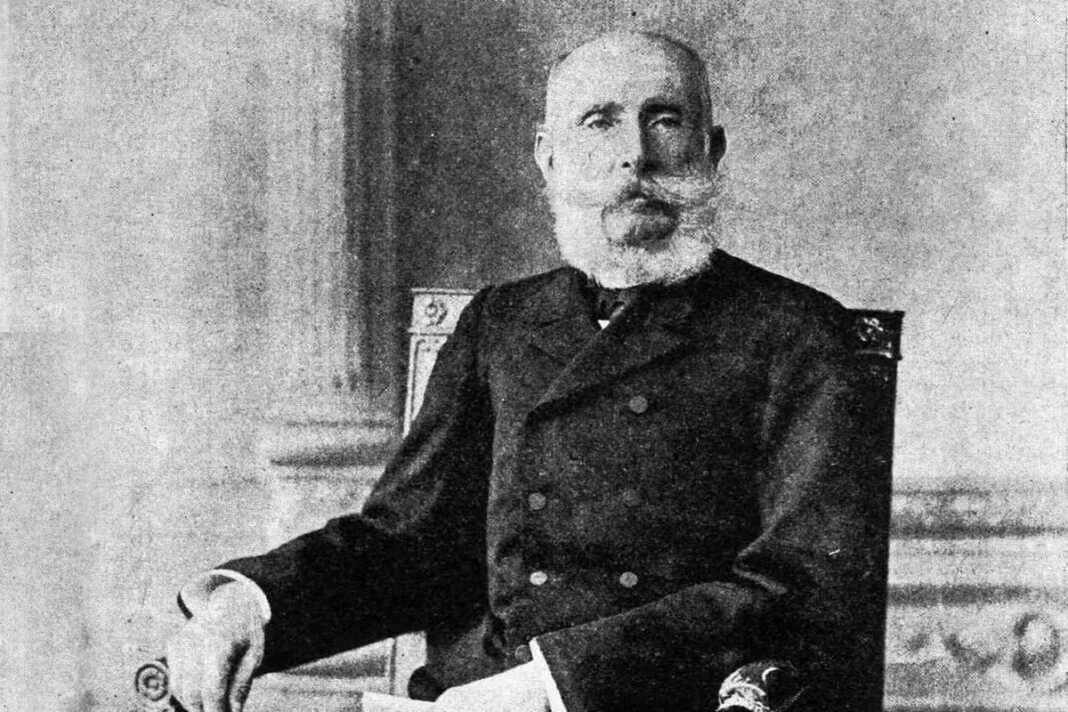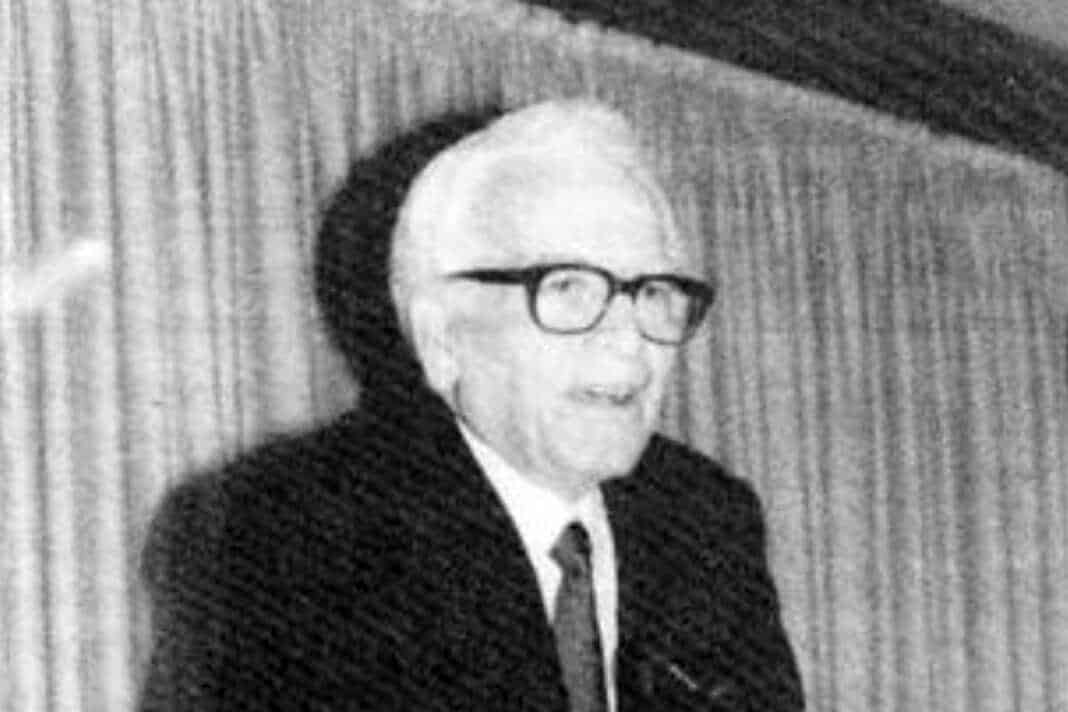
Panos Fyllis is the greatest poet in the modern history of Kythira. His real name was Panagiotis Antoniou Trifyllis. He was born in Avlemonas on June 4, 1912. His father, Antonis, and his mother, Evangelia, had five sons and one daughter. Panos was their youngest son. Their eldest son, Giannis, also took up poetry (under the pen name Fotis Kavos). Panos Fyllis attended elementary school in Potamos. The daily walk from his home in Trifyllianika to school was one kilometer. It was there that he met his inseparable friend Dimitris Komis, with whom he later shared a house in Chora when they attended middle school. School life was difficult for the two boys, as they had to take care of their own meals and housekeeping while also studying for their classes. On weekends, they would walk from Chora to their villages, Potamos and Trifyllianika, to stay with their families.
As soon as he finished school, Panos went to Athens to study at the Metaxas School. At the same time, he helped his uncle at his business, «Syntrivani,» located at 5 Themistokleous Street, where the Trifyllio Foundation is housed today. In 1934, he enlisted in the army and was later discharged with the rank of second lieutenant. Shortly before the war, in 1940, he published the first volume of his work «Tsirigotika,» which received rave reviews from literary figures and his fellow countrymen. When the war broke out, Panos Fyllis found himself on the Albanian front and fought as an officer until the collapse of the front.
Following Italy’s surrender to Germany and the entry of the occupying forces into Greece, the National Resistance began, and Fyllis joined the EAM in Athens; from 1942 onward, he was active in ELAS. On February 17, 1943, he was arrested by members of a paramilitary organization and taken to Hatzikosta Prison, then to the basement of the Unknown Soldier Garrison, on Elpidos Street, to the German ES-DE facility, and finally to Averof Prison. He was released in December 1944, despite suffering from severe asthmatic bronchitis.
After liberation, in 1945, Panos Fyllis married Alexandra Koutroumpousi. Together they had two children, Antonis and Mona. He was hired by the Revenue Guarantee Corporation, where he worked as an inspector. In 1947, Series B of ’Tsirigotika« was published, and in 1950, Series C. Panos Fyllis also published »A Journey to Kythira’ (1956), «The Swallows» (1958), «Blue Sorrow» (1959), «Heavenly Aphrodite» (1972), «Anastasia» (1974), «Leventia» (1975), and «Megalynaria» (1980).
In 1975, Panos Fyllis was awarded an honorary writer’s pension, and in 1981, his work *Leventia*, which the poet had dedicated to the memory of the Turkish writer Nazim Hikmet, was honored with the «Peace and Friendship – Abdi İpekçi» Award. In addition, the Society of Greek Writers recognized the poet’s work and honored him on April 24, 1985, for his 50 years of literary contribution.
Panos Fyllis’s involvement in the cultural groups of Kythira began around 1949, when he co-founded the Kythira Society of Music Lovers. In 1952, Panos Fyllis collaborated with the Association of Greek Writers, whose board of directors submitted a request to the Public Lands Directorate of the Ministry of Finance for the concession of the islet of Makrykythera or Makronisi in Diakofto, where the port of Kythira now stands. The purpose of the concession was to create a model settlement to host people of the arts. Finally, by Royal Decree of December 11, 1954, the request was granted, and the news thrilled the people of Kythira and the island’s leaders, and everyone rushed to helpin the realization of the writers« ambitious plan. In fact, on April 28, 1955, the presidents of the island’s fifteen municipal councils gathered at the Holy Monastery of Myrtidia and, by resolution, decided to support the effort in every way possible the effort. Members of the Association of Greek Writers were present at this meeting, namely President Georgios Stambolis, Secretary General Petros Markakis, and Panos Fyllis, who was then serving as special secretary. This led to the establishment of the new association, titled »Association of Friends of Makrykythira,” whose founding charter was signed on October 7, 1958. Among the founding members were Panagiotis Viaropoulos, a friend of Panos Fyllis; Grigoris Lambrinos Kasimatis; Nikolaos Georgiou Fatsas; and others. Unfortunately, the effort failed because it was not possible to raise the funds needed to build the settlement. In 1973, a new decree revoked the 1954 decision, and thus the plan was never implemented.
Panos Fylis, without losing heart, continued to contribute to community and social causes. His love for young people and his support for the publication of the student magazine «Stochi» are remarkable and are still remembered, even many years later, by the young people of Kythira of yesteryear. In this endeavor, he was joined by his friend Dimitris Komis, who also supported the youth right up until shortly before the end of his life.
In Avlaimon, the village he loved so dearly, Panos Fyllis made a contribution that is still appreciated today by all the village residents. In 1983, he spearheaded the founding of the «O Filoxenos» beautification and cultural association, which he led until the end of his life. During those 15 years, the historic monument of Avlaimon, the Kastelo, was restored. A playground was also built, trees were planted in public spaces, cultural events were organized, and the groundwork was laid to transform the village into one of the island’s most beautiful tourist attractions.
Panos Fyllis passed away on March 3, 1998, leaving behind a body of work that few others could have contributed to Kythirian society and culture. His literary work has not yet been appreciated to the extent that it deserves. However, as Kythirian society evolves and assimilates the urban way of life, and as the local dialect becomes alienated, abandoning every Kythirian idiom, Panos Fyllis’s *Tsirigotika* gain greater value and become a unique repository of the Kythirian dialect and culture.
In 1999, the Society for Kythirian Studies published a volume edited by Professor George Leontsinis, which includes all the texts from the «Tsirigotika» by Panos Fyllis.