In early May, following an exhausting two-month lockdown that citizens adhered to in an exemplary manner, we handed over a country that was virtually free of the virus. To give you an idea, on May 29 and 31, there wasn’t a single untraceable or non-imported case in Greece. Much has changed since then. And we reopened our tourism sector with great fanfare, «covid-free country» campaigns, and random testing—and under pressure from major travel agencies, we relented on quarantining tourists from specific regions and stopped our daily updates so as to give the public the impression that «it’s over,» and we reduced public transportation schedules because it was summer—and many other «and» factors that have brought us to where we are today.
Where We Stand Today
So today, we’re at 2,000 cases a day, with 169 patients already on ventilators in ICUs—a number that’s rising—and daily deaths, which aren’t just numbers but people with lives, friends, and families. Today, the country is experiencing a new lockdown—partial, universal, strict, lax, orthodox—it has it all—with incalculable consequences for both public health and the economy.
Starting today, thousands of workers in the restaurant industry, as well as many others in professions directly or indirectly related to it, as well as artists and retail workers in the gray economy, are once again facing the nightmare of work suspensions and the logic of underfunded welfare benefits. At the same time, the National Health System remains understaffed; many of the remaining workers are exposed to the virus—just consider how many cases we’ve had in factories—while doctors, nurses, and all other hospital staff are literally fighting a battle in hospitals that are already on their knees.
At the same time, the government pretends to support the economy and workers with half-measures and by providing piecemeal and inadequate support to the affected sectors, while rapidly pushing forward with its upcoming labor bill to effectively curtail the rights of wage earners. Some of the provisions that will be included in the bill and have already been made public are a ten-hour workday without overtime pay, the criminalization of union activity, and the further weakening of the Labor Inspectorate.
It is worth noting that the previous «successful management» of the first wave of the pandemic left 130,000 people newly unemployed, 15% a recession, and a 12% decline in household incomes.
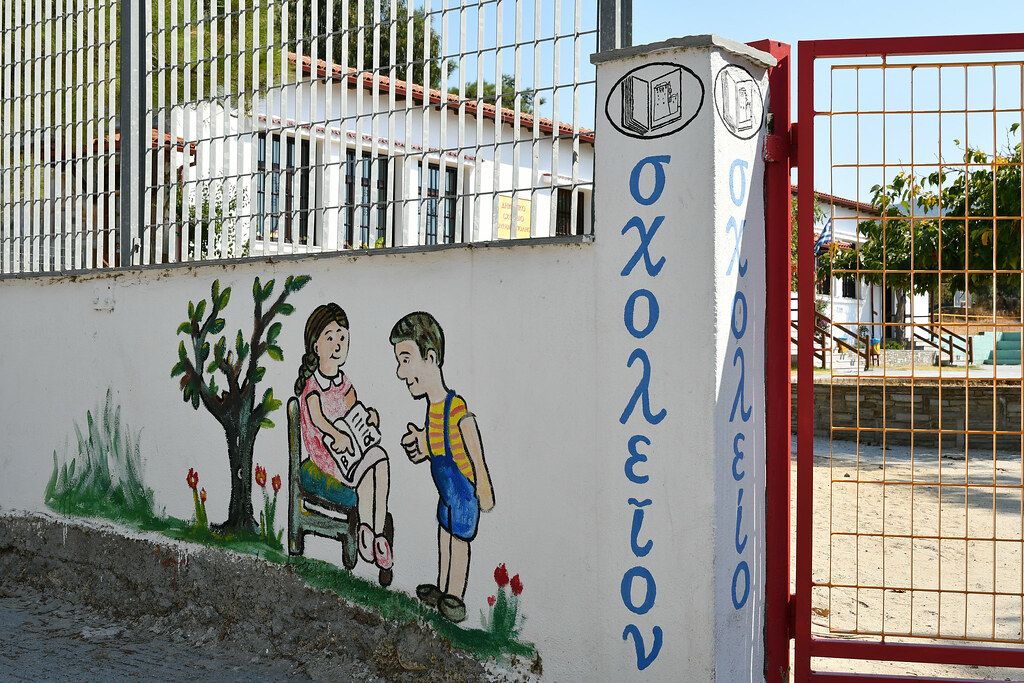
The government appears to be following a similar approach of taking half-measures in its handling of the pandemic, as it drafts, scraps, and reformulates measures even within a 24-hour period. It restricts movement during specific hours and closes restaurants in certain areas, but without banning travel between prefectures and without implementing any additional measures for public transportation, classes with 25–26 students, or churches in most of Greece.
It is clear that the government’s policy does not hold up wherever there is a «production line» or when it is called upon to implement policies that run counter to its neoliberal dogmas and the interests it represents and serves, dismissively labeling any other policy choice as wasteful.
We were told that the number of ICU beds is—or rather, has increased, thanks to the New Democracy party—from 500 to 1,200. They fail to mention, however, that due to their anti-social policies, they handed over 438 ICU beds to SYRIZA in 2015, which had been increased to 568 active beds by the previous government. Ultimately, regarding COVID-19, they admit that there are only 312. Of the 50 beds donated by the Hellenic Parliament to Sotiria Hospital, only 12 are currently available to treat patients, as there is no staff for the others. Until recently, Stelios Petsas was pleased that he hadn’t listened to SYRIZA and hadn’t wasted money on ICUs, but now he’s talking about a total lockdown because the system is reaching its limits.
Has anyone in the government really realized that, in addition to the healthcare system, the citizens themselves have now reached their limits? And it’s a quagmire of intertwined issues: economic, psychological, health-related fears, and a complete lack of hope and planning for the future. We accept our full individual responsibility; after all, citizens’ discipline during the first lockdown—which lasted two and a half full months—was exemplary.
Is anyone going to talk about state liability?;
Moreover, the total of 22,000,000 in state subsidies for the government’s communications support—not to mention the waiver of its 2020 licensing fee— is far too little to hide its negligence and inability to act within the timeframe it requested—and which we generously granted—to shield our country from the virus.
Author of the article: