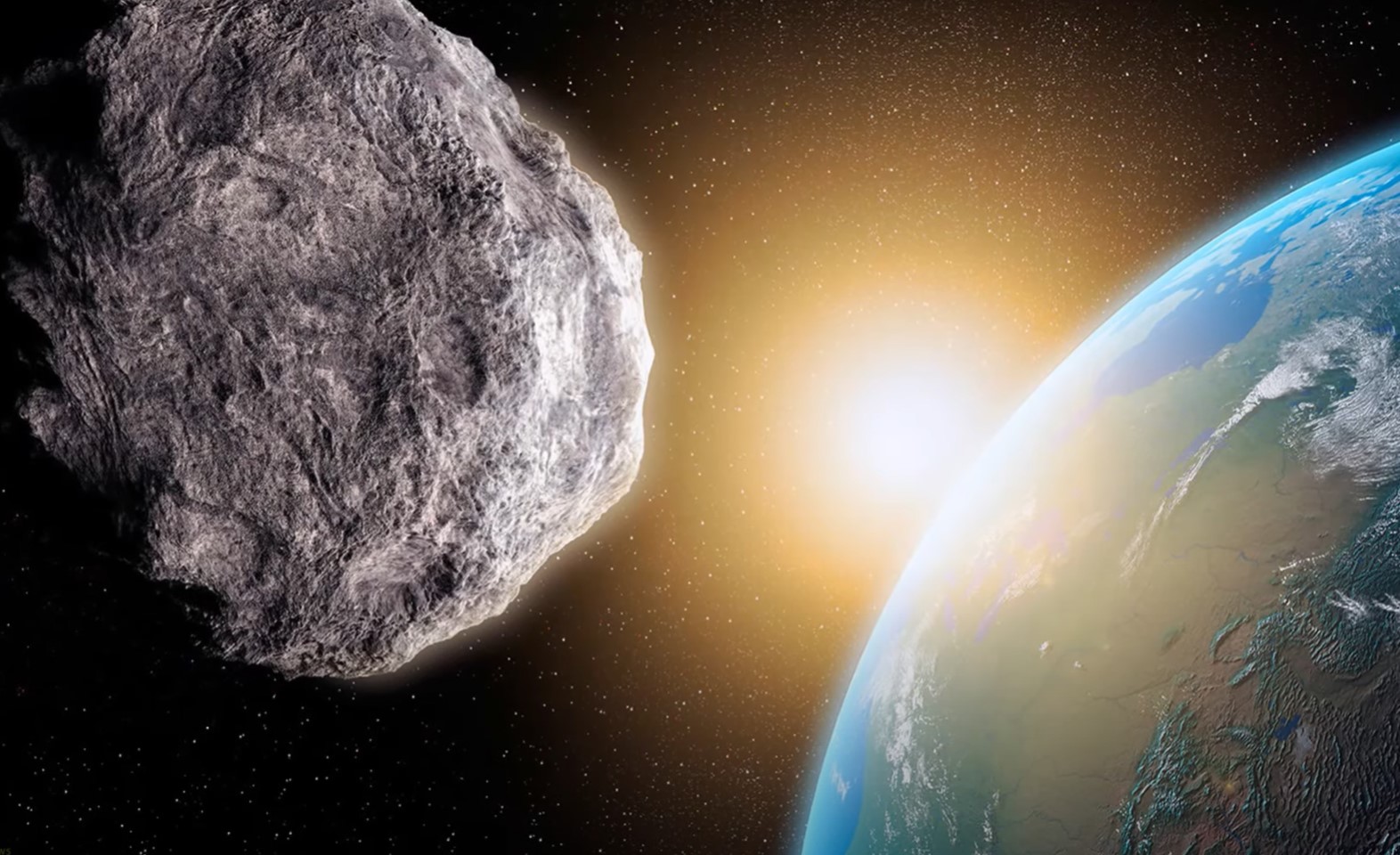
A large-scale asteroid, about a kilometre in diameter, is approaching Earth, but unlike the Netflix movie «Don't Look Up», it will not fall to our planet, but will pass on 18 January at a safe distance of almost two million kilometres, about five times the Earth-Moon distance - not so great for an asteroid of this size.
The large space rock called “7482 (1994 PC1)” moving at a speed of 70,415 kilometres per hour and will not come this close to Earth again this century, according to calculations made by astronomers at the US space agency (NASA). It was discovered in 1994 and was found to complete one orbit around the Sun every 572 days. In 1933, it was closest to Earth, at a distance of 1.1 million km, and will not be that close again until 2105, according to NASA and Caltcech estimates.
The asteroid is classified by NASA as potentially dangerous, a designation given to any asteroid with a diameter of more than 140 metres that comes within 7.5 million kilometres of the Earth's orbit around the Sun. A larger category is Near-Earth Objects (NEOs), which approach within 50 million kilometres of the Earth's orbit.
To date, around 28,000 NEOs have been found, and around 3,000 new NEOs are discovered every year. As new, more powerful telescopes are added in the coming years, the number of NEOs is expected to increase further. The objects on the NEO list are estimated - based on orbital calculations - to pose no threat to our planet within the next 100 years.