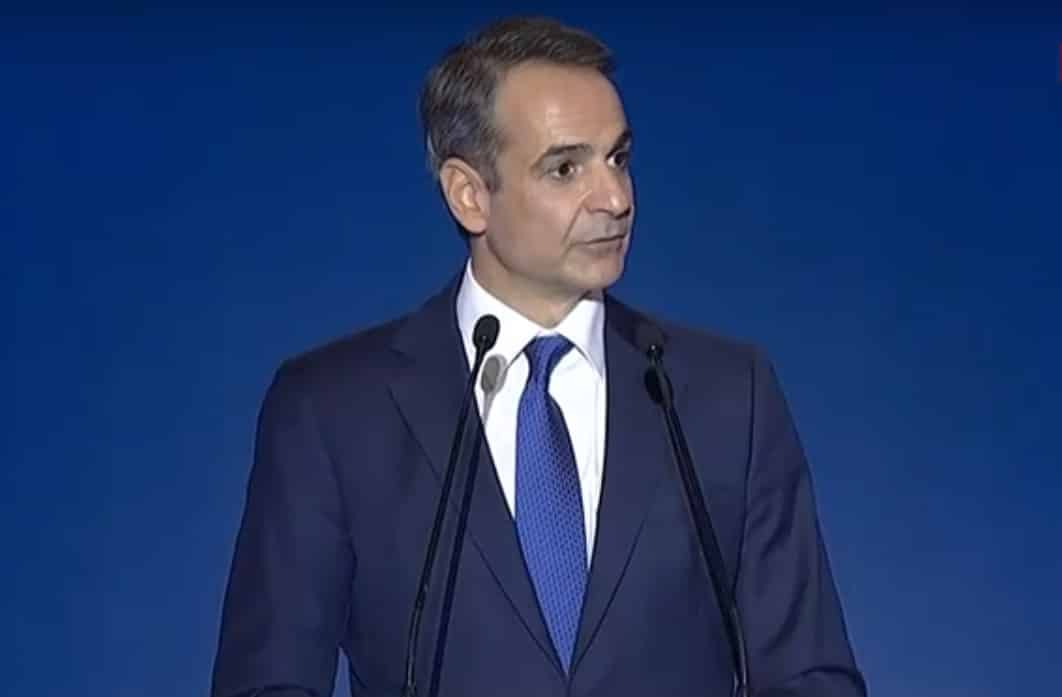
Greece «remains a strong and reliable ally» that actively upholds its commitments by investing in the defense sector and supporting NATO’s interests ‘in the Balkans and the Eastern Mediterranean.« This was emphasized, among other things, Prime Minister Kyriakos Mitsotakis in a pre-recorded address at the opening of the NATO Military Committee Conference, which is being held in Athens.
«Throughout our history,» the prime minister said, «we have honored our alliances. Since 1952, NATO has been at the heart of Greece’s security and defense architecture.‘.
«NATO’s strength lies in its values and principles: unity, solidarity, and respect for democracy and the rule of law,» said the prime minister. «Today,» he added, «the international security environment is evolving rapidly and often in unexpected ways. This poses a challenge to the strategic stability of past decades.».
«2021,» he said, «marks a new cycle for NATO. The 2020–2030 agenda sets the tone.» «The challenges ahead of us are complex. No country can tackle them on its own. Cooperation among all of us is crucial. And cooperation continues to define our Alliance,» Kyriakos Mitsotakis emphasized.
The prime minister did not fail to thank the Chief of the Hellenic National Defense General Staff «for his efforts in organizing the conference» while noting that the Conference is taking place on the 200th anniversary of the Greek Revolution, «which led to the founding of the modern Greek state.».
For his part, the Chairman of the NATO Military Committee, Admiral Rob Bauer, welcomed the delegates and thanked the Minister of National ‘and the Chief of the Hellenic National Defense General Staff. He described the «organization of the conference as exceptional,» given the COVID-19 pandemic and the wildfires that struck Greece, while noting that our country «is a resilient nation and a strong NATO ally.».
«Since 1952, when Greece became a member of NATO, it has contributed to our core mission: the protection of the citizens of our member states,» said Rob Bauer.
He pointed out that NATO is currently facing a series of challenges, emphasizing that «Russia is behaving aggressively, China is challenging the rules of international relations, terrorism threatens the safety of our citizens, new technologies are changing the nature of armed conflicts, cyberattacks are more frequent than ever, and climate change is fueling conflicts.» «We need,» he continued, «unity and security; we need Europe and North America to stand together, united by shared values, history, and goals.».
Regarding the end of NATO’s military presence in Afghanistan, he emphasized that the men and women of the armed forces of NATO member states had fulfilled their duty «with courage and dedication.» On behalf of the Military Committee, she thanked the personnel who served «with sacrifice and professionalism,» and then asked for a minute of silence in memory of those who lost their lives in operations.
In his opening remarks, General Konstantinos Floros, Chief of the Hellenic National Defense General Staff, focused on the review of the Alliance’s strategic framework. He stressed that it is essential for NATO to adopt a defense package consisting of ‘resilience, maintaining technological leadership, partnerships, and an ambitious approach to climate change.«.
«We must,» he said, «respond immediately to challenges. Developments in Afghanistan have underscored just how important it is for the Alliance to be able to make quick decisions and adapt to emergency situations.».
«Greece is a pillar of stability in the Eastern Mediterranean, upholding international law, good neighborly relations, and cooperation,» he noted, adding that our country «is building bridges of stability» and that «as an ally, it will honor all its obligations and commitments.».
Minister of National Defense Nikos Panagiotopoulos spoke about NATO’s present and future. He emphasized that the international community must work together to ‘prevent the resurgence of terrorism in Afghanistan« and »ensure the safety of the country’s citizens« to prevent a humanitarian crisis. »It is our duty,« he said, »to help the people of Afghanistan, especially those who are in immediate danger.«.
«We are facing,» he continued, «a series of challenges in Afghanistan, such as the risk of increased migration flows toward Europe,» while making it clear that «we must work together to support the countries bordering Afghanistan in order to avoid a migration crisis at our borders.».
«What happened in Afghanistan must serve as a lesson for the future so that we can strengthen our shared understanding and defend our common values,» added the Minister of National Defense.
«NATO,» he pointed out, «must be prepared to confront threats from every direction.» To that end, the minister emphasized that «NATO must evolve into a platform for sharing best practices» that will promote the exchange of views «on the design of each member state’s national plans.» «Technology,» said N. Panagiotopoulos, «is vital to the Alliance. Technological advantages determine the outcome of armed conflicts.».
For this reason, he emphasized the importance of interoperability, joint military exercises «that bring together personnel from different member states» and allow for «better communication» while «building a common understanding.».
Regarding climate change, the Minister of National Defense emphasized that ‘it is a defining challenge of our time« because »it affects our lives and our security« and »poses a threat to all societies.«.