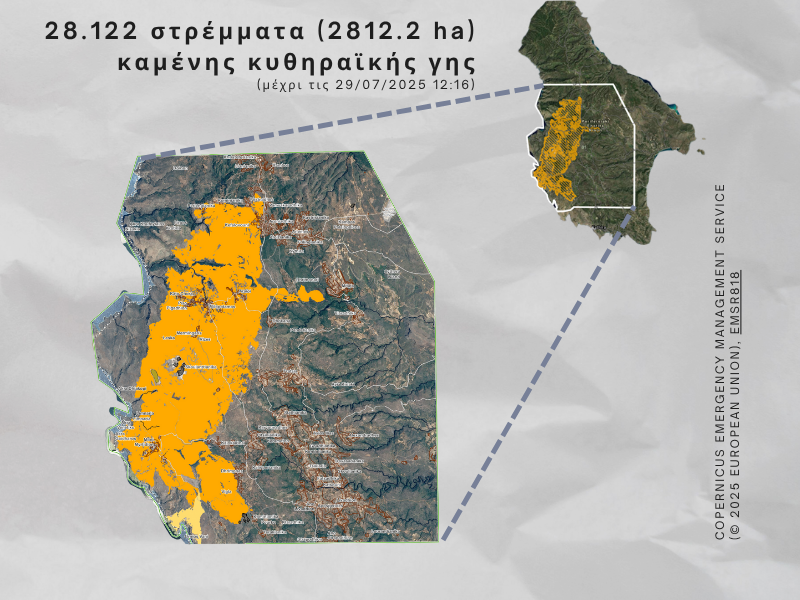
The nightmare of the great fire of 2017 struck Kythera again just eight summers later. Over 28,000 acres of Kythera land burned, with constant reignitions until recently (July 30) equating to more than 10% of the island's land area. A significant portion of the affected area is identical to the burned areas of 2017, resulting in weakened natural regeneration and degraded soil resources, intensifying erosion and the risk of flooding. To the extent that part of the cedar forest, which does not regenerate naturally after fires, is also affected, we will additionally have a significant loss for the natural environment of the island.
The challenge ahead of us is enormous. All the evidence suggests that the phenomenon of large fires will become more frequent, more intense and more extensive.
In addition to the management and regeneration measures that will be proposed, it is important to mention that in order to protect the place, the role of people who live and work on the land is crucial. They are the ones who shaped the unique Greek landscape and without those who love, live on and responsibly manage the land, the fires will not be able to be contained.
Abandonment, lack of care and the absence of a vision for a living countryside contribute - together with the climate crisis - to the conditions that will allow such disasters to recur.
For the island - and the country as a whole - to withstand future challenges, we need a vibrant primary sector and substantial support for the people who work in it.
Immediate actions are necessary, such as the recording of damage and impacts, compensation to the affected people, erosion and flood protection works. Beyond these, we propose long-term guidelines that combine fire prevention, mitigation and truly sustainable development.
- An integrated nature restoration plan with targeted actions that enhance the resilience of the island.
- Sustainable management plan for the forest areas of Kythera.
- A programme to support not only the tourist activity, but also the sustainable development of the agri-food sector of Kythera with incentives, training and ongoing support for producers and the attraction of new ones.
- Social innovation for fire prevention, prophylaxis and preparedness. Fire prevention is less costly and more efficient than suppression. Specialised training programmes covering the full range of relevant knowledge are needed.
- Assessment of vulnerability at the level of the Municipality and each residence and settlement of the island and informing all residents about actions to reduce the risk to their property.
- Shielding the island against environmentally damaging investments such as industrial-scale wind farms in protected and sensitive areas, which would further degrade the natural environment and the landscape as a whole, weaken the local community and ultimately reduce the overall resilience of the island against future crises and threats.
Only with a vibrant and resilient countryside will we be able to prevent or reduce such phenomena. The recent fire has once again highlighted the need for better preparation, coordination and long-term planning. It is important to see this crisis as an opportunity for improvement - both in terms of prevention and management, but also in terms of strengthening local society and sustainable development.
Hellenic Society for Nature Conservation and MedINA