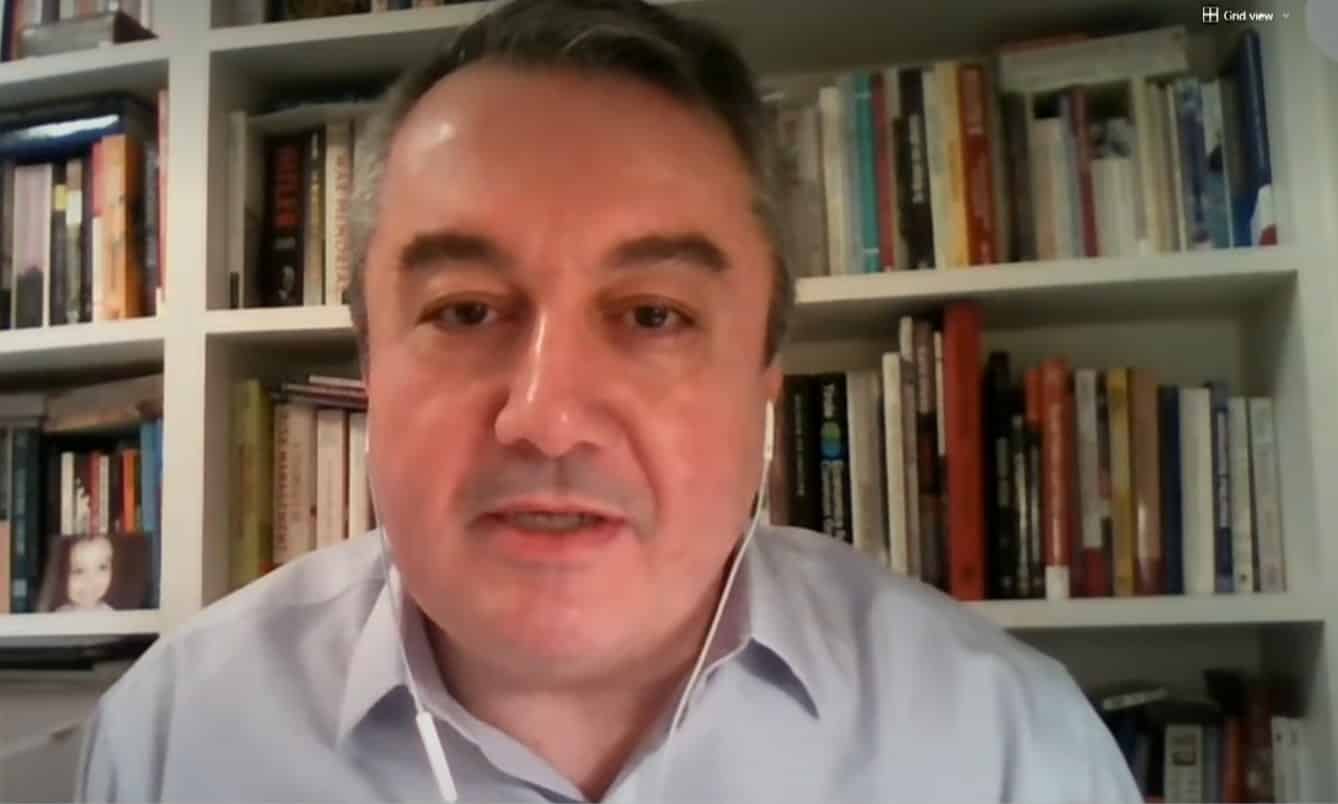
The need for parents to set aside their hesitations and to have their children ages 5 to 11 vaccinated against COVID-19, as Vaccines are safe and effective, notes the professor of Health Policy at Imperial College and the London School of Economics and Political Science (LSE), Elias Mosialos. As he points out in a lengthy new Facebook post, «A parent’s choice isn’t simply whether or not to vaccinate their child.”. The choice is between a highly effective vaccine and risking the child getting sick. Some parents will say, “My child won’t get sick because we’re careful, we avoid crowds, and we get tested often.” But how do they know that?».
Mr. Mosialos points out that The use of vaccines for children aged 12–17 has been approved for several months now, and marketing authorization has now also been granted for children aged 5–11. The first COVID-19 vaccine to be approved is the one developed by Pfizer/BioNTech, based on the results of a randomized controlled trial that evaluated its safety and immune responses.
He explains that the Pfizer/BioNTech clinical trial initially compared three doses: 30 micrograms (the dose given to adults), 20 micrograms, and 10 micrograms. The 10-microgram dose, which is one-third of the adult dose, had the fewest side effects. At the same time, the vaccine continued to elicit strong immune responses at levels typically achieved with higher doses. In the next phase of the trial, more than 2,200 children aged 5 to 11 were randomly assigned to receive either a 10-microgram dose of the vaccine (two-thirds of the participants) or a placebo (one-third of the participants). All received two doses three weeks apart. The children who received the vaccine had immune responses similar to those of young adults aged 16 to 25 who had received two 30-microgram doses.
When Pfizer submitted the data to the U.S. FDA for approval, there were not many cases of symptomatic COVID-19 infections among trial participants, and estimates indicated that the vaccine’s efficacy rate was 90%. The tests also confirmed that the infections were caused by the Delta variant, which is circulating widely in our country. Based on this data, regulatory agencies decided to approve the use of the vaccine for children.
However, many parents are still concerned, mainly because they are afraid of the side effects they have heard might occur if their children are vaccinated. However, Mr. Mosialos points out that «most of the children who participated in the clinical trial experienced no side effects other than some pain at the injection site.”. Some experienced fatigue, headaches, and/or muscle aches after the second dose (but not after the first dose). »Furthermore, only the 6% group experienced fever after the second dose of the vaccine, and there were no cases of severe allergic reactions to the vaccine.".
Regarding some people’s fears about the possibility of unexpected heart inflammation (myocarditis)—which was observed mainly in young people after the second dose of an mRNA vaccine (Pfizer/BioNTech or Moderna), Dr. Mosialos notes that «most cases were mild and »Experts are reassuring parents that their children will not have long-term problems.". Furthermore, he points out, «among children aged 5 to 11 who received the Pfizer vaccine during the clinical trial, there were no cases of myocarditis,» while noting that «Children aged 5–11 will receive a reduced dose of 10 micrograms, rather than 30 micrograms like children aged 12–17.».
Furthermore, Dr. Walensky, director of the U.S. Centers for Disease Control and Prevention, stated (in an interview with ABC News) that the CDC has not identified any reports or concerns regarding temporary heart inflammation (myocarditis) among the nearly 5 million children in this age group who have been vaccinated. Therefore, «the data confirm that the vaccines are safe for young children as well.».
Mr. Mosialos points out that «Kids have a lot of social interactions, and sooner or later most of them will catch it". Especially if the Omicron variant, which appears to be highly contagious, becomes dominant, this will happen sooner than expected with the emergence of the Delta variant. And people might not even notice it because of the possibility of asymptomatic infection. But that doesn’t mean a child won’t have any problems. Problems associated with long-term COVID-19 have also been reported in some asymptomatic individuals. So, can a parent decide not to vaccinate their child? Of course, but it’s highly unlikely that a child won’t catch the virus over time, unless they—and their parents—are completely isolated. In other words, if the child is deprived of all social contact in order to avoid receiving a safe vaccine.».
On the other hand, «While myocarditis is very rare in children, it has been observed to occur more frequently in those who have had severe cases of COVID-19.». A study published by the CDC, based on reports from more than 900 U.S. hospitals, shows that 86 children under the age of 16 (between March 2020and January 2021) were diagnosed with myocarditis among nearly 65,000 children (0.133%) who contracted COVID-19. However, during the same time period, among 4 million children who did not contract COVID-19, only 132 developed myocarditis. Therefore, the risk of developing myocarditis is more than 30 times higher in pediatric patients with COVID-19.
It was also found that COVID-19 patients under the age of 16 had a risk of myocarditis similar to that of patients over the age of 75, which is much higher than in all other age groups. The researchers noted that a diagnosis of myocarditis in patients under the age of 16 may represent cases of multisystem inflammatory syndrome in children (MIS-C), which typically occurs 2–4 weeks after infection with the coronavirus and presents with fever, rash, swollen lymph nodes, and conjunctivitis. Some patients experience cardiovascular complications, but it is believed that most children who develop MIS-C will recover without developing chronic heart disease. However, some may suffer from chronic conditions.
Mr. Mosialos also points out how many millions of children around the world have been vaccinated against the coronavirus and have had no problems. He also notes that many parents are hesitant because their doctors are reluctant to recommend the vaccines. «Medical associations must therefore step up their efforts to educate not only their members but also parents,» he emphasizes.
He concludes that «consistency, patience, and constant communication are required. People who hesitate are well-meaning but afraid.».
Below is Mr. Mosialos's post.