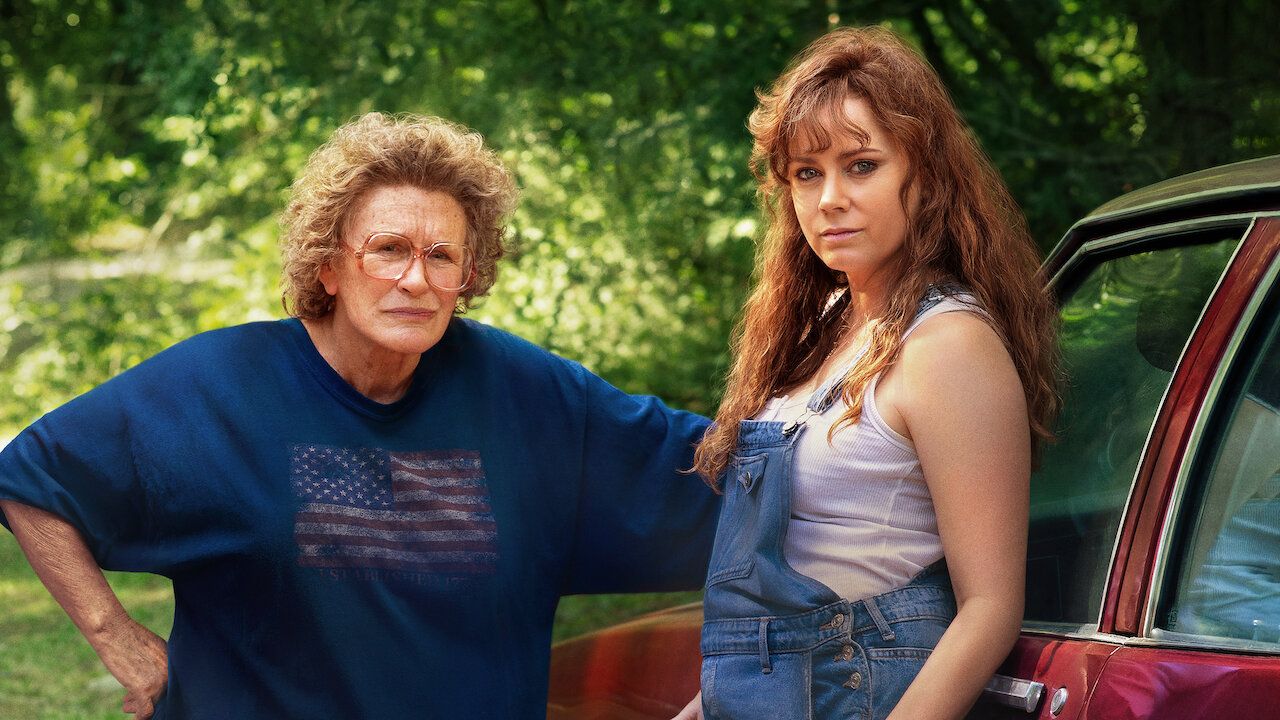
“Hillbilly Elegy”
DRAMA (2020)
Directed by Ron Howard
Cast: Amy Adams,
Glenn Close, Gabriel Basso
Another film, this time directed by Netflix, joins the ranks of films that in recent years have dissected «white,» provincial America. The two-time Oscar-winning Ron Howard («A Wonderful Man») takes the helm of a screenplay based on the true story of J. D. Vance and his family. He, law student at Yale, is suddenly told that he must return to his parents' home, in Ohio, where his mother is being treated for a drug overdose. As he rushes there, the young man recalls his childhood and the turbulent history of three generations of his family, which hails from the countryside Kentucky.
The film includes in its title the typically derogatory term «hillbilly,» which refers to rural Americans. Here, however, these are precisely the heroes: the clever Jay D, who tries to escape his ordinary fate but at the same time fondly remembers his hometown; his mother (Amy Adams), who raised two children on her own, without a husband, amid hardship and struggles with addiction; his older sister, who supports him; and, of course, his strict grandmother (the Glenn Close), who had taken over the actual running of the family.
The film’s strongest point is undoubtedly its pace, which Howard makes sure to keep at a high level, with constant flashbacks and rapid camera movement taking center stage. At the center of it all is the personal and family life of J.D. and all the remarkable women who surround him, but also the broader social context, set against the backdrop of a harsh side of America that offers people few opportunities and plunges them into misery. Despite all this, the young protagonist, growing up amid soft drinks, sweets, and sandwiches with fried… mortadella, also inherits the pride and integrity of these people—qualities that will prove to be vital assets for his future.
Ron Howard describes his protagonist’s journey as follows: «There are cultural references here, but above all, it’s about the fundamental pressure every family feels during a transition. J.D. is trying to find himself, but he’s not doing it alone. All these women actively participate in the process that ultimately allows him to define himself, without rejecting his culture or his own people. He draws strength from their strengths and overcomes some of their weaknesses.».