
On Thursday, February 11, the House of Representatives passed the Ministry of Education’s bill, which, among the sweeping changes it seeks to bring about, culminating in the stationing of police within universities without oversight by academic authorities, as well as the monitoring of the university community’s activities through electronic systems—which will lead to a thoroughly dystopian situation, leads to a drastic reduction in the number of students admitted to universities.
I will continue to focus on this issue, even though it is not the main topic of public debate.
The interpretation that has been offered, not only by the opposition but by others as well, regarding the proposed reduction in the number of university admissions is that it will essentially drive a large portion of the applicants who do not gain admission to public universities to private colleges, further increasing household spending on education.
A point that is entirely «reasonable» in the context of the current government’s broader policy government, which is attempting to transfer as much as possible to the private sector and maintains privileged relationships with organized interest groups such as private schools.
However, I would like to argue that behind this policy (which will lead to an absolute decline in the number of students, likely driving a large portion of them to private colleges), there is something very alarming.
The government does not seem to understand the need to change the country's development model, which, of course, requires a significant number of highly skilled workers.
Finance Minister Staikouras stated in Parliament on February 10, 2021, that «We need to reduce the mismatch between the graduates of Greek universities and the needs of the labor market—the phenomenon of over-education.».
He therefore believes that there is over-enrollment in Greece, and that is why the bill rightly reduces the number of students admitted to universities.1
However, a very large proportion of those who «fail» to gain admission to universities will end up at private colleges, where they'll get a lot lower-quality education2 and then they will enter the job market as «regular» college graduates, since the current government has ensured that degrees from private colleges are now equivalent to those from universities!
Therefore, we will not have reduction of «over-education», which, according to the government, is a problem, will simply exist a decline in the quality of education a portion of future graduates, as the excess demand will be met by private education.
In our country, there is undoubtedly a mismatch between supply and demand in the job market for scientists, which can be broken down into two types of problems.
The first refers to the existence of specific imbalances between supply and demand in certain scientific fields: in some there is an oversupply of labor, and in others the opposite.
This problem is obviously addressed by making individual adjustments to the relevant fields.
Second, The most significant problem—the mismatch between supply and demand in education—relates to the total number of students, a general oversupply, and if this is indeed the case—particularly in the medium and long term—it would justify the cuts the government is proposing.
The government’s position on «over-education» seems, at least at first glance, to be supported by the fact that high rates of unemployment, underemployment, and underutilization among scientists for many years now, and of course that some of them have left the country (braindrain).
Of course, that is the reality, and the issue is how we understand it and, consequently, how we deal with it.
To determine whether or not there is «over-education» in Greece, one sure way is to compare our country’s data with that of other EU countries.
So the data do not indicate any «over-education» in Greece.
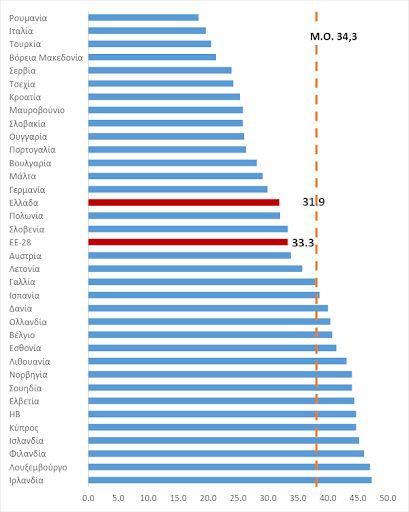
Specifically, the percentage of college graduates in the total population in Greece is below the EU average (in the 2009–2019 period, it was 28% in Greece, while the average for the EU-28 was 29.2%); today, the figures are 31.9% and 33.3%, respectively, so under no circumstances would this be characterized as «over-education» (see Figures 1 and 2).
Figure 1: Percentage of the population aged 25–64 with a tertiary education, 2009–2019
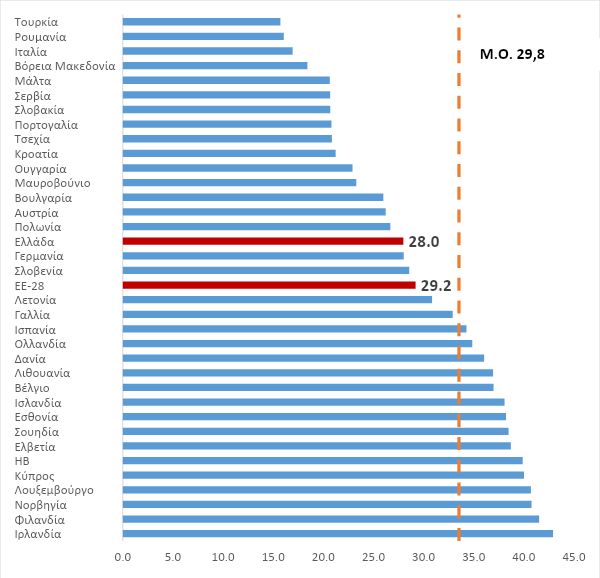
Figure 2: Percentage of the population aged 25–64 with a tertiary education, 2019
One must therefore understand that The mismatch between the supply of and demand for labor among higher education graduates is due to the limited demand for scientists in the economy – rather than to consider it with the adhoc Mr. Staikouras's theory that this is due to an oversupply resulting from over-education.
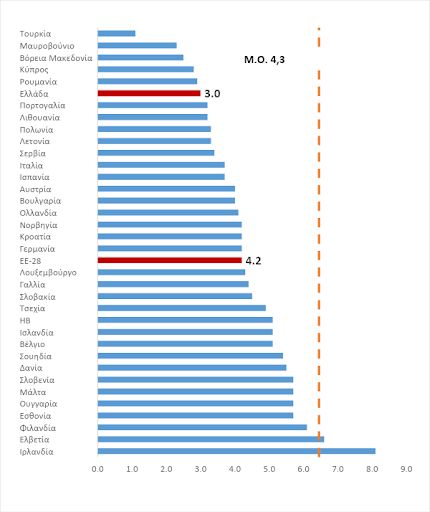
More specifically, in Greece during the 2009–2019 period, only 2.4% of the workforce was employed in high-tech sectors, while the EU-28 average was 3.9%, and in 2019, the corresponding percentages were 3% and 4.2%. (See Figures 3 and 4).
Figure 3: Employment Share in High-Tech Sectors, 2009–2019
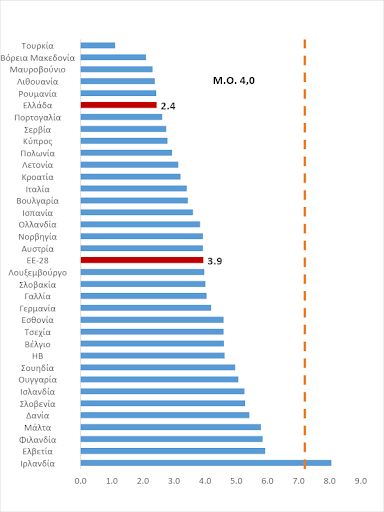
Figure 4: Employment rate in high-tech sectors, 2019
The low employment rates among college graduates are therefore mainly due to the fact that our country’s economy is geared toward the production of goods and services with low added value, since any shift toward the production of high-tech products will require a greater number of college graduates, and without this, the country’s future looks bleak.
Therefore, The policies that should be implemented are not aimed at reducing the number of students admitted, as the current government does, but toward a change in the development model and, specifically, toward the gradual shift of the Greek economy toward the production of higher-value-added goods and services, which will create a significant number of jobs for scientists.
It is thus revealed through actions rather than words (because, for example, the Pissaridis report argues otherwise), that the current government’s «Strategy» for the future is to maintain the status quo—that is, an economy based on construction, tourism, and realestate etc., which certainly does not require any significant educational upgrade.
The government is taking the country against the tide—and in the wrong direction, at that!3
Specifically, It is now an indisputable scientific consensus that the growth of knowledge in an economy has a significant impact on production and growth, and that productivity and competitiveness are largely linkedwith the creation and application of knowledge.
Globally, the gap between developed and less developed countries is constantly widening because of this relationship.
The following factors contributed to this: rapid technological advances which have radically transformed many economic processes and applications and opened up new scientific and technological horizons.
The recognition of knowledge as the main driver of economic growth has been so widespread that, since the mid-1990s, the term ’knowledge economy« has been adopted to describe developments in modern developed economies.
In fact, the term «learning economy» was subsequently adopted as the most representative term, precisely because it places particular emphasis on the fact that the most important characteristic of modern economies is not merely the much more intensive use of knowledge, but primarily that existing knowledge becomes obsolete at a very rapid pace and therefore requires continuous learning.
Human capital is not merely one of the key factors of production, alongside physical capital and technology, but the primary driver of economic growth.
This recognition of the role of knowledge and learning in modern economies has placed even greater emphasis on education and the development of human resources, and has led to efforts to increase the number of skilled workers at their disposal.
So, on the one hand, they are trying to improve the educational level of their residents and, on the other hand, to attract educated personnel from other countries (braingain), and in fact entering into fierce competition with other developed countries for the talent acquisition (wasfortalents).
In OECD countries, the average percentage of people aged 25–64 with a higher education degree has risen sharply over the past 20 years: it was 21% in 1998, rose to 28% in 2008, and reached 38% in 2018.
But in Greece, the current government is choosing a «different» path! It appears to be pursuing a policy focused on short-term, clientelistic goals, rather than the necessary long-term, growth-oriented approach.
Let's hope this trend is reversed—and soon, at that.
1And this stands in contrast to the rhetoric of some government officials regarding the existence of a significant pool of human resources in the country as the most fundamental, perhaps, competitive advantage in the international race to attract foreign capital.
It is difficult to explain, using logical arguments, how the same characteristic can be both an advantage and a disadvantage (since reducing it has become a national policy goal).
2And in recent global university rankings, Greek universities performed quite well (see the University of Athens at No. 180), while the best college/Deeree (it was in position 2,811).
3And this raises a crucial question: Who is to blame for the fact that prospective students whose qualifications fall below the standards the government deems acceptable are entering higher education?;
But of course, it is the government itself and its paradoxical rush to resolve the «impasse» of the Greek educational system—not by improving the quality of primary and secondary education (where, by common admission, our country is faring much worse than in higher education—see, for example, the mediocre performance in the rankings PISA), but by «punishing» the graduates for the poor quality of education that the university itself provided them.
Lois Lambrianidis, University Professor, former Secretary General for Private Investment at the Ministry of Economy