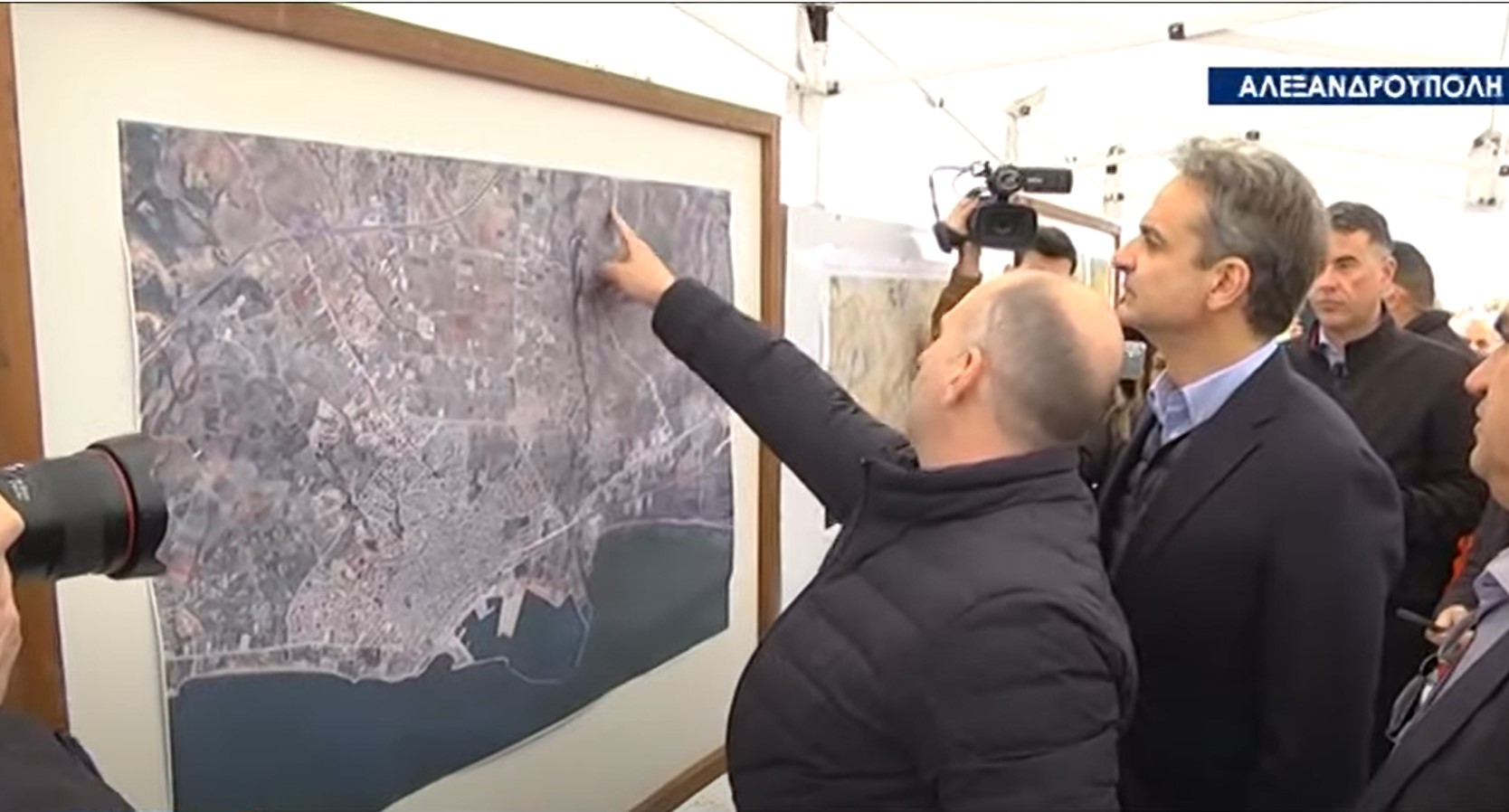
Η Alexandroupoli is converted to the new energy portal for all of Southeastern Europe, as part of the new Euro-Atlantic energy policy. The ceremony marking the start of implementation of the first floating natural gas storage and regasification unit, attracted domestic, American, European, and Balkan interest. The opening ceremony was attended by the leaders of Bulgaria, Serbia, and «North Macedonia,» as well as the President of the European Council, Mr. Charles Michel.
This station, which is expected, according to Mr. Mitsotakis Scheduled to begin operations in December 2023, it will be capable of delivering up to 5.5 billion cubic meters of natural gas annually, meeting the needs of Greece as well as other Balkan countries. Meanwhile, as he stated, Gastrade has already obtained a permit from the Energy Regulatory Authority to build a second plant in the area.
In a celebration affirming American interests, the speakers emphasized their determination to strengthen energy cooperation, prioritizing expensive American LNG as an energy source during the transition away from Russian natural gas. In practice, the energy crisis—exacerbated by the war in Ukraine—is becoming a golden opportunity to legitimize U.S. penetration into our broader region, with Alexandroupoli being a point of particular interest as a gateway to the Balkans and Southeast Europe. As Elmina Kopelouzo (of the well-known family), president of Gastrade, stated, «When we envisioned the FSRU in Alexandroupoli, few believed that a project so innovative for Greece could be realized, and even fewer foresaw that this project would come to meet a European and energy need.» War, then, as an opportunity, and the choices made over the years by segments of the local and foreign elite as objectively imposed, one-way paths.
«Developmental cosmogony»
That is how Mr. Mitsotakis described the situation in Evros. Of course, the reality experienced by the residents of this remote region is quite different. Years of neglect, deindustrialization, population decline, and the absence of a vision for development. And as if all that weren’t enough, In recent years, the region has also been experiencing the much-hyped «American invasion,» which amounts to mere crumbs for the local community in exchange for the complete transfer of all infrastructure (port, military bases, railroad) to serve U.S. interests, with no objections being accepted, as this is a matter of… national security.
Now, those in power are promising growth and jobs. In reality, American LNG will not immediately help our country achieve energy independence, as the projects are expected to be completed in about two years. But even when they are completed, they will simply mean a shift in the country we depend on (from Russia to the U.S.). Thus In practice, LNG serves as the Trojan horse for greater U.S. penetration—not just in the energy sector—into Europe and the Balkans, with Greece serving simply as the key to that penetration.
As if they had been ready for some time, certain circles in our country are rushing to support this new, Euro-Atlantic energy policy, proving that it is a well-thought-out project that was simply waiting for the right moment to unfold. The Kopelouzos Group and Gastrade, which are in charge of the project, Greek shipowners who are already building a fleet of LNG carriers, the political system that facilitates every move, and a number of local stakeholders are willing to do whatever is asked of them. How did Gastrade’s CEO, Mr. Sifnaios, put it at the Alexandroupolis inauguration? «We thank J. Payat, a true philhellene.» He certainly did a good job.
«Souda of the North»
The Americans are safeguarding their investments and, by strengthening their military presence in our country, Alexandroupoli is being transformed into a «Souda of the North,» as Chief of the Hellenic National Defense General Staff, General K. Floros, is reported to have said. Facilities at the city’s port are being upgraded, and U.S. Army personnel have been permanently stationed at military bases in the area, with the city effectively becoming an American base and the main gateway for troops entering the area of responsibility of NATO’s southeastern wing.
In fact, it has demonstrated its importance, not only in peacetime, by playing a pivotal role in major NATO exercises, but also in times of war, becoming one of the key hubs for the transport of military equipment to Romania and Poland, with the aim of direct or indirect involvement in the war in Ukraine. It is no coincidence that the Russian side is increasingly including Alexandroupoli among potential NATO retaliatory targets, thereby increasing the risks for an already geopolitically sensitive region.
This decision is also reflected in the new, five-year U.S.-Greece defense strategic agreement (MTCA), which has already been submitted to Parliament and is expected to come up for approval in the plenary session this coming Thursday. This agreement secures the U.S. presence in Souda, Alexandroupoli, Larissa, and Stefanovikeio for another five years, thereby deepening the Greek armed forces’ close integration into U.S.-NATO plans and simultaneously entrusting the security and defense of our country’s territorial integrity to NATO forces.
Validation Trip to the U.S.
Greek Prime Minister K. Mitsotakis is scheduled to travel to the U.S. on May 16. Amid the escalation of the war in Ukraine, with NATO forces becoming increasingly actively involved in the conflict and the issue of Turkish territorial claims still unresolved, This trip serves to reaffirm our country's alignment with the American agenda.
Mr. Mitsotakis is traveling to Washington after having secured two major projects involving U.S. interests. He is bringing with him the inauguration of the Alexandroupolis liquefied natural gas terminal, which took place just two weeks before his departure, as well as the Greece-U.S. defense agreement, which the Greek Parliament passed just four days before his trip. These are gifts from an ally that, according to the government, is becoming a hub of the utmost importance for the Americans.
The Greek side says it is ready to put Turkish provocations on the agenda for discussions, seeking U.S. support. The U.S., for its part, has already been sending its messages for some time. What interests the U.S. is greater engagement by Greece and other NATO countries in the confrontation with Russia (utilization of infrastructure, transfer of weapons, etc.) as well as the rapid advancement of plans to transport LNG from the U.S. to Europe, in the name of reducing dependence on Russian natural gas. In light of these major objectives, the «outstanding Greek-Turkish issues» must be resolved within the framework of NATO cooperation.
One thing is certain. This journey will have a decisive impact on our country’s geopolitical role, confirming and reinforcing the course that has already been set, and doing little to help defend the interests of our country and our people. It is telling that, according to government leaks, a parliamentary debate on energy is expected to be requested immediately following the trip to the U.S., proving once again «who really runs this country,» with Parliament reduced to a mere rubber stamp for decisions already made.
Country or place?;
All things considered, the question arises once again: Is Greece considered a country or a region? The remote Evros region, an energy and military hub for the Balkans and Eastern Europe. The country’s mountains and barren lands serve as a testing ground for German “green” development. The islands are split between NGOs and Frontex on one hand, and major tour operators on the other. Thessaloniki belongs to Savvidis, for now, since U.S. sanctions against Russian businessmen may cause ripples in our country as well. The port of Piraeus goes to the Chinese and the Greek shipowner-mafiosi, and with the U.S., through the words of its new ambassador to our country, declaring that they will drive the Chinese out of Piraeus, thereby bringing the global trade war onto our soil.
At a time of intense geopolitical upheaval, with the risk of a domino effect threatening to spread from Ukraine to the Balkans and our country, Greece finds itself without its own lines of defense, becoming a mere tool of Euro-Atlantic policy in the region. Aspects of our national sovereignty and security are being sacrificed in the name of our alliance obligations, with NATO being touted as the only viable «security umbrella» not only for our country but for all of Europe.
At the same time, provocations from neighboring Turkey continue unabated, despite our country’s constant «goodwill» concessions. Now, the «joint mission within the framework of NATO’s Southeast Wing» compels Turkey and Greece to «resolve» their differences in an «allied» spirit, foreshadowing further concessions of our sovereign rights. This policy weakens the country, leaves it at the mercy of geopolitical developments, and threatens the very viability of Hellenism in Greece and Cyprus.
By Dimitris Gazis